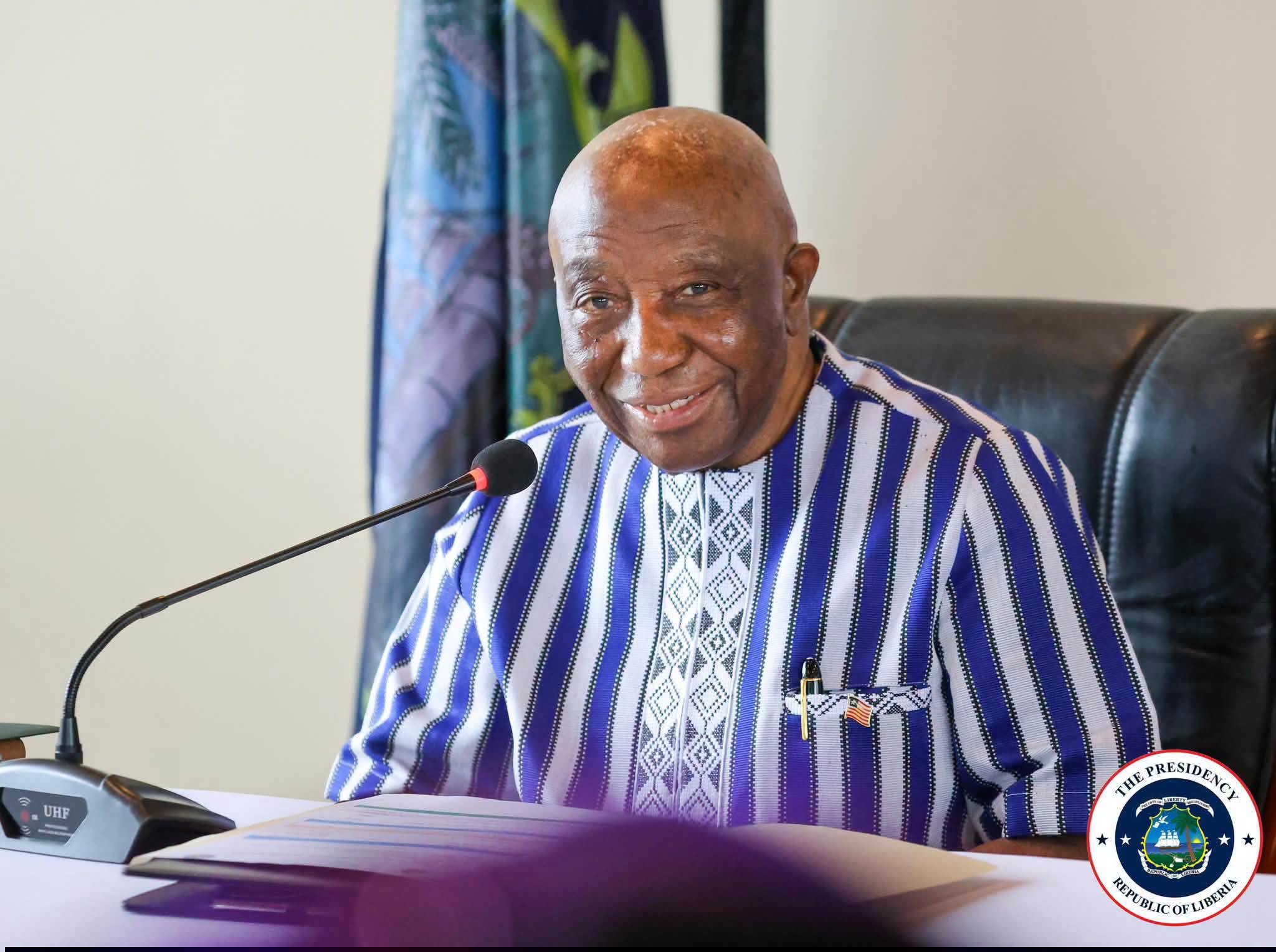
MONROVIA — President Joseph Nyuma Boakai has told his Cabinet that Liberia’s procurement rules must be respected, arguing that the safeguards are essential to protecting public resources, ensuring fair competition and giving ordinary Liberians a fair opportunity to do business with the state.
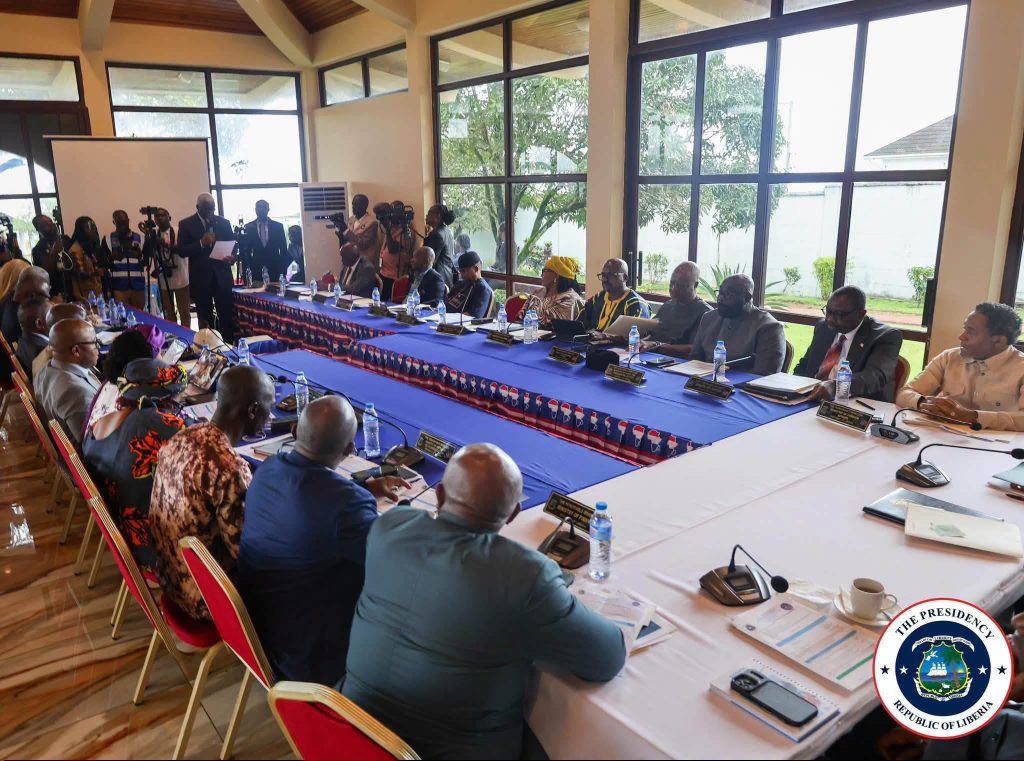
Boakai made the remarks as he opened the 24th Cabinet meeting, held under the theme, “Value for Money; Maximising Fiscal Space through System Efficiency and Government Asset Security.”
The entire meeting focused on public procurement and concessions, placing an unusually sharp spotlight on how government spends public money and awards contracts.
Acknowledging that procurement procedures can be frustrating and time-consuming, Boakai said the rules exist for a reason.
“Sometimes people get frustrated about all that you have to do to go through to buy this and buy that; but just imagine if these things were not in place, and even if they are in place, and people there were not implementing them, the resources you are talking about, you will not have them,” he told Cabinet members.
Procurement as a governance safeguard
Boakai said procurement should not be viewed merely as government bureaucracy. Instead, he described it as an important instrument for accountability, fair competition and wider economic participation.
“When we say procurement in the sense of procurement, it helps with accountability. It helps with fair play in the market. It also helps with making sure that every citizen has access to rendering services to this country,” he said.
The President argued that participating in government does not necessarily mean becoming a public servant. Liberians can also contribute to national development by supplying goods and services to the state.
ALSO READ: Regional Power Pools Seen as Key to Strengthening Africa’s Energy Security
“Participation in the government doesn’t mean that everybody will work with the government, but you can serve, you can provide goods and services,” Boakai said.
For that to happen, he said, the procurement system must be competitive and transparent, allowing qualified businesses and individuals to compete without contracts being perceived as rewards for political connections.
“To do that in a competitive society, you need to have a process by which everybody can have access without going around saying, well, they give it to their friend, they have this, they have that,” he said.
Boakai also used the meeting to defend Cabinet members against what he described as a tendency to focus on government mistakes while overlooking the routine work involved in running the country.
“People wait for the mistake you make, but we’re in leadership. So we watch and listen. We want to appreciate you very much,” he told the ministers.
Rules under pressure
The President’s renewed emphasis on procurement comes against a backdrop of growing scrutiny of Liberia’s public contracting system.
The country’s procurement framework is governed by the Amended and Restated Public Procurement and Concessions Commission (PPCC) Act of 2010. The legislation was intended to strengthen transparency and competition and limit political interference in the awarding of state contracts.
But enforcement has remained a persistent challenge. The PPCC has repeatedly faced difficulties securing compliance from procuring entities, even though the government remains the country’s largest buyer of goods and services.
That tension has also surfaced within Boakai’s administration.
A Senate joint committee investigation found that three of the President’s ministers, overseeing Public Works, Justice, and Finance and Development Planning, had awarded more than US$22 million in road contracts without competitive bidding, contrary to the PPCC law.
In another case, leaked internal PPCC correspondence showed the Commission’s Compliance and Monitoring Division rejecting a request to fast-track a US$9.8 million national biometric identification contract through restricted bidding.
The Commission reportedly argued that a contract of that size required international competitive bidding under the law. Days later, however, President Boakai endorsed the same vendor.
The administration has also faced a prolonged dispute over the Roberts International Airport concession.
ALSO READ: Women’s empowerment shapes stronger societies
In November, Boakai moved to nullify the concession through an executive order, citing alleged procurement fraud after claims that the concessionaire had been incorporated in the United States only days after receiving the bid documents.
The Senate rejected his request to de-ratify the contract in February, arguing that any dispute should be handled through the mechanisms provided under the PPCC Act rather than through executive action.
The dispute highlighted the difficulty of reversing a procurement decision once a contract has moved through the system, even when the executive raises concerns about how it was awarded.
Questions closer to the Presidency
Civil society organisations have also raised questions about procurement transparency surrounding a reported US$10 million presidential villa project in Foya, Lofa County, Boakai’s home district.
Questions have centred on the source of funding for the project and whether the PPCC was involved in its procurement. Details about the project’s financing and procurement process have not been publicly set out in full.
These controversies give added significance to Boakai’s latest call for procurement discipline.
His message to Cabinet was clear: public procurement must protect state resources, promote competition and prevent contracts from becoming instruments of patronage.
The challenge now is whether those principles will be consistently applied across the government’s next contract, concession and procurement decision.
For an administration that has made accountability a central part of its governance message, the test will ultimately be less about what is said in Cabinet meetings and more about how public contracts are awarded, scrutinised and implemented.