More than 136,000 candidates, hundreds of parties and an ANC already locked out of contesting some seats have set the stage for South Africa’s most fragmented local election yet. On 4 November, the decisive battles may not end when the votes are counted. In many councils, the real power struggle could begin afterwards.
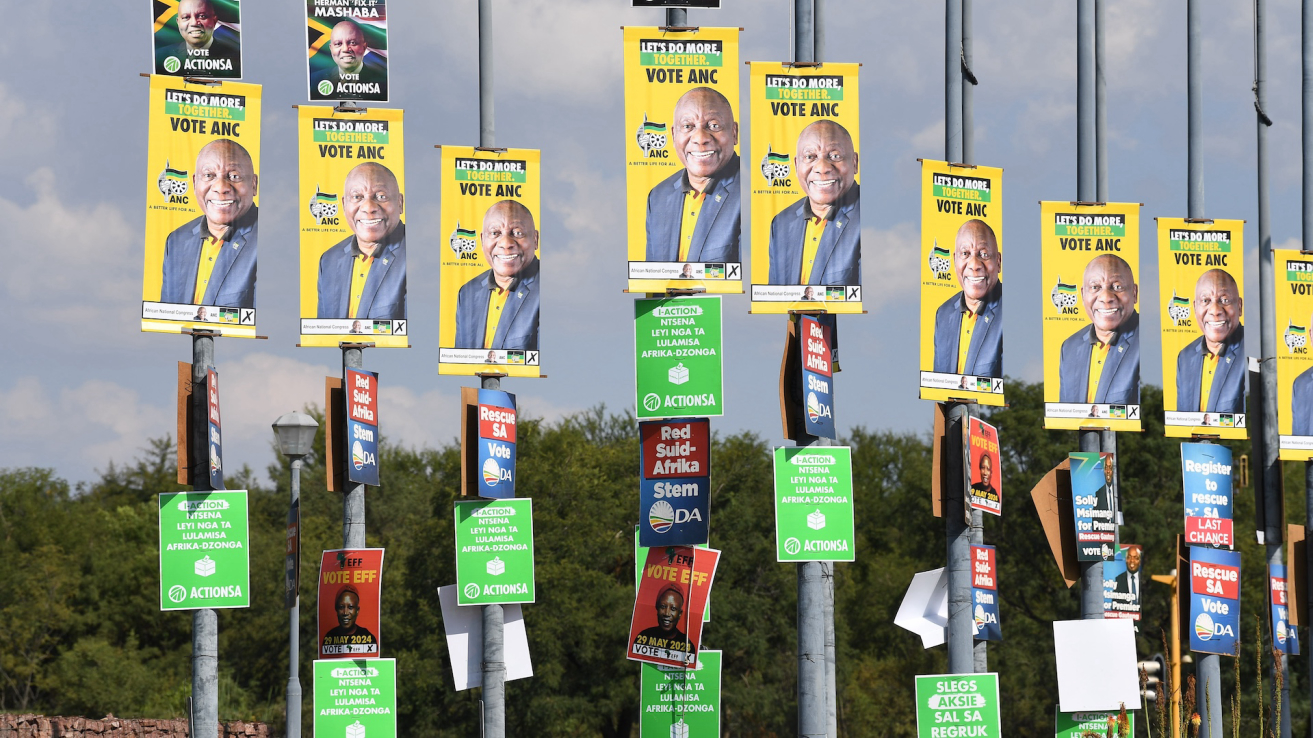
PRETORIA – When South Africans vote on 4 November, they will be choosing the councils that control some of the most important services in their daily lives, from water and electricity to roads, waste management and municipal budgets.
But the biggest question in several major cities may not be which party comes first.
It may be which parties can work together afterwards.
South Africa’s 2026 local government elections are shaping up as a deeply fragmented contest, with a record 136,790 candidates cleared to contest 10,526 council seats across the country’s eight metros, 44 district municipalities and 205 local municipalities. The number of candidates is sharply higher than the 95,427 certified in 2021, despite only a marginal increase in the number of seats.
That fragmentation is likely to put smaller parties in a powerful position in councils where no party secures an outright majority.
The result could be an election in which the most important political negotiations take place after voters have left the polling stations.
An election of unprecedented scale
The numbers tell their own story.
Of the 136,790 candidates certified by the Electoral Commission of South Africa (IEC), 98,219 are contesting ward seats on behalf of political parties, while 38,571 are standing on proportional representation lists. There are also 621 independent ward candidates.
The IEC says 5,096 candidates were disqualified during the certification process.
The sheer number of contestants has also created practical challenges for the ballot. In Johannesburg, 75 parties are contesting the PR ballot, compared with 70 in Tshwane, 69 in eThekwini, 67 in Ekurhuleni and 55 in Cape Town. The IEC says double-column PR ballots will be required where more than 48 parties are contesting.
It is a striking illustration of how far South Africa’s electoral landscape has moved from the dominance of a handful of major parties.
And this will be the sixth democratic local government election, not the seventh, following polls in 2000, 2006, 2011, 2016 and 2021. The election comes two-and-a-half years after the ANC lost its national majority for the first time in the May 2024 elections.
The central question is whether that national fragmentation will now be reproduced in the councils responsible for delivering services directly to communities.
The ANC enters with candidates already excluded
The ANC is entering the election with an unusual problem: in several municipalities, some of its candidates will not even appear on the ballot.
The Electoral Court dismissed the party’s challenge against the exclusion of 181 candidates after the ANC failed to complete the final submission process on the IEC’s online nomination system before the 28 August deadline. The affected candidates are spread across six municipalities.
The ANC had argued that candidate information had been loaded onto the IEC system before the deadline, while the commission maintained that the party had not completed the required final submission process.
ALSO READ: Zambia Resumes Vote Counting After Election Officials Attacked
The Electoral Court found that failure to comply with the election timetable had consequences in law.
The ANC has sought further legal relief, but the dispute has already added another layer of uncertainty to contests in municipalities where the party has traditionally been dominant.
In the Eastern Cape, the exclusion is particularly significant because Port St Johns and Ngquza Hill will not have ANC candidates unless the party succeeds in its further legal challenge.
That means the political balance in those councils could be affected before voters even cast their ballots.
What the polls say, and why they disagree
The polling picture is anything but settled.
An Ipsos survey conducted between June and July among 3,600 South Africans found the ANC at 31% nationally among registered voters surveyed, followed by the DA at 25%, MK at 14%, the EFF at 11%, ActionSA at 6%, the IFP at 3% and the Patriotic Alliance at 2%. Ipsos cautioned that the figures should not be treated as a prediction of the final election outcome.
The metropolitan picture is even more volatile.
Ipsos puts the ANC at 31% and the DA at 27% in Johannesburg, while giving the DA 31% against the ANC’s 22% in Tshwane. Its figures put MK at 55% in eThekwini.
Another poll, however, produced a radically different picture in Johannesburg, putting the DA at 42% and the ANC at 18%.
The gap between the surveys illustrates the difficulty of reading the 2026 contest from polling alone. Different methodologies, samples and fieldwork periods can produce substantially different results.
What the surveys do demonstrate is that the major metros are highly competitive and that there is no uniform national pattern.
The kingmakers
This is where smaller parties could become decisive.
South Africa’s experience with hung councils has already shown that a party does not need to finish first to exercise considerable influence over who governs.
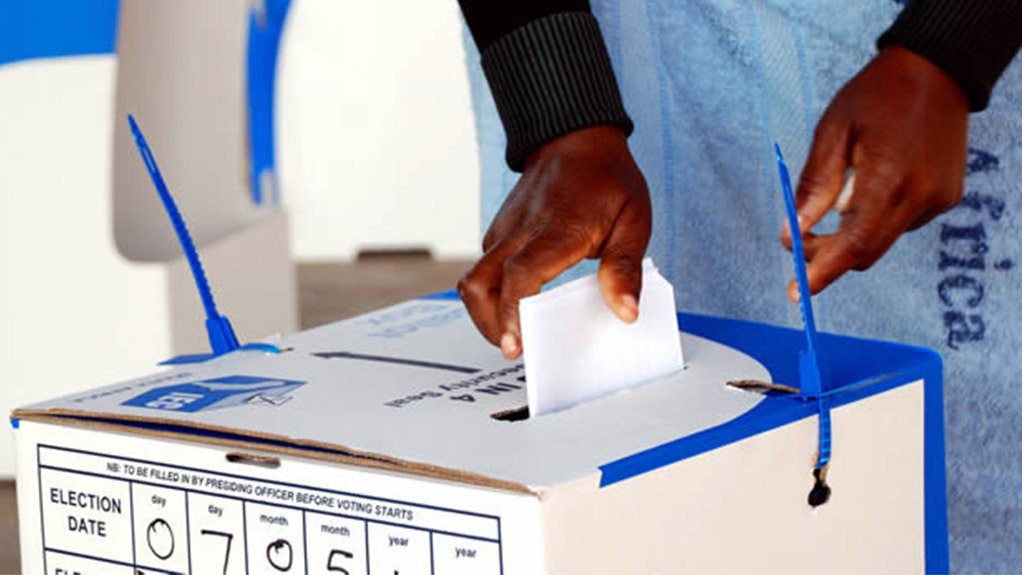
Hung councils increased substantially after the 2021 elections, and analysts expect coalition politics to remain a feature of municipal government in 2026. Johannesburg, Tshwane, Ekurhuleni, eThekwini and Nelson Mandela Bay are among the metros being closely watched for possible coalition arrangements.
The balance of power will differ from city to city.
Ekurhuleni
The ANC and DA are competing closely, while MK’s projected support could make it an important party in post-election negotiations.
Nelson Mandela Bay
The DA and ANC are expected to remain closely matched, with smaller parties potentially determining which side can assemble a governing coalition.
Johannesburg
The city has several prominent mayoral contenders and a crowded field of parties. Polling does not currently point to a single party commanding a majority, making coalition negotiations a central possibility.
Tshwane
The DA has polled ahead of the ANC in some surveys, but support for smaller parties could determine whether either can assemble a governing majority.
eThekwini
The city presents a different picture, with Ipsos recording strong support for MK. If that support translates into actual votes and seats, the composition of the next council could look markedly different from those of other metros.
The important point is that polling numbers are not council seats. A party’s ability to govern will depend on the distribution of seats and the agreements struck after the results are declared.
South Africa may be heading into coalition politics without new rules
The biggest uncertainty may come after election night.
The government has introduced the Local Government: Municipal Structures Amendment Bill, commonly known as the Coalition Bill, which seeks to create a legislative framework for coalition governments and address instability in hung councils. The Bill includes provisions dealing with coalition agreements, the election and removal of office-bearers and the timeframes for forming municipal governments.
Earlier versions of the legislation proposed a 1% threshold for parties seeking representation in municipal councils, as well as provisions dealing with coalition agreements and executive arrangements. The threshold has been controversial, with critics arguing that it could disadvantage smaller parties.
The legislation’s progress matters because South Africa could enter another cycle of coalition negotiations before the regulatory framework for coalition government is fully settled.
For municipalities, that creates a question that goes beyond who wins the most votes.
It is whether the governments that emerge from those negotiations will be stable enough to pass budgets, appoint office-bearers and keep councils functioning.
For residents, businesses and investors, that stability can matter as much as the election result itself.
The missing voter
There is another issue beneath the coalition arithmetic: turnout.
In 2021, turnout among registered voters fell to 45.79%, the lowest recorded in a South African local government election since 1994. The 2026 election faces another turnout challenge.
Recent Ipsos research suggests turnout could be around 42%, although this remains a survey-based estimate rather than a forecast of the actual result.
The IEC has expanded the voters’ roll through its registration drives, while continuing to encourage eligible voters to register and verify their details.
But registration alone does not translate into votes.
The demographic divide is significant. Younger South Africans are less likely to be registered than older voters, while local government elections historically attract lower participation than national elections.
That creates an important second layer to the election.
The parties will compete for votes, but they will also compete for the attention of citizens who may decide not to vote at all.
Beyond who wins
That question is at the centre of a new initiative being developed by the International Centre for Political Campaigns (ICPC) and the Nelson Mandela School of Public Governance at the University of Cape Town.
At an inception meeting in Cape Town on 26 September, scholars and campaign specialists discussed the proposed Global Political Campaign Index (GPCI), which would assess political campaigns on factors beyond their electoral results.
Among those involved are Professor Pippa Norris of Harvard Kennedy School, Professor Bob Mattes of the University of Strathclyde, Dr Momar Dieng, Professor Sarah Lockwood and Professor Cheryl Hendricks.
ALSO READ: Gambia Steps Up Early-Warning Efforts As 2026 Election Approaches
Glen Mpani, group lead of ICPC, said election results show who won but do not necessarily reveal whether citizens were heard or whether voters were offered meaningful choices.
“For us, the missing voter must be part of that assessment: whose concerns went unheard, who was overlooked and what can campaigns do better?” Mpani said.
The proposed index would examine four areas: the integrity of campaign conduct, reach and inclusion, the substance of policy offers, and citizens’ experience of meaningful choice and freedom from pressure.
The organisers say the initiative would include independent scientific oversight, transparent methodology and conflict-of-interest disclosures, with a pilot planned before any assessments are published.
The question 4 November cannot answer
South Africa is heading into an election with a record number of candidates and an exceptionally crowded political field.
But the number that may matter most will not be the number of parties on the ballot.
It will be the number of seats each party holds after the votes are counted.
A party can finish first without being able to govern. A smaller party can win only a handful of seats and still become critical to forming a coalition.
That is the paradox of the 2026 local elections.
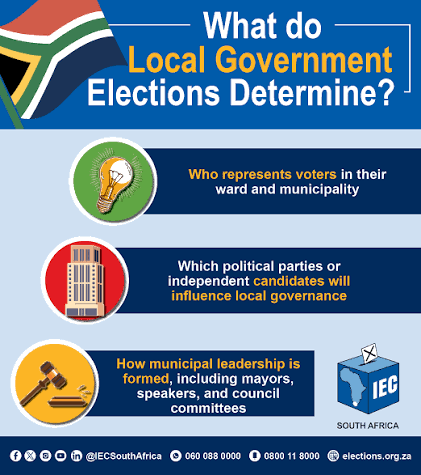
The voters will determine the composition of the councils on 4 November. The parties may then determine who governs those councils through negotiations.
The immediate questions will be whether the ANC can contain further losses in major urban centres, whether the DA can convert support into governing majorities, how far MK’s support extends beyond KwaZulu-Natal, and how smaller parties perform across the metros.
But the longer-term question is broader: can South Africa’s increasingly fragmented local political system produce stable municipal governments that can actually govern?
That answer will not be on the ballot paper.
It will emerge in the days and weeks after the votes are counted.