PRETORIA: The Department of Home Affairs has withdrawn a directive allowing previously excluded asylum seekers to lodge applications at refugee reception offices, citing overwhelming demand, threats to officials and violent disruptions.
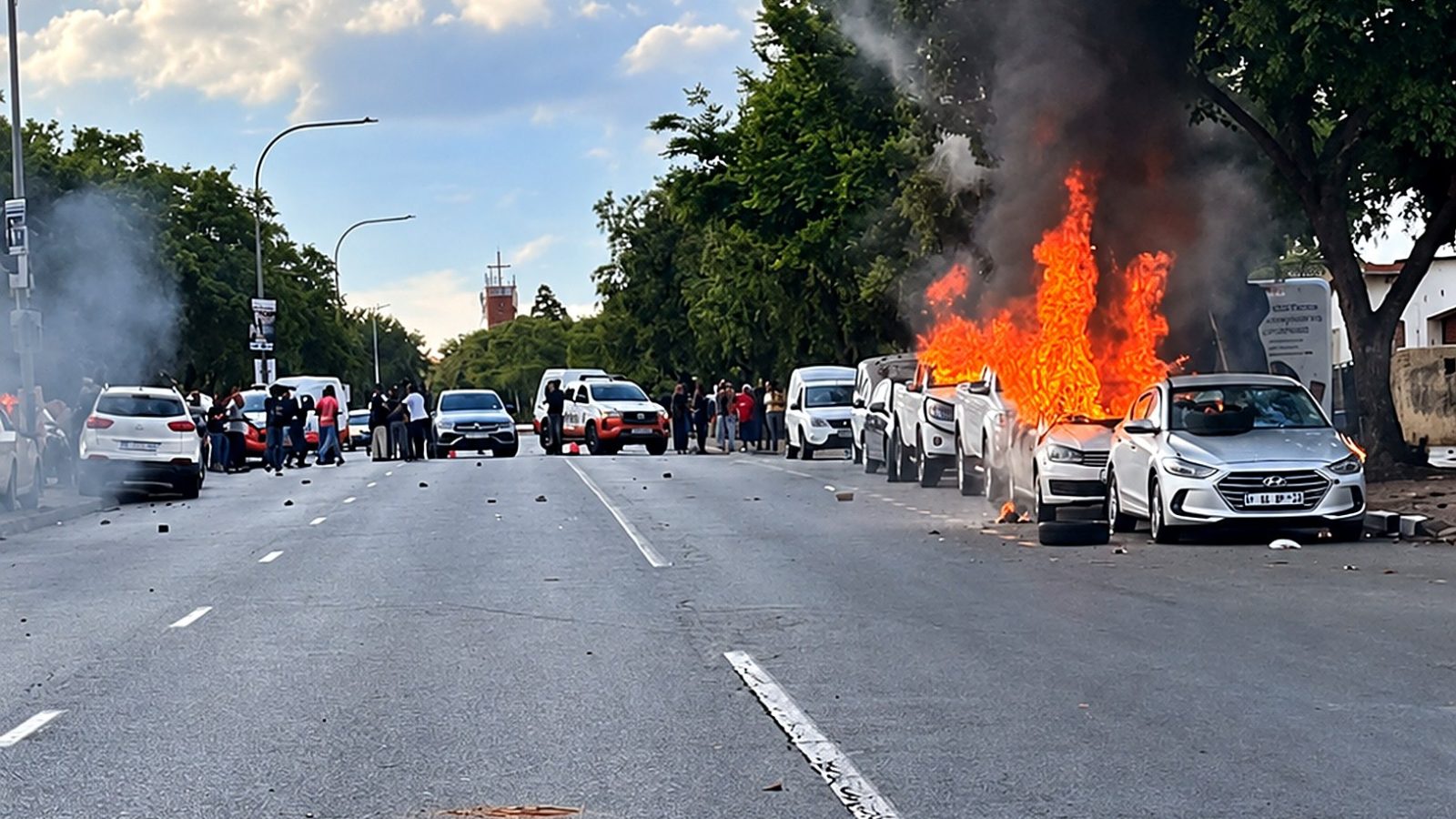
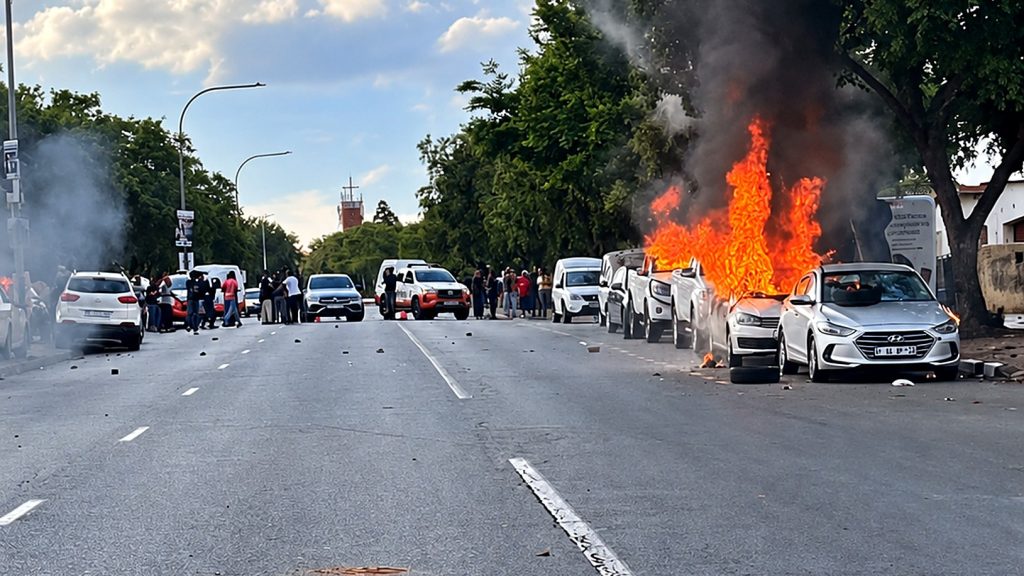
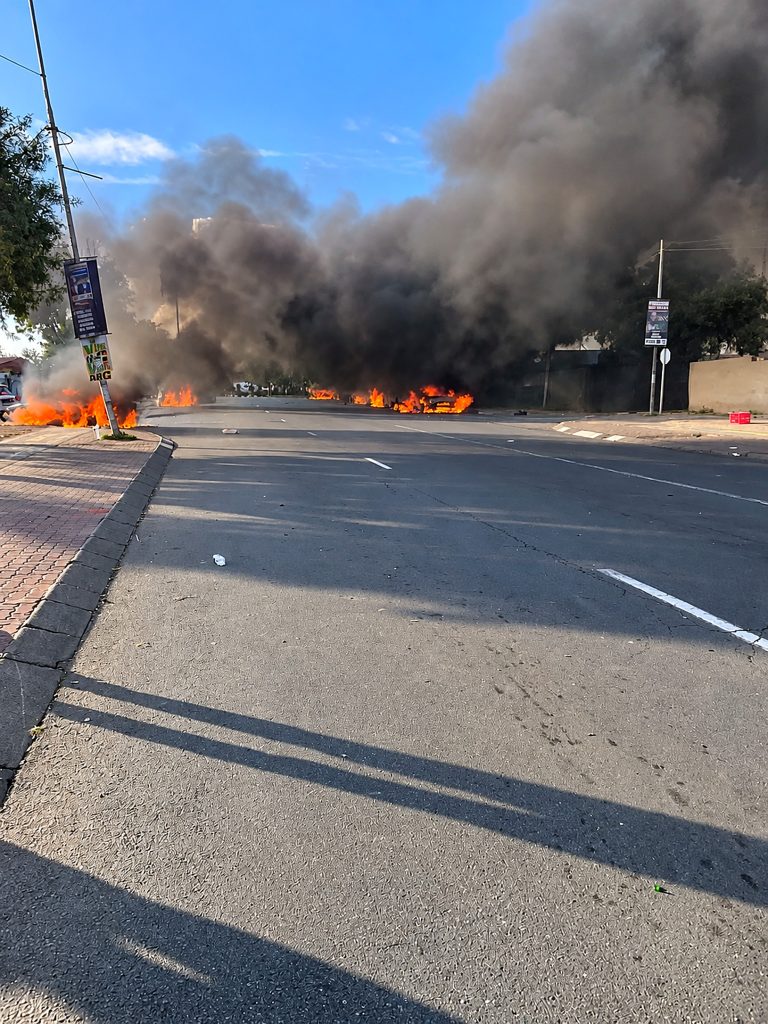
The decision follows unrest in Durban and Soweto, where vehicles were burnt and properties damaged amid protests over access to the asylum system.
The directive, issued by the department’s Director-General on 28 September, sought to implement the Constitutional Court’s July ruling striking down legal barriers that prevented some people from applying for asylum.
Home Affairs announced its withdrawal on Friday, saying the immediate implementation had placed refugee reception offices under severe pressure.
“The attempt to practically implement the judgement immediately led to serious consequences that could not have been foreseen in the Court order. This includes, amongst others, the fact that RRO operations were overwhelmed within a matter of days since the directive was issued, Home Affairs officials were placed at risk, and that serious threats to public safety and order had emerged,” the department said.
Withdrawing the directive does not overturn the judgment. Home Affairs said it would begin a fresh process to determine how to comply with the court order.
Department defends decision behind directive
Home Affairs said the directive was an operational decision taken without the knowledge of the minister or any other political office-bearer.
“Claims that it was a politically-motivated decision are therefore categorically untrue, as the directive emanated from a Constitutional Court case that the Department had opposed,” it said.
The department maintained that it respected the judiciary and remained committed to implementing the ruling.
“The Department reaffirms its respect for the judiciary and the rule of law, as well as its commitment to determine an operationally appropriate and sustainable method to comply with the order,” it said.
The challenge now is to provide lawful access to the asylum process while managing demand at the country’s five refugee reception centres.
What the Constitutional Court ruled
On 7 July 2026, the Constitutional Court confirmed a 2025 Western Cape High Court ruling declaring parts of the Refugees Act unconstitutional and invalid.
The case, Scalabrini Centre of Cape Town and Another v Minister of Home Affairs and Others, concerned provisions that restricted access to asylum applications.
These provisions allowed Home Affairs to exclude people who entered South Africa irregularly, lacked an asylum transit visa or missed the deadline for reporting to a refugee reception office, unless they could demonstrate “good cause” or “compelling reasons”.
The court found that these requirements gave officials unguided and arbitrary discretion.
The Scalabrini Centre, represented by Lawyers for Human Rights, brought the challenge in 2023. It argued that “hundreds of thousands” of people had been affected, including applicants left undocumented when refugee reception offices closed to new applications during the Covid-19 pandemic, from March 2020 to May 2022.
The court found that the barriers risked returning people to danger before their protection claims could be assessed. This would breach the principle of non-refoulement, which protects people against being returned to places where they face persecution or other serious threats.
ALSO READ: Stop shielding the corrupt and killing women, church tells Southern Africa’s leaders
“Refugees and asylum seekers cannot be denied protection through arbitrary administrative barriers,” Lawyers for Human Rights said when the judgment was delivered.
Access to apply does not guarantee refugee status
Justice and Constitutional Development Minister Mmamoloko Kubayi said the ruling had been widely misunderstood.
Speaking at a media briefing in Pretoria on Thursday, Kubayi, who chairs the Inter-Ministerial Committee on Migration, stressed that access to the asylum process did not amount to automatic permission to settle in South Africa.
“The judgment does not grant refugee status or permanent residence automatically to anyone who enters South Africa,” she said.
“It simply requires that individuals claiming asylum be allowed access to the asylum determination process.”
Fraudulent and unfounded applications would still be rejected, she said. People abusing the system “will continue to face lawful deportation once due process has been completed.”
Kubayi acknowledged the pressure on the department.
“All refugee offices were overwhelmed by the numbers of those coming for applications,” she said.
She also rejected social media claims that refugees would gain voting rights.
“Those granted refugee status do not have the right to vote in terms of our laws,” she said.
The inter-ministerial committee met urgently on Wednesday night and undertook to consult departments, legal experts and other stakeholders on managing applications within the law.
Vehicles burnt and properties damaged
In Durban, asylum seekers gathered outside the refugee reception centre on Che Guevara Road on Wednesday after the March and March movement reportedly blocked access.
Protesters again blocked the centre on Thursday, and police dispersed crowds.
Police reported that at least 14 vehicles were set alight in Durban. A guesthouse and warehouse were also damaged, while foreign-owned shops were looted.
In Soweto, confrontations broke out between residents and foreign nationals near a Home Affairs facility in Orlando West. Police initially reported that nine vehicles had been burnt.
The government condemned intimidation and vigilantism.
ALSO READ: King Misuzulu Calls for African Unity on Illegal Immigration
CONTRALESA backs marchers but appeals for peace
The Congress of Traditional Leaders of South Africa (CONTRALESA) in KwaZulu-Natal backed the marches against illegal immigration while urging participants to refrain from violence.
In a statement issued on Friday by provincial chairperson Inkosi V.T. Ngcobo, the organisation expressed disappointment with the court ruling.
“South Africa cannot accommodate asylum seekers from all over the world. We as CONTRALESA are raising this because we ourselves are confronted with pressing internal challenges of crime and unemployment within our communities,” it said.
CONTRALESA warned that ignoring citizens’ concerns could fuel further unrest.
“CONTRALESA appeals to our people to march peacefully and to refrain from burning cars and buildings. However, Government must take its own citizens seriously if it wants to avoid riots and save the economy and the country,” it said.
The organisation called for legislative and policy changes, arguing that the country lacked the jobs and resources to accommodate additional arrivals.
Its criticism, however, extends beyond what the judgment grants: the ruling requires access to an assessment process, rather than automatic recognition as a refugee.
Political parties challenge the ruling
The Patriotic Alliance, ActionSA and MK Party have also criticised the judgment.
The Patriotic Alliance’s Ashley Sauls argued that it created a “reverse incentive” rewarding irregular entry. He claimed that delays in processing false applications could allow the asylum system to function as a prolonged work permit.
ActionSA’s Lerato Ngobeni acknowledged the need to protect people fleeing persecution but warned that the ruling would place further pressure on Home Affairs. She cited corruption and fraudulent applications and called for Parliament to reform the law.
The MK Party’s Sfiso Mahlangu argued that the ruling would place the greatest burden on poor Black South Africans. He claimed it could worsen crime and illegal trading and strain public resources.
Full bench to clarify detention dispute
A related dispute has emerged over whether detained foreign nationals must be released after expressing an intention to seek asylum.
Gauteng High Court Judge Stuart Wilson ordered the immediate release of a detained Ethiopian asylum seeker, holding that release must follow once a detainee indicates an intention to apply.
In August, Judge Mandlenkosi Motha declined to release 21 undocumented people held at the Lindela Repatriation Centre. He instead ordered Home Affairs to give them access to the asylum process.
Gauteng Judge President Aubrey Ledwaba has referred the issue to a full bench to establish legal certainty and suspended similar applications pending its determination.
The full court is due to sit on 29 October.
For Home Affairs, the withdrawal leaves the central obligation intact: it must find a workable way to assess asylum claims without restoring the barriers the Constitutional Court struck down.