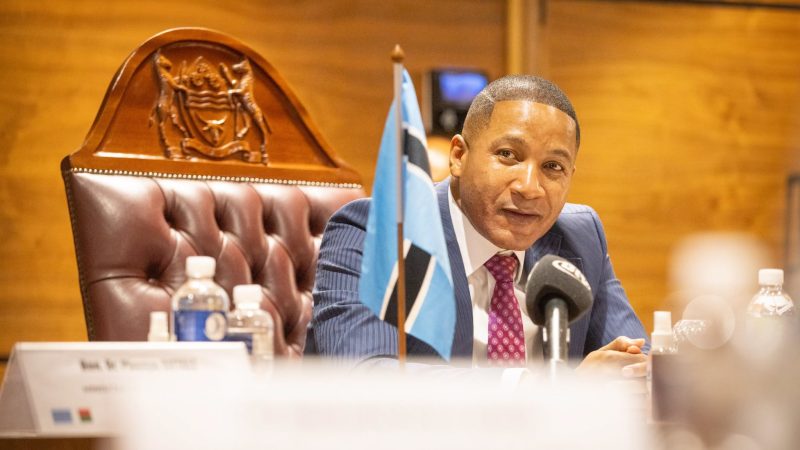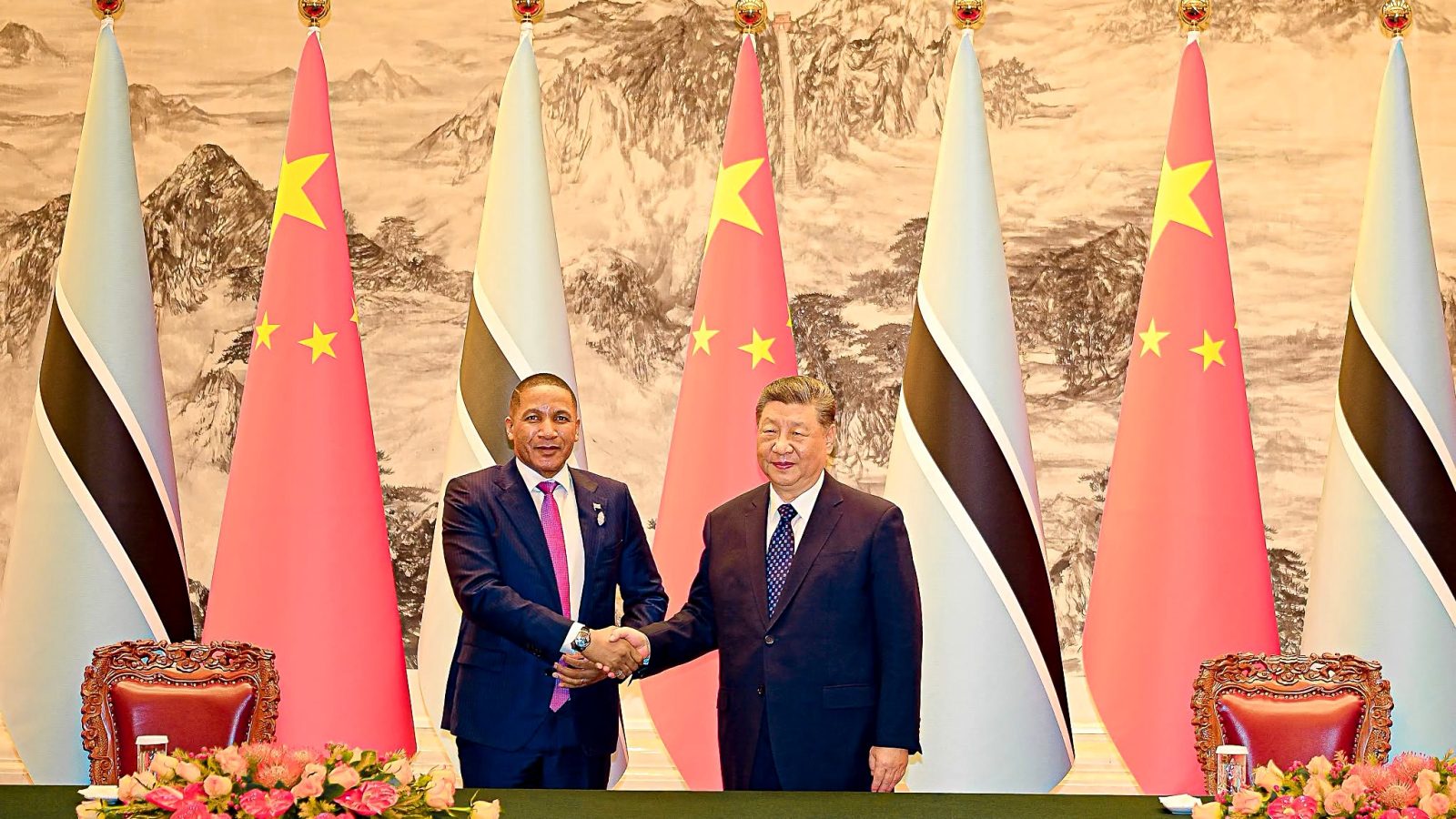
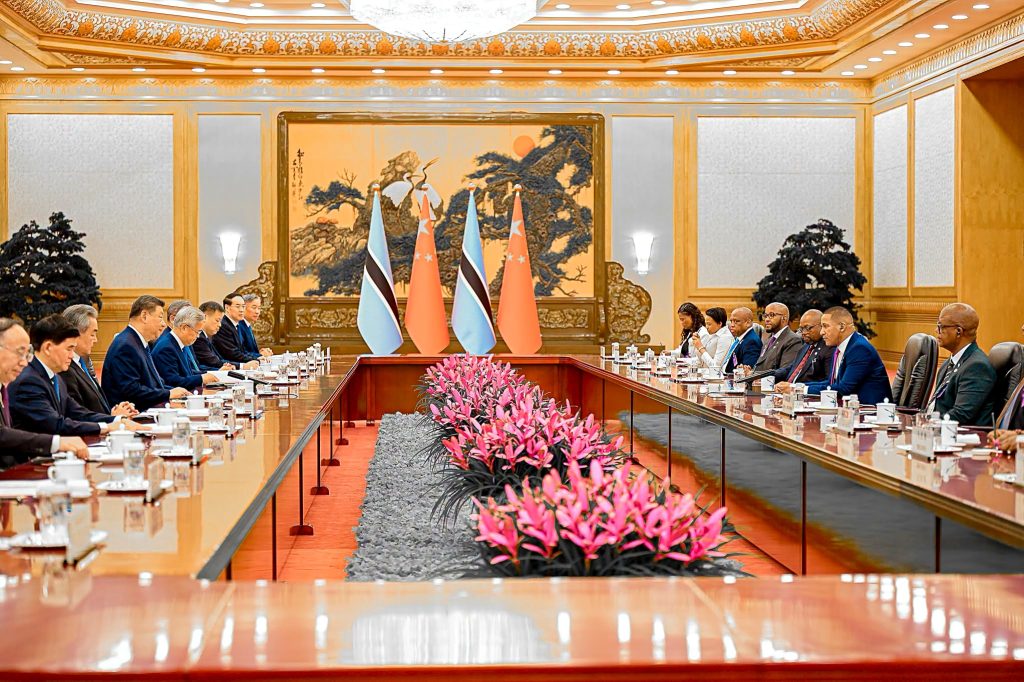
BEIJING, China: Botswana and China have elevated their relationship to a Comprehensive Strategic Cooperative Partnership, agreeing to expand cooperation in mining, agriculture, trade and technology as Gaborone seeks new sources of growth amid a prolonged diamond downturn.
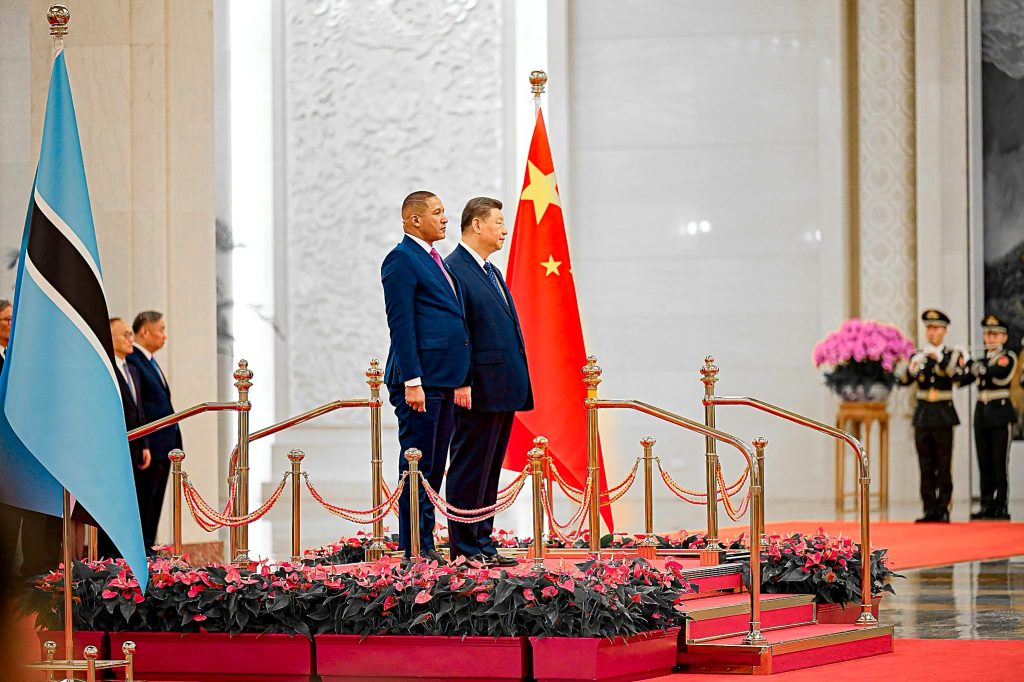
A 28-point joint statement issued after talks between President Duma Boko and Chinese President Xi Jinping on Tuesday sets out cooperation across economic, security and social sectors. It also records Botswana’s support for Beijing’s positions on Taiwan, Xinjiang, Xizang and Hong Kong, and provides for members of the governing Umbrella for Democratic Change (UDC) to attend training programmes in China.
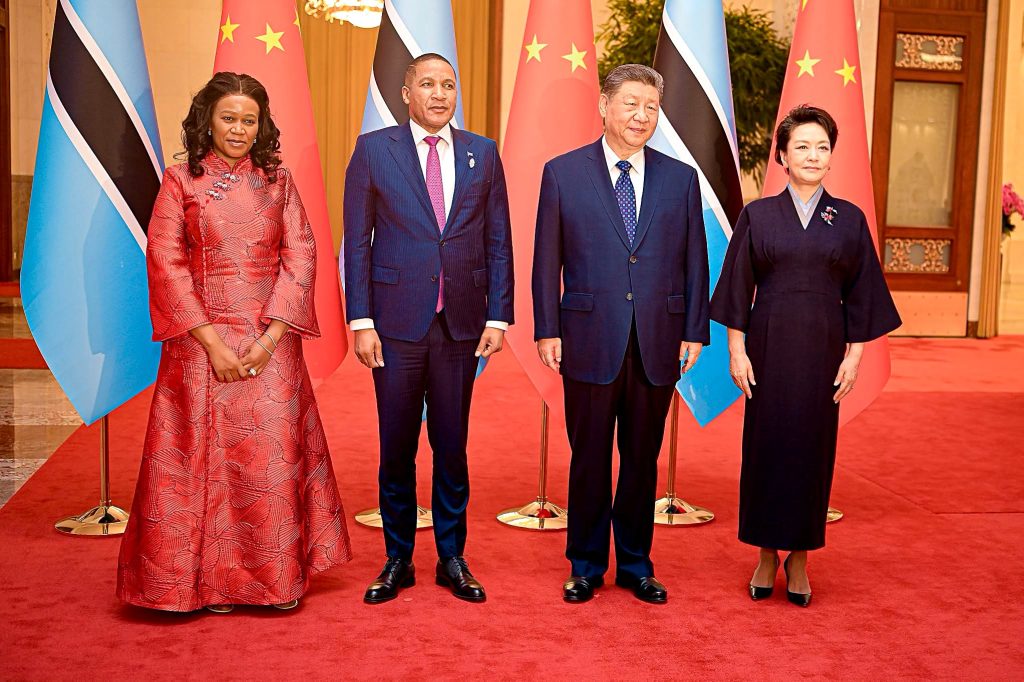
Boko is visiting China from 12 to 17 October at Xi’s invitation. It is his first visit to the country since taking office.
Announcing the trip last Friday, Chinese foreign ministry spokesperson Mao Ning said Xi would host a welcoming ceremony and banquet, and that Boko would also travel to Fujian Province. Beijing expected the visit to lift relations “to a new height”, she said.
In the joint statement, the presidents described the upgrade as opening “a new chapter in the longstanding and evolving relationship between the two countries”. They called the visit “an important milestone in the history of China-Botswana relations”.
Partnership Builds On Five Decades Of Relations
The upgrade comes barely two years after the countries established a strategic partnership during former president Mokgweetsi Masisi’s attendance at the Forum on China-Africa Cooperation (FOCAC) summit in Beijing in September 2024.
Diplomatic relations began on 6 January 1975. Botswana’s founding president, Sir Seretse Khama, visited China in 1976, while Xi visited Botswana in 2010 as vice president, according to remarks made by Botswana’s Minister of International Relations, Dr Phenyo Butale, during last year’s 50th anniversary commemoration.
Botswana now holds the same partnership designation granted to countries including Angola, the Democratic Republic of Congo and Gabon during state visits to Beijing in 2023 and 2024.
Boko has previously outlined his interest in drawing on China’s technical expertise, innovation and consumer market.
In March, while receiving Botswana’s ambassador-designate to China, Professor Lekoko Kenosi, he pointed to the growing presence of Chinese technology and vehicles.
“We are looking to benefit from these skills,” Boko said.
Diamond Downturn Adds Urgency
The agreement comes as Botswana confronts the economic consequences of its dependence on diamonds.
The economy has contracted for two consecutive years as weak global demand and competition from lab-grown stones have put pressure on its main export. Diamonds typically generate about a third of government revenue and roughly three-quarters of foreign exchange earnings.
In his February budget speech, Vice President and Finance Minister Ndaba Gaolathe projected growth of 3.1% for 2026. However, he warned that growth would remain below potential without substantial reforms and stressed the urgency of diversifying beyond mining.
The joint statement addresses that ambition through commitments to expand trade, encourage investment and improve access to the Chinese market.
China will work towards greater market access for Botswana’s beef, citrus and other agricultural products, while the countries address sanitary, phytosanitary and technical requirements.
ALSO READ: President Boko heads to China as Botswana seeks exports beyond diamonds
Botswana welcomed Xi’s zero-tariff measures for 53 African countries and the use of China’s Green Channel 2.0 trade facilitation mechanism.
The countries also agreed to accelerate early-harvest arrangements under an Economic Partnership for Common Development Agreement within the Southern African Customs Union (SACU).
On diamonds, China committed to improving access for Botswana’s stones and cooperating through the Kimberley Process. Weak Chinese demand has been cited as one factor behind the downturn.
Copper And Infrastructure Feature Prominently
Copper is another focus of the partnership, with the statement highlighting cooperation around the Khoemacau Copper Mine in the Kalahari Copperbelt.
The mine is owned by MMG Ltd, whose major shareholder is the Chinese state-owned China Minmetals Corporation.
MMG broke ground in February on an expansion costing approximately US$900 million. The project is expected to increase annual copper production to about 130,000 tonnes, with the first concentrate from the expanded operation anticipated in the first half of 2028.
“Our partnership with Botswana is central to this project and our success,” MMG chief executive Ivo Zhao said at the time.
Botswana also agreed to work towards a memorandum of understanding on green mining cooperation.
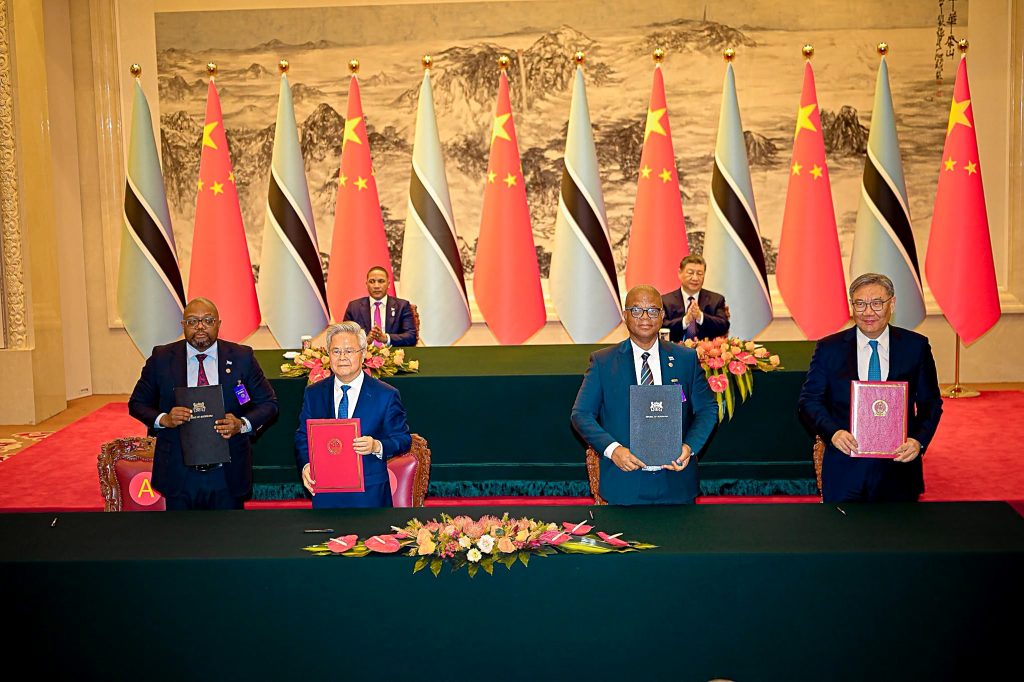
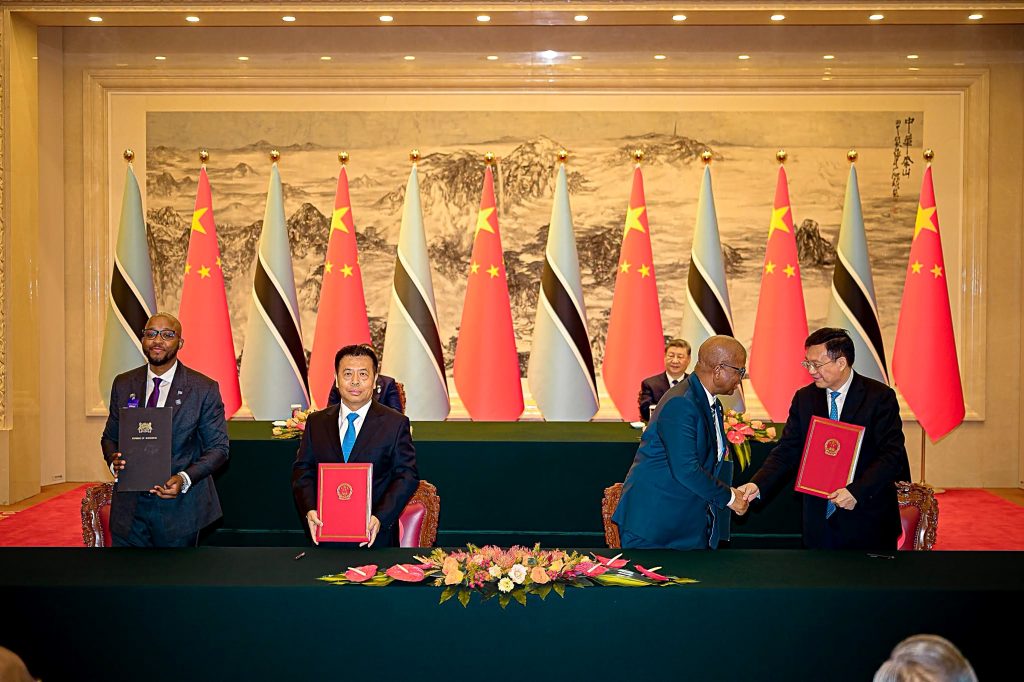
The countries signed a Cooperative Plan for Joint Progress on the Belt and Road Initiative, together with a memorandum identifying priority areas and potential flagship projects.
Investment cooperation will cover mining, energy, infrastructure, agriculture, manufacturing, logistics and digital technology.
However, the joint statement does not specify investment amounts, loan commitments or project values. It says the presidents witnessed the signing of “bilateral cooperation documents in various fields”, without providing a complete list.
Political Commitments Accompany Economic Cooperation
The statement also sets out political commitments.
Botswana reaffirmed the one-China principle, recognised Taiwan as “an inalienable part of China’s territory” and said it “resolutely opposes any form of ‘Taiwan independence’”.
It further stated that matters concerning Xinjiang, Xizang and Hong Kong are China’s internal affairs.
The countries agreed to encourage exchanges between political parties on leadership development, policy formulation, organisational development and training.
Botswana specifically “welcomed opportunities for members of the Umbrella for Democratic Change (UDC) to participate” in Chinese-hosted training and capacity-building programmes.
ALSO READ: Botswana marks 60 Years of Independence as Boko opens door to Madagascar
The UDC took office after the October 2024 election, ending nearly six decades of Botswana Democratic Party rule.
On human rights, the countries opposed the “politicization, instrumentalization and application of double standards”, while emphasising national circumstances and historical context.
Botswana also endorsed Xi’s four global initiatives on development, security, civilisation and governance.
It said it would “positively consider” joining the World Artificial Intelligence Cooperation Organization and the International Organization for Mediation, subject to domestic laws and procedures.
The countries expressed opposition to “unilateralism, protectionism, hegemonism and power politics” and said states “should not be forced to take sides in technology options”.
Cooperation Extends To Security, Health And Education
The partnership includes law enforcement cooperation and commitments to protect each other’s citizens, enterprises and projects.
The countries agreed to tackle cyber-enabled and telecommunications fraud, drug trafficking, smuggling and human trafficking.
On regional security, they endorsed “African solutions to African problems” and supported the African Union and regional economic communities in resolving conflicts.
In health, the statement marked 45 years of Chinese medical teams working in Botswana, following the programme’s launch in 1981.
Future cooperation will include specialist care, minimally invasive medicine and medical technology, alongside the “Brightness Journey” voluntary clinic programme.
Universities were encouraged to establish partnerships through the China-Africa 100 Universities Cooperation Plan.
China will continue providing government scholarships and professional training for Batswana. Both countries also supported the continued work of the Confucius Institute.
Delivery Will Determine The Partnership’s Value
The countries pledged to translate their commitments into “tangible outcomes” through existing mechanisms, including consultations between their foreign ministries and joint trade structures.
Botswana also committed to participating in FOCAC follow-up activities, including the forthcoming 10th FOCAC Ministerial Meeting.
For Gaborone, the value of the upgraded relationship will depend on implementation: whether agricultural products gain access to Chinese markets, investment creates jobs and technology cooperation helps broaden the economy.
With diamond revenues under pressure, those results will matter more than the diplomatic designation alone.