BRONKHORSTSPRUIT, South Africa: A public health emergency that has left 408 people ill, most of them young children, has triggered a political confrontation within Tshwane’s governing coalition, with the Economic Freedom Fighters (EFF) moving to lay criminal charges against Executive Mayor Dr Nasiphi Moya and City Manager Johann Mettler.
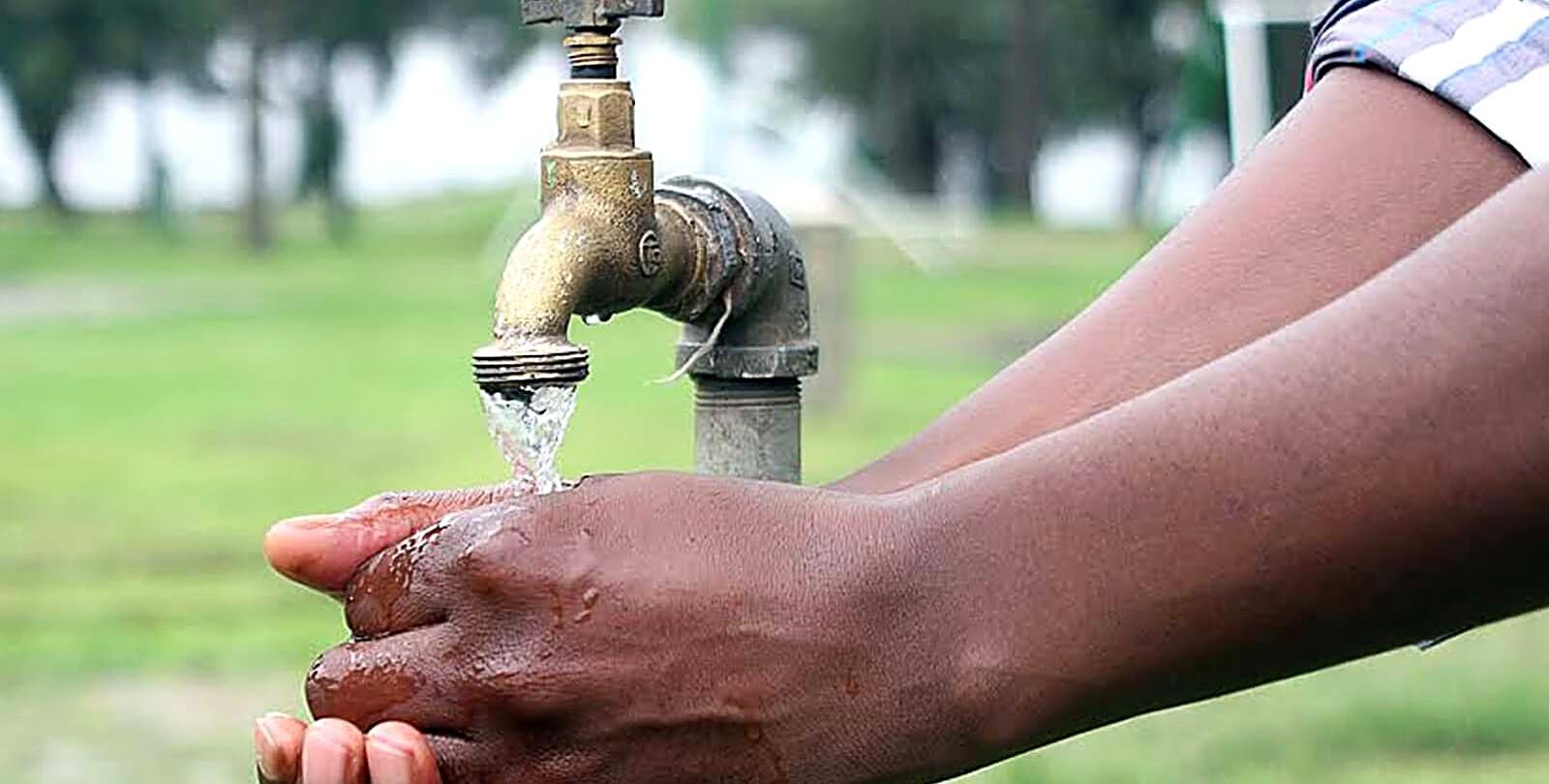
The crisis erupted after water from the Bronkhorstspruit Water Treatment Works was distributed without chlorine for three weeks, exposing communities to water contaminated by sewage pollution.
The EFF, which holds two positions in Moya’s Mayoral Committee, has demanded her resignation and accused the city’s leadership of failing to protect residents or warn them that their water was unsafe.
But ActionSA, which leads the coalition, has accused its governing partner of political opportunism, arguing that the EFF cannot distance itself from an administration in which it holds senior positions.
The dispute comes just two weeks before South Africa’s scheduled 4 November local government elections, placing the city’s handling of the outbreak at the centre of an increasingly bitter political contest.
Beyond the political fallout, the crisis has raised serious questions about water safety, infrastructure maintenance, regulatory compliance and the failure to communicate potentially life-threatening risks to residents.
Three weeks without chlorine: How the crisis unfolded
A joint statement issued on Monday by the national departments of Health and Water and Sanitation, the Gauteng Provincial Government and the City of Tshwane revealed the extent of the failures at the Bronkhorstspruit Water Treatment Works.
According to the statement, the Department of Water and Sanitation established that problems with the city’s chlorine supplier resulted in water leaving the treatment facility without chlorination between 24 September and 14 October.
The findings were particularly alarming because the plant draws raw water from the Bronkhorstspruit River, which investigators found was heavily contaminated by sewage.
The pollution was traced to dysfunctional wastewater treatment works upstream, under the Victor Khanye Municipality, as well as malfunctioning sewage pump stations operated by Tshwane.
Testing conducted on 14 October detected extremely high levels of E. coli and total coliform bacteria in water leaving the treatment plant and in the Ekandustria and Zithobeni reservoirs.
Investigators also identified mechanical failures involving pumps, sand filters and other equipment essential to the treatment process.
The most serious finding, however, concerned the city’s failure to warn residents.
According to the joint statement, the municipality did not adequately inform affected communities that the water had not been chlorinated and was unsafe for domestic use.
The authorities said this failure breached the communication requirements of the 2025 Compulsory Standards for Water Services issued under the Water Services Act.
For nearly three weeks, residents continued using water without being made aware of the potential health risks.
Children bear the brunt as 408 fall ill
Between 7 and 18 October, health authorities recorded 408 cases of gastrointestinal illness among residents of Zithobeni, Bronkhorstspruit, Dark City, Rethabiseng and Sokhulumi.
Most of those affected were children younger than four.
The number of new cases peaked at 72 on 13 October before declining to 16 by 18 October.
No deaths had been reported at the time of the joint statement.
Laboratory investigations by the National Institute for Communicable Diseases (NICD) identified norovirus, Campylobacter and Shigella in three of the four stool specimens analysed.
The authorities said the combination of pathogens and the rapid spread of illness pointed to a shared water supply as the likely source of the outbreak.
Importantly, no cholera bacteria were detected in the patient stool samples tested.
Bronkhorstspruit Hospital established an isolation area and additional beds to manage the influx of patients.
Most affected residents received rehydration treatment and were discharged within a day.
Health authorities also developed a four-level emergency response plan, allowing patients to be transferred to Mamelodi Regional Hospital, Tshwane District Hospital or Pretoria West District Hospital if additional capacity was required.
Water treatment plant shut down as emergency supplies increase
The City of Tshwane closed the Bronkhorstspruit Water Treatment Works on 14 October after the contamination was identified.
The chlorine supply was restored the following day, and the plant reopened on 16 October.
However, authorities warned that the water remained unsafe for consumption and other household uses.
Emergency drinking water supplies have since been transported from the Cullinan Water Treatment Works, with the tanker fleet increased to 36 vehicles.
The Water Research Commission has been appointed to conduct independent water quality testing and investigate the causes of the contamination.
Its findings are expected to provide a clearer understanding of the failures and the interventions required to restore safe water supplies.
ALSO READ: Mashatile Warns of Water Mafias, Calls for National Renewal
A report is due by 28 October.
The municipality is also appointing Rand Water as an implementing agent to undertake repairs at the treatment facility.
Authorities have not provided a definitive date for when residents will be able to use tap water safely again.
EFF demands mayor’s resignation and criminal prosecution
The water crisis has now escalated into a political confrontation between parties that jointly govern Tshwane.
In a media alert, the EFF demanded Moya’s immediate resignation, accusing her administration of failing to provide safe drinking water and adequately warn residents.
The party announced plans to lay criminal charges against Moya and Mettler at the Bronkhorstspruit Police Station on Tuesday afternoon.
The proposed charges relate to alleged negligence, dereliction of duty and contraventions concerning the provision and management of water services.
The party’s programme was to be led by EFF Treasurer-General Omphile Maotwe, who is also its mayoral candidate for Tshwane.
The EFF has further argued that Moya should be held personally accountable for what it describes as a preventable breakdown in coordination and resource management.
It has also called for national government to declare a disaster in response to the crisis.
The Democratic Alliance (DA) has separately pursued criminal action.
On Monday, former Tshwane mayor and DA mayoral candidate Cilliers Brink laid a case at Pretoria Central Police Station, accusing the municipality of ignoring earlier warnings about the condition of the water treatment facility.
The allegations have intensified pressure on the administration to explain when officials became aware of the chlorination failure, who was responsible for responding and why affected communities were not warned sooner.
ActionSA accuses coalition partner of hypocrisy
ActionSA responded sharply to the EFF’s intervention, accusing the party of attempting to portray itself as an opposition force while remaining part of the governing administration.
ActionSA Tshwane caucus spokesperson Councillor Henriette Frohlich said the EFF was entitled to demand accountability but could not ignore its own participation in municipal governance.
“The EFF is entitled to demand accountability. What it cannot credibly do is pretend to be an opposition party in a government in which it serves,” Frohlich said.
She pointed out that the EFF has governed Tshwane alongside ActionSA and other coalition partners since October 2024.
The party holds the Environment and Agriculture Management portfolio, headed by Alderman Obakeng Ramabodu, and the Health portfolio, led by Councillor Tshegofatso Mashabela.
Although the chlorination failure occurred within the water and sanitation function, Frohlich argued that the crisis raised broader questions about political oversight across the municipality.
She also questioned why the EFF’s two mayoral committee members had not accompanied Moya during her engagements with affected communities.
ActionSA further criticised the EFF for promoting its planned police station visit using election material featuring Maotwe.
“The EFF cannot have one foot in government and another on the opposition benches whenever political convenience demands it,” Frohlich said.
The party confirmed that the city’s Chief Operations Officer had been tasked with investigating both the chlorination failure and the failure to warn residents.
It said appropriate action should follow wherever negligence or misconduct is established.
The dispute exposes growing tensions within the coalition at a time when residents are demanding answers about a basic municipal service.
Moya accepts responsibility but rejects cholera claims
Moya has acknowledged the municipality’s responsibility for the crisis and apologised to affected residents.
“As the Executive Mayor of the City of Tshwane, the buck stops with me,” she wrote on X on Monday, according to Eyewitness News.
“We apologise to the residents of Region 7 that we have yet to resolve the issue of water.”
However, the mayor rejected allegations by Brink that the outbreak was caused by cholera.
“Let me be absolutely clear: cholera has not been identified as the cause of the gastrointestinal illness outbreak in Bronkhorstspruit,” Moya said.
She explained that although a variant of Vibrio cholerae had been detected in water samples, it was not the variant associated with epidemic cholera.
No cholera bacteria had been identified in the patient stool samples analysed.
ALSO READ: Ebola Panic: KZN Health Department Confirms No Cases in South Africa Amid Viral Rumours
Moya also disputed claims that the water treatment facility had been neglected to benefit contractors supplying water tankers.
She said the city had approved R1.2 million for the plant during the 2023/24 financial year and R5 million in 2024/25, when Brink was mayor.
According to Moya, her administration subsequently increased the allocation to R6 million.
She said approximately R20.8 million had been spent during 2025/26, while R57 million had been approved for 2026/27 and a further R30 million was planned for 2027/28.
The mayor argued that the figures demonstrated a substantial investment in the facility.
She also rejected Brink’s allegation that Tshwane had spent R777 million on water tankers during 2024/25.
According to her figures, actual expenditure on services delivered during that period amounted to approximately R441 million, including about R99 million incurred before her administration assumed office.
The competing claims have added another dimension to the dispute, with questions about infrastructure expenditure, maintenance and emergency water procurement likely to attract further scrutiny.
Union demands accountability and relief for residents
The Motor Industry Staff Association (MISA) has joined calls for those responsible for the contamination crisis to be held accountable.
The union also wants affected residents to be protected from paying for water that was unsafe to use.
“Keeping residents in the dark about untreated water is a betrayal,” said Martlé Keyter, MISA’s Chief Executive Officer: Operations.
“For three weeks, mothers bathed their babies and prepared meals with water the City had not made safe.”
Keyter said the circumstances surrounding the failure must be investigated and those responsible held accountable.
“Whether this was negligence or a deliberate failure to communicate, someone must be held accountable. Our children are not collateral damage.”
The union’s intervention adds to growing demands for accountability beyond political statements and internal investigations.
Memories of Hammanskraal’s deadly water crisis
For Tshwane residents, the latest contamination crisis has revived painful memories of the 2023 cholera outbreak in Hammanskraal, north of Pretoria.
That outbreak claimed more than 20 lives and drew national attention to the condition of municipal water and sanitation infrastructure, particularly the long-troubled Rooiwal Wastewater Treatment Works.
Although the current Bronkhorstspruit outbreak has not been identified as epidemic cholera, the two crises raise similar concerns about sewage pollution, deteriorating infrastructure and the consequences of failures in municipal water management.
In both instances, questions about the safety of drinking water have extended beyond infrastructure to the responsibility of authorities to protect public health and communicate risks promptly.
The latest findings also raise questions about oversight of water treatment processes, contingency arrangements when essential chemicals are unavailable and the effectiveness of routine water quality monitoring.
For affected communities, these are not simply administrative issues.
They determine whether water flowing from household taps can be trusted.
What happens next?
Several important questions remain unanswered.
Investigators must establish how water was distributed without chlorination for three weeks, why mechanical failures at the treatment plant were not addressed sooner and who knew that residents were being exposed to unsafe water.
The independent investigation must also determine whether the city’s monitoring, reporting and public warning systems complied with applicable water service standards.
Meanwhile, the political dispute raises questions about accountability within coalition governments, particularly when parties share executive responsibilities but publicly disagree over who should answer for failures.
The Water Research Commission’s report, expected on 28 October, will be an important step towards establishing the technical causes of the contamination.
But for the hundreds of residents who have fallen ill, and the families still dependent on emergency water supplies, the immediate priority remains the restoration of safe, reliable drinking water.
Health warning: Residents urged not to use tap water
Until authorities formally confirm that the water is safe, residents supplied by the Bronkhorstspruit Water Treatment Works have been instructed not to use tap water for drinking, cooking, bathing, brushing teeth, washing food or washing clothes.
The water may only be used for flushing toilets.
Residents have also been advised to discard previously stored tap water, disinfect storage containers and keep water supplied by tankers in clean, covered containers.
Anyone experiencing diarrhoea, stomach cramps or other symptoms of gastrointestinal illness should seek medical attention promptly.