Paul Mashatile stood before the Parliamentary Press Gallery this week with a message that blended urgency, reflection and hope.
Mashatile Warns of Water Mafias, Calls for National Renewal
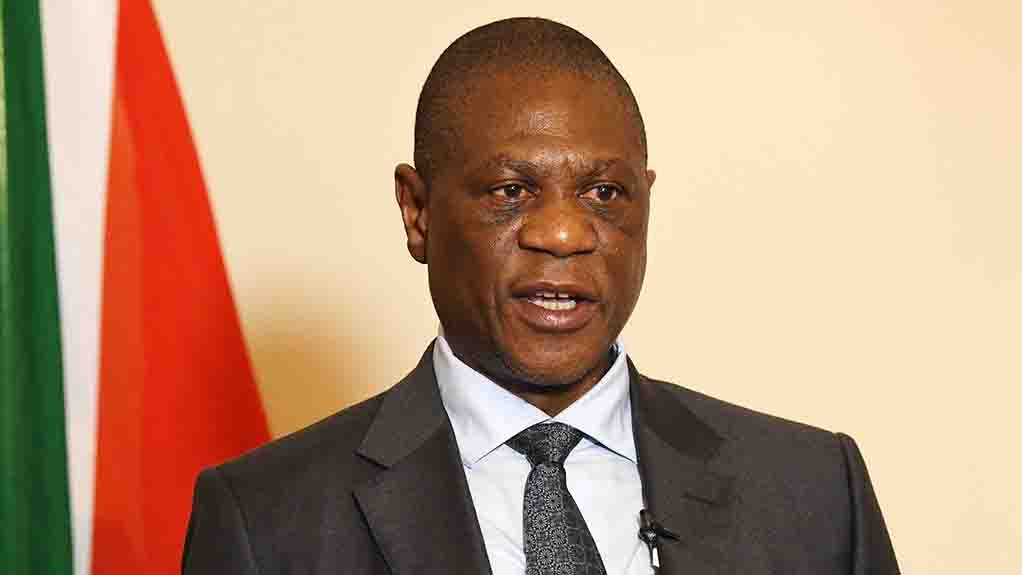
JOHANNESBURG – South African Deputy President Paul Mashatile stood before the Parliamentary Press Gallery this week with a message that blended urgency, reflection and hope. Fresh from South Africa’s successful G20 Presidency, he used the platform not only to highlight the state’s priorities but to speak directly to the heart of a nation weary of crisis yet unwilling to surrender its belief in a better future.
He reminded journalists that government and the media “are two threads of the same tapestry, woven differently, yet united in shaping a better future for our nation.” It set the tone for a speech that called for honesty, accountability and nation-building at a time when South Africans feel both anxious about the present and protective of their democratic gains.
“Every contribution counts” — Mashatile’s call for a shared national project
Mashatile said the G20 Leaders’ Summit had underscored a global push for “Solidarity, Equality and Sustainability,” but stressed that South Africa’s renewal must be driven from within. “Achieving this dream requires the contribution of every individual, regardless of the size of their efforts,” he said.
The Deputy President framed South Africa’s project of renewal as a generational mission. A prosperous future, he said, is not something citizens inherit, it is something they build.
Much of Mashatile’s address focused on the state’s work in land reform. He reported that 305,990 hectares of land had been redistributed in five years, including 127,525 hectares to women, 111,071 to youth, and 2,781 to persons with disabilities.
He described the progress as meaningful, but not sufficient.
“Land reform must integrate with agricultural support,” he said, explaining that blended finance solutions, grants and partnerships with the Land Bank and DBSA were being used to ensure that beneficiaries succeed in practice, not just on paper.
Project Kuyasa, a digitized land claims system, is intended to remove long-standing delays that have traumatized families and fuelled bitterness for decades.
cleaning cities, restoring dignity
Mashatile acknowledged that South Africans are tired of municipalities that cannot provide the most basic services. He positioned the District Development Model as a way to break siloed government and renew trust.
Through the Clean Cities and Towns Campaign, he said, the state was trying to “cultivate a sense of community pride and shared responsibility.” The initiative, launched in Kliptown, is aimed at restoring dignity in neighbourhoods where residents feel abandoned.
But he admitted the model will only work if municipalities function and if leaders are held accountable.
The most emotional and forceful section of Mashatile’s speech came when he spoke about the war on water criminality. He did not downplay the severity of the crisis.
“A troubling trend confronts us,” he warned. “Criminal syndicates, commonly known as the ‘water mafias’, deliberately sabotage water infrastructure… only to profit by selling water at inflated prices through tankers.”
He promised action:
- arrests and prosecutions
- accountability for failing municipalities
- publication of water schedules
- and mobilisation of communities as watchdogs
“We call on all citizens to report suspicious activities,” he urged. “Together, we can protect our water infrastructure and guarantee equitable access for all.”
It was a moment that revealed the scale of frustration across the country — and the expectation placed on the government to act decisively.
Youth unemployment
Mashatile painted a frank picture of the economy: unemployment remains unacceptably high, and the youth bear the brunt of it. Through the Human Resource Development Council, he said the government is expanding apprenticeships, learnerships, internships and entrepreneurship support.
The aim is clear: to give young people a genuine path into the labour market. “Upskilling the youth is vital,” he said. The Master Skills Plan focuses especially on young people who are not in employment, education or training, a group he described as “central to our economic future.”
READ MORE: Nzimande Warns of Rising Threats to Journalists as SA Opens Landmark Global Science Conference
Mashatile highlighted South Africa’s increasing trade engagements, from China to France to Türkiye, and ongoing diplomatic work in South Sudan.
His message was that South Africa is not isolated, it is positioning itself globally as an advocate for the needs of the Global South. Investment, he noted, is not an abstract promise; it is tied to jobs, infrastructure and new industries.
GNU Clearing House: preventing chaos, protecting stability
Turning to the Government of National Unity, the Deputy President offered rare insight into how disagreements between parties are being managed.
“The Clearing House is a recommending body, not a decision-making structure,” he said. When parties cannot find consensus, they “agree to disagree” and escalate matters to the Political Leaders’ Forum. This mechanism, he explained, is about transparency and preventing unilateral decisions that could fracture the GNU.
Mashatile closed with a deliberate appeal to the room: he called on the media to remain committed to truth, independence and accountability.
“It is critical that you maintain high standards of accuracy, independence, fairness and accountability by providing unbiased information and ensuring elected officials are held accountable,” he said.
He described the press not as an adversary but as “a vigilant companion, ensuring that every promise we make is guided by truth and every step we take is in service of the nation.”
Subscribe to Our Newsletter
Keep in touch with our news & offers
Thank you for subscribing to the newsletter.
Oops. Something went wrong. Please try again later.