NAIROBI: Kenya is pressing for stronger human oversight of artificial intelligence in warfare as it prepares to host a global summit on the responsible military use of the technology next year.
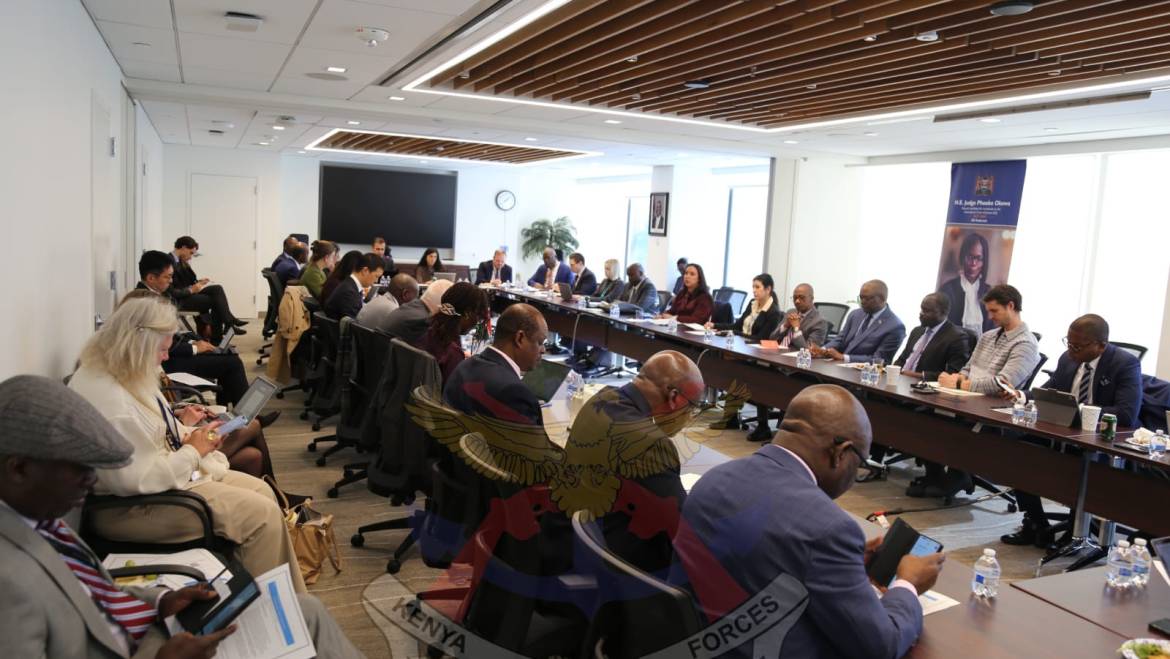
The country’s Permanent Mission to the United Nations recently convened a high-level discussion in New York with South Korea and the Netherlands, bringing together international stakeholders to examine the opportunities, risks and governance challenges of military AI.
Held on behalf of the Kenya Defence Forces (KDF), the meeting formed part of preparations for the Responsible Use of Artificial Intelligence in the Military Domain (REAIM) Summit, scheduled for Nairobi on 14 and 15 April 2027.
Kenya’s Ministry of Defence said technological advances must remain anchored in “human oversight, accountability and responsible decision-making”. It described the New York discussion as a “strategic precursor” to the summit.
A first for Africa
Kenya will become the first African country, and the first from the Global South, to host the REAIM summit. Previous editions took place in The Hague in 2023, Seoul in 2024 and A Coruña, Spain, in February 2026.
Ambassador Philip Thigo, Kenya’s Special Envoy on Technology, announced the country’s selection in Geneva in June on behalf of Defence Cabinet Secretary Soipan Tuya.
He said the Nairobi meeting would focus on putting responsible AI principles into practice through capacity building and institutional readiness.
“Kenya looks forward to welcoming the global community to Nairobi to shape the crucial frameworks,” Thigo said.
For Kenya, hosting the summit offers an opportunity to bring African priorities into a debate with implications for international security, military accountability and the protection of civilians.
Building an African contribution
Kenya has taken an increasingly active role in the REAIM process.
ALSO READ: What China’s New AI Alliance Means for South Africa and the Future of Artificial Intelligence
It co-hosted the Seoul summit in 2024 alongside South Korea, the Netherlands, Singapore and the United Kingdom. In June that year, it convened the first African regional REAIM workshop in Nairobi.
A second round of African consultations followed in August 2025, drawing representatives from 17 countries.
Domestically, Kenya has launched its National AI Strategy for 2025 to 2030. The KDF also identifies its Moran AI and Cyber Center of Excellence as part of efforts to develop expertise in the field.
These initiatives place capacity building at the centre of Kenya’s approach: countries need the technical knowledge and institutional systems to assess military AI, oversee its deployment and hold decision-makers accountable.
International agreement faces pressure
The Nairobi summit comes as support for the REAIM process’s outcome documents has weakened.
Around 60 countries endorsed the 2023 Call to Action, with a similar number backing the 2024 Blueprint for Action. The 2026 Pathways to Action document attracted markedly fewer endorsements.
According to an analysis by Singapore’s S. Rajaratnam School of International Studies (RSIS), neither the United States nor China endorsed a REAIM outcome document in 2026, the first time both had withheld support.
The A Coruña document contains 28 recommendations, including legal reviews of AI-enabled weapons, audit trails, risk assessments before deployment and training for military personnel. It also calls for capacity-building support for developing countries.
Its central principle is that AI decision-support systems should “assist, not replace, human judgment”. Ghana and Morocco were among the African countries that endorsed it.
ALSO READ: Africa Turns to Artificial Intelligence to Drive Its 50-Year Vision
The challenge for Nairobi will be to turn such principles into practices that governments and armed forces can implement, even where broader political agreement remains difficult.
Moving beyond declarations
The RSIS analysis describes REAIM as an initiative “led and sustained by middle powers” and argues that the Nairobi summit will test the Global South’s ability to shape international AI governance.
It recommends concentrating on practical cooperation rather than another declaration alone. Proposals include working groups to develop specific guidelines, a permanent platform for engagement with industry and expanded regional capacity building.
That approach would shift attention towards how military institutions review AI systems, train personnel, document decisions and establish responsibility when something goes wrong.
It would also give countries with fewer technical resources a stronger basis for participating in decisions about technologies that could affect their security.
Part of a wider debate on autonomous weapons
REAIM runs alongside United Nations discussions on lethal autonomous weapons systems, although its remit extends more broadly across military applications of AI.
In 2023, the UN General Assembly’s First Committee adopted its first resolution on autonomous weapons by 164 votes to five, with eight abstentions. Campaigners argued that it fell short because it did not call for negotiations on a binding treaty.
The parallel discussions reflect a central concern: how to preserve human responsibility as military systems become increasingly capable of processing information and supporting decisions.
Kenya’s Ministry of Defence said it would continue advocating for AI that strengthens military effectiveness without compromising accountability or international peace and security.
For the Nairobi summit, the measure of progress will be whether participating countries can agree on practical safeguards and build the capacity to apply them.