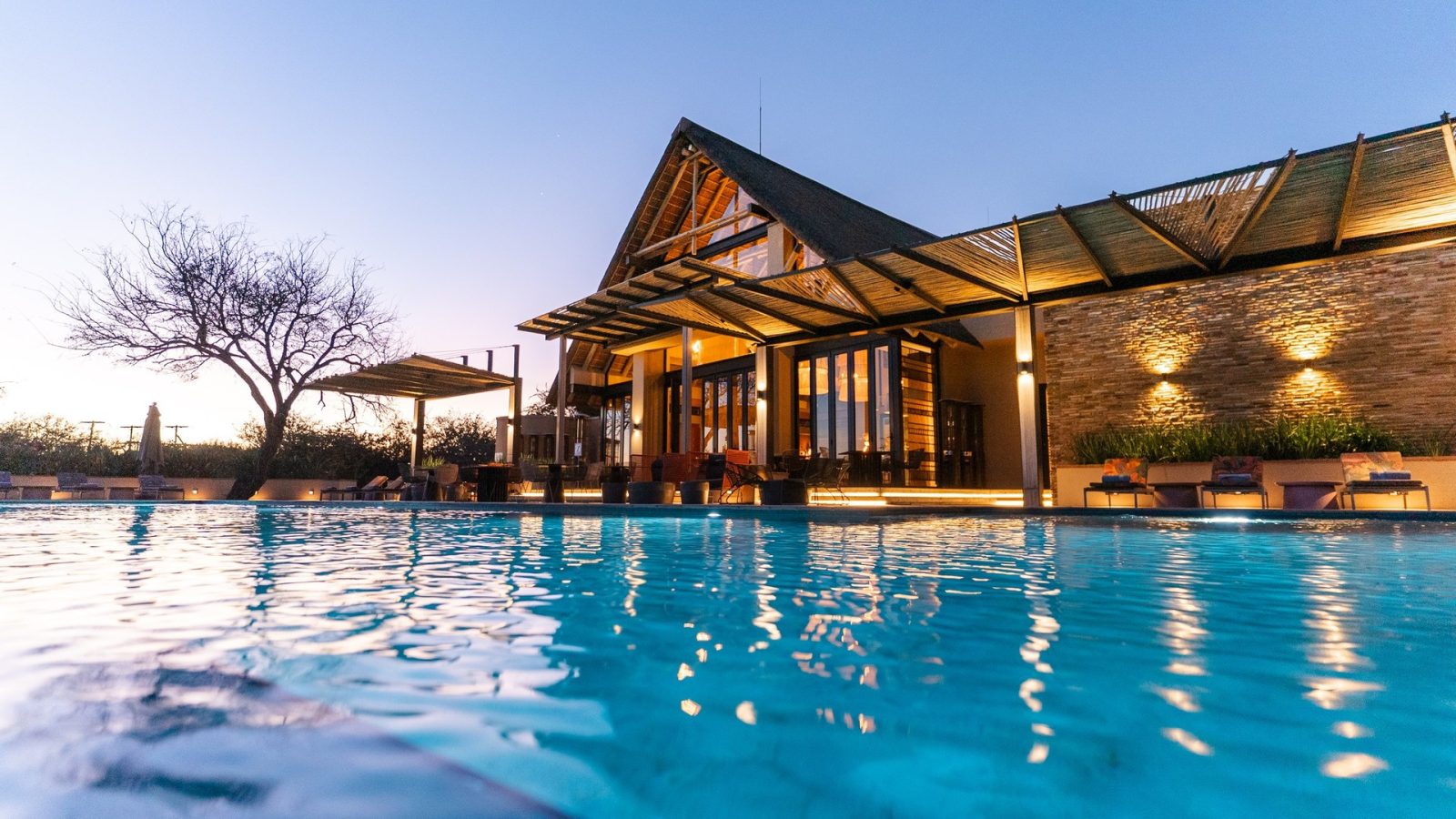
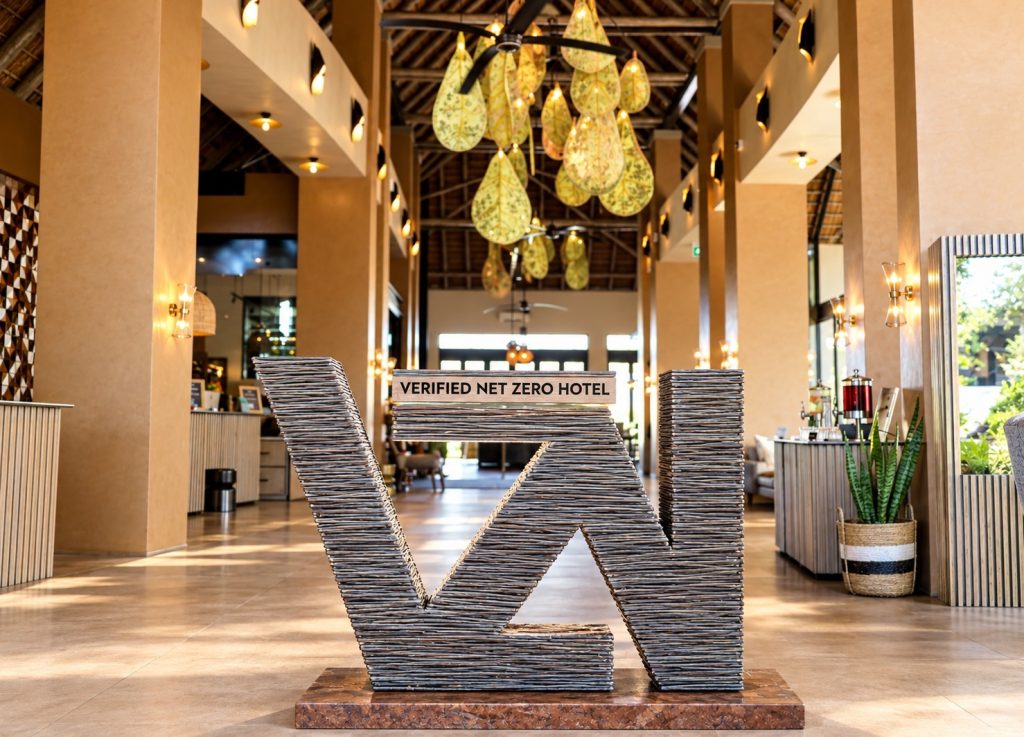
HOEDSPRUIT: A safari hotel near Kruger National Park has become the first in Africa to receive Radisson Hotel Group’s Verified Net Zero label, following a programme that examines emissions from its energy use, operations and supply chain.
Radisson Safari Hotel Hoedspruit, which opened in February 2024, is also the first property outside Europe and the first safari hotel to qualify under the programme, according to the group.
The 138-room hotel is about two kilometres outside Hoedspruit in Limpopo, between Kruger National Park and the Blyde River Canyon. Its setting, surrounded by some of South Africa’s best-known natural attractions, makes the achievement particularly meaningful, Radisson says.
The programme was introduced in May 2025 at two city hotels in Manchester and Oslo before being extended across the group’s UK and Nordic properties. German testing and certification company TÜV Rheinland independently checks participating hotels against the programme’s requirements.
Tim Cordon, Radisson Hotel Group’s chief operating officer for the Middle East, Africa and South East Asia Pacific, said the natural environment was central to the Hoedspruit property’s appeal.
“At Hoedspruit, the natural surroundings are a defining part of why guests visit, making this a particularly meaningful place to introduce the program,” he said.
Cordon said investments in renewable electricity, electrification and changes to daily operations showed how a hotel could reduce its environmental impact while maintaining its guest experience.
“It also gives our owners and teams across Africa a practical example of how existing hotels can contribute to the transition toward net zero.”
What the label means
Radisson’s programme assesses emissions using three categories under the Greenhouse Gas Protocol.
Scope 1 covers direct emissions from sources controlled by a hotel, such as fuel burned on site. Scope 2 covers emissions associated with purchased electricity, while Scope 3 includes emissions across the wider value chain, including those linked to purchased food and other supplies.
Under the group’s rules, Scope 1 and 2 emissions must be substantially reduced, while Scope 3 emissions must also be cut. Remaining emissions are addressed through carbon credits.
At Hoedspruit, the hotel generates some of its electricity through rooftop solar panels. It uses renewable energy certificates, known as guarantees of origin, to cover the balance of its electricity consumption.
The certificates represent renewable electricity generated elsewhere. They do not mean that all the power physically supplied to the hotel comes directly from renewable sources.
From 2027, the hotel plans to use a solar wheeling agreement. Under this arrangement, electricity produced by a solar supplier is fed into the grid and credited against the hotel’s consumption.
ALSO READ: Emirates dangles free Dubai attractions as tourism bounces back
Moving away from gas and diesel
The hotel has made several changes to reduce its direct use of fossil fuels. Its kitchen relies mainly on electric equipment, heat pumps provide hot water for guest rooms, and electric golf carts and three-wheel utility vehicles are used to move staff and supplies around the property.
The hotel also says it treats and reuses its wastewater through an on-site treatment plant.
Other measures focus on waste and resource use. Shodulla Recycling collects plastic, glass and paper, while Egg Brothers processes food waste for composting and worm farms. Bathroom products are supplied in bulk containers that are returned for refilling and recycling, and drinking water is served in glass bottles.
Guests can choose to reuse towels and reduce the frequency of room cleaning. The hotel also plans to replace printed room information with its STAY digital concierge app.
Putting the carbon cost on the menu
Guests will see some of the changes in the hotel’s restaurants.
Working with Swedish food sustainability platform Klimato, the hotel is introducing menus that display the estimated carbon footprint of each dish. Lower-carbon choices will also receive greater prominence on menus and buffets.
When Radisson introduced the programme in Europe, the group said Klimato’s data could help reduce the carbon footprint of individual recipes by up to 40%.
Suppliers are also involved. Through Zanetti Collection, used Hausbrandt coffee bags are turned into reusable shopping bags by a local community sewing project. The hotel says its coffee capsules are compostable, while its tea packaging is recyclable and its tea bags compostable.
Inge Huijbrechts, Radisson Hotel Group’s chief sustainability and security officer, said the programme was designed to examine more than a hotel’s electricity supply.
“Verified Net Zero requires us to look beyond a hotel’s energy supply and address the wider footprint of its operations,” she said.
“Independent verification by TÜV Rheinland provides a consistent framework and gives guests, owners and corporate customers greater confidence in the hotel’s credentials. Bringing the program to Africa is an exciting proof that Verified Net Zero can work everywhere.”
Carbon credits support grassland restoration
The hotel says its remaining emissions are covered by carbon credits purchased through trader Greentrade from the Grassland Restoration and Stewardship in South Africa project, known as GRASS.
The project is run by TASC Africa with Meat Naturally Africa and works with about 10,000 communal livestock farmers in roughly 180 communities in the Eastern Cape and KwaZulu-Natal.
ALSO READ: Museveni puts wealth creation at centre of Marriott’s Uganda debut
It supports the restoration of degraded rangeland through planned grazing, improved herd management and fire control. The project has issued about 266,000 verified carbon credits under an updated grassland method used by international carbon standard Verra, and has received its Climate, Community and Biodiversity label.
In August, the project reported its first payout of R2.7 million to 15 communities. Grazing associations decide how the money is spent, with stated priorities including paying herders, managing fires and maintaining livestock health.
Other tourism businesses have also bought credits from the project. Earlier this year, luxury safari operator Singita retired almost 17,000 GRASS credits to address emissions associated with guest stays.
Singita sustainability coordinator Dr Andrea Ferry said rangeland damage was “starkly evident on the borders of our concessions”, making support for surrounding land and communities “a strategic imperative”.
From green claims to measured impact
The hotel’s announcement comes as tourism businesses face growing pressure to demonstrate the environmental impact of their operations.
In a South African pilot programme this year, 25 tourism properties began measuring and reducing their emissions. ETC Africa director Duncan Pritchard said in June that properties taking part had cut emissions by more than 20%.
He attributed the reductions to “the simple discipline of paying attention”, rather than sweeping operational changes.
Pritchard also argued that travel can help build support for conservation by connecting people with wildlife and natural spaces.
“The greatest environmental challenge isn’t travel, it’s disconnection,” he said.
Radisson has not published the Hoedspruit hotel’s emissions figures, the size of the reductions achieved or the number of carbon credits purchased. Its current approach also relies in part on renewable energy certificates for power generated elsewhere and carbon credits to address remaining emissions.
Those details matter when assessing the hotel’s progress over time, alongside the changes made directly to its operations.
Bigger plans for South Africa
Radisson wants to have 100 Verified Net Zero hotels by 2030 and reach net zero across the group by 2050. It has also said it plans to double its South African portfolio to 25 hotels by 2030, potentially creating opportunities to apply lessons from Hoedspruit at other properties.
The safari hotel is about 20 minutes by car from Hoedspruit Eastgate Airport and overlooks the northern Drakensberg escarpment. It has two restaurants, Pegasus and Mirage, a spa, two swimming pools and suites with private plunge pools.
Its five meeting venues include a banquet hall that can accommodate up to 200 guests.