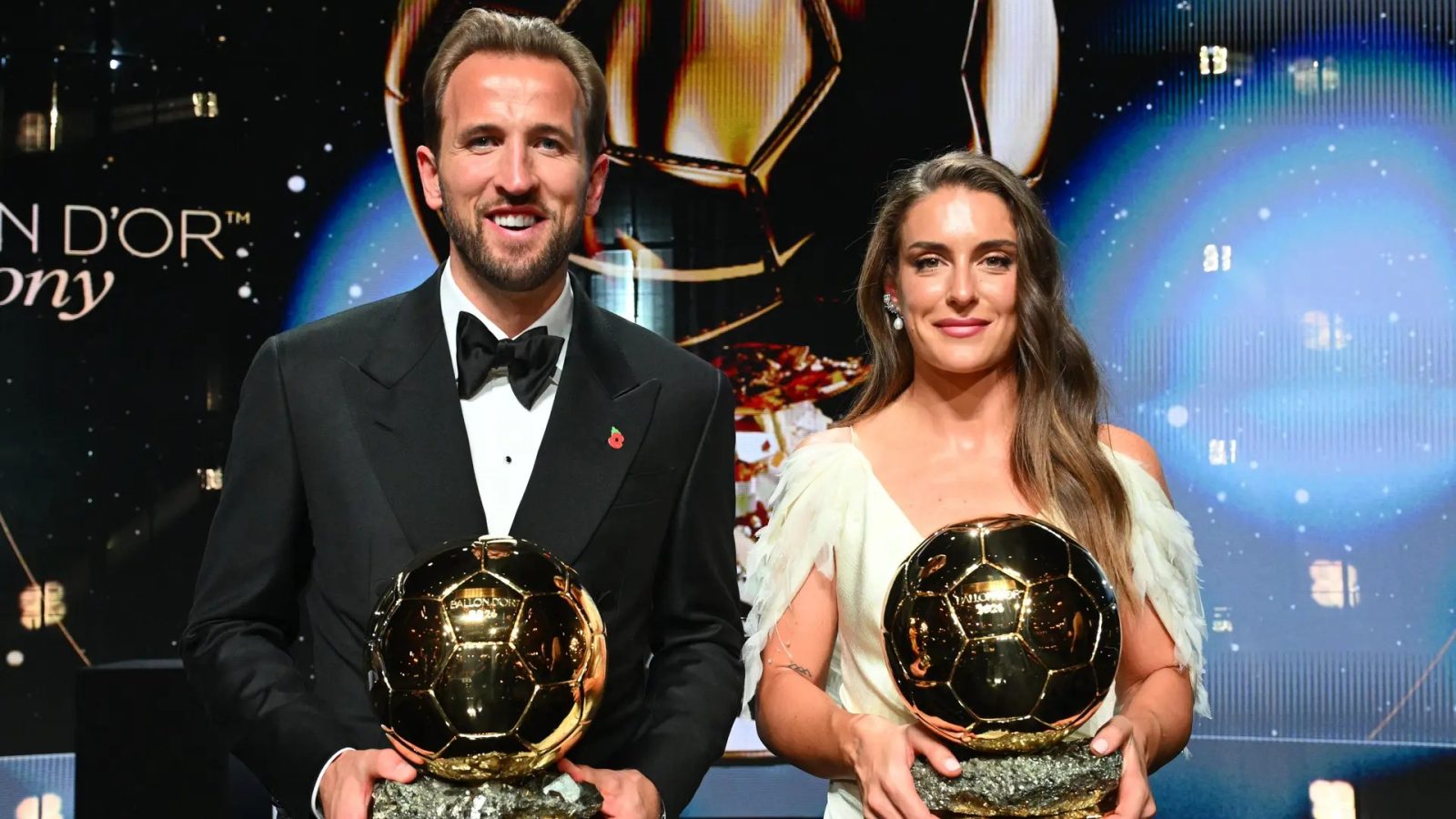
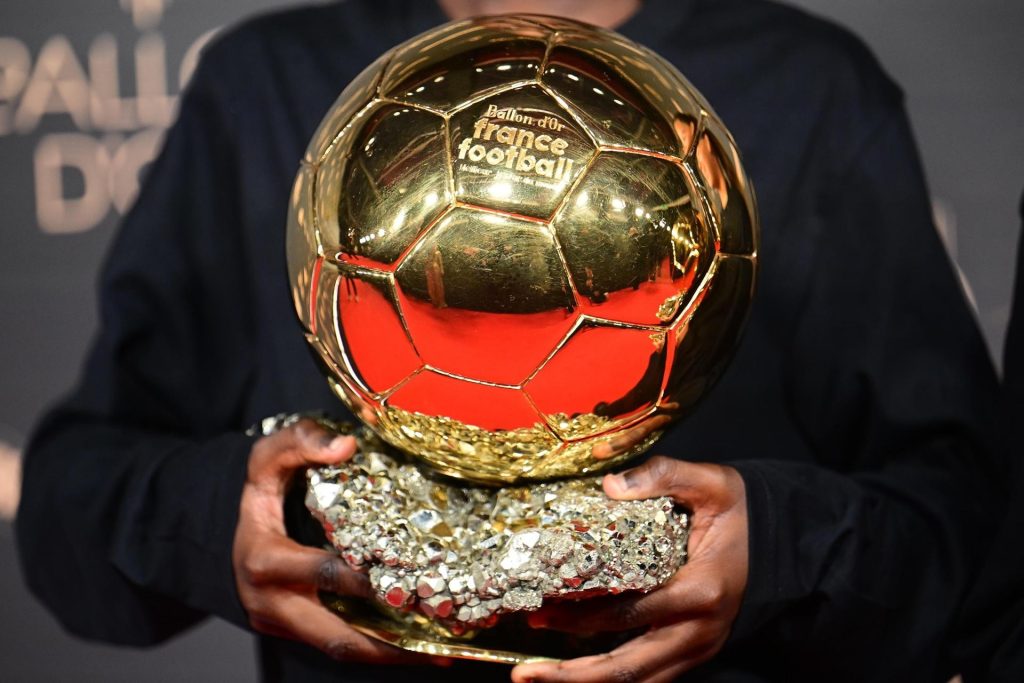
JOHANNESBURG: Harry Kane may have claimed football’s most prestigious individual award in London on Monday night, but for African football, the 2026 Ballon d’Or ceremony told a different story, one of declining representation among the established stars and growing promise from a new generation.
Morocco’s Achraf Hakimi finished 13th, Senegal’s Sadio Mané shared 29th place, and several of the continent’s biggest names failed to make the men’s 30-player shortlist altogether.
Yet beyond those disappointing rankings, African football found reasons for optimism.
Three young African internationals featured among the nominees for the Kopa Trophy, while Malawi’s Temwa Chawinga and Zambia’s Barbra Banda earned places among the world’s leading female footballers.
The contrasting results highlighted a familiar challenge for the continent: producing exceptional talent has never been the problem. Turning that talent into sustained recognition at the very highest level of world football remains considerably harder.
Kane claims football’s biggest individual prize
England captain Harry Kane was crowned the 2026 Ballon d’Or winner at the London Palladium, becoming the first Englishman to lift the award since Michael Owen in 2001.
The 33-year-old finished ahead of France’s Kylian Mbappé and Spain’s Lamine Yamal following an outstanding campaign for Bayern Munich and England.
Kane scored 73 goals for club and country during a season that included the Bundesliga title and England’s run to the 2026 FIFA World Cup semi-finals.
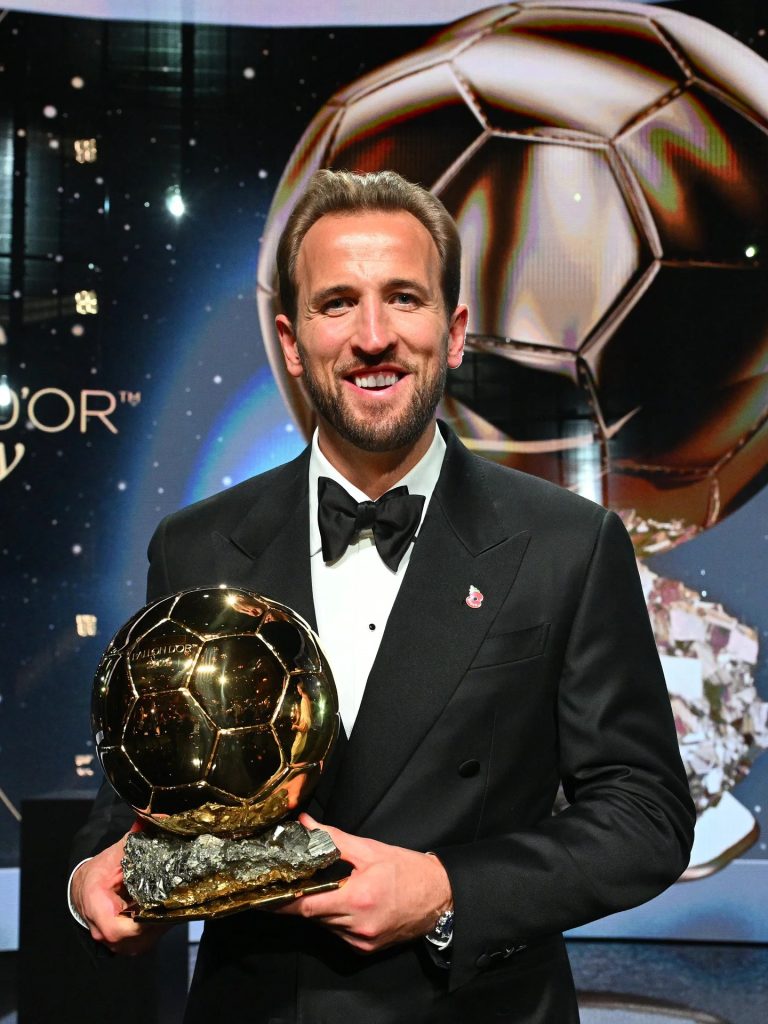
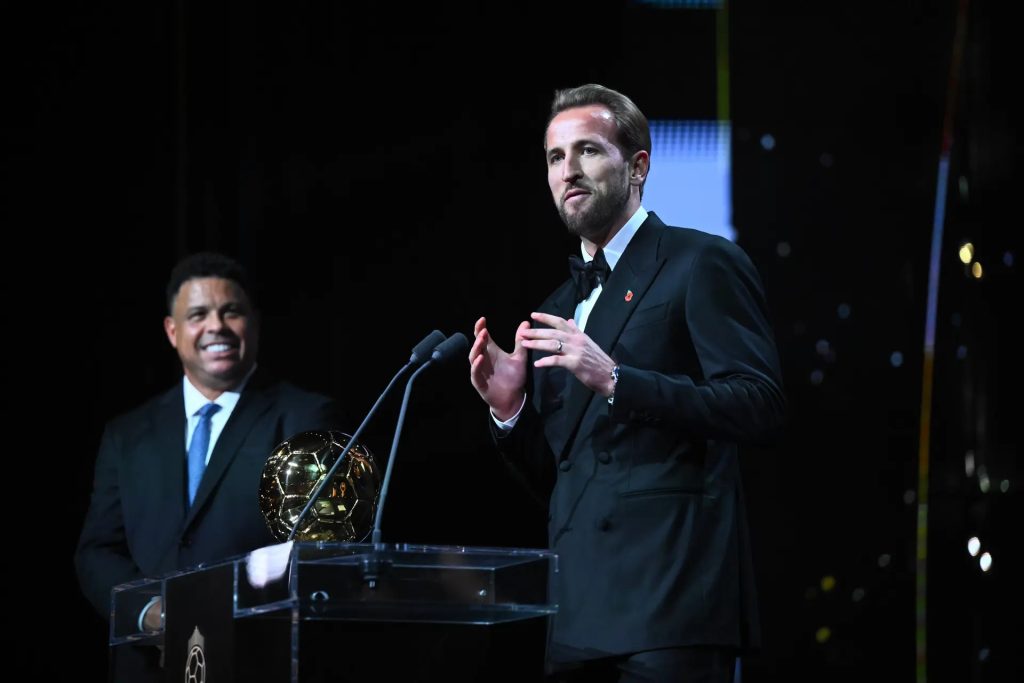
“Thank you to everyone who voted for me, I can imagine it was tough,” Kane said as he accepted the award.
In the women’s category, Barcelona midfielder Alexia Putellas claimed the Ballon d’Or for a third time after helping the Spanish club complete a remarkable quadruple.
For African football, however, the most revealing results came further down the rankings.
Hakimi remains Africa’s leading man despite slipping to 13th
Achraf Hakimi entered the awards conversation with another impressive season behind him, but the Moroccan defender finished 13th, seven places below his sixth-place finish in 2025.
That previous result remains the highest Ballon d’Or placing achieved by a Moroccan footballer.
On paper, Hakimi had another strong case for recognition.
The Paris Saint-Germain defender helped his club secure a second consecutive UEFA Champions League title, defeating Arsenal on penalties in Budapest in May.
PSG also won Ligue 1 and the UEFA Super Cup, adding to a season in which Hakimi contributed consistently in attack and defence.
According to French newspaper L’Équipe, he recorded four goals and 17 assists in 49 appearances during the voting period.
His influence extended to the international stage, where he captained Morocco to the World Cup quarter-finals before the Atlas Lions were eliminated 2-0 by France.
He also reached the milestone of 100 international appearances during the tournament.
Despite those achievements, Hakimi finished behind several of his PSG teammates.
Khvicha Kvaratskhelia placed sixth, Ousmane Dembélé seventh and Fabián Ruiz 10th.
With 10 PSG players included in the shortlist, the French champions’ strong representation also illustrated the intense competition for individual recognition within Europe’s most successful squads.
Hakimi nevertheless achieved a notable distinction.
He was the second-highest-ranked defender, behind Barcelona’s Pau Cubarsí.
According to French statistics service Stats Foot, Hakimi became the first African defender to finish inside the Ballon d’Or top 15 in two separate years.
His ranking may have fallen, but his continued presence among the world’s leading players reinforces his position as one of Africa’s most accomplished footballers.
Mané’s decline reflects a changing era
For Sadio Mané, the 2026 rankings marked a much sharper decline.
The Senegalese forward finished joint 29th alongside Arsenal defender William Saliba, his lowest position across five appearances in the Ballon d’Or top 30.
It was a considerable fall for a player who finished runner-up to Karim Benzema in 2022, the closest an African footballer had come to winning the award since George Weah’s historic triumph in 1995.
Mané spent the season with Saudi Arabian club Al-Nassr, away from the UEFA Champions League stage that has traditionally provided leading Ballon d’Or contenders with global visibility.
Senegal’s World Cup campaign also failed to provide the momentum he needed.
The Teranga Lions lost their opening two matches against France and Norway, limiting their opportunity to make an impression at the tournament.
Mané’s ranking reflects a broader challenge facing African players who move away from Europe’s leading competitions.
Although the Saudi Pro League has attracted established international stars, performances outside Europe’s major club tournaments can struggle to command the same attention from Ballon d’Or voters.
For Mané, once among the world’s most celebrated forwards, the latest result also illustrates how quickly football’s individual honours can shift towards younger players and emerging stars.
Salah and Nigeria among the biggest absentees
The absence of Egypt’s Mohamed Salah was another striking feature of the men’s shortlist.
ALSO READ: Opinion | More than a trophy: Africa’s moment to champion women’s football
Salah finished fourth in 2025, establishing himself among the leading African contenders for the award.
But after a less productive final season at Liverpool, the Egyptian forward failed to secure a nomination.
He scored 12 goals in 41 appearances, compared with 34 goals in 52 matches during the previous campaign.
Although Egypt recorded its first World Cup victory and progressed to the round of 16, those achievements were not enough to return Salah to the Ballon d’Or conversation.
Nigeria’s absence was equally notable.
For the first time since 2023, the country had no representative in either the men’s or women’s Ballon d’Or shortlists.
Victor Osimhen had finished eighth in 2023, while Ademola Lookman placed 14th the following year.
Nigeria’s failure to qualify for the 2026 World Cup also deprived its leading players of one of football’s biggest international stages.
As Nigerian publication Premium Times observed, missing the tournament reduced the opportunities for the country’s stars to strengthen their cases for global recognition.
The absence of players from two of Africa’s traditional football powerhouses underlined how quickly the continent’s representation can fluctuate.
African goalkeepers earn recognition
Africa enjoyed broader representation in the Yashin Trophy, awarded to the world’s leading goalkeeper.
Three African goalkeepers appeared on the 10-player shortlist, although Spain’s Unai Simón ultimately claimed the award.
Morocco’s Yassine Bounou finished eighth, while Senegal’s Édouard Mendy also earned a nomination.
Perhaps the most unexpected inclusion was Cape Verde’s 40-year-old goalkeeper Vozinha.
His nomination followed an impressive World Cup campaign in which Cape Verde held Spain and Uruguay to draws before pushing defending champions Argentina into extra time in the round of 32.
For a country with a relatively small footballing population, Vozinha’s recognition represented an important achievement.
It also demonstrated that outstanding performances on the international stage can bring global recognition to players outside football’s traditional powerhouses.
A new generation offers Africa hope
While Africa’s established stars struggled to make an impact in the senior men’s rankings, the Kopa Trophy shortlist provided a more encouraging picture.
Three African internationals were among the 10 nominees for the award recognising the world’s best player aged under 21.
Morocco’s Ayyoub Bouaddi, 18, finished sixth after a breakthrough period that included a move from Lille to Manchester City.
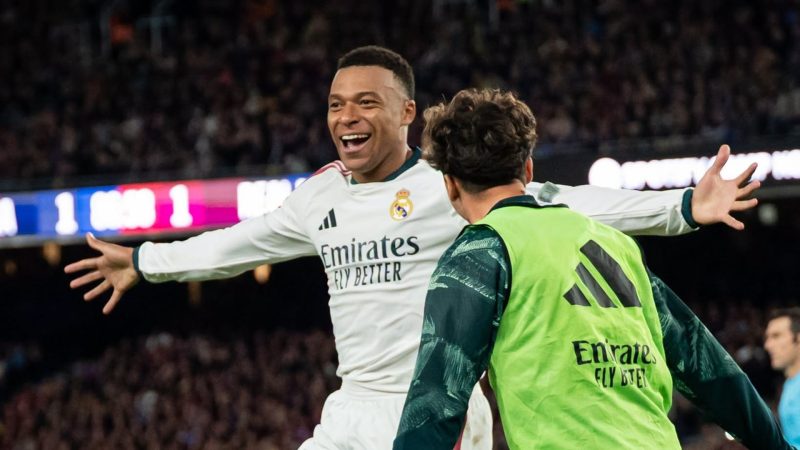
Ivory Coast winger Yan Diomandé, 19, who joined Real Madrid, also featured on the shortlist, alongside Algerian forward Ibrahim Maza.
Spain’s Lamine Yamal ultimately claimed the Kopa Trophy for a third consecutive year.
Nevertheless, the presence of three African youngsters among the world’s leading emerging players offered evidence of the continent’s continuing ability to produce exceptional talent.
Bouaddi and Diomandé’s presence at two of Europe’s biggest clubs is particularly significant.
Their development will be closely watched as African football looks for the next generation capable of challenging for the sport’s highest individual honours.
For years, African supporters have watched players such as Didier Drogba, Samuel Eto’o, Salah and Mané excel at the highest level without matching Weah’s Ballon d’Or triumph.
The question now is whether the emerging generation can eventually go further.
Chawinga and Banda keep African women’s football in the spotlight
African women’s football also had reasons to celebrate.
Malawi’s Temwa Chawinga finished 10th in the women’s Ballon d’Or rankings, while Zambia’s Barbra Banda placed 18th.
Both compete in the United States’ National Women’s Soccer League, where their performances have helped establish them among the game’s most recognised attacking players.
Chawinga’s top-10 finish followed a remarkable year for Malawi.
Competing at their first Women’s Africa Cup of Nations, Malawi reached the final with Chawinga and her sister Tabitha playing central roles in the team’s attack.
Their historic campaign ended in a 3-0 defeat to Cameroon, who secured their first continental title.
For Malawi, reaching the final was itself a major achievement.
Chawinga’s recognition on the global stage demonstrated how players from countries with limited football resources can compete with the world’s best when given access to strong professional environments.
ALSO READ: South Africa’s first blind soccer league kicks off in Joburg
Banda’s inclusion further highlighted the growing influence of African players in women’s football.
However, their achievements also raise questions about the development of domestic women’s leagues across the continent.
Many of Africa’s leading female footballers still depend on opportunities abroad to access the professional structures, financial support and competitive environments needed to reach their full potential.
Strengthening domestic leagues and youth development pathways will be essential if Africa hopes to translate individual success into sustained continental progress.
Why Africa continues to struggle for the Ballon d’Or
More than three decades after George Weah became the first African to win the Ballon d’Or in 1995, the continent is still searching for another winner.
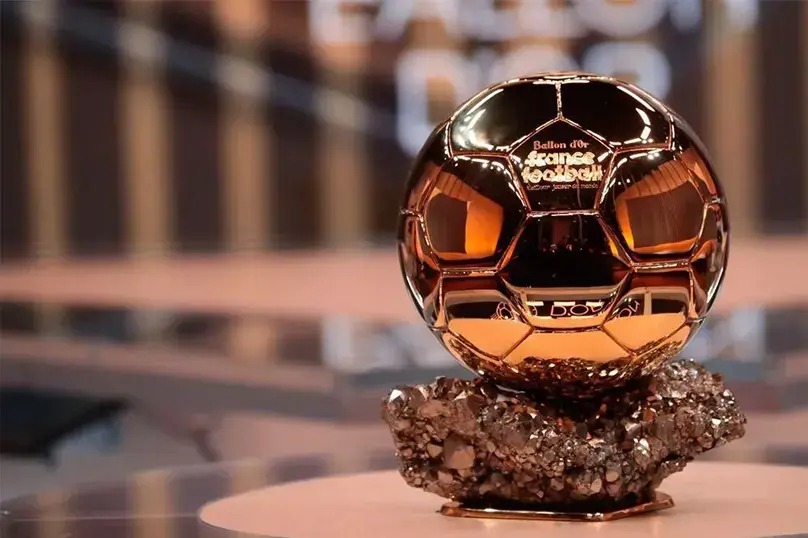
Several factors help explain the difficulty.
The first is the influence of Europe’s leading clubs.
Although Ballon d’Or voting criteria prioritise individual performances, collective achievements also carry significant weight.
Players who compete for clubs regularly challenging for the Champions League benefit from high-profile matches, major trophies and sustained international exposure.
African players at these clubs often excel in defensive or supporting roles that attract less individual recognition than prolific goalscorers and attacking stars.
The second challenge is visibility.
Players who move to competitions outside Europe’s leading leagues may continue performing at a high level but receive less attention in the Ballon d’Or conversation.
Mané’s decline since leaving European football illustrates that challenge, although his age, performances and international results must also be considered.
The third factor is the importance of major international tournaments.
The 2026 World Cup provided African football with its strongest collective showing, as nine of the continent’s 10 representatives reached the knockout rounds.
Yet Morocco was the only African nation to advance to the quarter-finals.
Without a player producing a defining run deep into the tournament, Africa struggled to generate the individual momentum that often influences major awards.
Senegal goalkeeper Édouard Mendy acknowledged the disappointment following his country’s elimination.
“Elimination was a failure. We had the quality to go further. We didn’t,” he said.
AFCON controversy adds another complication
African football’s biggest continental competition has also been overshadowed by an unresolved dispute.
Senegal defeated Morocco 1-0 after extra time in the Africa Cup of Nations final in Rabat in January.
However, the Confederation of African Football’s Appeal Board subsequently ruled in March that Senegal had forfeited the match after players walked off the pitch during a dispute over a penalty.
The ruling awarded the title to Morocco.
Senegal challenged the decision at the Court of Arbitration for Sport, which heard the case in October and is expected to deliver its ruling at the end of November.
The prolonged dispute has left the status of Africa’s premier international football title unresolved.
It has also complicated assessments of individual achievements from the tournament during a year in which continental performances could have strengthened African players’ Ballon d’Or credentials.
CAF Awards offer Africa another stage
Attention now turns to the CAF Awards on 7 December, when the continent will recognise its leading footballers.
Hakimi, who won the African Player of the Year award in 2025, will again be among the prominent names in discussions surrounding the honour.
With established stars such as Salah and Mané experiencing contrasting fortunes, the awards will also provide an opportunity to assess the emergence of younger African talent.
The longer-term challenge is more significant.
Africa continues to produce players capable of competing for the world’s biggest clubs, excelling at international tournaments and earning recognition among football’s elite.
But the continent has yet to consistently translate that talent into Ballon d’Or podium finishes.
The 2026 rankings exposed the distance between Africa’s current generation and football’s highest individual prize.
They also revealed something encouraging.
From Hakimi’s continued excellence to Chawinga’s breakthrough and the emergence of Bouaddi, Diomandé and Maza, the continent’s talent pipeline remains strong.
Africa’s challenge is no longer simply to produce world-class footballers. It is to create the conditions in which more of them can become genuine contenders for football’s biggest individual honour.