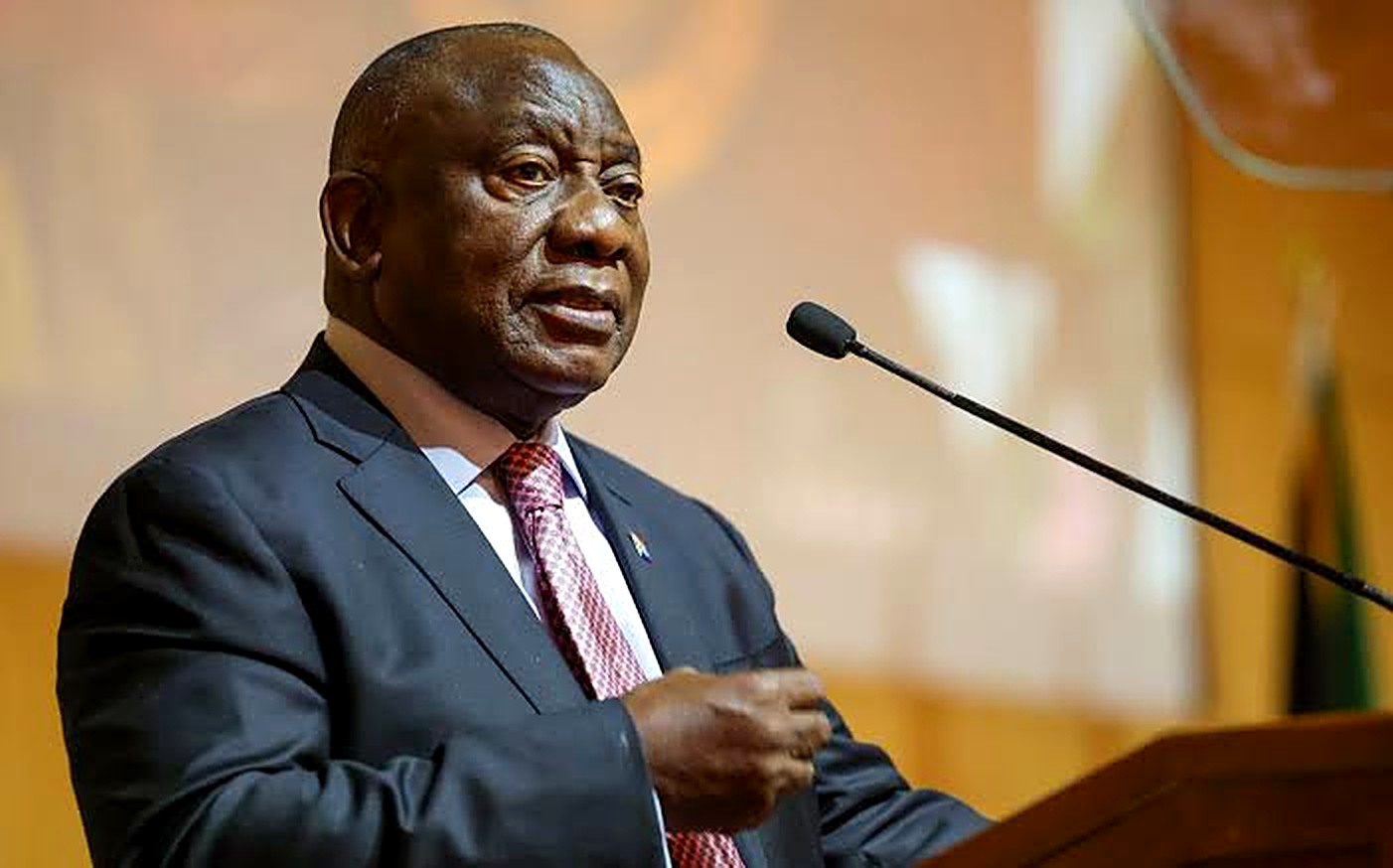
PRETORIA: President Cyril Ramaphosa has urged South Africans to vote in Wednesday’s local government elections, saying communities have an opportunity to restore trust in failing municipalities by choosing councillors capable of delivering services.
Writing in his weekly newsletter on Monday, Ramaphosa said the 4 November poll would take place as government prepares an overhaul of the municipal system, aimed at improving accountability, protecting infrastructure funding and strengthening professional standards.
“Municipal failures have contributed to declining public trust and confidence in democratic governance. This election is an opportunity to turn this around and to build local government as an instrument for development,” he wrote.
His appeal comes amid persistent service failures, strained municipal finances and concerns about political violence ahead of voting.
A contest involving nearly 137,000 candidates
Ramaphosa described the election as one of the largest electoral contests in South Africa’s democratic history, with 546 political parties and nearly 137,000 candidates participating.
About 29 million South Africans are registered to vote. The voters’ roll passed that mark after the second registration weekend in August, according to Eyewitness News.
The elections cover eight metropolitan, 44 district and 205 local municipalities.
Ramaphosa said the participation of women and the growing number of independent candidates reflected a maturing democracy, even as political freedoms faced pressure elsewhere.
“We can be proud that every election since 1994 has been free and fair and that public trust in the Independent Electoral Commission (IEC) remains high,” he wrote.
The vote will also test parties serving in the Government of National Unity. In the 2021 municipal elections, the ANC received 45.59% of the vote, down from 64.82% in 2011 and its lowest share in a nationwide election since 1994 at that point.
Police identify high-risk voting stations
Ramaphosa called for an election free of intimidation and violence, saying the South African Police Service had completed risk assessments, operational planning and simulation exercises.
National Police Commissioner General Fannie Masemola said on Friday that 331 voting stations had been classified as high-risk, SAnews reported.
KwaZulu-Natal accounted for 165 of those stations, including 124 in eThekwini. Gauteng had 119 and the Western Cape 33.
ALSO READ: Unstable coalitions threaten service delivery as local elections near
“We are confident in our state of preparedness. We have left no stone unturned in preparing for these elections,” Masemola said.
The campaign has unfolded against concerns about politically motivated killings. In August, Cabinet condemned what it described as an escalating wave of political murders. The National Joint Operational and Intelligence Structure also warned that those responsible would face the full force of the law.
Ramaphosa linked the violence to competition for power and access to municipal resources. He said these struggles had contributed to disrupted council meetings and the killings of ward candidates, councillors and municipal officials.
Councils face sweeping reforms
The next group of councillors will take office as government pursues what Ramaphosa described as “a bold reset of the entire local government system”.
He launched the Revised White Paper on Local Government in Ekurhuleni on 22 October, setting out a new policy direction to replace the framework adopted in 1998.
Among the proposals is the ring-fencing of revenue from water and electricity sales for investment in and maintenance of the infrastructure supporting those services.
Water and electricity providers would also need licences demonstrating that they meet minimum standards.
Where a municipality cannot perform a function, the policy envisages transferring responsibility to another sphere of government or an alternative entity. It also calls for appointments based on qualifications and competence.
“We cannot build our way out of failure if we do not maintain what we have already built,” Ramaphosa said at the launch, according to SAnews.
The same report put municipal debt to Eskom at more than R120 billion.
The changes will not take effect all at once. Some require legislation and potentially constitutional amendments. Cabinet has endorsed a phased implementation process overseen by a transition management body.
Corruption and councillors who are ‘bought’
Ramaphosa also acknowledged how corruption and patronage had weakened municipalities and diverted attention from residents’ needs.
ALSO READ: The kingmakers’ elections: What the world should watch on 4 November
“We have seen corrupt local government officials scheme with businesspeople to obtain tenders for services that are sub-standard or not delivered at all,” he wrote.
He said some councillors were “bought” by businesspeople, placing procurement interests ahead of the communities they were elected to serve.
His comments come against a bleak assessment of municipal governance by the Auditor-General.
Only 39 of South Africa’s 257 municipalities received clean audits for 2024/25, Auditor-General Tsakani Maluleke reported in June.
Municipalities had “made limited progress to strengthen governance and improve service delivery”, she said, according to Eyewitness News.
Reforms must deliver results
Parliament’s Portfolio Committee on Cooperative Governance and Traditional Affairs has welcomed the revised policy while stressing that its value will depend on implementation.
Committee chair Dr Zweli Mkhize said MPs would “scrutinise whether these reforms improve municipal performance”.
“The measure of success must be functioning infrastructure, reliable basic services,” he said in a Parliamentary statement.
The reform programme has also renewed scrutiny of the ANC’s role in municipal decline.
In Parliament in August, DA parliamentary leader George Michalakis challenged Ramaphosa over failures in ANC-run councils, including water losses and sewage spills in eThekwini.
“Why did you allow your party, the ANC, to govern municipalities in such a way [that] we got this in the first place?” he asked, according to AllAfrica.
Ramaphosa said government was acting against corrupt practices, while urging voters to examine the people seeking their support.
“However we vote on Wednesday, let us strive for better, safer, cleaner and more prosperous communities,” he wrote.