
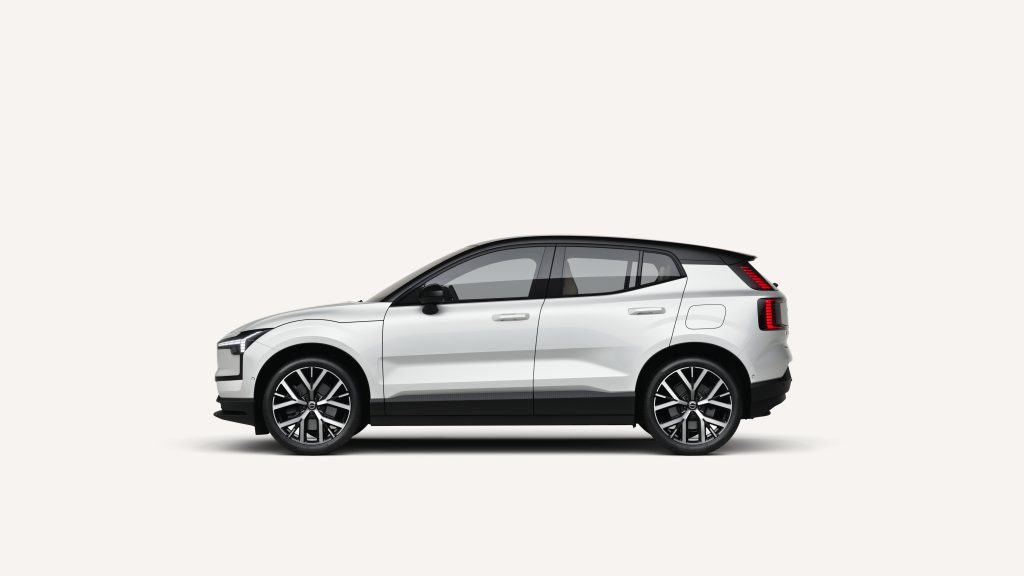
PRETORIA: Volvo Car South Africa is recalling 738 EX30 and EX30 Cross Country vehicles over a potential safety defect involving the reinforcement of the front seat head cushions.
The National Consumer Commission (NCC) announced the recall on Wednesday, saying it affects certain 2024 to 2027 model-year vehicles sold nationally.
According to the supplier, the front seat head cushion reinforcement may have a defect that could pose an injury risk under specific conditions during a collision of sufficient severity.
Volvo has advised affected owners to contact their preferred dealership to arrange an appointment for the recall work.
The latest notice comes amid a growing number of vehicle safety recalls in South Africa. It is also the second recall involving the Volvo EX30 announced locally this year, although the two campaigns concern different potential safety problems.
A second EX30 recall this year
In January, Volvo Car South Africa recalled 372 EX30 vehicles over a potential problem with the high-voltage battery.
That recall followed concerns that the battery could overheat and potentially catch fire when charged to a high level.
The November recall concerns a different component: the reinforcement of the front seat head cushion.
The two notices do not necessarily mean that the same vehicles are affected. Owners should check their vehicle identification number (VIN) with Volvo to establish whether their vehicle falls within the scope of either campaign.
The distinction matters because a vehicle may be affected by more than one recall, while another vehicle of the same model and year may not be included at all.
More than 50 vehicle recall instances recorded this year

The Volvo announcement is part of a much wider pattern of safety recalls affecting vehicles already on South African roads.
By June, the NCC had issued 17 vehicle recall notices covering 39,164 individual vehicles, according to a review by automotive publication TopAuto.
ALSO READ: 23 667 Chery vehicles recalled as regulator investigates earlier safety notifications
The recalls involved several major manufacturers and a range of faults, from braking and steering-related concerns to battery defects, software problems and components that could affect occupant protection.
By October, an Eyewitness News investigation reported that more than 50 vehicle recall instances had been recorded in South Africa during the year.
The figures are not directly comparable because they cover different periods and use different descriptions of recall activity. However, they illustrate the scale of the issue facing motorists and the importance of paying attention to safety notices.
Some of the larger campaigns have affected thousands of vehicles. Volkswagen, for example, recalled 25,729 Polo Vivo models in March over a handbrake fault that could prevent the parking brake from engaging properly or cause it to disengage unexpectedly.
Toyota and Lexus have also issued recalls involving thousands of vehicles, including a campaign affecting more than 6,500 vehicles over a software issue involving the parking-assist system.
Other recalls have involved Ford, Hyundai, Jeep, BMW, Mercedes-Benz and Jaguar Land Rover models.
The faults differ, and a recall does not automatically mean that a manufacturer or model is generally unsafe. Rather, it means that a specific defect or potential safety concern has been identified and requires corrective action.
Why recalls matter to motorists
Vehicle recalls are not simply administrative notices. Depending on the defect, they can involve risks ranging from minor equipment failures to loss of braking performance, fire, engine failure or reduced protection in a collision.
The challenge for consumers is that many defects are not immediately visible and may not produce warning signs before a failure occurs.
A vehicle may appear to be operating normally while still having a component that could fail under particular driving conditions or during an accident.
This is why manufacturers and regulators use recall campaigns to identify affected vehicles and arrange inspections, repairs or replacement of defective components.
The NCC is the country’s consumer protection regulator responsible for monitoring compliance with consumer legislation, including product safety and recall requirements. Suppliers are expected to notify the commission of product recalls and provide information about the affected products and the corrective measures required.
However, a recall system is only effective if affected owners receive the information and act on it.
ALSO READ: Almost 900 Audi, Hyundai and Hino vehicles recalled over safety defects
Questions over how recalls are reported
The growing number of recalls has also drawn attention to whether consumers are receiving a complete picture of safety campaigns involving vehicles sold locally.
An Eyewitness News investigation published in October raised concerns about the reporting of recalls by some manufacturers, particularly amid the rapid growth of Chinese vehicle brands in South Africa.
The report highlighted an investigation by the NCC into allegations that Chery had conducted recall activity without properly notifying the commission. Chery disputed aspects of the account, while the commission said its investigation was ongoing.
The issue is important because consumers generally rely on manufacturers and regulators to alert them when a vehicle has a safety defect. If a manufacturer contacts dealers and affected customers but the regulator is not properly notified, the public may not have the same level of visibility over the campaign.
The NCC has stressed that suppliers have an obligation to notify it promptly of product recalls.
The existence of a recall should not, however, be interpreted as proof that a particular brand is less reliable than another. Recalls are part of the safety process across the global automotive industry. What matters is whether defects are identified, reported transparently and corrected before they cause harm.
What Volvo owners should do
Owners of Volvo EX30 and EX30 Cross Country vehicles should contact an authorised Volvo dealership and provide their vehicle identification number to establish whether their vehicle is affected.
The NCC has not published individual VINs in its announcement. Checking the vehicle directly with the manufacturer or an authorised dealer is therefore important.
Owners should not assume that every EX30 or EX30 Cross Country is included simply because it falls within the model years mentioned in the notice.
Consumers who have questions about the latest recall can also contact the NCC’s Product Recall team at ProductRecall@thencc.org.za.
The commission’s announcement does not specify the precise corrective procedure. Owners should obtain confirmation from Volvo about the work required and whether their vehicle is safe to continue driving before the recall inspection is completed.
For motorists, the broader lesson is that buying a vehicle is not the end of the safety process. Owners should keep their contact details updated with manufacturers, respond to recall notifications and periodically check whether their vehicles are subject to outstanding safety campaigns.