NIAMEY, Niger: Nearly 64,000 people have fled violence in northern Nigeria and crossed into neighbouring Niger since the beginning of 2026, as a worsening regional humanitarian crisis puts growing pressure on already overstretched host communities and aid agencies.
Several hundred Nigerians have also sought refuge in Benin, highlighting how insecurity in northern Nigeria is forcing families beyond their borders in search of safety.
The United Nations High Commissioner for Refugees (UNHCR) warned on Tuesday that the influx is deepening an emergency in Niger, where authorities are already struggling with insecurity, climate shocks and limited resources.
Before the latest arrivals, Niger was hosting more than 500,000 refugees and asylum-seekers, including approximately 327,500 Nigerians, alongside large numbers of people displaced within the country.
Most of the new arrivals have settled in the border regions of Diffa, in south-eastern Niger, and Tahoua, in the west.
In October alone, around 1,200 people crossed into Diffa and another 3,400 into Tahoua, according to UNHCR.
The scale of displacement is particularly evident in Diffa, where more than 23,000 refugees have arrived since January. More than two-thirds are children.
Violence pushes families across borders
Northern Nigeria has endured overlapping security crises for more than two decades, involving jihadist insurgencies, armed banditry and conflicts between farming and herding communities.
The insurgency involving Boko Haram and its splinter faction, Islamic State West Africa Province (ISWAP), has devastated communities, disrupted livelihoods and forced millions from their homes over the years.
Attacks by armed groups and criminal gangs have added to the insecurity, leaving civilians exposed to killings, kidnappings, destruction of property and repeated displacement.
The latest movement into Niger reflects the wider regional consequences of the violence. Families fleeing their homes are arriving in communities that are themselves struggling with insecurity and a lack of basic services.
The pressure is especially severe in Diffa. UNHCR says more than 70% of Niger’s reported security incidents this year, including armed attacks and violence against civilians, have occurred in the region.
This means that people fleeing insecurity are seeking refuge in an area where security conditions remain precarious.
Drought compounds the humanitarian emergency
The crisis is not driven by violence alone. Climate pressures are making it increasingly difficult for both refugees and host communities to secure food and maintain their livelihoods.
ALSO READ: Nigerian customs officers study Lesotho’s coordinated border model
Drought and irregular rainfall during the 2026 rainy season have severely affected agricultural production and grazing land in Diffa.
Grain production is expected to be insufficient in around 700 of the region’s 1,000 villages, while an estimated 70% of pastureland has been lost.
The combination of insecurity, poor harvests and declining pasture is putting additional pressure on food supplies in a region where resources were already limited.
For newly arrived families, the consequences are immediate.
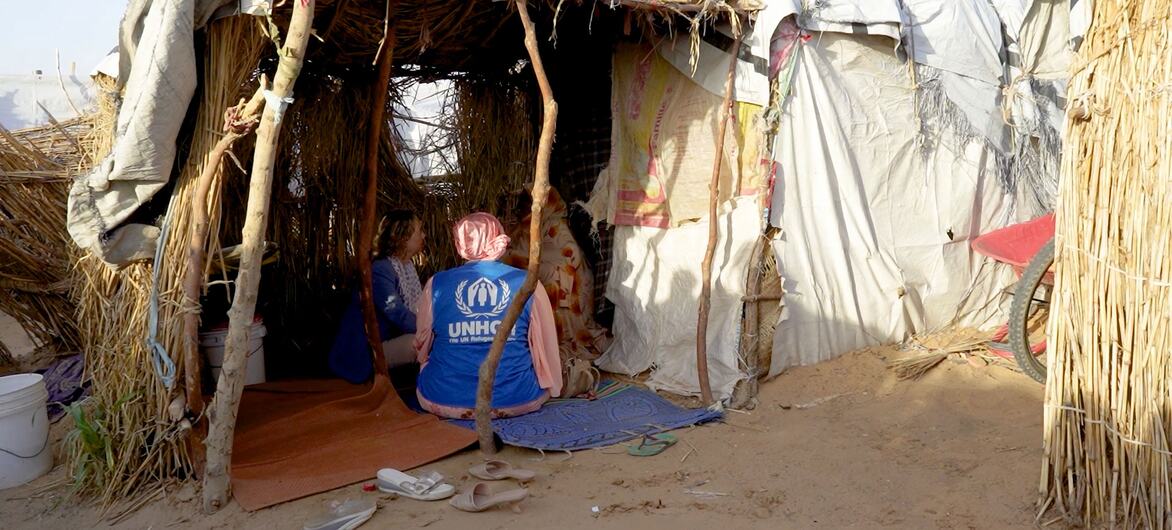
UNHCR says many refugees, including large numbers of children, have limited access to food, clean water, shelter and healthcare. Malnutrition levels are high, while humanitarian partners have reported poor hygiene and widespread respiratory infections.
Many families are living in makeshift shelters constructed from basic materials, offering little protection from harsh weather conditions.
Access to water is another major challenge. Refugee women have described walking several kilometres to collect water for their families, adding to the daily burden of people already struggling to meet their basic needs.
Thousands remain unregistered
Beyond the shortages of food and shelter, the lack of formal registration is creating serious protection concerns.
Only about 5% of Nigerian refugees who arrived in Niger this year have been registered, according to UNHCR. Funding shortages have hampered efforts to document the growing number of new arrivals.
Without registration documents, refugees face additional barriers to accessing humanitarian assistance and essential public services.
The problem is particularly serious for children, who may struggle to access healthcare, education and other forms of protection.
Education is emerging as another challenge for families who have crossed from Nigeria.
Nigerian children are arriving from an education system where English is the main language of instruction, while French is Niger’s official language. Some locations lack schools or transitional classes capable of helping the children adjust to the different system.
The absence of suitable learning facilities risks leaving children out of school at a time when displacement has already disrupted their lives.
Niger’s generosity under pressure
ALSO READ: Nigerian air Force crash kills 32 as Tinubu Orders investigation
Despite its own challenges, Niger’s authorities and host communities have continued to provide refuge to people fleeing Nigeria.
UNHCR Director of External Relations Dominique Hyde described their response as one of “remarkable solidarity”, pointing to the provision of land for temporary shelters and other forms of support.
However, the agency warned that local capacity is increasingly stretched and that host communities cannot sustain the growing humanitarian response without additional international assistance.
The situation also highlights the difficult position facing countries that host large refugee populations while dealing with their own economic, security and climate-related pressures.
The arrival of tens of thousands of people requires additional shelter, food, water, healthcare, registration services and protection programmes. Without sufficient resources, both refugees and the communities receiving them face worsening conditions.
UN appeals for $11.4 million
UNHCR is seeking $11.4 million to scale up its emergency response and longer-term solutions across Niger, Nigeria and Benin.
The appeal includes $2 million for immediate critical needs, including water, food, shelter, healthcare, registration and protection.
Hyde warned that the funding shortfall could leave thousands of vulnerable families without essential assistance as displacement continues.
“Without additional resources, thousands of vulnerable families risk being left without essential assistance and protection as displacement continues,” she said.
The agency is also calling for stronger coordination and additional operational partners to help address the growing needs.
The challenge extends beyond emergency relief. UNHCR says greater investment is needed in livelihoods and longer-term solutions that can support both refugees and host communities.
The latest displacement figures underline how insecurity in one part of the region can place additional pressure on neighbouring countries already facing multiple crises.
For families fleeing northern Nigeria, crossing the border may offer temporary safety, but it does not necessarily mean the end of their struggle. Many are arriving in communities where food is scarce, water is difficult to access and humanitarian assistance is falling short.
Without a significant increase in support, the search for safety could leave tens of thousands facing another crisis on the other side of the border.