Cameroon has promised new laws, national strategies and stronger protections for women. Yet as femicide cases climb and women continue to die at the hands of partners, relatives and other people they know, the country’s own figures suggest that the crisis is worsening faster than the government’s response.
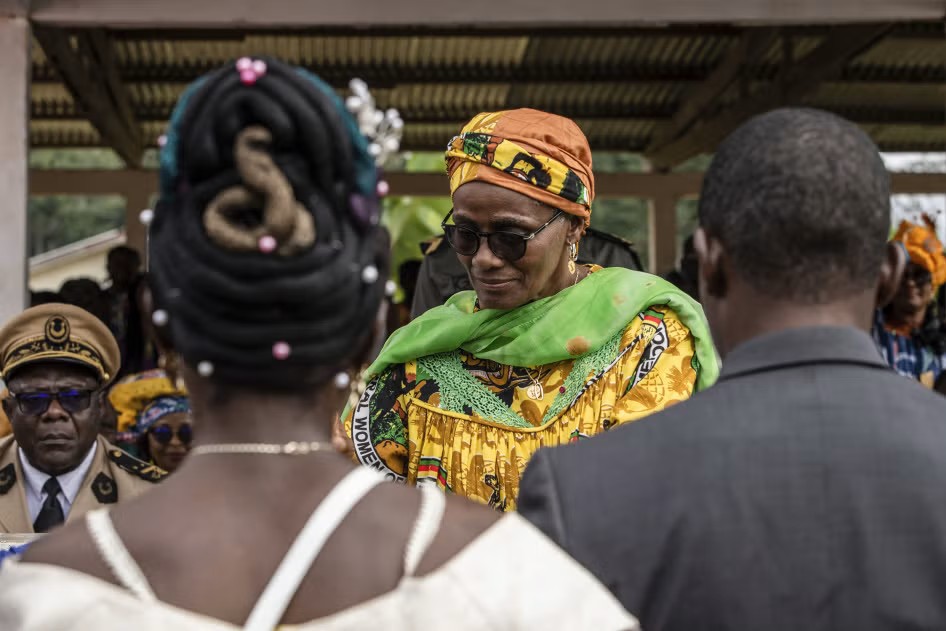
YAOUNDE — The killings keep coming. Between August 6 and 26, 2026, several women were killed across Cameroon, some allegedly by current or former partners and others in front of their own children. Their deaths, documented in a new Human Rights Watch briefing released this week, have added to a grim pattern that has intensified since 2023.
For women’s rights campaigners, the latest cases point to a deeper failure: despite years of government promises to tackle gender-based violence, women remain exposed to violence with limited access to protection, support and justice.
Human Rights Watch says the pattern is becoming increasingly difficult to ignore. Women in Cameroon, including victims and survivors of domestic violence, have little protection and limited access to justice, the organisation said, describing the recent killings as further evidence of a system that repeatedly fails women, including those who have already sought help.
Even the government says the figures are incomplete
The scale of the crisis is acknowledged by Cameroon’s own Ministry for the Promotion of Women and the Family, known by its French acronym MINPROFF.
The ministry, which is responsible for developing and implementing policies aimed at protecting women’s rights, has reported a sharp increase in femicide cases since 2023. More significantly, it has warned that the official numbers capture only the “tip of the iceberg.”
That admission is significant. The warning is not coming only from activists or opposition politicians. It is coming from the government institution charged with protecting women and promoting gender equality.
ALSO READ: Inside West Africa’s Fight Against Gender-Based Violence
The United Nations defines femicide as the intentional killing of women and girls with a gender-related motivation. It represents the most extreme form of violence against women and girls.
Human Rights Watch says violence against women and girls, including domestic violence, remains widespread in Cameroon and is rooted in entrenched gender inequality, discriminatory laws and weak institutions. Chronic government underinvestment in prevention and survivor support, the organisation says, has compounded the problem, while limited accountability continues to create an environment in which perpetrators can act with relative impunity.
The numbers tell their own story
The figures presented by MINPROFF Minister Marie-Thérèse Abena Ondoa to the National Assembly in June paint a stark picture.
Ondoa told lawmakers that domestic femicides had increased by about 37 per cent since 2023. In the first four months of 2026 alone, Cameroon recorded 50 femicide cases, along with 166 reported rapes and 13 infanticides.
Government data shows a similarly troubling trajectory.
The number of documented femicide victims rose from 50 in 2023 to 67 in 2024 and 77 in 2025. Officials have warned that figures from the first half of 2026 indicate that the upward trend has continued.

Independent monitoring has since recorded further deaths.
One Cameroonian outlet tracking cases documented 14 women violently killed during just 20 days in August. Nine of those cases met the strict definition of femicide, involving killings linked to domestic, intimate-partner or sexual violence.
The victims came from different walks of life, including a nursing student and a teenage girl who was reportedly lured into the bush and killed.
The violence is also geographically widespread.
Cases recorded this year have been reported in the Centre, Littoral, South and East regions, affecting women across different ages, professions and social backgrounds. Victims have included students, hairdressers and a female soldier.
The numbers, however, tell only part of the story.
An Afrobarometer survey indicates the social attitudes that can allow violence to persist. Nearly two-thirds of Cameroonians surveyed said it is sometimes or always justified for a man to use physical force to discipline his wife.
Fewer than half viewed domestic violence as a matter for the criminal justice system rather than a private family affair. Almost half said violence against women and girls was common in their communities.
Those attitudes can make it harder for victims to report abuse and easier for perpetrators to escape accountability.
Government commitments, but no Family Code
Cameroon has not been short of promises.
In 2022, the government adopted a national strategy to combat gender-based violence as well as a national gender policy. The latter included a commitment to halve gender-based violence by 2026.
That deadline has now arrived.
The government’s own statistics suggest the target has not been met.
In June, Minister Abena Ondoa told parliamentarians that her ministry was finalising legislation that would establish gender-based violence as a standalone criminal offence and strengthen legal protections for women’s rights.
The rise in femicide cases was also discussed at a national security meeting convened by President Paul Biya in August.
But Human Rights Watch says these announcements have yet to translate into clear, immediate measures capable of protecting women on the ground.

The problem also runs deeper than the absence of new legislation.
Earlier research by Human Rights Watch identified Cameroon’s outdated family law as a major obstacle to protecting women’s rights. A revised Family Code, regarded as an important reform for bringing the country closer to its international obligations, has remained in draft form for more than two decades.
Cameroon also has no national policy or guidelines specifically addressing domestic violence.
ALSO READ: Nowhere Is Safe: Women Endure Escalating Sexual Violence in Eastern Democratic Republic of Congo
Under the existing legal framework governing family relations, husbands are designated as heads of household and primary managers of marital property. Human Rights Watch argues that such provisions can undermine women’s decision-making power over issues including where they live, whether they work and what happens to property they helped acquire.
For women trapped in abusive relationships, the legal and social consequences can be profound.
Rights groups want action, not another promise
Human Rights Watch is now calling on the government to move beyond declarations and implement a coordinated national response.
The organisation wants Yaoundé to establish a fully funded task force involving MINPROFF and the ministries responsible for Justice, Defence, National Security, Territorial Administration and Finance.
The task force should focus on preventing gender-based violence while ensuring that survivors receive meaningful support.
Human Rights Watch is also calling for domestic violence shelters to be expanded to every region and adequately staffed so victims and survivors can access healthcare, psychosocial support and justice.
It wants the government to review the obstacles women face when seeking protection orders and strengthen efforts to arrest and prosecute perpetrators.
The organisation’s message to the government is blunt: Cameroon has made repeated commitments to women, but those commitments mean little if they are not backed by resources, enforcement and accountability.
“The Cameroon government has made a lot of promises to women,” Human Rights Watch said. “It’s time to keep them.”
A warning that extends beyond Cameroon
Cameroon’s femicide crisis should not be viewed as an isolated national problem.
Across Africa, gender-based violence continues to expose the gap between governments’ legal commitments and what women experience in their homes and communities.
African states, including Cameroon, have signed international and continental instruments such as the African Union’s Maputo Protocol and the Convention on the Elimination of All Forms of Discrimination Against Women. Yet the existence of those commitments has not always translated into adequately funded shelters, properly trained police, accessible courts or effective prosecution.
Cameroon’s experience illustrates the danger of treating legislation and policy commitments as an end in themselves.
For women facing violence, protection is measured not by the number of strategies adopted or bills drafted, but by whether a police officer responds when they report abuse, whether a court grants protection, whether a shelter is available and whether the perpetrator is held accountable.
That distinction is becoming increasingly urgent in a country where many women are not killed by strangers, but by people they know, including partners, relatives and neighbours.
And the warning extends beyond Cameroon’s borders.
Several African countries, including South Africa, continue to record some of the continent’s highest levels of femicide and gender-based violence. Cameroon’s rising numbers should therefore be viewed not simply as another national crisis, but as a warning about what happens when government commitments are not matched by sustained investment, enforcement and political will.