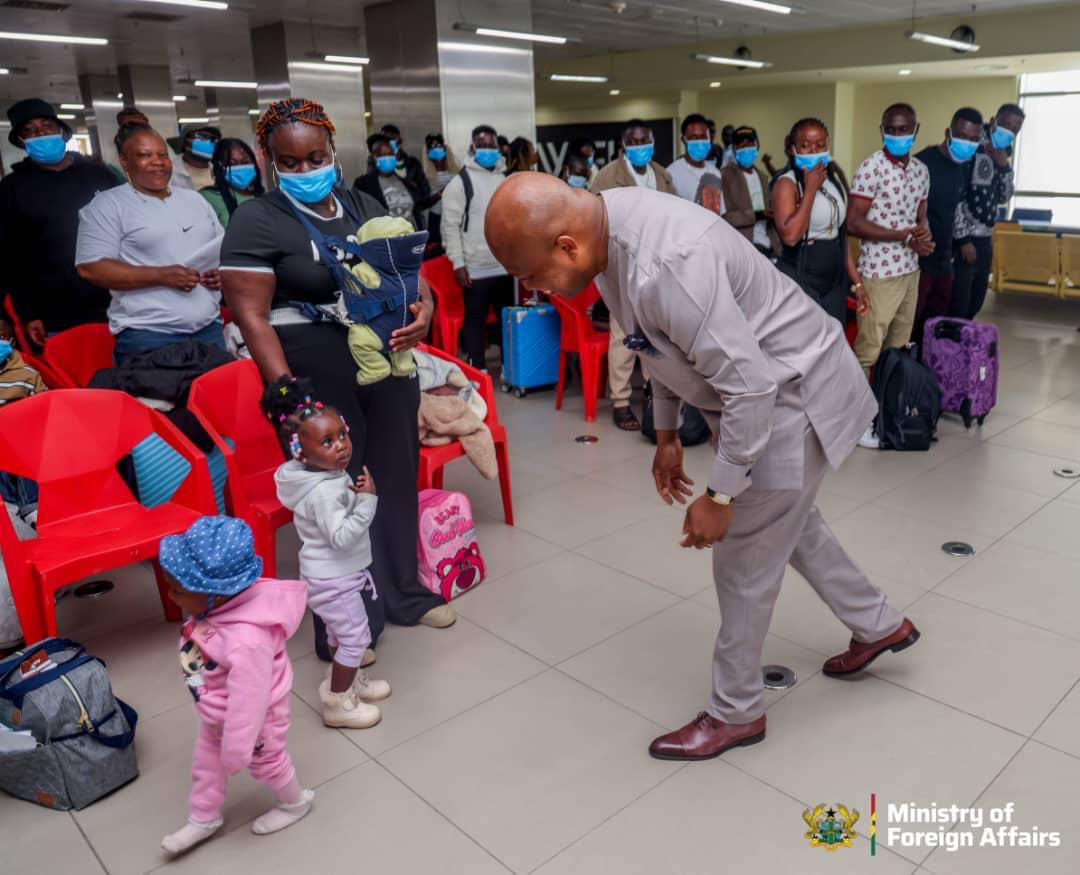
ACCRA – Ghana has completed the evacuation of citizens who voluntarily registered to return home from South Africa following recent xenophobic attacks, with the final group of 41 returnees arriving in Accra on Friday, 4 September.
The operation, which began in May 2026, saw nearly 1,900 Ghanaians evacuated from South Africa, according to Ghana’s Ministry of Foreign Affairs.
The final arrivals were received at the Accra International Airport by Foreign Affairs Minister Samuel Okudzeto Ablakwa, who said the completion of the exercise marked the end of the government’s evacuation programme.
The operation was undertaken against the backdrop of renewed concerns over attacks targeting foreign nationals in parts of South Africa. For Ghana, the scale of the evacuation reflects the extent to which insecurity had affected members of its diaspora community.
Three deaths recorded during evacuation exercise
While the majority of those registered for repatriation returned safely, the Ghanaian government said the exercise was also marked by three deaths.
The remains of two Ghanaians who were attacked and killed were repatriated to Ghana. A third returnee died after arriving in Accra.
The deaths add a sombre dimension to an operation that was primarily presented as a voluntary return programme for Ghanaians seeking safety and a return to their home country.
ALSO READ: King Misuzulu Calls for African Unity on Illegal Immigration
Ablakwa thanked President John Dramani Mahama for what he described as his commitment to the welfare and safety of Ghanaian citizens abroad.
Addressing the final group, the minister urged returnees to focus on rebuilding their lives rather than allowing the experience to undermine their prospects.
“Do not lose hope. Remain resilient and channel your time, skills and energy towards building a better Ghana,” Ablakwa told the returnees.
The appeal comes as the government shifts from evacuation to reintegration, a process that could prove more difficult for returnees who have lost homes, livelihoods, businesses or employment in South Africa.
Government urges returnees to prioritise health
The Ghanaian government has provided a reintegration allowance to those returning through the programme.
But Ablakwa cautioned that financial assistance alone would not address all the challenges facing people who had been uprooted from their lives abroad.
He urged the returnees to make their health a priority and seek medical assistance where necessary as they begin rebuilding their lives in Ghana.
The emphasis on healthcare is significant given the circumstances surrounding some of the returns, particularly for people who may have experienced violence, displacement or financial losses.
The government has not indicated how many returnees intend to remain permanently in Ghana or whether any will seek to return to South Africa once conditions improve.
Ghana promises transparency on evacuation costs
The conclusion of the operation has also placed the government’s expenditure under scrutiny.
Ablakwa assured the Ghanaian public that the Ministry of Foreign Affairs would provide a full account of all funds spent on the evacuation exercise.
The commitment is likely to be closely watched given the scale and duration of the operation, which involved the movement of almost 1,900 people over several months, alongside the repatriation of the remains of two deceased citizens.
The minister also acknowledged the contribution of government agencies, allied organisations and private-sector partners whose assistance helped facilitate the evacuation.
For Ghana, the operation now moves into a different phase. The immediate task of getting registered citizens out of South Africa has ended, but the longer-term question is how effectively those who have returned can rebuild their livelihoods.
The government’s message to the final 41 returnees was therefore as much about what comes next as it was about bringing the evacuation to an end: turning a forced or precautionary return into an opportunity for economic and social reintegration.