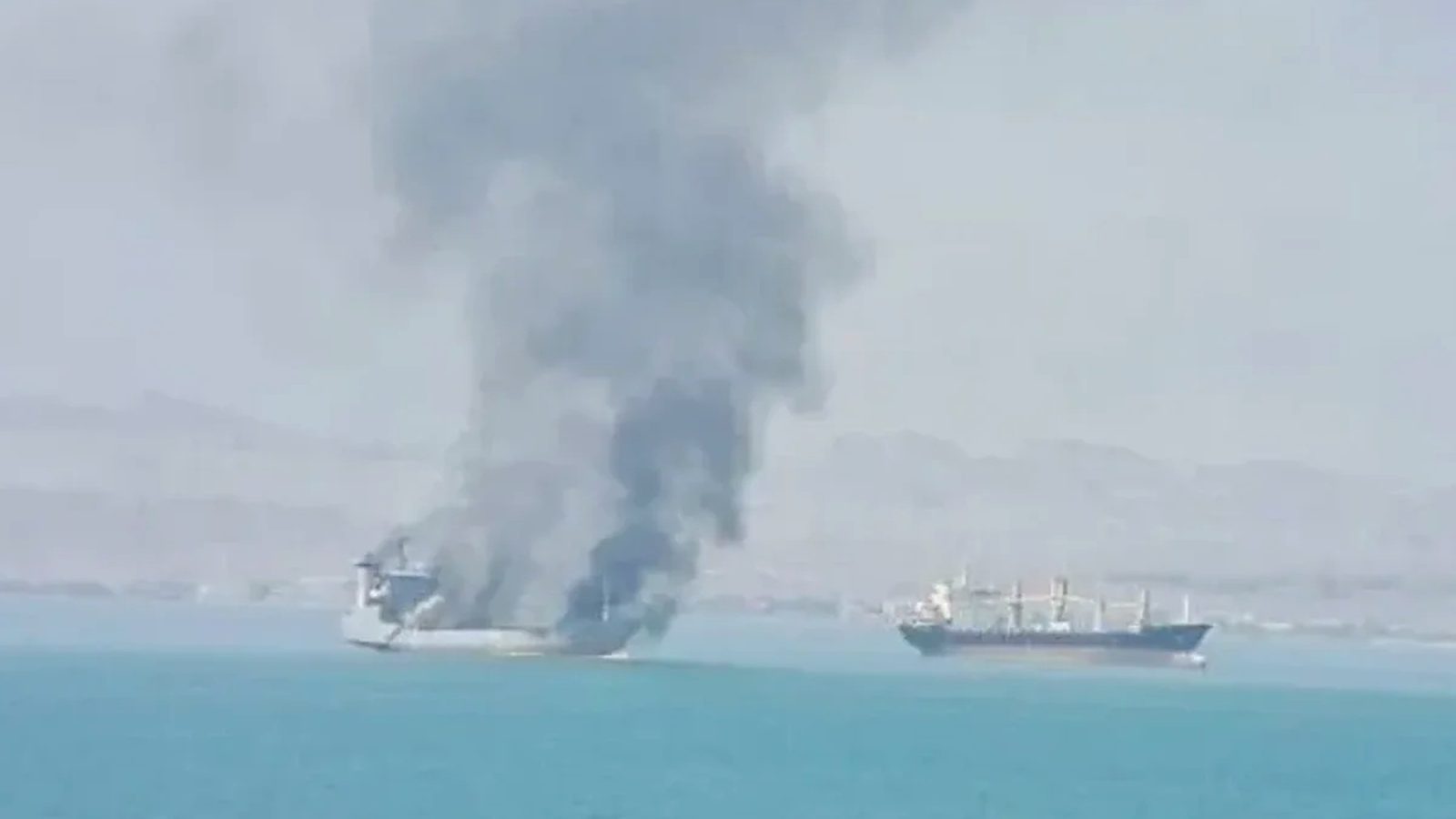
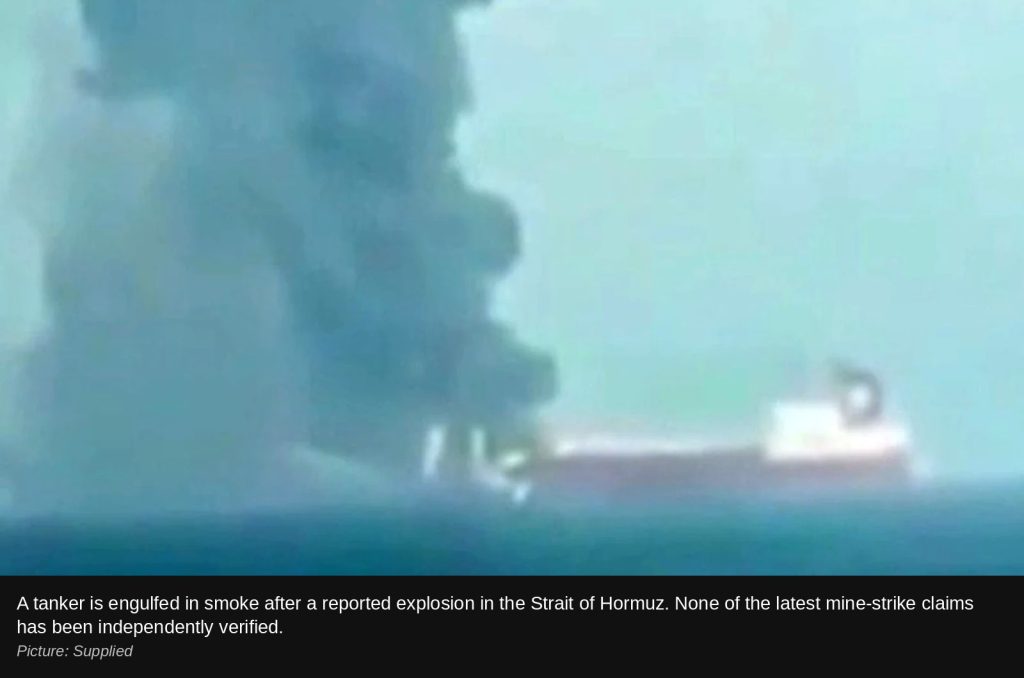
DUBAI/JOHANNESBURG: Iran’s Islamic Revolutionary Guard Corps (IRGC) says more oil tankers have struck naval mines and caught fire near the Strait of Hormuz, raising fresh concerns about shipping through a waterway that has been at the centre of the war involving Iran, the United States and Israel.
The IRGC Navy said two tankers struck mines south of the strait while attempting to pass through an unauthorised route without being detected. It claimed their navigation and automatic identification systems had been switched off.
Some market reports put the number of vessels hit at three. The US military has disputed Iran’s account, saying shipping routes through the area are clear.
The Guards said the incidents caused explosions and large fires on board the vessels. Neither the reported mine strikes nor the extent of the damage has been independently verified.
The latest claims come as the disruption to one of the world’s most important energy corridors continues to affect oil markets, shipping costs and the price of fuel.
A war in its ninth month
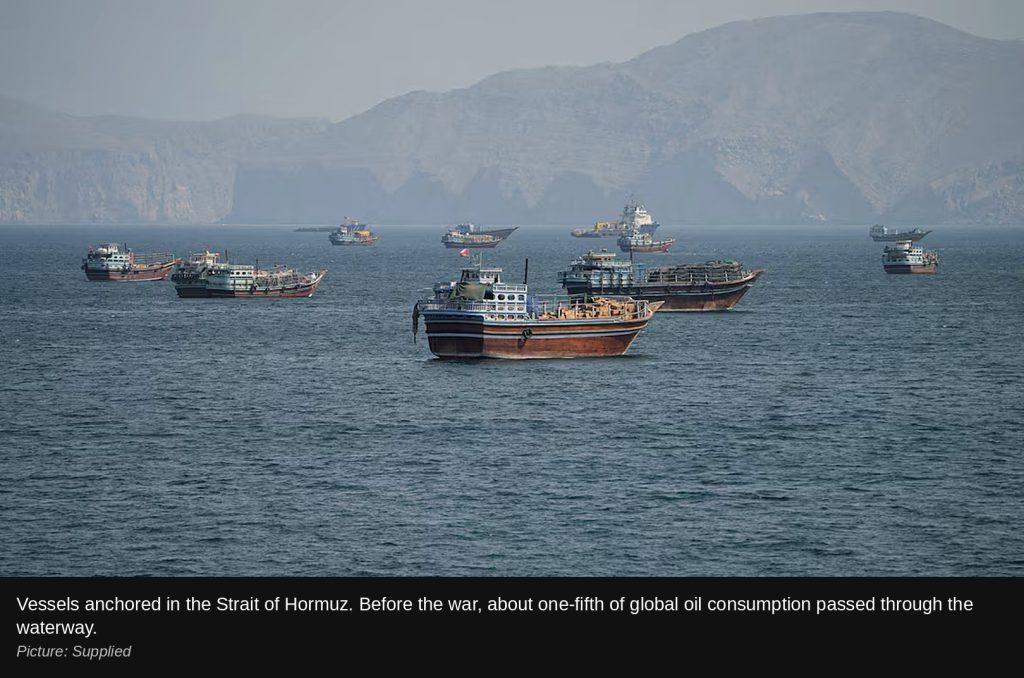
Iran took control of the Strait of Hormuz after the war with the United States and Israel began in late February. Before the conflict, the waterway handled about one-fifth of global oil consumption, making it a critical route for energy supplies.
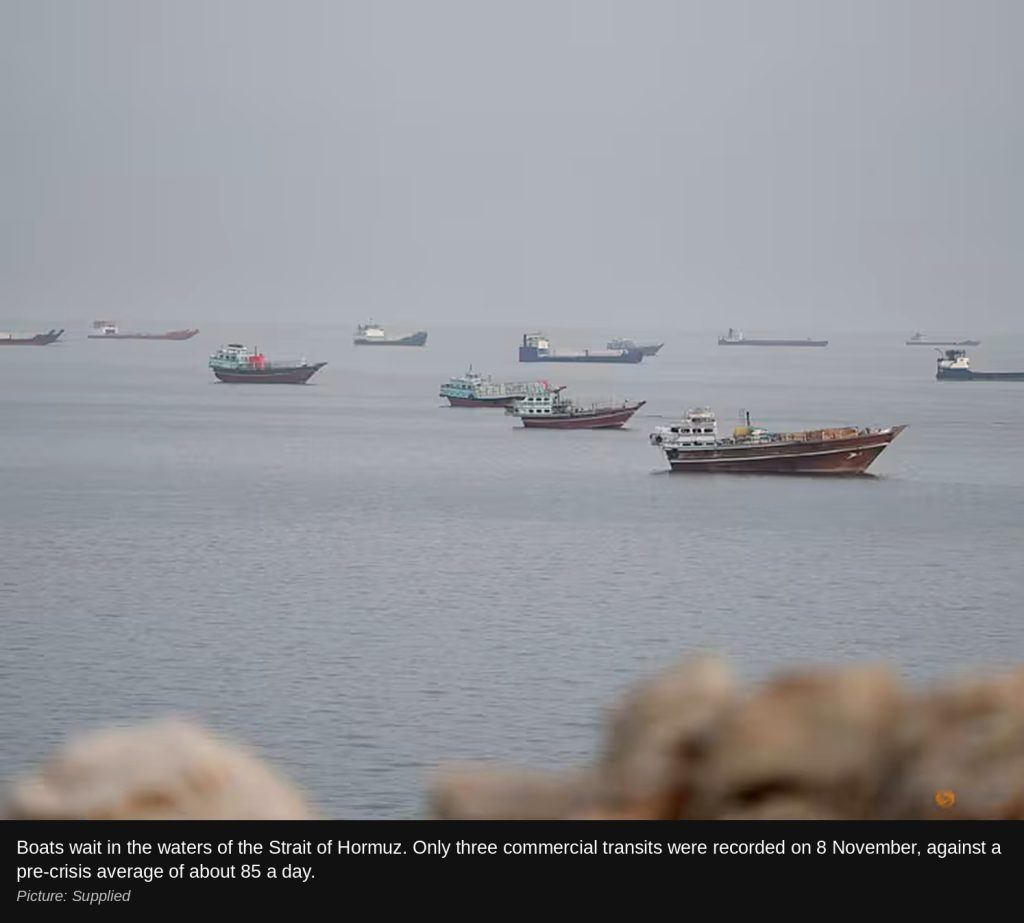
A ceasefire was announced on April 8, but shipping traffic has yet to return to normal. Data from the International Monetary Fund’s PortWatch platform recorded only three commercial transits through the strait on November 8, compared with a pre-crisis average of about 85 a day.
The disruption has also driven up the cost of transporting oil. According to Lloyd’s List figures, war-risk insurance for a $100 million tanker now costs between $7 million and $9 million, compared with about $250,000 before the conflict.
The past week has brought further escalation. The IRGC claimed it had destroyed a US early-warning radar system in Bahrain in retaliation for an American strike on a telecommunications tower in southern Iran. Washington has denied the claim.
Yemen’s Houthi movement has also claimed fresh attacks on Saudi oil facilities, including infrastructure linked to the East-West pipeline.
Diplomatic efforts have meanwhile produced little certainty. On November 9, Qatar reportedly delivered an Iranian proposal to reopen the strait to the White House. Days later, US President Donald Trump appeared to dismiss the need for an agreement, saying: “We don’t need a deal with Iran.”
Why oil prices are falling despite the attacks
Despite the latest reports of attacks and continuing disruption in the Gulf, international oil prices have been declining.
Brent crude settled at $95.84 a barrel on Friday, recording its second consecutive weekly decline. That was down from $117.64 on October 30.
On November 10, Brent fell to a 10-week low of about $91.50 after Trump described the war as “militarily effectively over” following talks with Qatar’s prime minister.
The main factor behind the decline is a changing balance between supply and demand.
The International Energy Agency said on Friday that global oil supply was outpacing demand for the first time since the war began, as Gulf producers increased output.
This has helped ease some of the pressure on prices, despite the continuing security risks around Hormuz.
However, the latest mine-strike claims could unsettle the market when oil futures reopen on Sunday evening. Traders will be watching for signs that the incidents are confirmed, whether shipping has been affected and whether the attacks signal a wider escalation.
A sustained increase in risk around the strait could push prices higher again, particularly if oil infrastructure or major shipping routes come under further attack.
What it means for South African motorists
For South African motorists, the recent decline in international oil prices is beginning to show up in domestic fuel forecasts.
Mid-month data from the Central Energy Fund (CEF) points to a possible petrol price reduction of about R2.62 a litre for 95 unleaded and R2.35 for 93 unleaded from Wednesday, December 2.
ALSO READ: ICC Fails To Act Against Trump As Iran Bombardment Continues
These projections already take into account the planned reduction in temporary fuel levy relief provided by the Treasury.
The temporary measure, introduced on November 4, reduced the general fuel levy by R1.50 a litre for petrol and R3 a litre for diesel. From December 2 until January 5, the relief is scheduled to fall to R1 a litre for petrol and R1.50 for diesel.
The package is expected to cost the government about R10 billion.
The reduction in levy relief means motorists will not receive the full benefit of the decline in international oil prices. Even so, the current CEF figures suggest that petrol users could still see a substantial reduction at the pumps.
Diesel users face a less favourable outlook. After accounting for the smaller levy relief, current data points to possible increases of between 16 and 53 cents a litre.
That position could change if the recent decline in oil prices continues through the remainder of November, potentially turning the projected increases into a modest reduction.
Gulf tensions remain a risk to December prices
The projected December fuel adjustments are not final. The CEF figures reflect the movement in international oil prices and the rand-dollar exchange rate during the monitoring period. The Department of Mineral and Petroleum Resources will announce the official adjustments closer to the end of the month.
That leaves the outlook exposed to developments in the Gulf.
If the reported mine strikes are confirmed and shipping through the Strait of Hormuz faces further disruption, oil prices could recover before the end of November. A renewed attack on Saudi energy infrastructure would add to those concerns.
For South African consumers, the distinction matters. A lower international oil price does not automatically translate into cheaper fuel at home. The rand’s performance against the dollar, changes in fuel levies and other domestic pricing factors also influence the final pump price.
For now, the numbers point to some relief for petrol motorists in December, but the situation remains volatile. The next few weeks will determine whether the projected cuts survive the latest escalation in the Gulf.