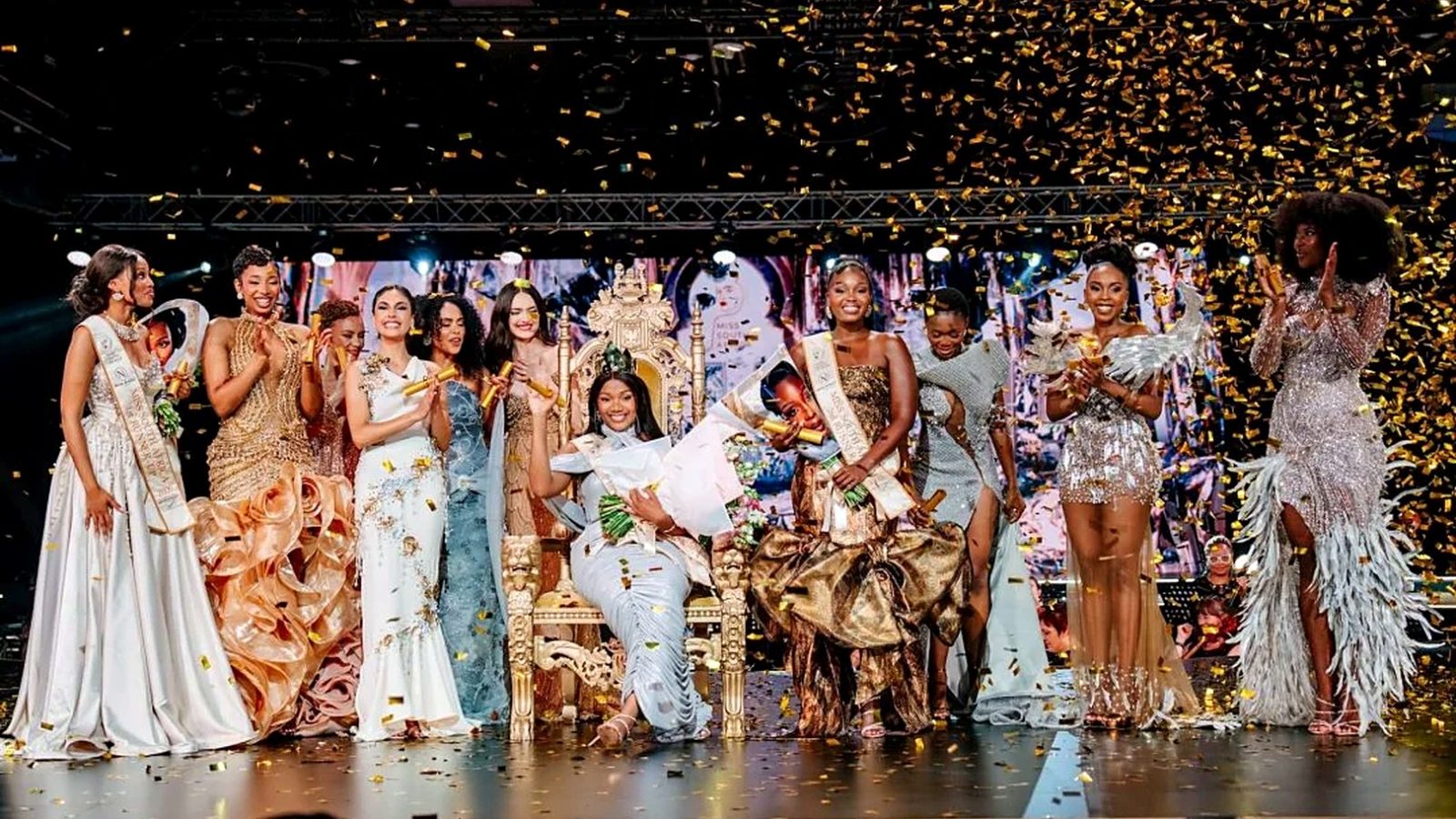
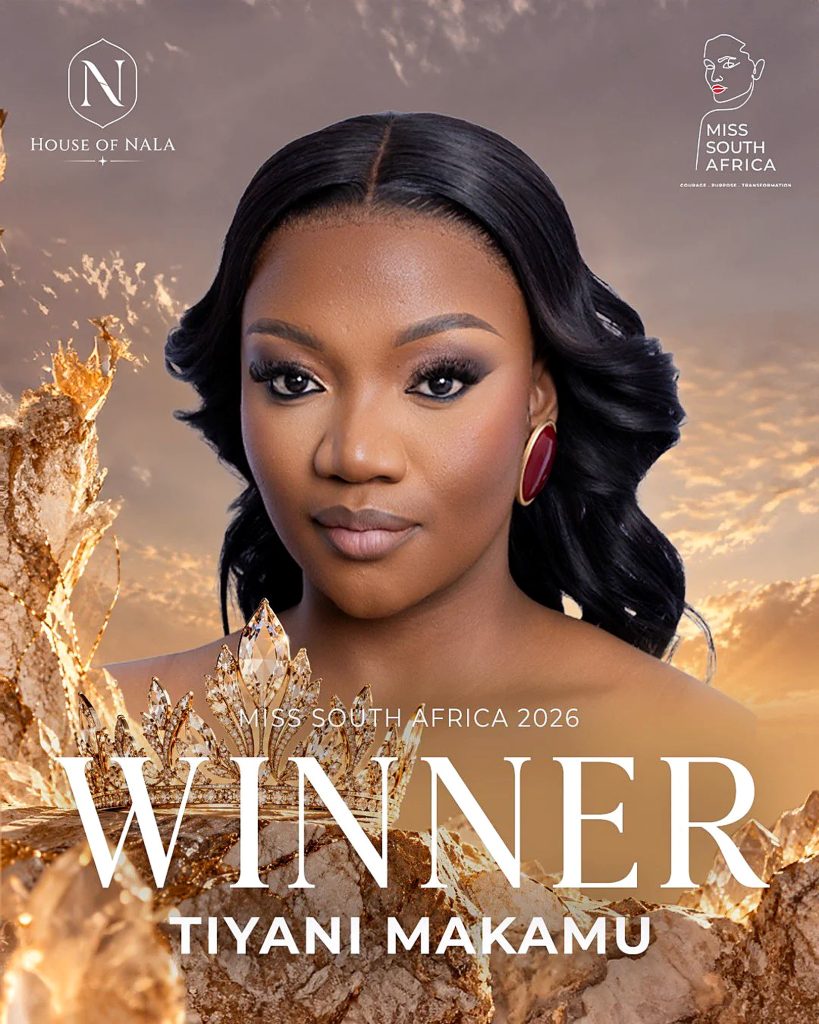
JOHANNESBURG: Tiyani Makamu, a 27-year-old communications professional and entrepreneur from Bronkhorstspruit, Gauteng, has been crowned Miss South Africa 2026, taking the title as the pageant continues its shift towards leadership, entrepreneurship and social impact.
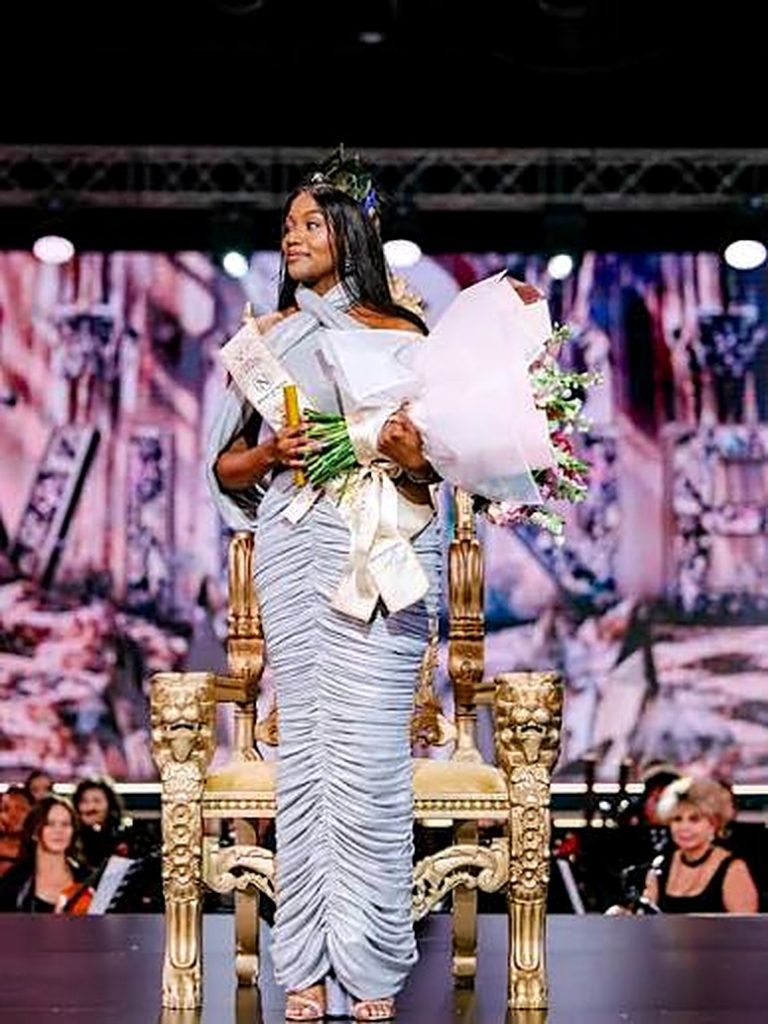
Makamu was crowned at the Sandton Convention Centre on Saturday night, November 14, succeeding Qhawekazi Mazaleni, who held the title in 2025.
Cwenga Koyana Kotu-Rammopo, from Edenvale, was named First Princess, while Lesego Khumo Nyathela, from Springs, took the Second Princess title. All three finalists are from Gauteng.
Makamu, a youth advocate whose work focuses on entrepreneurship, skills development, youth unemployment and access to education, said her reign would prioritise the economic empowerment of women and young people.
“My mandate as Miss South Africa is to empower women entrepreneurs,” she said, adding that she wanted to help women acquire the skills, resources and financial readiness needed to build sustainable businesses.
Media reports identify Makamu as a graduate of the Pearson Institute of Higher Education. She works as a group digital lead and client success executive.
A new venue and a different format
The 68th edition of the pageant, held under the theme “The Mandate”, marked another break with tradition. The finale moved from Pretoria’s SunBet Arena at Time Square, which had hosted the event for several years, to the Sandton Convention Centre. Mazaleni was crowned at the Pretoria venue in October 2025.
The evening was hosted by actor and presenter Lawrence Maleka and former Miss South Africa Jo-Ann Strauss, and broadcast on Mzansi Magic.
The winner was selected by a five-member judging panel that included former Public Protector Professor Thuli Madonsela, Miss South Africa 2023 Natasha Vermaak, medical doctor and television personality Dr Musa Mthombeni, and Pumla Molope, president of African Women Chartered Accountants.
The competition began with entries opening on April 28 and closing on May 17. A Top 24 was announced in June before the field was reduced to 19 finalists in August. Actress and media personality Minnie Dlamini unveiled the finalists, 11 of whom were from Gauteng.
The group was subsequently narrowed to a Top 12, who received their sashes at a ceremony at the Johannesburg Stock Exchange on November 12.
Singer Makhosazana “Azana” Masango was among the contestants who reached the Top Five on finale night. Her exit prompted debate among fans on social media.
The finalists’ journeys were also documented in The Mandate, a seven-part documentary series following the 19 contestants through a programme of leadership, entrepreneurship and personal development.
What the new Miss South Africa wins
This year’s competition introduced a revised prize structure, separating guaranteed cash awards from additional funding for social impact projects.
Makamu receives R1 million in cash, with access to up to R500,000 from the Impact Fund. The First Princess receives R250,000 in cash and may access up to R150,000 from the fund, while the Second Princess receives R150,000 in cash and up to R100,000 in project funding.
Before the finale, the organisation announced a contribution of nearly R5 million to its women’s leadership impact fund.
Each of the 12 finalists is also guaranteed R25,000, regardless of their final placing, while a further R1 million has been allocated to the contestants’ social impact projects.
The top three will receive additional development opportunities, mentorship, wellness support and access to regional and international leadership networks.
The structure reflects the organisation’s stated intention to make the competition about more than the title and the cash prize. It places greater emphasis on what contestants can do with the platform and the resources made available to them.
From beauty pageant to leadership platform
The changes form part of a broader repositioning of a competition that began in 1956, originally serving as a route for selecting South Africa’s representatives at international beauty pageants.
The organisation now describes Miss South Africa as a national platform for leadership, self-development and social transformation. Its social impact programme, Empower Youth Africa (EYA), has become central to the responsibilities of finalists and the titleholder.
When entries opened in April, the organisation said: “Miss South Africa is no longer defined by a single moment on stage.”
Spokesperson Zawadi Dlamini has said the pageant is moving away from a focus on beauty and entertainment towards measurable social impact through EYA.
The pageant’s patron, University of Cape Town Chancellor Dr Precious Moloi-Motsepe, has also presented the shift as a question of leadership and the ability to develop solutions.
“The world no longer needs young women who are simply visible,” she said.
The expectations placed on contestants have grown alongside the organisation’s ambitions. Under this year’s eligibility rules, finalists had to be available to the organisation full time for extended periods, participate in the reality television series The Journey to Miss South Africa and agree to a one-year contract with its talent agency after the finale.
That commitment points to a more structured model in which the titleholder and finalists are expected to function as public representatives and participate in organised development and social impact programmes.
The Motsepe era
The overhaul follows a change in ownership in 2025. Long-serving chief executive Stephanie Weil stepped down early that year, and the Motsepe Group of Companies was announced as the new owner of the Miss South Africa Organisation.
In July 2025, Africa Fashion International (AFI), founded by Moloi-Motsepe in 2007, announced a strategic partnership with the organisation, describing the two as sister companies.
The 2026 competition was the first full pageant cycle under the Motsepe Group’s ownership.
One of the most consequential changes was the decision to end Miss South Africa’s participation in the international pageant system. In 2025, the organisation relinquished its international pageant licences, ending a long-standing arrangement under which the winner or a runner-up would typically represent the country at competitions such as Miss Universe or Miss World.
ALSO READ: Tanzania’s Jihan Dimack becomes the first African to win Miss Grand International
African Beauty International subsequently acquired the Miss Universe South Africa licence and established a separate selection process. Former Miss South Africa Bokang Montjane-Tshabalala was appointed national director.
The change meant Mazaleni did not represent South Africa at Miss Universe. Melissa Nayimuli represented the country instead.
The separation has fundamentally altered the relationship between the national title and international pageants. Winning Miss South Africa no longer automatically means competing for one of the major global crowns.
A record of international success and periods of turbulence
The change is significant given South Africa’s history at Miss Universe. The country has won the competition three times, with Margaret Gardiner taking the crown in 1978, Demi-Leigh Tebow in 2017 and Zozibini Tunzi in 2019.
The years leading up to the ownership change were also marked by controversy.
In 2021, the government withdrew its support for the pageant after the organisation proceeded with South Africa’s participation in Miss Universe in Israel, despite government advice against taking part.
In 2024, finalist Chidimma Adetshina withdrew from the competition amid a public dispute over her nationality.
That year’s winner, Mia le Roux, made history as the first deaf woman to hold the title. However, she later withdrew from Miss Universe 2024 for health reasons. The organisation also withdrew her from Miss Supranational 2025, meaning South Africa missed two major international pageants in succession.
These developments formed part of the backdrop to the organisation’s decision to redefine what the national title should represent and how it should operate.
Mixed reaction to the new direction
The latest changes have not been universally welcomed.
Within hours of Makamu’s crowning, social media users began mocking the headpiece placed on her head, while others questioned the revised prize structure and the direction of the competition.
Organisers have since explained that the crown, named “Imbokodo” in keeping with the pageant’s “Imbokodo to Diamond” theme, is temporary. Young South African designers will be invited to create a permanent replacement.
The online reaction has also exposed a wider debate about the identity of Miss South Africa. Some users have welcomed the emphasis on entrepreneurship and youth development, while others have questioned the organisation’s marketing, visibility and departure from the traditional beauty pageant model.
One TikTok commenter summed up the criticism by saying: “It’s business now, nothing else.”
For Makamu, the year ahead will be an opportunity to demonstrate whether the new approach can deliver on its promises. Her reign will be judged not only by public appearances or the international competitions she attends, but also by the reach and measurable results of the initiatives she leads.
The central test for the organisation is whether its new emphasis on business and social impact can build a compelling national platform while retaining the public interest and recognition that made Miss South Africa one of the country’s best-known pageants.