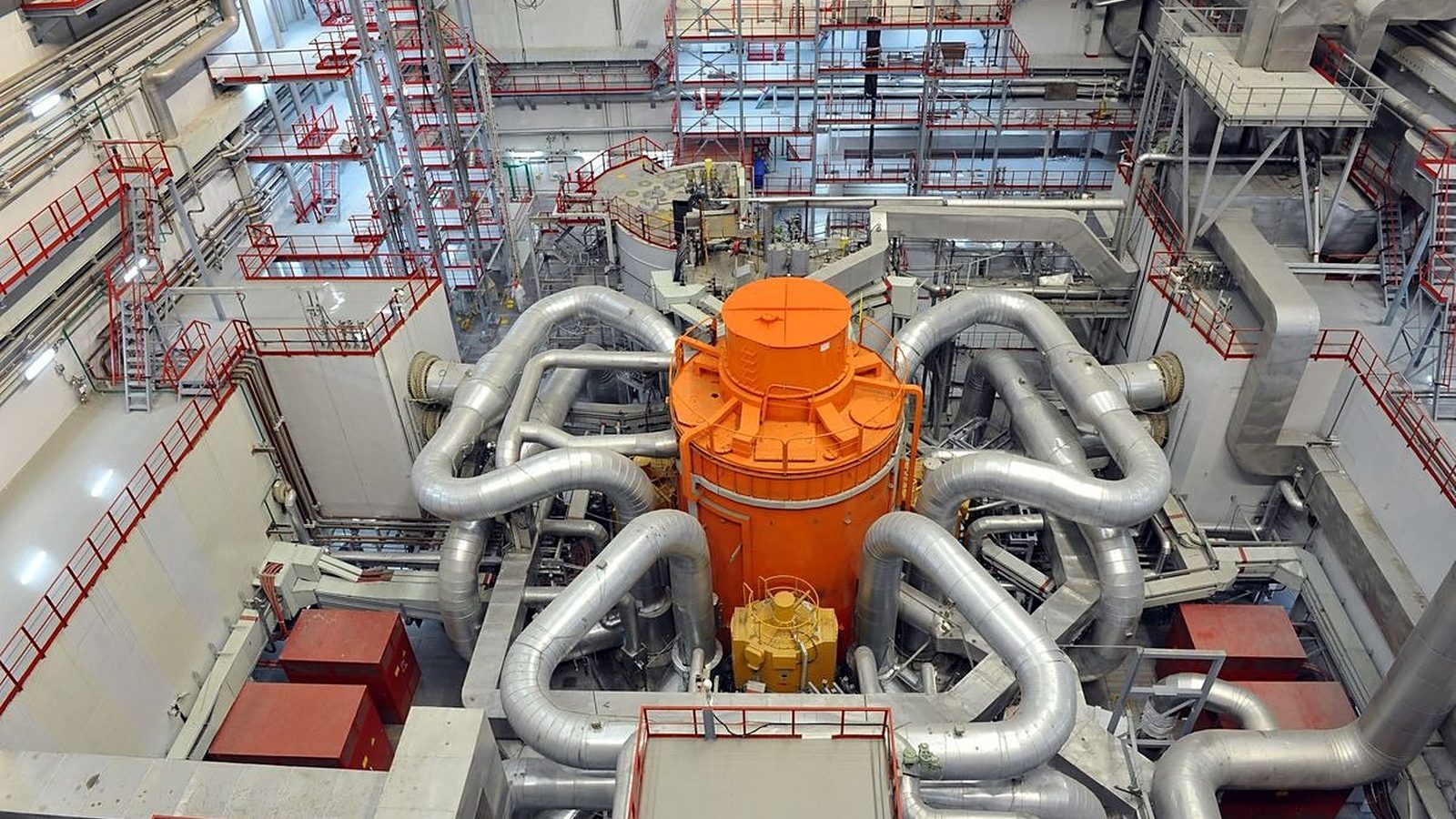
MOSCOW: Russia has taken a major step towards recycling nuclear fuel, loading a commercial power reactor with plutonium recovered from its own spent fuel for the first time.
The experimental fuel assembly is now operating in the 880 MW BN-800 fast-neutron reactor at the Beloyarsk Nuclear Power Plant. The breakthrough moves a closed nuclear fuel cycle, in which used fuel is reprocessed and reused, closer to commercial reality.
Rosatom says the technology could extract 60 to 70 times more energy from mined uranium than conventional reactors while reducing long-lived radioactive waste. Until now, recycling fuel within the same reactor had been demonstrated only in experimental and prototype fast reactors.
From theory to commercial operation
Rosatom Director General Alexey Likhachev said the achievement had moved the concept of closing the nuclear fuel cycle around fast reactors beyond the laboratory and into commercial operation.
“Today, in closing the nuclear fuel cycle around fast reactors, we have moved from theory to practice. By overcoming this next technological milestone, we are proving the viability of a ‘renewable’ nuclear energy model,” Likhachev said.
He said the technology could help meet rising electricity demand without a corresponding increase in pressure on natural resources or the volume of radioactive waste.
Rosatom said the new fuel assembly was manufactured using an optimised plutonium-recovery process that requires fewer processing steps while maintaining the required fuel quality. The company argues that this could make recycling more economical, although it has not released detailed cost figures.
How recycled nuclear fuel works
Plutonium is produced inside a nuclear reactor as uranium fuel is exposed to radiation during operation. Once the fuel has been used, the plutonium can be recovered through reprocessing and manufactured into new fuel.
In a fast-neutron reactor, this process can, in principle, be repeated, allowing material that would otherwise remain in spent fuel to be used again.
The BN-800 has been part of Russia’s effort to develop this technology for several years.
Unit 4 at Beloyarsk was connected to the electricity grid on 10 December 2015, according to World Nuclear News. Its first batch of uranium-plutonium mixed oxide (MOX) fuel assemblies was loaded in January 2020. By September 2022, the reactor was operating with a core fully loaded with MOX fuel.
The latest development is different because of the source of the plutonium.
Earlier MOX fuel used in the reactor contained plutonium produced at other nuclear power stations and recovered from their spent fuel. The new assembly uses plutonium recovered from the BN-800’s own used fuel, bringing the recycling process within the same commercial reactor.
Beloyarsk has also been used to test whether fast reactors can consume some of the more hazardous components of nuclear waste.
In 2024, three trial MOX fuel assemblies containing the minor actinides americium-241 and neptunium-237 were loaded into the reactor. These radioactive elements are produced during nuclear fuel irradiation and can remain hazardous for long periods.
ALSO READ: Eswatini eyes nuclear reactors as kingdom expands push for energy security
The potential benefits of recycling are considerable. Rosatom says a fingertip-sized fuel pellet contains roughly as much energy as a tonne of coal. Conventional nuclear reactors, however, use only a small proportion of the energy available in uranium.
The International Atomic Energy Agency (IAEA) has said that recycling long-lived radioactive elements in fast reactors could reduce the time needed for nuclear waste to fall to the radiotoxicity level of natural uranium from about 250,000 years to between 300 and 400 years.
Worldwide, about 448,000 tonnes of spent nuclear fuel have already been discharged from power reactors, according to IAEA data. Rosatom argues that reprocessing and recycling this material could provide a substantial energy resource for future generations.
A technology with critics
Despite its potential, plutonium recycling remains controversial because of concerns about nuclear weapons proliferation, security and cost.
The central concern is that separating plutonium from spent nuclear fuel creates material that could potentially be diverted for weapons purposes if it is not adequately safeguarded.
In 1977, the United States government decided against pursuing reprocessing because of concerns that separating plutonium could increase the risk of nuclear weapons proliferation, according to the Nuclear Threat Initiative.
Australia’s Department of Foreign Affairs and Trade has acknowledged the potential advantages of fast reactors in improving uranium use and managing radioactive waste. However, it has also warned that the technology requires strong technical and institutional safeguards to address the risks associated with plutonium recycling.
Cost is another major obstacle.
Former US Nuclear Regulatory Commission member Victor Gilinsky and non-proliferation analyst Henry Sokolski have argued that reprocessing has proved considerably more expensive than originally projected. They have also questioned whether fast reactors can compete economically with conventional nuclear power stations, given their construction costs.
Rosatom’s claim that its revised recovery process could make recycling cheaper addresses part of that criticism. However, without published cost comparisons, it remains difficult to assess whether the technology can be deployed economically at a larger scale.
What it means for Africa
The development comes as African countries look for ways to expand electricity generation and meet growing demand.
Reliable electricity remains a major development challenge across the continent. The International Energy Agency estimates that hundreds of millions of people worldwide still lack access to electricity, with the overwhelming majority living in sub-Saharan Africa.
Nuclear power is increasingly being considered as one option for closing that gap. The IAEA says about a third of the nearly 30 countries considering nuclear energy are in Africa.
South Africa’s Koeberg Nuclear Power Station, near Cape Town, remains the continent’s only operating commercial nuclear power station. It supplies about 5% of the country’s electricity.
The government’s Integrated Resource Plan 2025 provides for an additional 5,200 MW of nuclear capacity by 2039.
“Nuclear will form part of South Africa’s future electricity mix,” Electricity and Energy Minister Kgosientsho Ramokgopa told the South African Nuclear and Clean Energy Conference.
ALSO READ: AfDB unveils $5.1bn emergency plan as energy and fertiliser shocks threaten African economies
“South Africa needs enough dependable electricity for the economy we intend to build.”
Egypt is also moving ahead with its nuclear programme. It is constructing the El Dabaa Nuclear Power Plant on the Mediterranean coast, a Rosatom project comprising four 1,200 MW VVER-1200 reactors.
Prime Minister Mostafa Madbouly said in July that Egypt aims to begin generating electricity from the first unit by the end of 2028, with all four reactors expected to be operational by 2030.
Rosatom is contracted to supply nuclear fuel throughout the plant’s operating life, while Russia will also provide a dry storage facility for used fuel.
For countries developing nuclear programmes for the first time, the question of what happens to spent fuel is one that must be addressed long before a power station begins operating.
The IAEA’s Milestones Approach, which guides countries through the preparations for their first nuclear power plant, identifies the nuclear fuel cycle and radioactive waste management among the 19 key infrastructure issues that must be considered.
This makes developments in fuel recycling relevant to African countries exploring nuclear energy. A closed fuel cycle could offer longer-term options for managing uranium resources and spent fuel, but it would also require specialised infrastructure, technical expertise, effective regulation and strong safeguards.
The technology is therefore not a simple solution to Africa’s electricity shortages. Its potential value will depend on whether countries can afford the infrastructure and manage the associated safety, security and waste challenges.
What comes next
Rosatom describes the BN-800 milestone as an important step towards the development of Generation IV nuclear reactors, which are designed to improve fuel efficiency, safety and waste management.
Preparatory work is under way at Beloyarsk for a larger fast-neutron reactor, the BN-1200M, which the company expects to bring into operation in the next decade.
Further development is also taking place in Russia’s Tomsk region under the Proryv, or “Breakthrough”, project.
The project involves building a nuclear power plant with an on-site closed fuel cycle. The planned facilities will include infrastructure to reprocess used fuel and manufacture new fuel at the same location. Rosatom describes it as the first facility of its kind.
The wider ambition is to create a nuclear energy system in which fuel resources are used more efficiently and less long-lived radioactive waste is left for future generations.
That ambition is gaining attention as countries seek reliable, low-carbon electricity to support economic growth. In one of its scenarios, the IAEA projects that global nuclear generating capacity could more than double by 2050, reaching 890 GW.
Whether recycled fuel becomes commercially competitive on a wider scale will depend not only on technical progress, but also on costs, regulation, public confidence and the ability to manage proliferation risks.