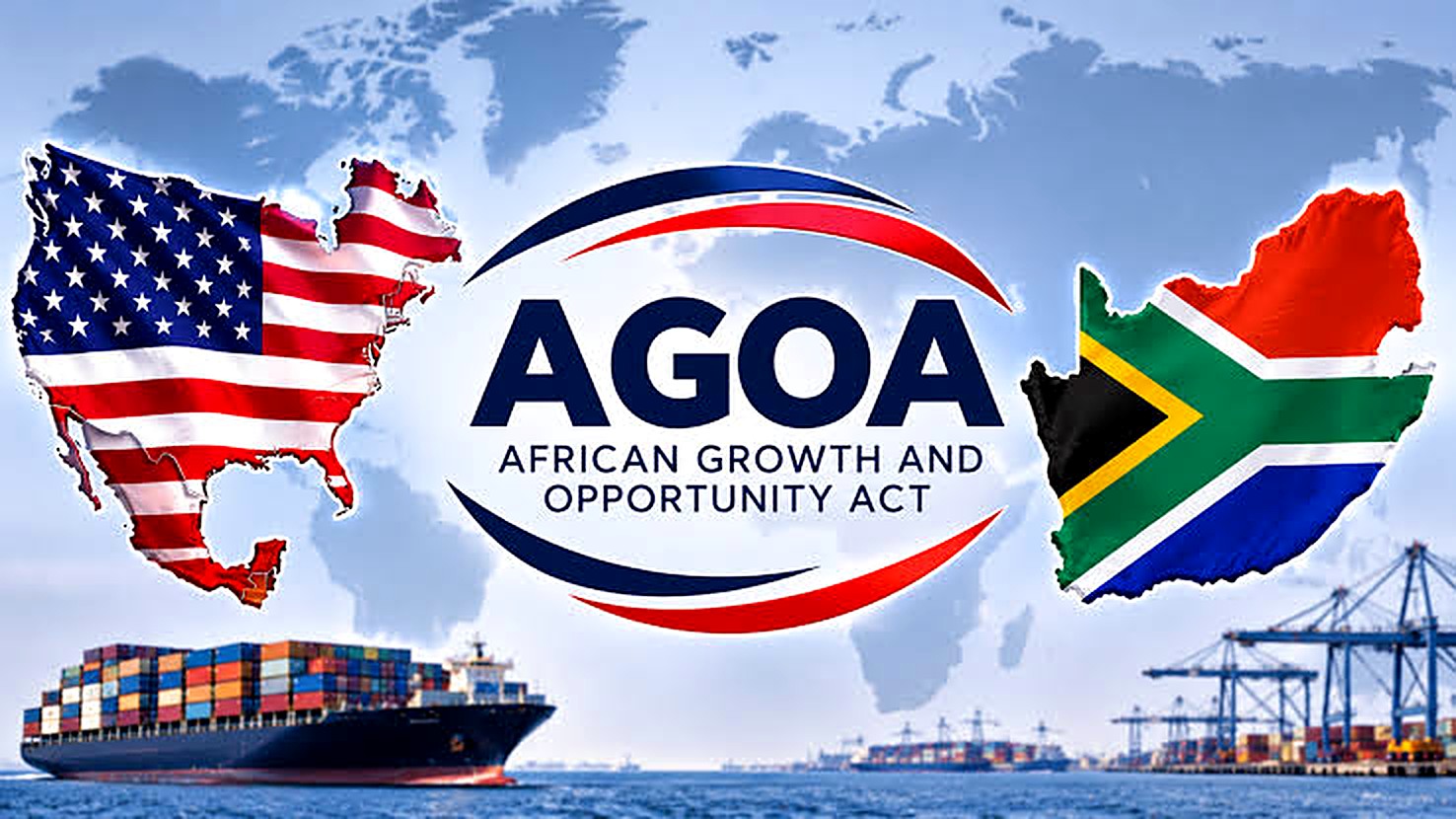
JOHANNESBURG: The United States intends to remove South Africa and Rwanda from the African Growth and Opportunity Act (AGOA) from 1 January 2027, threatening preferential access to the American market and raising concerns for businesses connected to South Africa’s regional supply chains.
US Trade Representative Jamieson Greer announced the move on Monday after President Donald Trump notified Congress and the two governments of his intention to end their participation in the programme.
Greer said both countries were “engaging in practices that are inconsistent with AGOA’s eligibility criteria”.
Washington cited barriers to US trade and investment, corruption, and concerns about US national security and foreign policy interests in South Africa. For Rwanda, it raised trade barriers, rule-of-law and human-rights concerns.
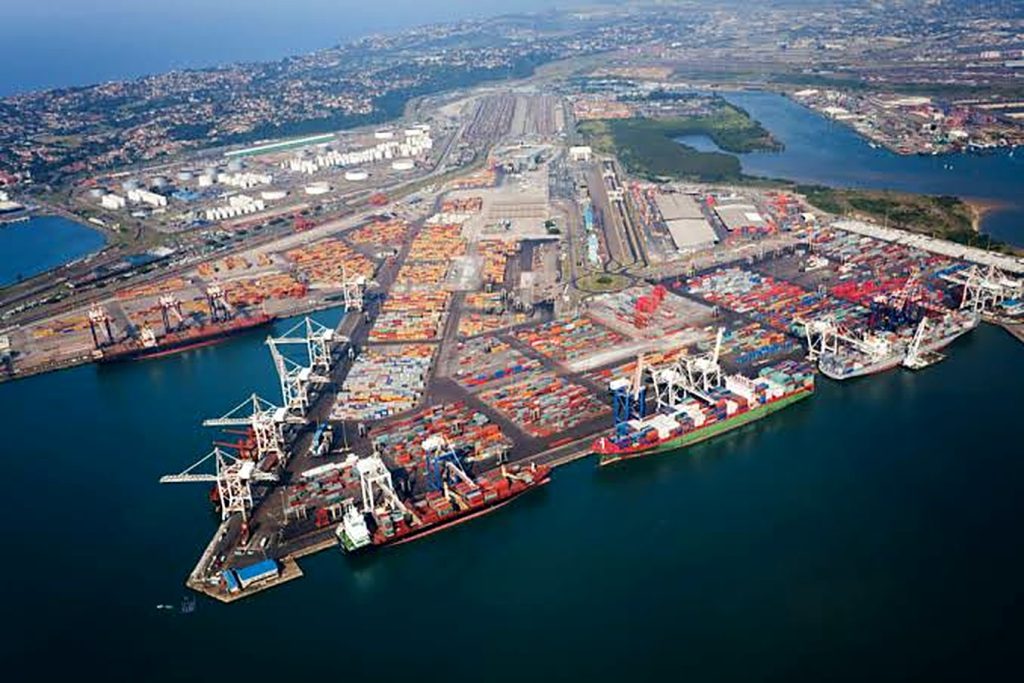
The decision would remove AGOA preferences rather than prohibit trade. South African businesses could continue exporting to the US, but affected goods would face the applicable tariffs unless another exemption or arrangement applied.
What South Africa stands to lose
Introduced in 2000, AGOA gives eligible sub-Saharan African countries preferential access to the US market for thousands of products.
South Africa has been one of its most significant beneficiaries, with exports ranging from vehicles and industrial goods to agricultural products.
The programme’s wider future had recently become clearer after its extension to December 2028. However, individual countries remain subject to annual eligibility reviews, meaning the programme can continue while particular participants lose access.
South Africa exported about $1.7 billion under AGOA in 2025, according to Reuters. Its trade ministry has said AGOA exports account for approximately 10% of the country’s exports to the US and 1% of its global exports.
Those proportions suggest a limited direct effect on the economy as a whole. They do not mean the consequences would be small for individual exporters or communities dependent on affected industries.
Pretoria keeps the door open
Trade, Industry and Competition Minister Parks Tau said ahead of the announcement that South Africa was prepared for an adverse outcome while remaining open to negotiations.
“We are ready, whatever the decision,” he said.
Tau said government had engaged Washington on its concerns and submitted proposals through official channels.
“These matters are best resolved through diplomatic and trade channels, and that is where we will continue to pursue them,” he said.
He also pointed to the commercial interests linking the two economies. Bilateral trade reached $28.8 billion in 2025, while more than 600 American companies operate in South Africa.
ALSO READ: Kenya, US deepen trade and security ties as new economic framework takes shape
The notice period leaves a window for further engagement before the proposed exclusion takes effect. It does not guarantee that Washington will reverse its decision.
Some industries face greater pressure
The effect of losing AGOA will depend on the product, its existing tariff treatment and any additional duties or exemptions.
A 2023 study by Trade and Industrial Policy Strategies (TIPS) found that vehicles and ferroalloys accounted for more than half of South Africa’s preferential exports to the US.
Agriculture also relied heavily on preferences. The study found that 75% of agricultural exports to the US used AGOA or Generalised System of Preferences benefits, with citrus and wine among the leading products.
Those findings describe the trade structure at the time of the study. Changes in US tariff policy since then mean exporters need product-specific assessments rather than a single estimate of the additional cost.
Agricultural economist and presidential envoy Wandile Sihlobo has stressed that losing AGOA would not amount to a trade ban.
“These remain key, and we must work to retain our access to them,” he said of the US and other export markets.
Employment estimates also need careful interpretation. TIPS identified about 28,000 jobs directly linked to preferential exports, while an OECD estimate put employment supported by all exports to the US, including indirect effects, at about 267,300.
The larger figure is not a count of jobs that would automatically disappear if AGOA preferences were withdrawn.
Why neighbouring countries could feel the effects
South Africa’s removal could have consequences beyond its borders because regional manufacturers supply components and services to its exporters.
TIPS identified wiring harnesses from Botswana and vehicle seats from Lesotho among the inputs used by South Africa’s automotive industry.
The researchers described AGOA as “an international opportunity for a regional productive network, rather than for individual countries”.
If South African manufacturers lose orders or reduce production, suppliers elsewhere in the Southern African Customs Union could face weaker demand. The customs union includes Botswana, Eswatini, Lesotho, Namibia and South Africa.
A separate concern involves rules of origin, which determine whether goods qualify for preferential treatment.
AGOA generally requires a minimum level of qualifying content and allows certain inputs from other eligible countries to count towards that threshold. South Africa’s exclusion would make it important for regional exporters to reassess how South African materials are treated under the rules applicable to their products.
The consequences would depend on the relevant provision and any continuing eligibility under other arrangements. South Africa’s removal would not automatically disqualify every neighbouring country’s exports containing South African inputs.
ALSO READ: Trump Escalates Fight With Lula as US Slaps Brazil With 25% Tariffs
Lesotho’s dependence shows the stakes
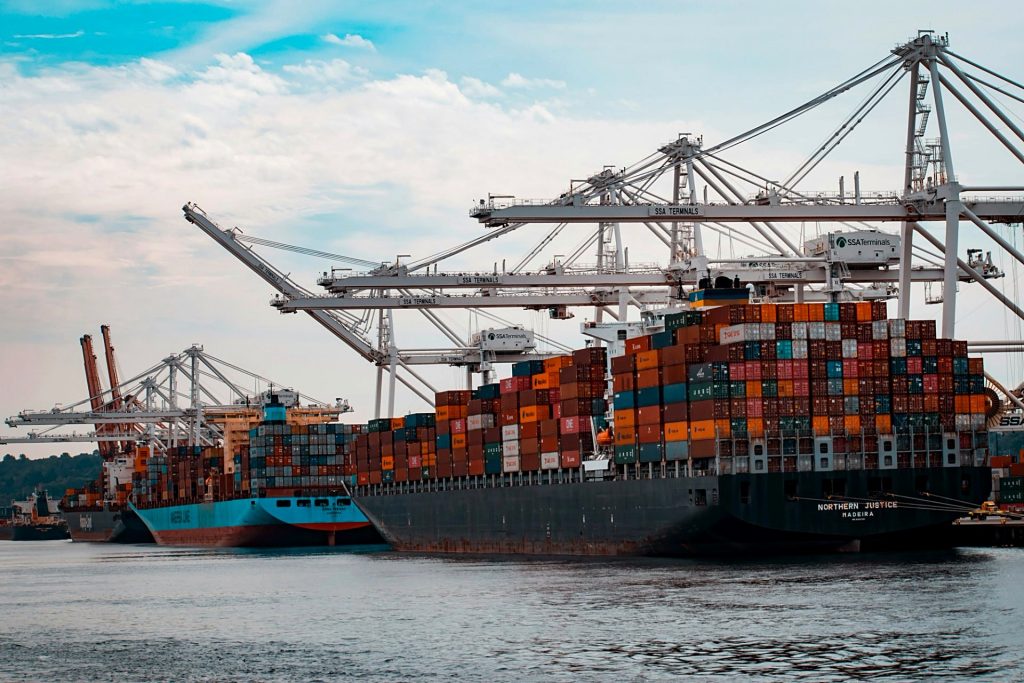
Lesotho’s clothing industry illustrates how important access to the US market can be for smaller economies.
Its trade minister, Mokethi Shelile, warned last year that a lapse in AGOA would threaten 11 factories exporting to the US and approximately 12,000 direct jobs.
That warning concerned the programme’s wider future, rather than South Africa’s eligibility alone. Nevertheless, it highlights the exposure of economies whose export industries depend on preferential access and investment decisions made around it.
For regional businesses, uncertainty itself can carry a cost, complicating orders, sourcing decisions and long-term investment.
A warning for the continent
Rwanda’s proposed removal reinforces the message that AGOA access is conditional.
The country’s apparel benefits were suspended in 2018, although it retained eligibility for other benefits. The new announcement would end its broader participation.
For other African countries, the decision underlines the importance of maintaining access to existing markets while reducing dependence on any single preference programme.
South Africa is already pursuing a broader range of trading partners through its “Butterfly Strategy”, which targets opportunities in Africa, Asia, Europe and South America.
Tau said the approach included the African Continental Free Trade Area, SADC, India, the European Union, the United Kingdom, ASEAN, MERCOSUR and China.
Alternative markets could help exporters diversify, but they will not necessarily absorb the same products, at the same prices or on the same terms.
Political fallout at home
The announcement has also sharpened disagreements within South Africa’s Government of National Unity.
DA international relations spokesperson Ryan Smith blamed the ANC and International Relations Minister Ronald Lamola, describing the decision as “a devastating blow” to agriculture, agro-processing, automotive manufacturing and mining.
The government has maintained that it engaged constructively with Washington and that trade disputes should be resolved through diplomatic channels.
For exporters, the immediate task is more practical: determine which products will lose preferences, calculate the applicable duties and establish whether existing contracts remain commercially viable.
For South Africa’s neighbours, the concern is how those decisions will travel through shared supply chains. The direct loss may be concentrated in particular industries, but its effects could reach factories, farms and workers well beyond South Africa’s borders.