SENEGAL – West Africa is preparing to reshape its agricultural policy for the next decade as governments move to finalise a review of the region’s Common Agricultural Policy amid mounting pressure from food insecurity, climate change, weak regional trade and limited agricultural financing.
More than 80 national focal points, technical experts, ECOWAS Commission officials and regional consultants met virtually on Tuesday, 25 August 2026, to examine the latest drafts of the review of ECOWAP, the Economic Community of West African States’ Common Agricultural Policy.
The technical discussions are feeding directly into a virtual meeting of the region’s agriculture ministers on 27 August, where they are expected to consider a draft stocktaking report, a 10-year outlook and proposed strategic priorities for the next phase of ECOWAP.
The outcome will help shape West Africa’s agricultural policy through 2035.
ECOWAP has served as the region’s main framework for agricultural development and food security since 2005. Its current implementation cycle, which began in 2015, is now drawing to a close, creating an opportunity for governments to reassess what has worked, what has fallen short and what needs to change.
For Senegal, which currently holds the rotating chair of ECOWAS, the review must be grounded in the realities facing farmers and food systems across the region.
Ousman Sylla, representing Senegal’s Ministry of Agriculture, Food Sovereignty and Livestock, told the technical meeting that the exercise should go beyond simply updating the existing policy.
“Its review must provide tailored responses to the region’s persistent challenges: food insecurity, climate change, low regional trade, insufficient local processing, and financing constraints,” he said.
ALSO READ: Akinwumi Adesina’s Agricultural Vision Finds Home in The Gambia
Sylla said the revised policy should also align with the Kampala Declaration, the Comprehensive Africa Agriculture Development Programme’s 2026-2035 cycle and ECOWAS Vision 2050.
He placed particular emphasis on producers, women and young people, arguing that the review should translate into guidelines that are “ambitious, realistic, and consensual” enough to support more resilient and inclusive agrifood systems.
He also identified governance, financing, coordination between national and regional structures, monitoring and accountability as areas requiring greater attention.
From continental commitments to regional action
The reference to the Kampala Declaration is significant because it places the ECOWAP review within a broader continental effort to transform Africa’s agricultural sector.
The declaration, adopted alongside the CAADP Strategy and Action Plan for 2026-2035, follows the Maputo Declaration of 2003 and the Malabo Declaration of 2014.
The Kampala Declaration was adopted at an African Union summit in Johannesburg in May 2025, after member states acknowledged that the targets set under the Malabo framework had not been achieved by 2025.
The new continental strategy seeks to mobilise about $100 billion for agriculture, increase agrifood output by 45% and triple intra-African trade in agricultural products over the next decade.
For West Africa, the ECOWAP review provides an opportunity to translate those continental ambitions into a regional policy framework that responds to conditions on the ground.
That challenge is particularly important as the region grapples with a combination of food insecurity, climate-related shocks, conflict and disruption to agricultural markets.
Food security remains a pressing concern
Across parts of West Africa, conflict and displacement have disrupted agricultural production and food supply chains, particularly in the Sahel. Climate shocks have added another layer of pressure, with changing rainfall patterns, droughts and floods affecting smallholder farmers.
The region’s reliance on food imports also leaves it vulnerable to international price fluctuations and disruptions in global supply chains.
At the same time, limited processing capacity means that much of the value generated from agricultural production is not captured within the region.
Weak intra-regional trade further compounds the problem.
These challenges explain why the new ECOWAP cycle is expected to place greater emphasis on regional markets, local processing, agricultural financing and the resilience of food systems.
Regional institutions urged to work together
The review is also bringing several regional institutions closer into the process.
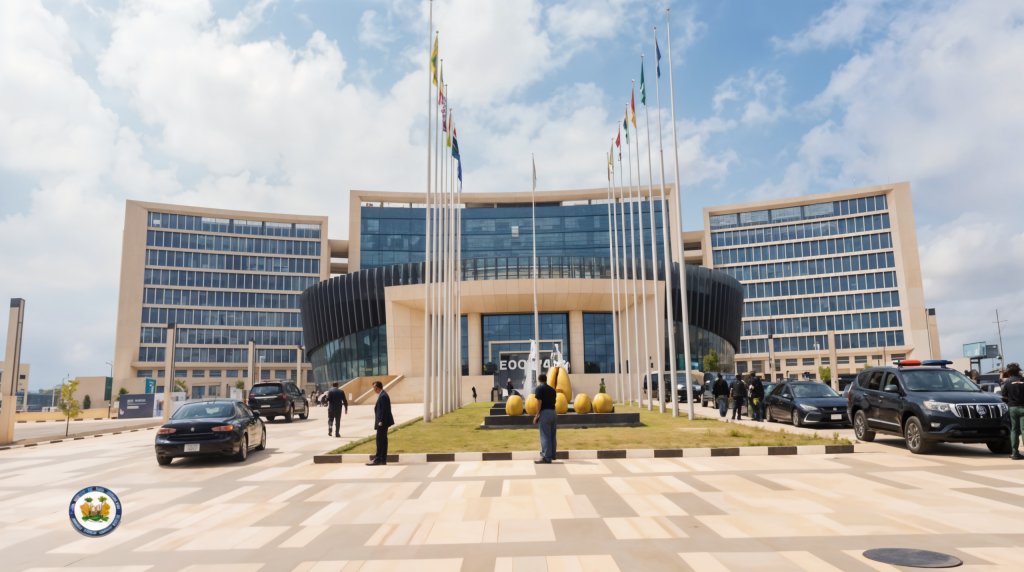
Fatmata Seiwoh, Acting Director of Agriculture and Rural Development at the ECOWAS Commission, welcomed the participation of a representative from the West African Economic and Monetary Union Commission.
She also committed to bringing the Entente Council and the Mano River Union into future discussions.
“Involving these various institutions, which include several ECOWAS Member States, will ensure that the ECOWAP review process remains inclusive,” Seiwoh said.
The wider participation reflects the interconnected nature of West Africa’s agricultural markets, where food production, trade, transport and consumer markets frequently cross national borders.
For the revised policy to succeed, coordination between national governments and regional institutions will therefore be critical.
Women and youth emerge as key priorities
The emphasis on women and young people is another important element of the review.
Women play a major role in agricultural production, food processing and rural economies across West Africa. Meanwhile, the region’s rapidly growing youth population is creating an urgent need for employment and sustainable economic opportunities.
ALSO READ: Too few vets, too many outbreaks: South Africa’s FMD challenge
Agriculture is potentially one of the sectors capable of absorbing that growing workforce, but unlocking that potential will require better access to finance, markets, technology, skills and infrastructure.
Digitalisation and improved market access are therefore increasingly being viewed as tools to make agriculture more productive and commercially attractive.
The stakes extend beyond farming itself. Limited economic opportunities in rural areas have contributed to migration towards urban centres and, for some young people, irregular migration routes outside the region.
A policy that makes agriculture more productive and profitable could therefore have implications for employment, food security and regional economic stability.
Ministers face a critical decision
The technical phase of the ECOWAP review has now brought the process to a critical juncture.
Emmanuel Ahouansinkpo, a consultant with the ECOWAS Commission’s Directorate of Agriculture and Rural Development, also contributed to the technical discussions, providing further input into the documents now headed for ministerial consideration.
The agriculture ministers meeting on 27 August will have to consider whether the stocktaking report, 10-year outlook and proposed strategic priorities are sufficiently developed to move forward or whether further technical and political negotiations are required.
What is at stake is ultimately bigger than the revision of a regional policy document.
ECOWAS is attempting to define how West Africa will produce food, support its farmers, strengthen regional agricultural trade and build more resilient food systems over the next decade.
The success of the new ECOWAP cycle will depend on whether the commitments emerging from the review can move beyond policy documents and translate into practical gains for farmers, agricultural businesses and consumers across the region.