Seychelles and Namibia are seeking to deepen decades of diplomatic ties through cooperation in fisheries, health, renewable energy, mining, tourism and sport, with both countries exploring areas where their respective expertise can be shared.
Seychelles and Namibia Seek to Turn Historic Solidarity Into Practical Cooperation
VICTORIA — Seychelles and Namibia are seeking to turn a relationship forged during Namibia’s liberation struggle into more practical cooperation in areas ranging from fisheries and maritime security to health, renewable energy, mining, tourism and sport.
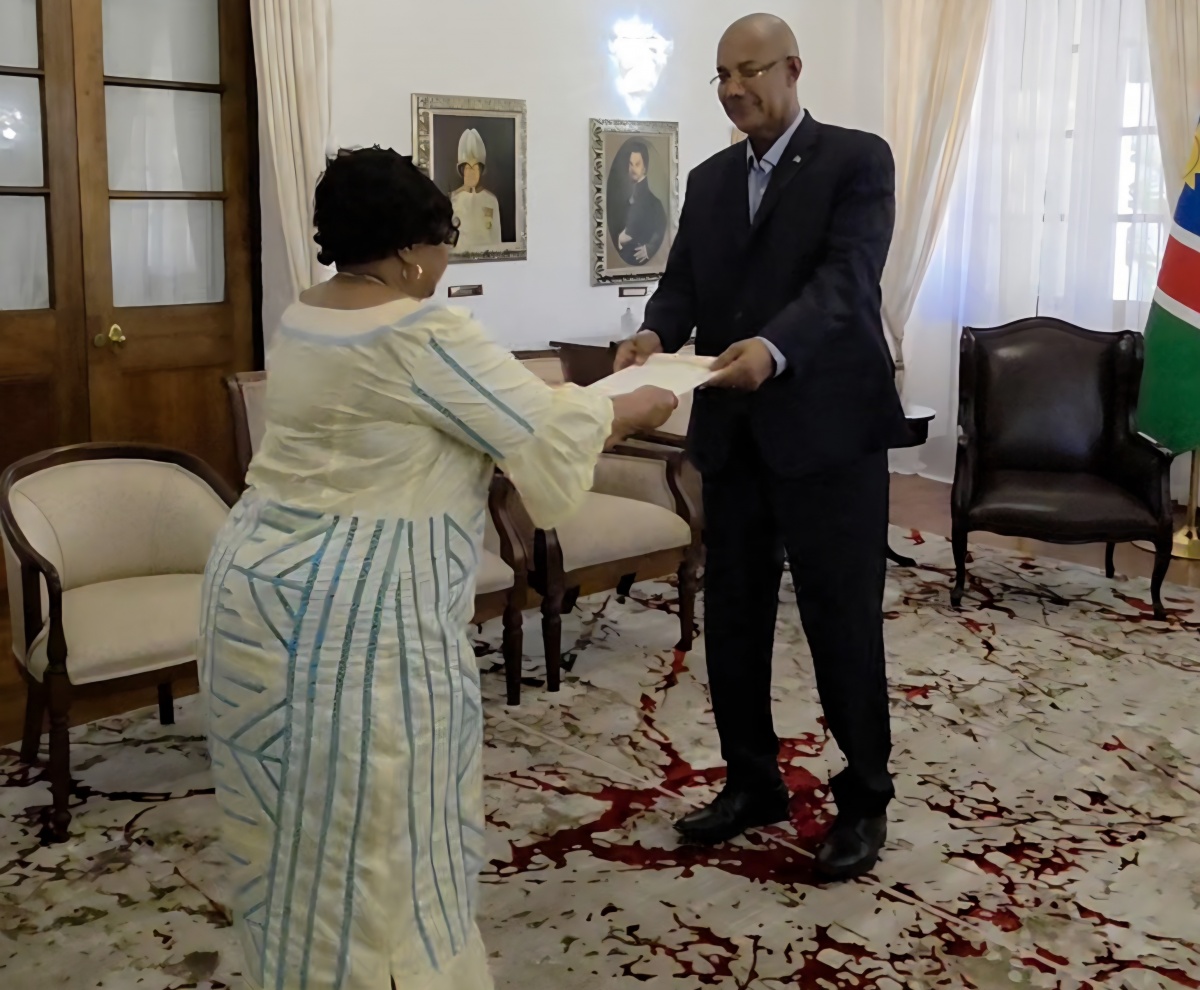
The push emerged during the formal accreditation of Namibia’s new High Commissioner to Seychelles, H.E. Nangula F. Ithete, who presented her credentials to Seychelles President Dr Patrick Herminie at State House in Victoria.
Herminie welcomed Ithete and said he was encouraged by her enthusiasm and commitment to strengthening relations between the two countries during her tenure.
The discussions also provided an opportunity to review the historical ties between Seychelles and Namibia and identify areas where the relationship could deliver greater economic and technical benefits.
The relationship between Seychelles and Namibia predates the establishment of formal diplomatic relations in 1991.
Herminie highlighted Seychelles’ historical ties with Namibia’s founding president, the late Dr Sam Nujoma, and recalled the country’s support for Namibia during its struggle for independence from South African rule.
Seychelles was among several African states that supported liberation movements in the region, including the South West Africa People’s Organisation (SWAPO), which was led by Nujoma.
That shared history has provided a strong foundation for bilateral relations. The latest discussions, however, placed greater emphasis on how the relationship can be translated into practical cooperation.
Fisheries and maritime security take centre stage
Fisheries, aquaculture and the wider Blue Economy emerged as key areas for collaboration.
The two countries discussed opportunities to cooperate on sustainable ocean governance, fisheries management and maritime security, including maritime surveillance and capacity-building in fisheries enforcement.
The focus reflects the importance of marine resources to both countries, despite their different geographic settings.
Seychelles, an Indian Ocean island nation, has made the Blue Economy a central component of its development strategy, while Namibia’s Atlantic coastline supports a major commercial fishing industry.
Cooperation on maritime security and fisheries enforcement could also contribute to efforts to combat illegal, unreported and unregulated fishing, a persistent challenge for African coastal states.
Health was another priority, with discussions focusing on the exchange of medical professionals, training and broader capacity-building initiatives.
ALSO READ: Economic Freedom Takes Centre Stage in South Africa-Namibia Partnership
The two countries also explored cooperation in renewable energy.
Seychelles expressed interest in Namibia’s experience in emerging energy technologies, including green hydrogen, as Namibia develops ambitions around the production and export of renewable hydrogen and related products.
The discussions point to an opportunity for the two countries to share technical expertise as they pursue different aspects of the transition towards cleaner energy.
Sport was identified as another avenue for cooperation, particularly through coaching, training and youth development programmes.
Seychelles could potentially draw on Namibia’s experience in rugby and other sporting disciplines, while exchanges between the two countries could create opportunities for athletes and coaches.
Herminie also stressed the importance of strengthening cooperation through regional and continental institutions, including the African Union and the Southern African Development Community.
Mining and tourism added to the agenda
Following her meeting with Herminie, Ithete met with Seychelles Vice-President Sebastien Pillay for further discussions on bilateral cooperation.
The meeting expanded the agenda to include education, tourism, parliamentary diplomacy and technical exchanges.
Pillay highlighted Seychelles’ interest in Namibia’s extractive sector, particularly its mining industry and approach to foreign ownership and participation.
Namibia has built a substantial mining sector, with uranium and diamonds among its major mineral resources, while exploration for critical minerals has expanded in recent years.
For Seychelles, the discussions provide an opportunity to learn from Namibia’s experience in managing and developing an extractive industry, particularly as the island nation considers approaches to resource-sector development and governance.
Tourism was also identified as an area where the two countries could exchange expertise.
Although their tourism models differ, the sector is important to both economies, creating scope for knowledge-sharing around destination development, skills and sustainable tourism.
Education and parliamentary diplomacy were also discussed, with both sides identifying opportunities for greater institutional and technical exchanges.
Ithete’s parliamentary experience was highlighted as a potential asset in strengthening engagement between the two countries’ legislative institutions.
The accreditation meetings suggest that Seychelles and Namibia want their longstanding political and historical relationship to produce more tangible forms of cooperation.
Fisheries, maritime security, health, renewable energy, mining, tourism, education and sport provide a broad platform for collaboration, while engagement through the African Union and SADC gives the relationship an additional regional dimension.
The next step will be translating the areas identified during the meetings into sustained engagement between government departments, institutions and businesses in Seychelles and Namibia.
For two countries whose relationship was strengthened through solidarity during Namibia’s independence struggle, the emerging focus is increasingly on what that history can deliver for their future.
Subscribe to Our Newsletter
Keep in touch with our news & offers
Thank you for subscribing to the newsletter.
Oops. Something went wrong. Please try again later.