Sudan has hit back at mounting international pressure to accept a ceasefire, accusing foreign powers of trying to dictate the country’s path to peace. With General Abdel Fattah al-Burhan kept out of the UN General Assembly amid a visa dispute with Washington, Khartoum is drawing a harder line over who gets to decide Sudan’s future.
Burhan Shut Out, Sudan Fights Back
NEW YORK – Sudan has drawn a diplomatic line in the sand, warning that it will not accept peace terms dictated by foreign powers as a visa dispute kept de facto leader General Abdel Fattah al-Burhan out of the United Nations General Assembly.
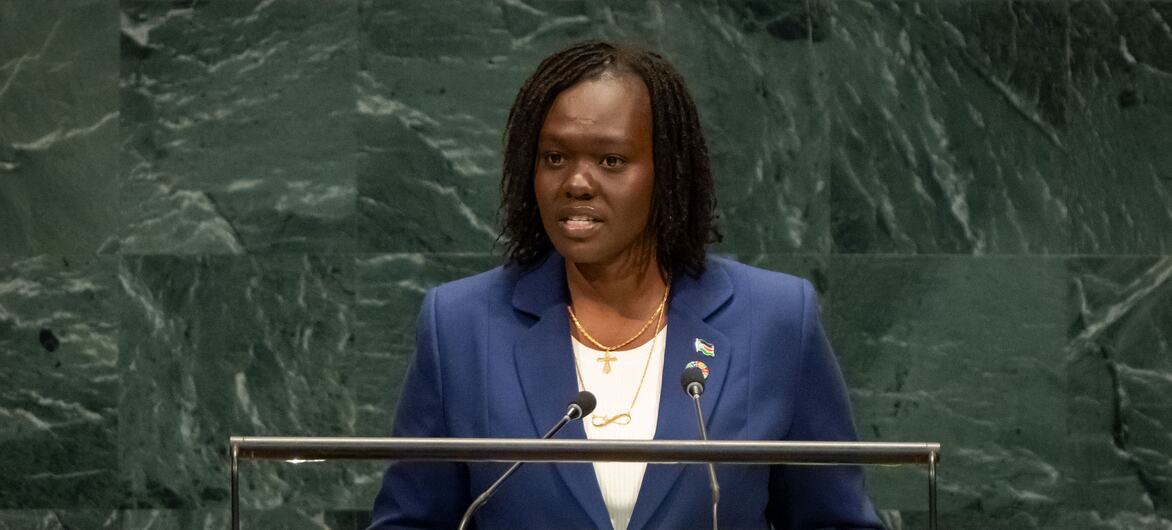
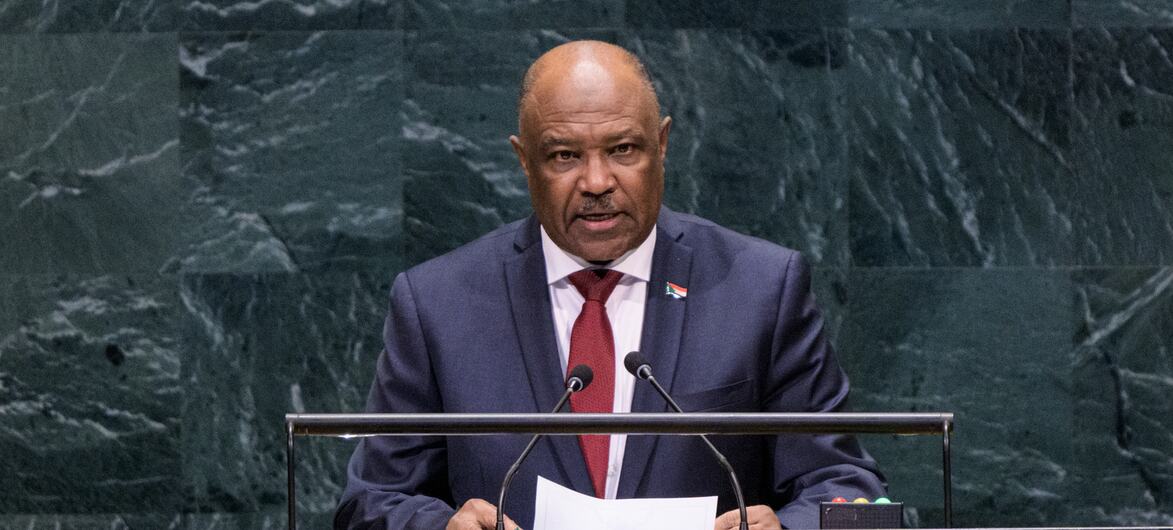
Instead of Burhan, Foreign Minister Mohieldin Salim Ahmed Ibrahim took Sudan’s seat at the UN on Monday and used his address to reject what he described as attempts to impose “solutions, dictates or external agendas” on the country.
The intervention came as the United States faces mounting questions over its decision not to issue Burhan a visa, with diplomatic sources saying Washington linked the visa to Sudan’s acceptance of a proposed 90-day ceasefire.
Khartoum rejected the proposal, arguing that a pause in fighting would allow the Rapid Support Forces (RSF) to regroup and launch further attacks.
The United States has not publicly confirmed that Burhan was denied a visa, with the State Department saying it does not comment on individual visa cases.
However, US senior adviser Massad Boulos, who proposed the 90-day ceasefire, later told The National that keeping Burhan away was intended to signal “a lack of appreciation for their position”.
The State Department has also said that neither the Sudanese army nor the RSF “represent legitimate, constitutional governance for Sudan”.
UN Secretary-General António Guterres expressed “deep concern” over the dispute, with his spokesperson calling on the host country to issue visas in accordance with the 1947 Headquarters Agreement.
Guterres later raised the issue again during a meeting with Sudan’s foreign minister on the sidelines of the General Assembly.
‘Sudan will not be dictated to’
In his address, Salim Ahmed Ibrahim repeatedly returned to the issue of foreign intervention, arguing that outside interference had contributed to prolonging Sudan’s conflicts.
“We reaffirm Sudan’s openness to any sincere and constructive effort aimed at ending the war imposed on its people. […] At the same time, we reiterate our categorical rejection of any attempt to impose solutions, dictates or external agendas upon our people,” he said.
“Peace is a process requiring patience, determination and commitment to addressing the root causes of conflict,” he added.
He argued that agreements that fail to address the underlying causes of the war would not deliver lasting peace.
His remarks came as international pressure on Sudan’s warring parties intensified.
Last Wednesday, the African Union and the United States co-chaired the first joint meeting of the Quad and Quintet diplomatic groupings, which called for an immediate humanitarian truce, protection of civilians and an arms embargo.
ALSO READ: CIA Chief Meets El-Sisi in Cairo as Iran, Gaza, Sudan and Somalia Dominate Talks
Participants agreed to work towards a humanitarian declaration and establish mechanisms to monitor and verify future agreements.
The Quad, comprising the United States, Saudi Arabia, Egypt and the United Arab Emirates, first proposed a three-month humanitarian truce in September 2025, followed by a nine-month transition towards an independent, civilian-led government.
The RSF said it accepted the proposal last November, while the Sudanese army insisted that any truce must include the paramilitary group’s withdrawal from civilian areas and the surrender of its weapons.
Salim Ahmed Ibrahim also criticised international sanctions imposed on Sudan over the past two decades, arguing that they had damaged the country’s economy and national sovereignty while “[exacerbating] cycles of violence […] and hindering national reconciliation”.
He called for an end to the flow of weapons, ammunition and mercenaries into Sudan.
Washington is separately seeking to expand a two-decade-old arms embargo covering Darfur, with Boulos describing the existing restrictions as outdated.
RSF accused of atrocities
Throughout his speech, Salim Ahmed Ibrahim referred to the RSF, once an ally of the Sudanese army but now its principal rival, as “the terrorist militia”.
He blamed the group for the civil war that erupted in April 2023 and accused it of attacking civilians, medical centres and hospitals.
He also criticised the international community for failing to designate the RSF as a terrorist organisation and for not closing cross-border supply routes used by the group.
“Silence regarding the atrocities committed by the terrorist militia in Sudan is not only shameful, unethical and complicit, it is a betrayal of the civilian victims,” he said.
UN investigators have documented serious abuses by the RSF.
An independent UN fact-finding mission found that during the siege of El Fasher, the group committed crimes against humanity, including murder, torture, enslavement and sexual violence.
The UN Human Rights Office has confirmed 6,000 killings by the RSF in the city, while warning that the actual toll is likely considerably higher.
The destruction of Sudan’s healthcare system, however, has involved both sides.
According to the World Health Organization, Sudan accounted for 82% of recorded global deaths from attacks on healthcare in 2025. Both the Sudanese army and RSF have been accused of attacking health facilities.
More than three years of fighting have pushed Sudan into one of the world’s largest humanitarian crises.
Estimates put the death toll at about 150,000, while the UN refugee agency says more than 11.3 million people have been forcibly displaced.
The WHO estimates that 33.7 million people in Sudan will require humanitarian assistance this year.
Sudan calls for UN reform
The Sudanese foreign minister also criticised the functioning of the UN, accusing international institutions of allowing states to use or threaten force, interfere in the internal affairs of other countries and disregard international law.
He called for reform of the UN system, particularly the Security Council.
Sudan backed calls for Africa to receive two permanent seats on the council, a position that forms part of the African Union’s longstanding demand for greater representation in the UN’s most powerful body.
ALSO READ: Aid Cuts Leave 117,000 Sudanese Refugees Facing Worsening Conditions In Chad
Despite his criticism, Salim Ahmed Ibrahim said Sudan remained committed to “positive cooperation” with the UN.
He cited cooperation with UN offices dealing with sexual violence in conflict and children affected by armed conflict, as well as the Office for the Coordination of Humanitarian Affairs and UN human rights mechanisms.
During his meeting with Guterres, he also reaffirmed Sudan’s cooperation with the Secretary-General’s Personal Envoy, Pekka Haavisto, and pledged to facilitate humanitarian aid convoys across the country.
The bigger battle: who speaks for Sudan?
The dispute over Burhan’s visa has exposed a deeper diplomatic question over who has the authority to speak for Sudan and negotiate its future.
Burhan has never been elected, while Sudan remains suspended from the African Union following the military coup of October 2021.
Washington has also said that neither the Sudanese army nor the RSF represents legitimate constitutional governance.
Yet Khartoum insists that Sudan’s future cannot be settled in foreign capitals.
That puts the country at the centre of an increasingly intense diplomatic contest. International powers are pressing for a ceasefire and civilian transition, while Sudan’s military-backed government insists that the terms of peace must not be dictated from outside.
For now, the battle over Burhan’s missing seat at the UN has become a symbol of the much larger struggle over who gets to shape Sudan’s future.
Subscribe to Our Newsletter
Keep in touch with our news & offers
Thank you for subscribing to the newsletter.
Oops. Something went wrong. Please try again later.