MASERU – The Uniting Reformed Church in Southern Africa (URCSA) has called on political and business leaders to stop protecting the corrupt and confront violence against women and children, warning that communities cannot prosper. At the same time, public money is stolen and people live in fear.
In a statement issued on Saturday, 3 October, during its ninth General Synod in Lesotho, the church challenged governments, political parties and businesses in South Africa, Namibia and Lesotho to act “with urgency and integrity”.
It also turned that challenge on its own leaders, saying the church must account for how it manages resources, treats survivors of abuse and protects people facing exclusion.
“No society can flourish while communities live in fear, women and children are killed, public resources are stolen and people facing poverty are denied meaningful opportunities,” it said.
The statement, issued on behalf of the General Synod and its executive, addresses corruption, gender-based violence, civilian suffering in Gaza, xenophobia and economic inequality.
Stop protecting wrongdoing
URCSA condemned corruption across government, business and religious institutions, saying it drains resources needed for healthcare, education, housing, infrastructure and jobs.
Beyond the financial losses, it said, corruption deepens poverty and destroys trust in institutions meant to serve the public.
“We call on political and business leaders to end the protection of wrongdoing through patronage, party loyalty or financial influence. Those entrusted with public resources must account for their conduct,” the church said.
ALSO READ: Zulu Royal Family Moves to Mend Rift with Shembe Church After King’s Public Apology
It demanded independent investigations, protection for whistle-blowers, fair legal processes and the recovery of stolen resources wherever possible.
Those standards, it stressed, must apply within the church too.
“The Church accepts that this demand applies equally to its own leadership and stewardship.”
No belief justifies abuse
The synod condemned murder, mass killings, gender-based violence, femicide, rape and child abuse, rejecting any attempt to excuse violence through culture, religion or politics.
“We reject the normalisation of violence in homes, communities and public life. No grievance, political cause, cultural practice or religious belief justifies murder or abuse,” it said.
The appeal comes against a disturbing backdrop in South Africa. Police figures for April to June 2026 recorded 5 427 murders, down 5.9% from the same period a year earlier.
Despite that decline, 569 women were murdered and another 1 052 survived attempted murder during the quarter. According to a Mail & Guardian analysis, women and children accounted for 8 814 of the 9 201 recorded rape cases.
URCSA called for stronger prevention, swift protection for people at risk, thorough investigations and services that put survivors’ needs first. Police and justice institutions, it said, must have the resources and capacity to act with competence, care and integrity.
It also condemned attacks on police officers and others serving communities.
Men and boys have a particular responsibility to challenge misogyny and coercive behaviour, the church said. Religious leaders, meanwhile, must stop using their authority to silence survivors or keep them in abusive relationships.
“Religious leaders must never use spiritual authority to silence survivors or pressure them to remain in danger, while forgiveness should not be invoked to obstruct justice.”
Protect civilians in Gaza
The church expressed profound concern for Palestinians, particularly civilians in Gaza, condemning attacks on civilians, collective punishment, forced displacement and the denial of food, water, healthcare and humanitarian aid.
It called for an immediate end to violence, unrestricted humanitarian access, the release of hostages and accountability for violations of international humanitarian law.
ALSO READ: Faith, Leadership And Unity Take Centre Stage At AU Pre-Summit Prayer Gathering
A lasting peace must uphold Palestinian rights and self-determination alongside the rights and security of Israelis, it said.
“Justice cannot be achieved by making the lives of one people expendable.”
URCSA also rejected antisemitism, Islamophobia and anti-Palestinian racism, warning against turning criticism of governments into hostility towards entire communities.
“Criticism of a government must never become hatred towards a people or religion. Equally, opposition to religious hatred must never be used to silence legitimate advocacy for Palestinian rights.”
Migrants are not scapegoats
Closer to home, the synod rejected racism, tribalism, xenophobia and Afrophobia, including attacks on fellow Africans because of their nationality, language or perceived foreignness.
“Migrants, refugees and asylum seekers must not be blamed for unemployment, crime or failures of governance,” it said.
It urged leaders to avoid inflammatory rhetoric and called on communities to protect people facing intimidation.
The church said tackling unemployment, inequality and poverty requires sustained cooperation between government, business, labour, educational institutions and communities.
Young people need credible routes into education, skills development and dignified work, while those with the fewest resources must not continually bear the greatest burden of economic hardship.
URCSA also committed itself to ensuring that women, children, queer people, migrants and others facing exclusion find dignity and protection within the church.
Belhar’s promise put to the test
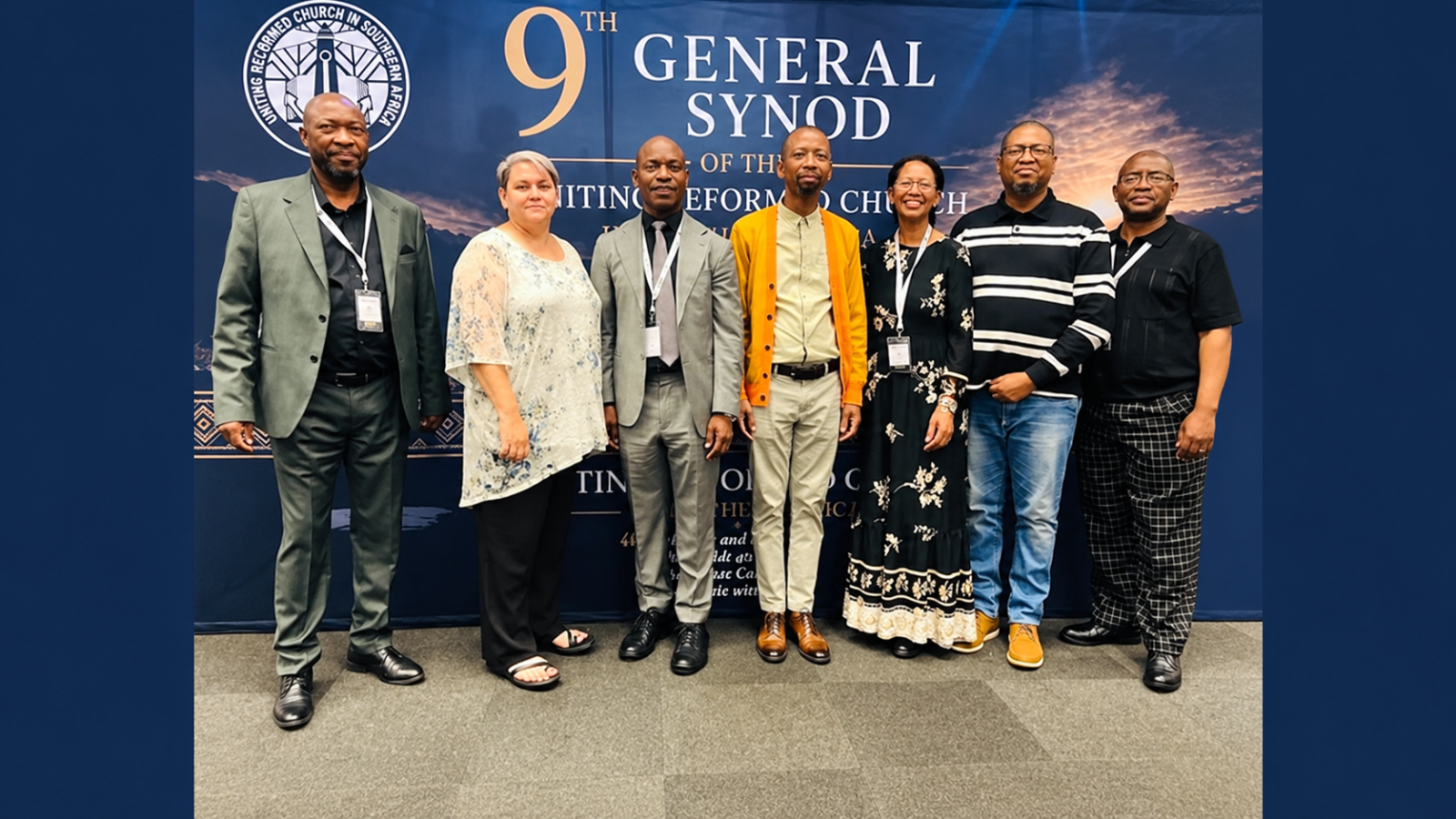
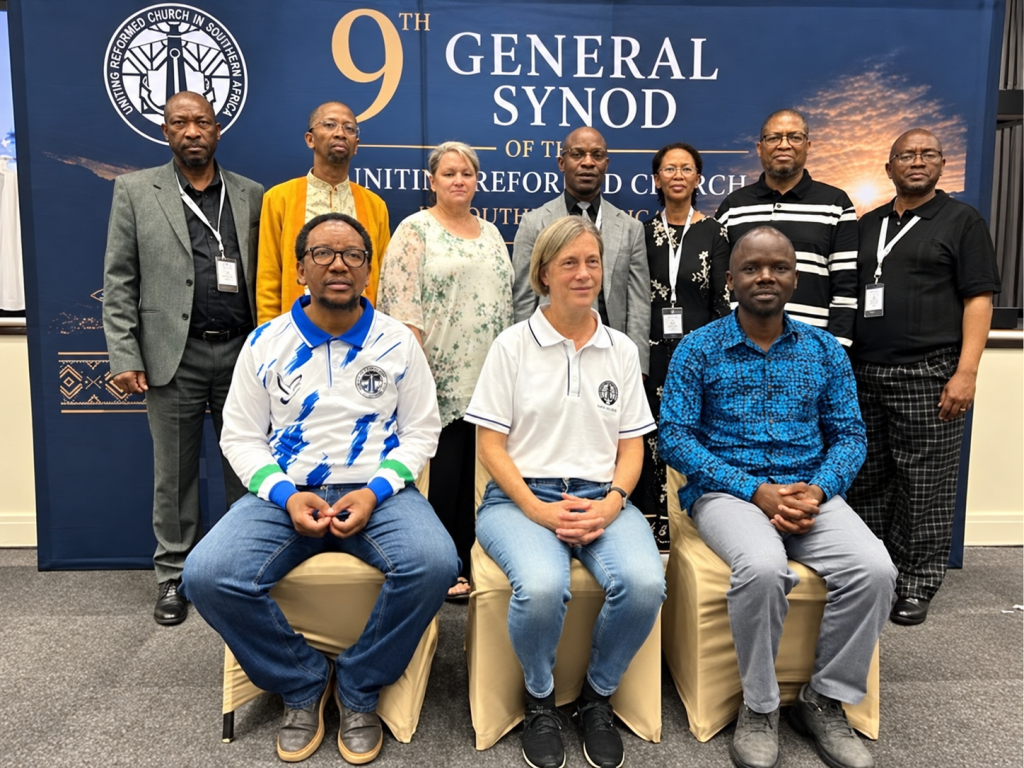
The statement came during a synod held at the Avani Maseru Hotel from 28 September to 4 October, hosted by the Free State and Lesotho Synod.
Its theme, “Be the Salt and the Light of the World: 40 Years of the Belhar Confession as Prophetic Witness”, placed the church’s record on justice and reconciliation at the centre of deliberations.
Delegates elected Rev Prof B.B. Senokoane of the Southern Synod as moderator for the next four years.
The new leadership includes Rev S. Mostert as assessor, Rev Dr E. Monhla as scribe and Rev H. Tromp as actuarius, with Rev T.T. Hlalele, Rev Elise Julius and Rev Dr Mbatha serving as additional members.
Drafted in 1982 and formally adopted in 1986, the Belhar Confession rejected the theological justification of apartheid and affirmed the church’s commitment to unity, reconciliation and justice.
URCSA was established in 1994 through the union of the Dutch Reformed Mission Church and the Dutch Reformed Church in Africa.
The church said the confession’s anniversary demanded more than remembrance.
“Forty years of Belhar is not only a remembrance of what the Church confessed; it is a renewed call to live that confession.”
Its appeal to Southern Africa’s leaders was equally direct: make public office a position of trust, protect human life and resolve differences without violence.
“Reconciliation requires truth and justice. Peace requires protecting human life. Hope requires action.”