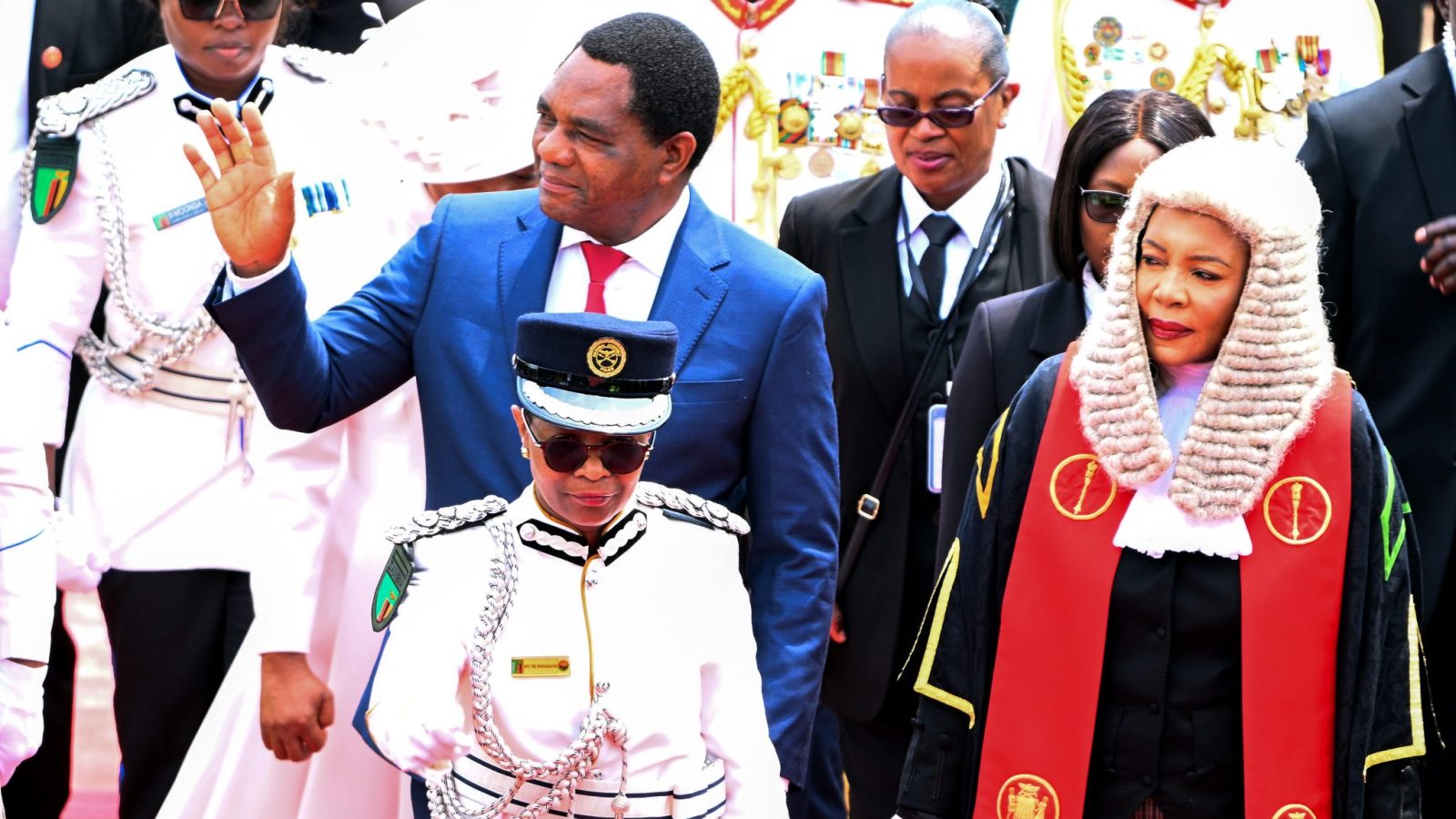
LUSAKA, Zambia: President Hakainde Hichilema has outlined a five-year agenda to more than double the size of Zambia’s economy, saying progress on debt management and foreign exchange reserves must translate into jobs, business opportunities and food on household tables.
In a statement released by State House on Friday, Hichilema presented the “Grow Zambia” programme as the next step after five consecutive years of positive gross domestic product growth.
His address to the Fourteenth National Assembly, delivered under the theme “Grow Zambia: An Agenda for Inclusive Growth and Opportunity for Every Zambian”, linked the expansion drive to cheaper financing and a wider role for investment partnerships.
“To deliver the Grow Zambia Agenda, to more than double the size of our economy, to create jobs and business opportunities, we must work as one nation,” he said.
Debt buyback anchors financing argument
Hichilema pointed to a US$1.36 billion Eurobond buyback as evidence of the government’s efforts to lower the cost of its debt.
“Gross International Reserves have increased to their highest levels ever,” he said. “We have gone a step further by successfully executing a 1.36 billion US Dollar Eurobond buyback, replacing expensive commercial debt with more affordable financing.”
The statement did not provide the reserves total, the buyback price, the replacement financing terms or an estimate of annual interest savings.
A bond buyback involves repurchasing outstanding debt. Replacing expensive debt with cheaper financing can reduce future repayment costs, but the value of the bonds involved should not be treated as an equivalent amount of new money available for public spending.
ALSO READ: Zambia begins Lenacapavir rollout as first doses arrive in Lusaka
The distinction matters for households: lower debt costs can create room for development spending, but the benefits depend on the terms of the transaction and how any savings are used.
Growth gains must reach households
Hichilema acknowledged that national economic indicators alone do not establish whether ordinary Zambians are better off.
“Going forward, our administration will focus on ensuring that these gains translate into tangible benefits for all citizens, including putting food on the table,” he said.
That places employment, household purchasing power and opportunities for local businesses at the centre of the programme’s stated purpose.
Positive GDP growth measures an increase in economic output. It does not, by itself, show how that increase is distributed, whether wages are keeping pace with prices or whether enough jobs are being created.
Similarly, foreign exchange reserves provide a national financial buffer. A record reserves position does not automatically translate into lower living costs or higher household incomes.
What doubling the economy would require
The target concerns the size of Zambia’s economy, rather than simply doubling its annual growth rate. The statement does not specify whether the government is measuring that size in inflation-adjusted terms, current prices or US dollars.
The choice affects how ambitious the target is. As a mathematical illustration, doubling real output in five years would require average compound growth of about 14.9% a year. More than doubling it would require an even faster rate.
A target expressed at current prices can also reflect inflation, while one measured in US dollars is affected by exchange-rate movements. State House’s summary does not provide a starting GDP value or an annual growth path against which progress could be assessed.
Partnerships and capital markets to fund expansion
Hichilema said the government would broaden its financing options to support the development programme.
“To finance our ambitious development priorities, we will broaden the use of innovative financing instruments including Public-Private partnerships, joint ventures, bonds and capital-market instruments,” he told lawmakers.
These mechanisms can attract investment and spread project costs over time. Their effect on the public finances, however, depends on their design: bonds require repayment, while partnerships may involve government guarantees or future payment commitments.
The statement does not identify specific projects, financing amounts or the safeguards that would govern those commitments.
Debt discipline remains an important backdrop. In its January 2026 programme review, the International Monetary Fund assessed Zambia’s public debt as sustainable but still at high risk of overall and external debt distress, and called for prudent borrowing.
For the Grow Zambia agenda, the next test will be the detail: a clearly defined economic target, funded projects and measurable improvements in employment and household welfare. Hichilema’s promise is that the country’s financial gains will become benefits citizens can see in their daily lives.