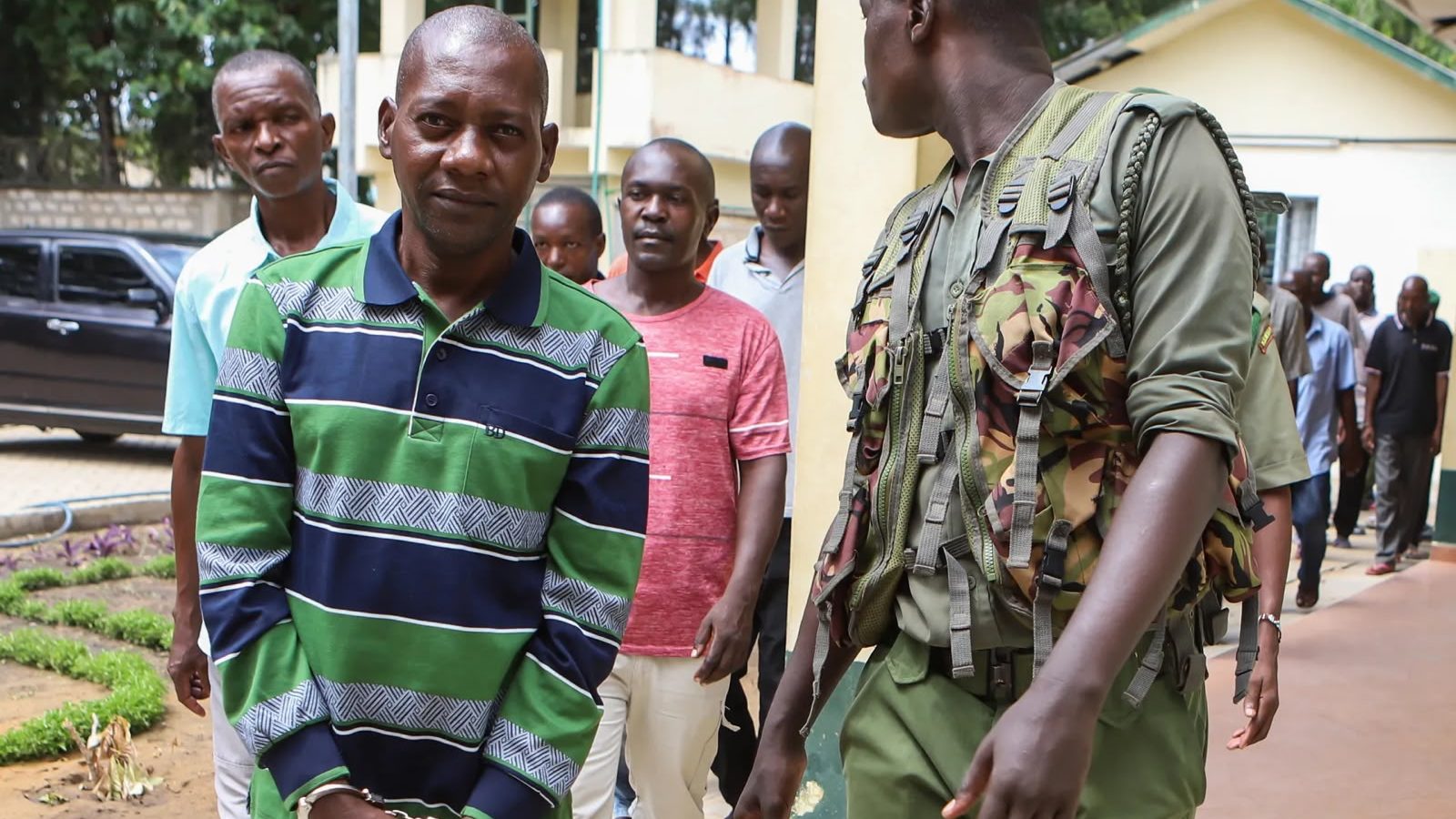
MOMBASA: Preacher Paul Nthenge Mackenzie and 28 of his followers have been convicted of murdering 191 people, including 190 children, in Kenya’s Shakahola Forest tragedy.
Justice Diana Kavedza delivered the verdict at the Mombasa High Court on Monday, 19 October, more than three years after investigators began uncovering mass graves in Kilifi County on Kenya’s coast.
The case centred on followers of a religious movement who were allegedly instructed to starve themselves in preparation for the end of the world.
The 191 murder counts cover only part of the tragedy. Kenyan authorities say more than 400 people died at Shakahola, with the remaining deaths falling outside the counts decided on Monday.
The Office of the Director of Public Prosecutions (ODPP) said the evidence revealed “an organised system in which religious teaching and an established hierarchy directed and enforced deadly fasting.”
Mackenzie’s deputy pastor, Smart Deri Mwakalama, was among those convicted. Two other accused, Kelvin Saudi Asena and Edison Safari Mnyambo, died during the trial, and the murder charges against them were withdrawn.
Mass graves exposed the scale of the deaths
Mackenzie, a former taxi driver, founded the Good News International Church.
Prosecutors said he promoted an apocalyptic message that encouraged followers to withdraw their children from school, reject medical treatment and pursue salvation through extreme fasting.
ALSO READ: Kenya on Ebola alert after first imported case ends in death
They alleged that he “initiated and directed” the fasting on his land in Shakahola Forest and established a “structured hierarchy of death” under which children were to die first, followed by women and then men.
The case attracted international attention in April 2023, when police discovered the first graves. Further exhumations revealed the scale of the deaths, with some burial sites containing a dozen bodies or more.
The discoveries prompted public outrage and questions about the protection of vulnerable people, oversight of religious organisations and the authorities’ response to earlier warnings.
Mackenzie had been arrested twice before the graves were discovered and released on both occasions.
Children were central to the prosecution’s case
The trial focused overwhelmingly on children whom prosecutors said had been subjected to fasting despite being too young to understand or consent to its consequences.
Medical testimony also demonstrated the difficulty of establishing how every victim died.
A pathologist who examined the remains of 190 children attributed 76 deaths to starvation. The cause of death could not be determined in 112 cases, largely because the bodies were badly decomposed. Other findings included head injury, strangulation and asphyxia.
ALSO READ: Uganda High Court Clears Way for Besigye Treason Trial, Rejects Abduction Claims
Decomposition has also complicated identification, prolonging the uncertainty for families searching for missing relatives.
For those who lost loved ones, the verdict offers a measure of accountability after years of grief and unanswered questions.
“It has been really a heavy thing (for) us as a family,” Francis Wanje, who lost eight relatives, including two grandchildren, told Al Jazeera.
Sentencing set for November
Mackenzie denied forcing his followers to starve themselves. The court nevertheless found him and his co-accused guilty of the murders.
Those convicted are due to return to court for sentencing on 6 November 2026.
The verdict does not conclude the wider legal proceedings. Mackenzie and his co-accused have pleaded not guilty in separate cases involving charges that include terrorism, radicalisation and denying children an education.
The tragedy has intensified calls for stronger oversight of religious organisations and earlier intervention when their practices threaten lives.
Monday’s convictions mark a significant step towards accountability. Families still await answers about the full number of victims, the identities of those whose remains have not been identified and whether earlier action could have prevented the deaths.