NAIROBI, Kenya – Health authorities are racing to trace contacts and airline passengers after Kenya confirmed its first Ebola case and death, involving a Kenyan man who travelled from the Democratic Republic of Congo through Uganda before arriving in Nairobi.
Health Cabinet Secretary Aden Duale announced the case on Tuesday, 6 October. The patient, who had lived in the DRC for seven years, died at Nairobi Hospital on Monday night after being admitted and isolated following his arrival.
Authorities have identified 28 contacts, including relatives and health workers, and are tracing 23 more passengers and four crew members from his flight. The immediate priority is to establish whether anyone else was infected and prevent local transmission.
From The DRC To A Nairobi Hospital
The man had reportedly been unwell for about a month and received treatment at several hospitals in the DRC before travelling to Uganda and boarding a commercial flight to Nairobi.
According to the World Health Organization (WHO), he travelled by road through Beni to Kampala on 2 October and arrived in Nairobi the following day. He was taken to hospital and quickly isolated.
Tests at the National Virology Reference Laboratory and the Kenya Medical Research Institute confirmed Bundibugyo virus disease, a form of Ebola. Despite supportive care, he died on the night of 5 October. WHO said he was buried on 6 October under Kenya’s safe and dignified burial protocols.
His journey has renewed attention to cross-border surveillance as transmission continues in the DRC.
Contact Tracing Becomes The Immediate Priority
The patient remained Kenya’s only confirmed case at the time of Tuesday’s announcement. Identifying contacts does not mean they are infected, but it allows health teams to assess exposure and monitor for symptoms.
“We are also pursuing a further 23 passengers and four crew members,” Duale said, referring to those who travelled on the same aircraft.
Health officials said contacts would undergo 21 days of follow-up, covering Ebola’s maximum incubation period, with quarantine and testing arrangements forming part of the response.
Ebola spreads through direct contact with infected blood or other body fluids, or contaminated materials. WHO says people do not transmit the virus before developing symptoms. The incubation period ranges from two to 21 days.
The task now is to locate everyone who may have been exposed, assess their risk and ensure that anyone who develops symptoms receives prompt testing and care.
Bundibugyo Has No Approved Vaccine Or Specific Treatment
The Bundibugyo virus presents a particular challenge because there is currently no approved vaccine or specific treatment for the disease it causes. Candidate vaccines and medicines are being evaluated in clinical trials.
Vaccines and treatments developed for Ebola caused by the Zaire virus cannot simply be assumed to work against Bundibugyo. WHO has said evidence remains insufficient to establish the effectiveness of the licensed Ervebo vaccine against Bundibugyo disease, restricting its use for that purpose to research protocols.
ALSO READ: Africa Charts New Course in Global Health Governance at Landmark Accra Summit
Care focuses on keeping patients hydrated, treating symptoms and managing complications. Early supportive care can improve survival.
Initial symptoms, including fever, fatigue, muscle pain and a sore throat, can resemble other illnesses. Laboratory testing is therefore essential to confirm infection.
The DRC Outbreak Keeps Neighbouring Countries At Risk
The current outbreak was declared in the DRC in May and has become the country’s largest recorded Ebola epidemic. Ituri has remained the epicentre, with substantial transmission also reported in North Kivu.
WHO has warned that insecurity, armed conflict and displacement complicate efforts to identify patients, provide care and interrupt transmission. Its September assessment highlighted delayed detection and limited access to treatment as persistent problems.
By 6 October, international reporting put the DRC’s outbreak at more than 8,000 cases and more than 4,000 deaths.
ALSO READ: The Ebola outbreak the world’s vaccines were not built for
Kenya’s case follows earlier infections in Uganda and a travel-related case in France. It demonstrates the continuing risk of international spread while the outbreak remains active at its source.
Uganda’s Experience Shows Why Vigilance Must Continue
Uganda’s Bundibugyo outbreak ended on 27 August after the completion of a 42-day monitoring period following the discharge of its last patient.
The country recorded 20 confirmed cases: 15 imported from the DRC and five acquired locally among contacts and health workers linked to imported infections. Eighteen patients recovered and two died.
WHO and Africa CDC welcomed Uganda’s containment efforts but warned that close economic ties, frequent travel and cross-border trade would continue to expose neighbouring countries to imported cases
The Kenyan patient’s passage through Uganda does not, by itself, establish renewed transmission there. It does, however, underline the need for authorities along his route to coordinate investigations and follow up on possible exposure.
Kenya’s Preparedness Faces A Practical Test
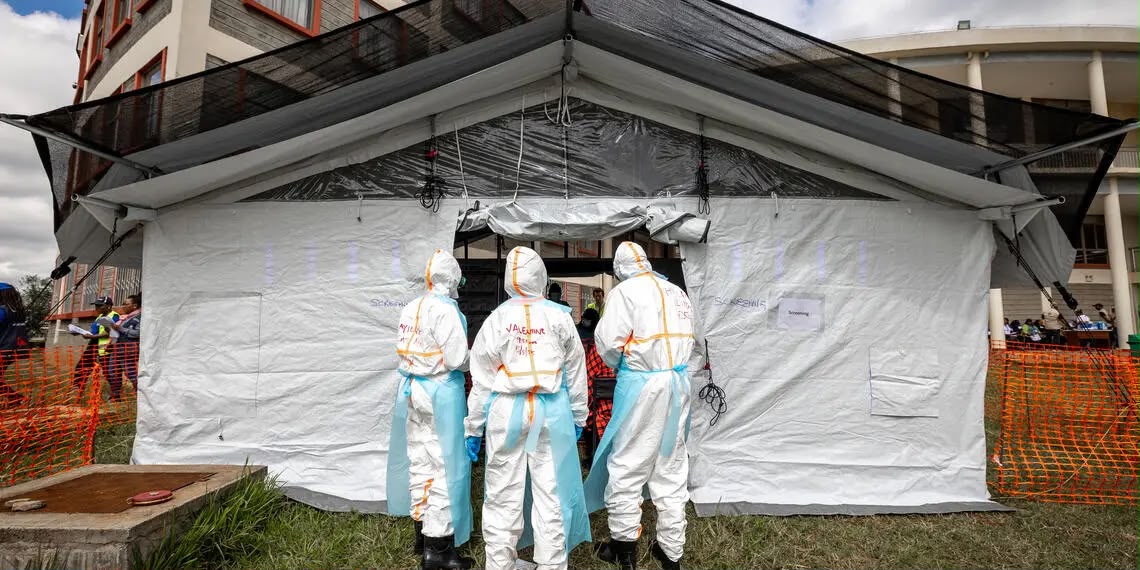
Kenya had been on alert since the regional outbreak began in May. By 6 October, authorities had screened more than 652,000 arriving travellers, tested 267 suspected samples and trained around 5,000 health workers in Ebola prevention and management.
WHO is supporting surveillance, laboratory testing, contact tracing, infection prevention and community engagement. It has also advised against restrictions on travel or trade with Kenya, Uganda or the DRC based on the available information.
That approach places the emphasis on detecting illness early, protecting health workers and maintaining cooperation across borders.
For Kenya, the coming weeks will test how effectively those preparations translate into action. Contacts need monitoring for 21 days after their last possible exposure, and any new suspected case will require rapid investigation.
The immediate goal is to prevent a single imported infection from becoming a chain of local transmission. Across the region, lasting protection will also depend on bringing the continuing outbreak in the DRC under control.