VANDERBIJLPARK: A proposed international airport and trade hub in the Vaal is moving through planning and environmental processes, bringing a multibillion-rand vision for investment and job creation in southern Gauteng closer to its first major regulatory tests.
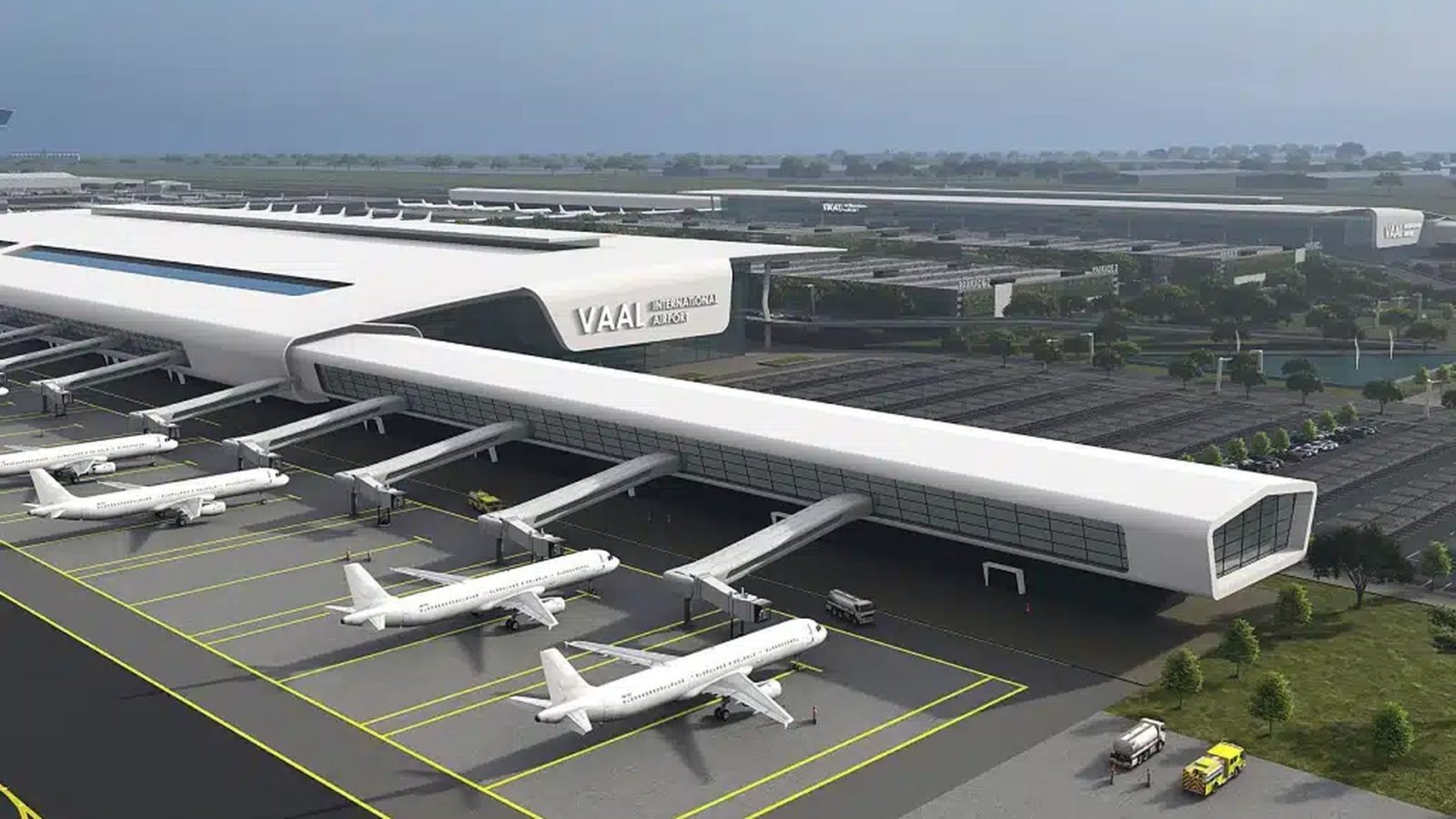
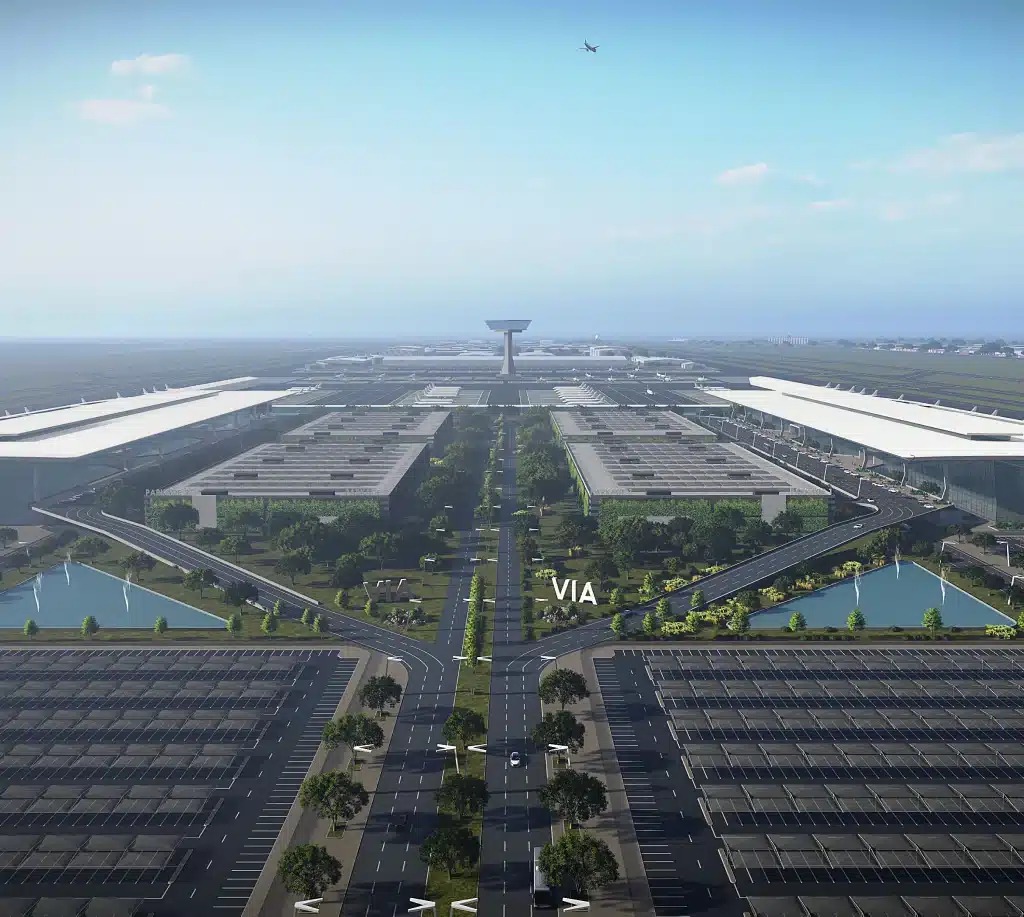
The Vaal Aerotropolis, planned for land west of Vanderbijlpark in Emfuleni, would combine a passenger and cargo airport with an agricultural zone, commercial precinct and airport city.
Its developer, Vaal AeroZone, says the project is intended to create a gateway for international trade and support economic development in the Sedibeng district.
The company has published township establishment documents for public participation and listed a notice for an environmental impact assessment scoping process.
The development remains a proposal. Environmental, land-use and other approvals, as well as the financing needed to build it, will be central to whether it proceeds and when construction begins.
Airport planned around cargo and trade
Vaal AeroZone says the proposed airport has been designed with air cargo as a priority, while also accommodating passenger flights.
The developer’s plans provide for an initial capacity of 7.2 million passengers and 150,000 tonnes of freight a year. These are planned capacities, not confirmed volumes of passengers or cargo.
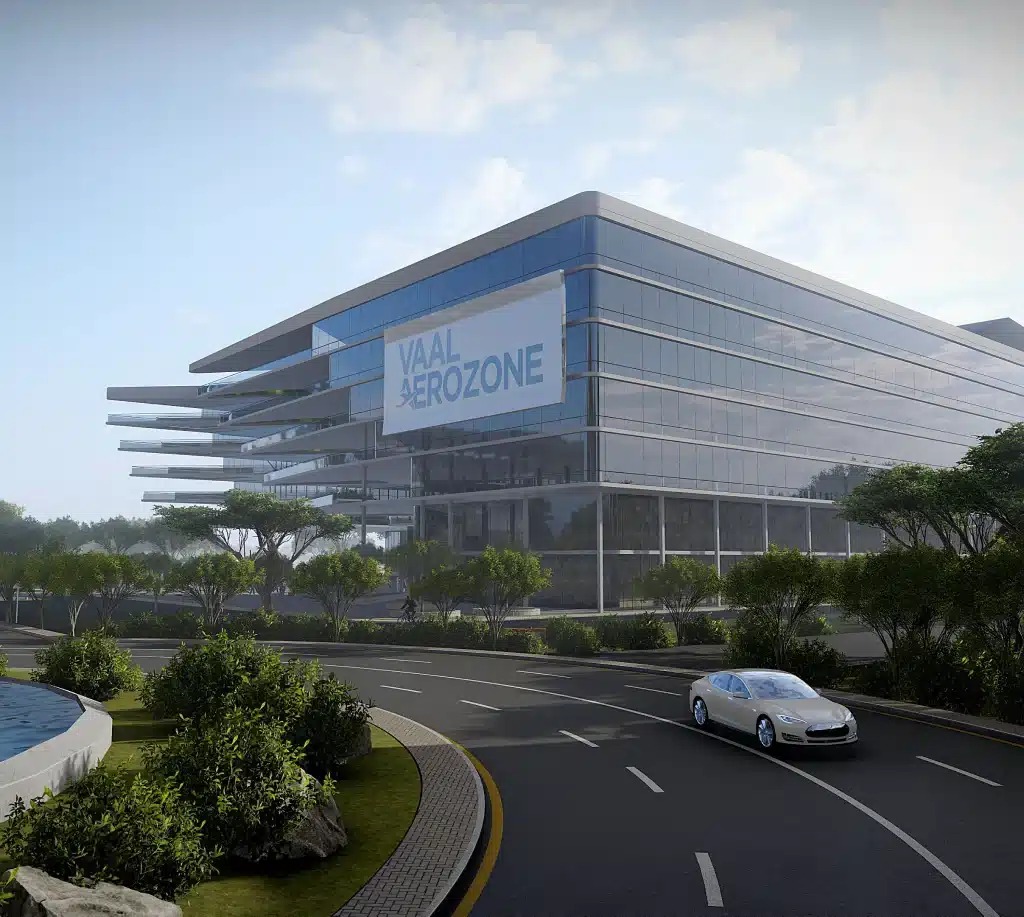
The first phase would include a 4.2km runway, passenger and cargo terminals, aircraft parking, a trade zone and supporting facilities. According to the company, the airport would have four flexible freighter stands.
The site is planned near the N1 corridor, with access also envisaged from the proposed PWV5 road. The company says the airport and its surrounding precinct would allow manufacturers, agricultural businesses and distributors to move goods more directly into international markets.
Vaal AeroZone says its role is to “facilitate global trade, foster regional development” and create value for investors, businesses and local communities. It intends to develop, operate and manage the aerotropolis.
An airport city and agricultural zone
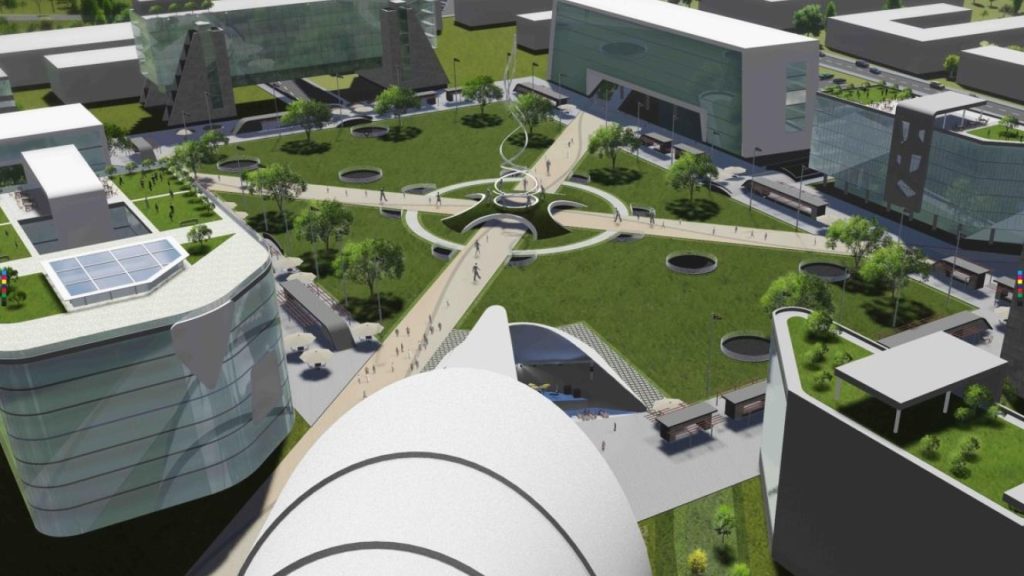
The airport is the centrepiece of a wider development known as an aerotropolis, a commercial and urban precinct planned around aviation infrastructure.
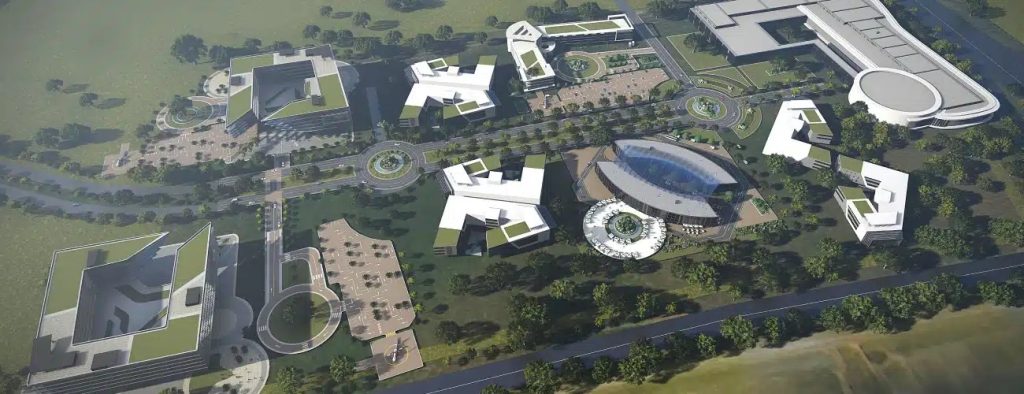
The proposal includes an airport city with offices, shops, hospitality and leisure facilities, alongside clinics and hospitals. The developer says it is targeting a minimum four-star green rating for the airport city.
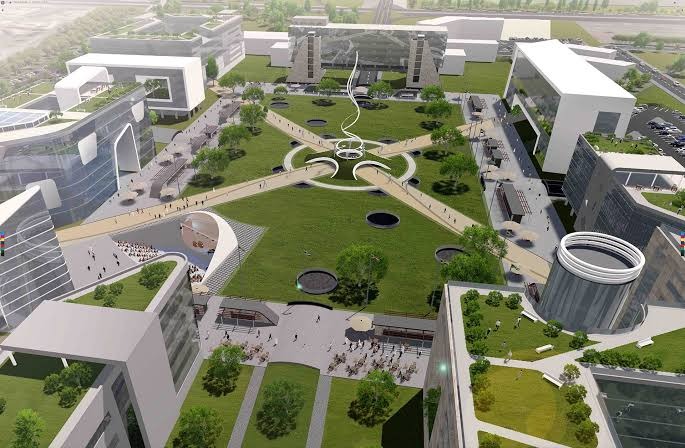
An agricultural zone would include climate-controlled greenhouses, packhouses and a tissue culture laboratory. Vaal AeroZone also proposes facilities to support the export of live animals by air.
ALSO READ: Ethiopia Begins $12.5 Billion Construction of ‘Africa’s Biggest Airport’
The company says a trade zone linked to the cargo terminal would give manufacturers, assemblers and distributors access to airport facilities.
For farmers and businesses dealing in perishable goods, proximity to air freight and cold-chain facilities could reduce the time between production and export. The extent of those benefits would depend on the cost of using the facilities, the availability of flights and whether producers in the Vaal can access them.
Investment figures and funding
The aerotropolis has been presented as a significant investment opportunity for Gauteng, although figures published in government planning documents differ.
In his 2025 State of the Province Address, Gauteng Premier Panyaza Lesufi said the Vaal Special Economic Zone had attracted R28 billion for the aerotropolis, with the prospect of 6,000 jobs for people from Evaton, Sebokeng and Sharpeville.
The 2025 Gauteng Investment Conference project booklet estimated the project’s value at R28.2 billion. It listed approximately R1.4 billion as invested to date and identified funding for bulk infrastructure design and construction as an investment requirement.
Sedibeng District Municipality’s draft 2026/27 integrated development plan lists a project budget of R29.3 billion. The different figures are estimates in planning documents and should not be treated as proof that the entire amount has been secured or spent.
Vaal AeroZone says Citibank South Africa has pledged R1.375 billion towards the first phase.
Citi has described its approximately R1.37 billion Equity Equivalent Investment Programme as supporting a broader Vaal development. In a 2025 statement, the bank said the development would comprise “the Vaal River City and Vaal Aerotropolis”.
The published information does not make clear how much has been disbursed to each component or establish that all the money required for the airport has been secured.
The jobs and infrastructure question
The Gauteng investment booklet estimated that the project could support 12,000 jobs during construction and 6,000 during operations. These are projections, and actual employment would depend on the scale and pace of development, the businesses attracted to the precinct and the airport’s performance.
For communities in Sedibeng, the attraction is the prospect of new investment in a region with a long industrial history and a continuing need for employment.
At a public engagement on the proposed Vaal Special Economic Zone in April, Trade, Industry and Competition Deputy Minister Zuko Godlimpi said the region needed coordinated investment and modernisation to build on its existing strengths.
“Young people in this region must not remain spectators,” he said. “They must become participants in the economy.”
The aerotropolis will also need reliable water, electricity, roads and sanitation infrastructure. The Gauteng investment booklet identifies bulk infrastructure as an area requiring funding.
ALSO READ: Morocco’s Ambitious $4.2 Billion Airport Expansion Plan Ahead of 2030 FIFA World Cup Co-hosting
For residents and businesses, the question is not only whether jobs will be created, but also how many will be accessible to local people, what skills they will require and whether smaller firms will be able to participate in construction and supply contracts.
Part of a broader economic zone
The airport project is linked to government’s wider plans for a Vaal Special Economic Zone, intended to attract investment across several parts of Sedibeng.
The Department of Trade, Industry and Competition held public consultation sessions on the proposed zone in April. It identified green industrialisation, agriculture, logistics, tourism and links with township and rural economies among the opportunities being explored.
The department’s plans also refer to a smart city and an aerotropolis as potential drivers of development.
Designation of a special economic zone and construction of the aerotropolis are separate processes. Both depend on their own planning, regulatory and investment decisions.
Land, environment and airport demand
The scale of the proposal raises questions about land use and environmental effects in an area that includes agricultural land.
A local spatial development framework prepared for the aerotropolis describes a much wider planning area than the airport alone. It also records the acquisition of private land and arrangements concerning government land.
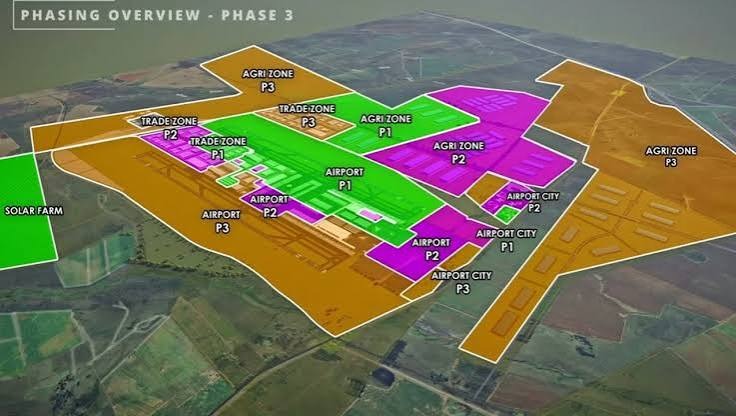
The framework and subsequent applications will be important in assessing how different parts of the proposed development could affect farming, water resources, nearby communities and existing infrastructure.
There is also the question of demand. The planned initial capacity of 7.2 million passengers a year is substantial, and the airport would enter a Gauteng aviation market already served by OR Tambo International Airport and Lanseria.
The developer’s cargo-first approach offers a different emphasis, but the project will still need airlines, freight operators and businesses to use the facilities. Planned capacity does not establish that those users have committed to the airport.
When could construction begin?
Vaal AeroZone’s published timeline indicates that the first phase of development is planned to start in 2028. Sedibeng’s draft planning document also points to a 2028 construction start, although other published accounts have cited different schedules.
The developer’s longer-term plans envisage further expansion in 2048 and 2068, including additional terminal facilities and a second runway. Those dates are planning milestones rather than guaranteed construction commitments.
For now, the immediate focus is on the applications and consultations needed to move the project forward. Their outcome, together with financing and commercial demand for the airport, will determine whether the Vaal Aerotropolis becomes the economic hub its backers envisage.