JOHANNESBURG: Swiss-based infrastructure company Mitrelli says its education projects in Angola have supported more than 1.5 million learning journeys, positioning the country at the centre of an ambitious effort to expand skills development and educational infrastructure across Africa.
The company expects that figure to exceed 2.3 million by 2032 when its education initiatives in Angola and Senegal are combined.
But behind the impressive numbers lies a more complicated question: how much are African governments paying for these projects, and are the investments translating into meaningful employment and economic opportunities for young people?
Mitrelli, which is owned by Israeli businessman Haim Taib’s Taib Group, delivers large-scale government infrastructure projects across Africa, including schools, vocational training facilities, housing and university campuses.
In a statement issued on Wednesday, the company highlighted its growing education portfolio, which spans early childhood development, technical training, entrepreneurship and higher education.
“After three decades of working across Africa, I believe the continent’s greatest strength lies in the talent and ambition of its people,” said Taib, Mitrelli’s founder and president.
“As African economies grow, investing in education is essential to turning that potential into lasting prosperity.”
The company’s latest figures suggest substantial reach. However, Mitrelli has not explained precisely how it calculates a “learning journey” or whether the reported 1.5 million represents unique individuals.
That distinction matters because a learner participating in several programmes could potentially be counted more than once.
Without a clear methodology, the figure provides an indication of the scale of activity but does not establish how many people have completed training, obtained qualifications or secured employment.
Angola at the centre of Mitrelli’s education expansion
Angola has become one of Mitrelli’s most significant markets, with the company delivering education and infrastructure projects through partnerships with the government.
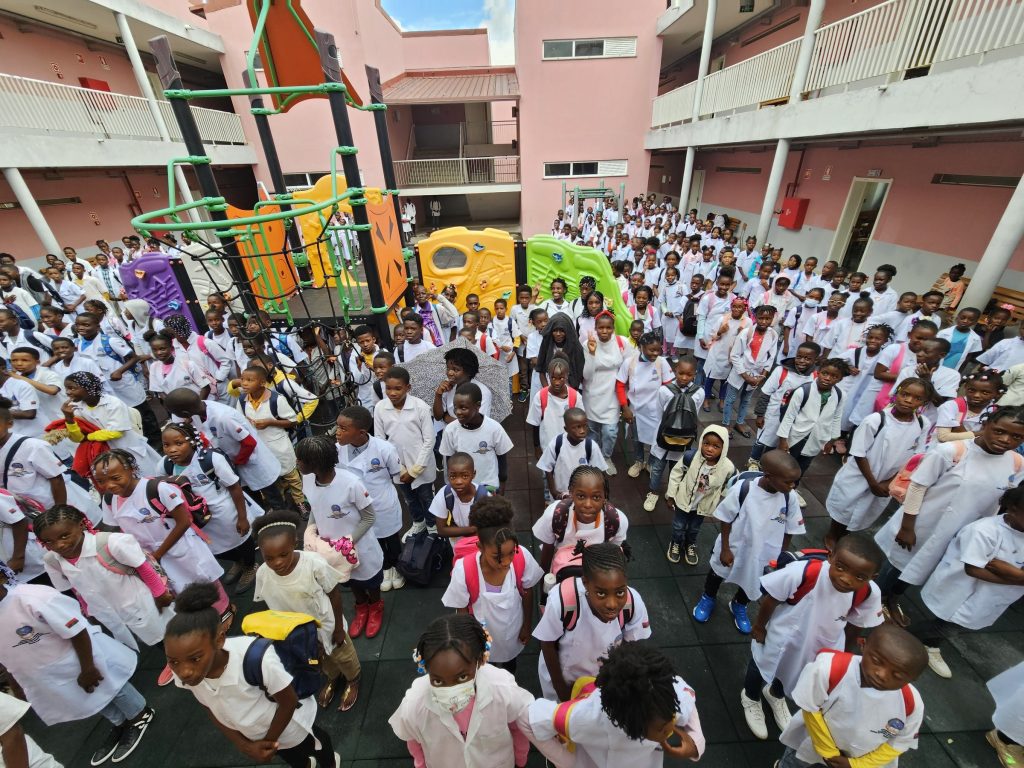
According to Mitrelli, its education portfolio in the country includes the strengthening of 52 technical and vocational schools, the development of eight Youth Villages and the establishment of eight entrepreneurship centres.
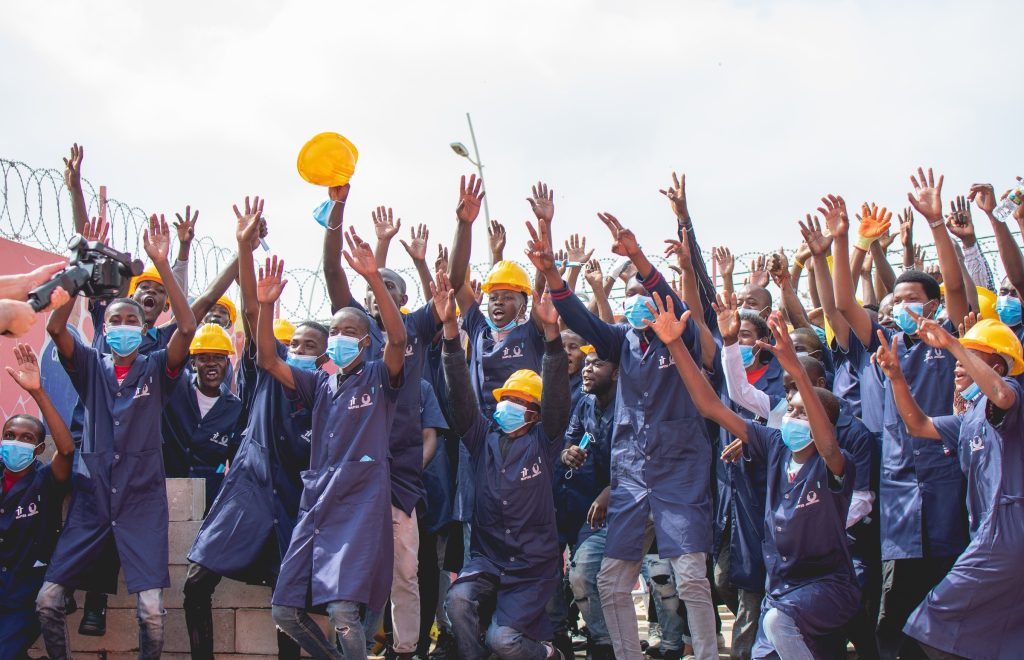
The initiatives are intended to expand access to practical training, support youth development and equip young Angolans with skills relevant to the country’s economic needs.
In 2023, Taib announced an ambition to provide vocational and technology-related training to one million people across Africa within a decade.

The latest figures suggest the company’s education initiatives have reached a substantial number of participants, although the extent to which that translates into completed training and employment remains unclear.
Its most prominent current project is the development of a new university campus in Benguela Province.
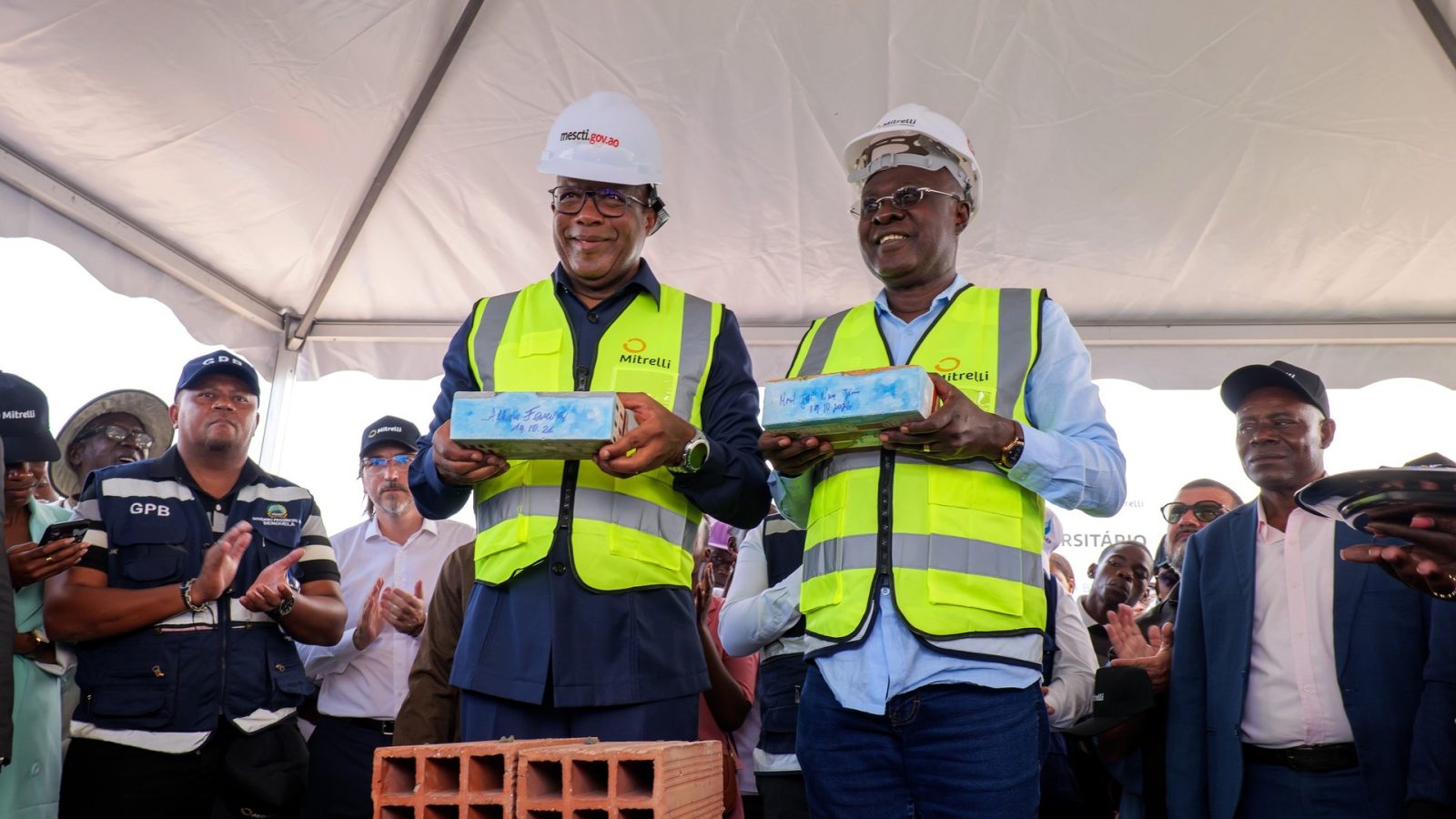
On 19 October, Angola’s Minister of Higher Education, Albano Ferreira, laid the cornerstone for the Baía Farta University Campus, an expansion associated with Katyavala Bwila University.
The campus is expected to accommodate approximately 8,500 students per shift and will house the university’s faculties of medicine, law and economics, alongside the Higher Institute of Educational Sciences, known as ISCED-Benguela.
For Benguela, the development could significantly expand access to higher education and professional training, particularly in disciplines essential to public services and economic development.
Additional medical training capacity could help address healthcare workforce needs, while education programmes could contribute to the supply of qualified teachers.
Law and economics graduates could also strengthen the province’s professional and administrative skills base.
However, the benefits will depend on more than constructing buildings. The campus will require qualified lecturers, teaching equipment, operational funding, maintenance and opportunities for graduates to enter the labour market.
Mitrelli chief executive Rodrigo Manso said the company’s approach was designed to connect education investment with the skills required by emerging industries.
“Preparing people for tomorrow’s economies means anticipating the skills that future industries will require,” Manso said.
“Our partnerships with governments in Angola and Senegal connect education with national economic priorities, ensuring that investment in infrastructure goes hand in hand with developing the people who will drive progress.”
The financing question: development today, debt tomorrow
While Mitrelli describes its relationship with African governments as a development partnership, the financing arrangements behind major projects deserve closer examination.
Many of the company’s infrastructure developments are financed through loans supported by export credit agencies.
Under such arrangements, financing is secured for the construction of public infrastructure, while the borrowing government remains responsible for repayment over an agreed period.
In July, Global Trade Review reported that Mitrelli had secured approximately €135 million, equivalent to about R2.7 billion, in financing for the Katyavala Bwila University expansion.
The 19-year facility was arranged by Deutsche Bank, with 98% of the financing covered by Atradius Dutch State Business, the Netherlands’ state export credit agency.
The arrangement provides financing for a major education development, but it also creates a long-term repayment obligation for Angola.
This is an important distinction.
ALSO READ: Eswatini and Lesotho seek to revive education ties and expand trade
A project financed through an export credit arrangement is not a donation. The infrastructure may provide lasting public benefits, but the state must service the associated debt according to the financing agreement.
The model is not new to Mitrelli’s operations in Angola.
In 2021, Angolan business publication Expansão reported on a US$782 million housing programme involving financing arranged through a Mitrelli-group entity.
According to the report, the projects were awarded to the group’s construction operations through a simplified contracting procedure.
Such arrangements have attracted scrutiny because they combine financing and project delivery within closely connected commercial structures.
While this model can accelerate infrastructure development, it also raises questions about competition, procurement transparency, project pricing and the government’s ability to negotiate favourable terms.
Swiss guarantees bring additional scrutiny
Mitrelli’s financing activities have also attracted attention in Switzerland, where public export credit guarantees have supported some of its African projects.
In June, an investigation published by Swiss weekly WOZ reported that Switzerland’s public export credit agency, SERV, had provided guarantees worth approximately 168 million Swiss francs for Mitrelli projects in Angola and Senegal.
These guarantees protect lenders or exporters against specified risks, including certain forms of non-payment.
They can help governments access financing for projects that might otherwise be difficult to fund.
However, they also create contingent financial exposure for the public institution providing the guarantee if a covered default occurs.
Reporting on the Swiss investigation, Expansão further stated that Mitrelli’s financing arm indirectly held approximately 4% of Angola’s external debt.
The figure, if confirmed, would indicate the scale of the company’s financial relationship with the Angolan state.
None of these arrangements automatically establishes wrongdoing or suggests that the infrastructure is unnecessary.
Export credit financing is a recognised mechanism for supporting international infrastructure development.
Nevertheless, the public interest requires transparency about project costs, procurement processes, repayment obligations and the economic benefits expected from the investments.
For Angola, the central issue is whether the long-term value of the facilities justifies the financial commitments undertaken to build them.
Youth unemployment puts education investments to the test
The need for better education and skills development in Angola is substantial.
According to the country’s National Statistics Institute, youth unemployment stood at 43.6% at the end of 2025.
Overall unemployment reached 21.5% in the second quarter of 2026, while nearly four out of every five jobs were in the informal economy.
These figures illustrate the difficult transition facing young Angolans as they move from education and training into employment.
Expanding access to vocational education could help address skills shortages and improve employability.
However, qualifications alone cannot create jobs in an economy where formal employment opportunities remain limited.
This is where the performance of Mitrelli’s programmes requires closer examination.
The company has highlighted the number of learning journeys supported, the schools strengthened and the facilities developed.
What remains less clear is how many participants have completed accredited training, obtained employment, established sustainable businesses or increased their earnings.
Those outcomes would provide a stronger indication of the programmes’ economic contribution.
For example, a vocational training centre that enrols thousands of learners may demonstrate significant demand for its services.
But its long-term impact depends on how many learners complete their courses, acquire marketable skills and successfully enter employment or self-employment.
Similarly, entrepreneurship centres should ultimately be assessed by the businesses they help establish, the survival rates of those enterprises and the jobs they create.
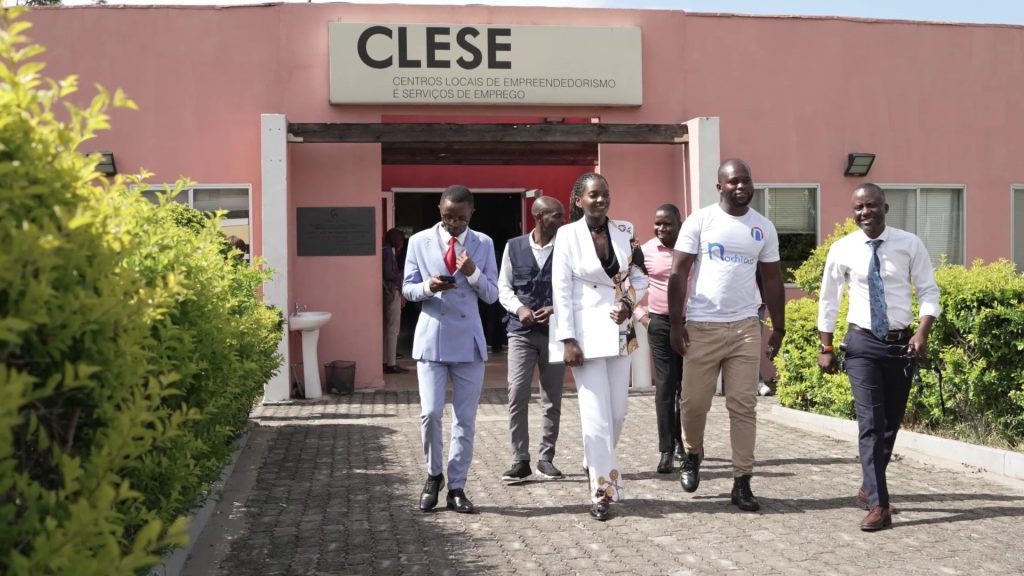
Mitrelli’s latest statement does not provide these outcome measures.
Without them, the reported 1.5 million learning journeys remains an indicator of programme activity rather than independently demonstrated economic impact.
Senegal’s 23 vocational centres form part of the expansion
Mitrelli is pursuing a similar education development strategy in Senegal.
ALSO READ: RESPECT Unveiled: How Digital Infrastructure Is Poised to Revolutionise Education Across Africa
In 2022, its education arm, Focus Education, announced plans to develop 23 advanced vocational training centres in partnership with the Senegalese government.
The proposed facilities were intended to provide training for up to 30,000 young people annually across 14 programmes aligned with regional economic priorities.
The initiative reflects a growing emphasis among African governments on vocational education as a means of addressing unemployment and improving workforce readiness.
Rather than concentrating exclusively on university education, the model seeks to develop practical skills that can support industries and local businesses.
However, implementation has progressed gradually.
By December 2024, the vocational training centre in Diourbel was reportedly just over 31% complete.
The Senegalese developments are also among the projects linked to Swiss export credit guarantees.
As with Angola, the value of the investment will ultimately depend on whether the centres are completed, equipped, staffed and used effectively.
Their contribution will also need to be measured against training completion rates, employer demand and the ability of graduates to secure sustainable livelihoods.
Infrastructure must deliver more than impressive numbers
Africa’s need for education infrastructure is undeniable.
Across the continent, population growth, urbanisation and changing labour market demands are placing increasing pressure on schools, universities and vocational training institutions.
Governments must expand access while ensuring that education systems equip learners with skills relevant to modern economies.
Private companies capable of mobilising financing, engineering expertise and project management can play a role in meeting those needs.
Mitrelli’s projects in Angola and Senegal demonstrate the scale of infrastructure development that such partnerships can support.
But public investment must be judged against clear and measurable outcomes.
The number of schools renovated, training centres constructed or learners reached is important, but it represents only part of the picture.
Equally important are the quality of instruction, qualifications obtained, employment outcomes, maintenance costs and the financial sustainability of the institutions after construction is completed.
For projects financed through government borrowing, those questions become even more significant.
The benefits of the infrastructure must extend well beyond the construction period, particularly when repayment obligations continue for many years.
Governments also need to establish whether the cost per student place or training opportunity compares favourably with alternative approaches.
Baía Farta campus will be a major test
The Baía Farta University Campus in Benguela offers a practical opportunity to assess whether Mitrelli’s infrastructure model can deliver lasting educational and economic benefits.
With capacity for approximately 8,500 students per shift, the development could expand higher education access and strengthen professional training in one of Angola’s important provincial centres.
If completed and operated effectively, it could support the development of doctors, teachers, legal professionals and economists needed by the country.
But the true measure of success will not be the size of the campus or the value of the construction contract.
It will be whether students receive quality education, graduate with relevant qualifications and find opportunities to contribute productively to the economy.
Angola must also ensure that the facilities remain operational and properly maintained while meeting the debt obligations associated with their construction.
The same principle applies to the technical schools, Youth Villages and entrepreneurship centres already delivered under Mitrelli’s programmes.
The company’s ambition to exceed 2.3 million learning journeys by 2032 is substantial.
Yet the more important question is how many of those journeys lead to lasting improvements in people’s lives.
For Angola, where youth unemployment remains exceptionally high and public borrowing carries long-term consequences, that distinction is crucial.
Education infrastructure can create opportunities, but buildings and enrolment figures alone do not guarantee economic transformation. The real return on investment will be measured in qualifications earned, businesses established, jobs created and the financial value delivered to the public.
That is the test Mitrelli’s expanding education portfolio, and the governments financing it, must ultimately meet.