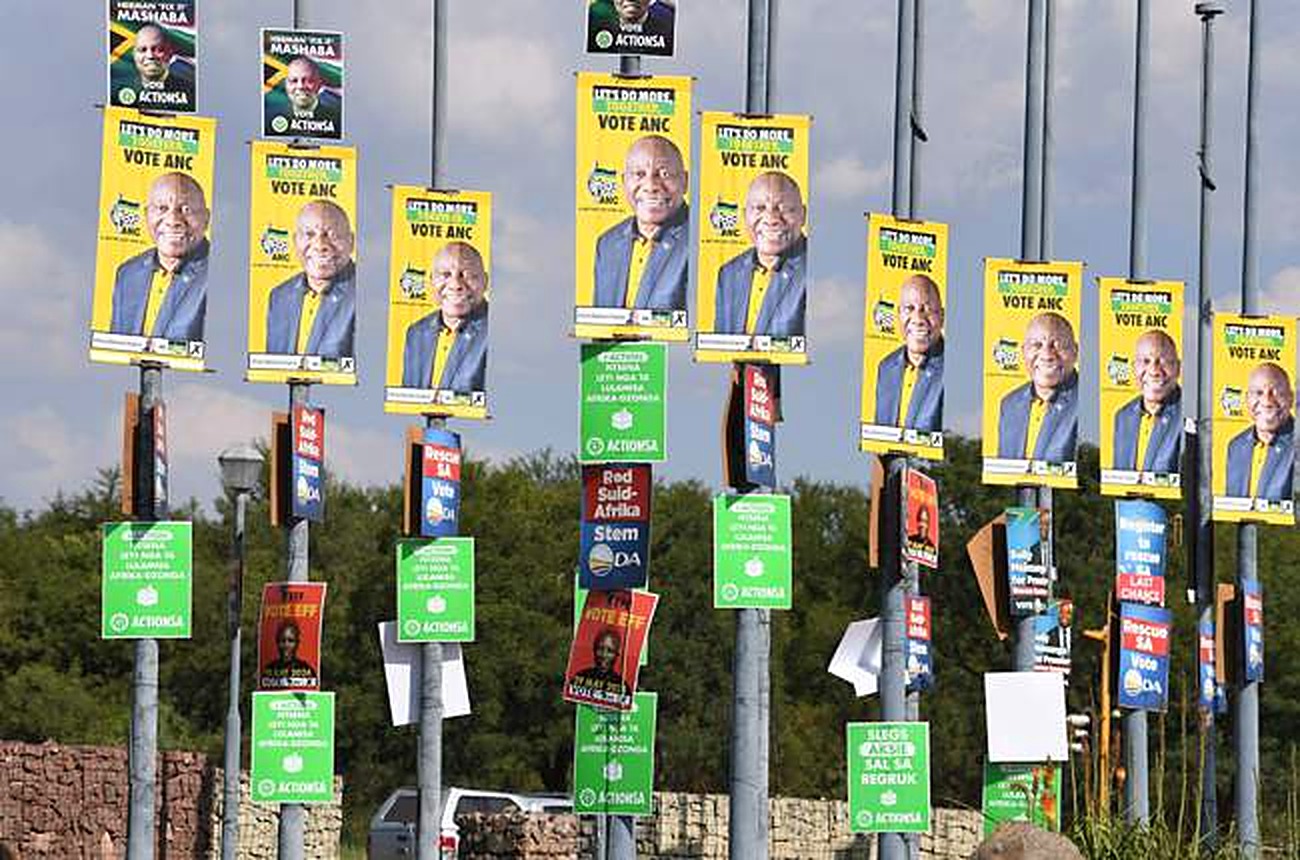
PRETORIA: The die is cast. South Africa’s 2026 local government elections are over. The votes have been counted, and the final results have been declared. What remains is the difficult task of translating the outcome into stable and effective government.
The elections have delivered a clear message: no single political party has secured an outright majority in most municipalities, making coalition governance once again a defining feature of South Africa’s democratic landscape. Political power has been dispersed, and parties must now find ways to work together.
As coalition negotiations gather momentum across the country, two realities should guide the process. First, every political party that contested the elections did so with the intention of gaining political power and participating in government. Second, negotiations must place the will of the electorate and the urgent need for service delivery above narrow ideological preferences, factional interests and political grandstanding.
The first point may seem obvious, but it is often overlooked in the moral posturing that follows an election. Political parties are not charitable organisations. They are vehicles through which groups of citizens seek to influence, acquire and exercise state power. Every candidate who stood for election, every activist who distributed campaign material and every leader who addressed political rallies did so with the intention of winning support and securing a role in government.
The modern democratic state remains one of the most powerful instruments for shaping society. Through government, political organisations influence how resources are allocated, which priorities receive attention and how public institutions function. At municipal level, councils determine how roads are maintained, how refuse is collected, how water is supplied and how local economies are supported.
To suggest that parties contest elections for reasons unrelated to political authority is to misunderstand the nature of democratic politics.
The real question, therefore, is not whether political parties should participate in government. That intention was clear when they entered the electoral contest. The question is how they should exercise that responsibility when voters have denied any single party an outright majority.
Coalition politics is the voters’ instruction
Coalition politics is not an electoral accident. It is a consequence of how citizens have distributed their votes. By denying individual parties outright majorities in most municipalities, voters have created the conditions for negotiated governance.
This places a responsibility on political organisations to cooperate, compromise and demonstrate political maturity. No party can simply assume that its electoral support gives it an unrestricted mandate to govern alone.
Unfortunately, South Africa’s recent experience with coalition government has too often produced instability rather than cooperation. Municipalities have become testing grounds for political manoeuvring, with coalition agreements collapsing almost as quickly as they are concluded. Motions of no confidence have increasingly featured in political power struggles, while residents watch as parties devote more energy to securing positions, titles and political influence than addressing the challenges facing their communities.
This cycle must end.
Coalition negotiations should begin with one fundamental question: which political arrangement will best serve the people who voted?
The negotiations should not revolve around which party gets the mayoral chain, which political organisation secures the most committee positions or which agreement best satisfies party headquarters. The central consideration must be whether the resulting administration can provide stable, accountable and effective governance.
ALSO READ: The kingmakers’ elections: What the world should watch on 4 November
Service delivery must take precedence over ideology
At municipal level, politics is ultimately measured by practical outcomes. Residents want reliable electricity, functioning streetlights, clean streets, dependable water infrastructure, effective wastewater treatment, safer neighbourhoods and opportunities for local economic development.
They are less concerned with ideological purity than with whether their municipalities work.
Communities do not experience government through political manifestos or ideological declarations. They experience it through the quality of services they receive and the responsiveness of those entrusted with public office.
The late Chinese revolutionary and political theorist Deng Xiaoping captured this practical approach when he famously argued: “It does not matter whether the cat is black or white, as long as it catches mice.”
That principle has particular relevance to South Africa’s coalition negotiations.
Bread-and-butter issues must occupy the centre of discussions. If parties with different political philosophies can work together to improve electricity supply, strengthen water provision, repair roads and attract investment, their ideological differences should not prevent cooperation.
Equally, parties that share similar ideological positions but cannot provide stable and effective government should not mistake philosophical alignment for administrative competence.
The history of democratic governance in different parts of the world shows that successful coalitions do not depend on complete ideological agreement. They depend on shared objectives, clearly defined responsibilities and a willingness to compromise in the interests of the public.
Political parties do not have to abandon their identities or principles to govern together. They must, however, recognise where their interests intersect and translate those areas of agreement into practical programmes of action.
Municipal governance is not an academic seminar on political theory. It is an exercise in solving problems that directly affect people’s lives.
Building coalitions that deliver
Achieving this requires a different political culture, one in which coalition agreements are treated as serious governing commitments rather than temporary arrangements for accessing political office.
Coalition agreements should contain measurable service delivery targets, clear timelines and transparent accountability mechanisms. Parties must agree on how disagreements will be resolved without destabilising municipal administrations or holding residents hostage to political disputes.
There must also be a clear distinction between political oversight and interference in the day-to-day administration of municipalities. Professional administrators should be allowed to perform their responsibilities without constant disruption from political elites or criminal networks seeking to influence municipal decisions.
ALSO READ: Coalition Bill moves ahead in South Africa as November local elections loom
Appointments should be guided by competence, integrity and the requirements of the law rather than patronage and political loyalty. Stable administration, financial discipline and effective oversight must become central measures of coalition performance.
Without these safeguards, even the most promising coalition agreement risks becoming another casualty of political competition.
Most importantly, political parties must remember where their legitimacy comes from. The seats around negotiating tables do not belong to political organisations permanently. They are entrusted to them by voters for a limited period and must be used in the public interest.
Every decision taken during coalition negotiations should therefore be measured against one fundamental democratic test: will it advance the interests of the residents those parties seek to govern?
A defining moment for local government
South Africa stands at an important political crossroads. The era in which one dominant party could govern with relative certainty in many municipalities is increasingly giving way to an environment of negotiated political authority.
Whether this transition strengthens local democracy or deepens existing governance challenges will depend substantially on how political leaders respond to the new electoral reality.
The electorate has distributed political power among multiple parties. No organisation has been given an automatic right to govern alone in municipalities where it lacks a majority. The responsibility now rests with political leaders to negotiate arrangements that reflect this outcome.
They can approach coalition talks as political battlegrounds, where opponents must be defeated, excluded or humiliated. Alternatively, they can recognise the opportunity to build administrations that are stable, accountable and focused on the needs of communities.
The die has indeed been cast. The election contest is over. What matters now is not which party ran the loudest campaign or secured the most political attention, but whether those elected can demonstrate a genuine commitment to governing in the public interest.
Coalitions built around citizens’ interests, service delivery and municipal stability will give practical expression to the voters’ decision. Those driven by political egos, ideological rigidity and narrow partisan calculations risk undermining the very mandate they have been entrusted to fulfil.
South Africans did not vote for endless negotiations, political horse-trading or a perpetual cycle of leadership changes. They voted for government.
The responsibility now rests with political parties to demonstrate that they understand the difference.
Martin Ramotshela is a doctoral candidate in Management Sciences and works at the University of South Africa (Unisa). He writes in his personal capacity.