JOHANNESBURG: State power alone is not enough. When the state fails to use its authority to consolidate the broader centres of power in society, it eventually risks losing that power. These other centres of influence form an interconnected matrix that can either strengthen the reach and effectiveness of the state or undermine it. I argue that four institutions are particularly influential in this regard: the media, universities, business and civil society.
For the past 32 years, the media has allegedly been used to “vigorously disseminate such information as it believes served to discredit and weaken the ANC”. This sustained approach, the argument goes, has gradually chipped away at the credibility of both the ANC and the state, eroding public confidence piece by piece.
Universities, meanwhile, have increasingly become spaces in which an entire generation is allegedly being persuaded that markets offer the answer to virtually every societal problem, provided government stays out of the way. This worldview turns some of the country’s brightest young minds against the state while reinforcing the idea that market failures, monopolies, oligopolies, barriers to entry, unemployment, inequality and inefficiencies are all ultimately the government’s fault. The market, in this formulation, is treated as inherently perfect.
The power of corporations also extends beyond the economy. Through their influence over consumer culture, they shape tastes and aspirations, encouraging individualism and self-serving indulgence among young people rather than a sense of responsibility to use their talents to address community and societal challenges. The result is a society increasingly inclined to leave the responsibility for solving its problems to a state that is simultaneously portrayed as incapable of doing so.
Similarly, the influence of NGOs and their donors is seen as contributing to the weakening of the state. Their interventions, often through legal challenges and other forms of litigation, can place government decisions under sustained pressure. Frustrated citizens may then turn against the state, particularly when they perceive it as unable or unwilling to assert its authority in the face of these challenges.
Corporations sit at the centre of this broader power matrix. Their financial resources allow them to operate as political actors, whether through media ownership, political party donations, university funding or financial support for civil society organisations. Business interests therefore have considerable influence over which political parties receive funding, which causes attract support and how political leaders are presented to the public.
These institutions do not operate in isolation. Their influence intersects, creating a powerful network capable of shaping public opinion, political choices and the broader direction of society.
The ANC’s own subjective failures
While these external forces have undoubtedly influenced the political environment in which the ANC operates, the party cannot escape responsibility for its own decline.
The use of media power to discredit the ANC government, particularly over the past three decades, has, according to this argument, drawn on historically entrenched stereotypes about black leadership and black governance. This places an additional responsibility on the ANC: to govern in a manner that actively challenges those stereotypes and restores confidence in black leadership.
Historically, black people have been subjected to deeply prejudicial stereotypes portraying them as incompetent, unprofessional, unreliable and volatile. These assumptions have been internalised by sections of society, both black and white. Consequently, black leaders in a postcolonial society have often had to overcome an additional burden: proving themselves against prejudices that should never have existed in the first place.
They have had to demonstrate exceptional competence, professionalism, composure and intellectual ability, often simply to be afforded the same credibility routinely extended to others.
In many respects, it was the rejection of these offensive stereotypes that informed the formation of the South African Native National Congress in 1912, renamed the African National Congress in 1923. Its founders were highly educated black professionals who brought international exposure, academic distinction and a strong intellectual tradition to the organisation. They presented a counter-image to the prevailing racial assumptions of the time, embracing the universal principles of equality and non-racialism.
This helped give the ANC a broad appeal and established an intellectual and political tradition that would sustain the organisation for generations.
From Pixley ka Isaka Seme to AB Xuma and, later, Thabo Mbeki, the ANC was led by individuals who embodied this tradition of intellectual leadership, professional excellence and political discipline.
Indeed, in the early 1960s, the ANC recognised that the liberation struggle would eventually have to give way to the difficult task of governing a free South Africa. The organisation therefore selected 16 young people to be sent abroad for education and training in preparation for that responsibility.
Thabo Mbeki was among those selected.
Nelson Mandela, who was operating underground at the time, reportedly risked exposure to emerge and address the young people before their departure. His appearance underscored the importance the organisation attached to their education and preparation for the future.
The message was clear: political liberation would require more than the defeat of apartheid. It would also require a generation of capable, educated and disciplined leaders equipped to govern.
ALSO READ: Ramaphosa urges voters to help rebuild failing municipalities in Wednesday’s elections
When popularity replaced competence
Three decades later, as the ANC prepared to govern, it faced another critical question: how would the country’s national executive be constituted?
The party’s internal processes and governing arrangements would ultimately determine whether the distinction between political popularity and administrative competence could be maintained.
Mandela understood the danger of allowing conference popularity to become the primary determinant of who would occupy positions in the national executive of government. He was concerned that allowing conference delegates to determine who served in government could result in popularity replacing competence, with potentially disastrous consequences for the country.
His position was that those appointed to executive government should be selected on the basis of their demonstrated skills, experience and ability to perform the responsibilities of their portfolios.
The liberation struggle, however, had not been fought exclusively by highly educated professionals. It had also produced a broad political movement comprising people from different backgrounds, experiences and levels of education. As the ANC transitioned into a governing party, competing interests and expectations over access to political leadership and state power were inevitable.
Those who did not necessarily fit the professional and technocratic mould nevertheless believed they had earned their place in the post-liberation political order. Their demands for political representation increasingly collided with the emphasis on competence and experience.
During Mbeki’s presidency, the forces of populism grew stronger. At the ANC’s 2007 Polokwane conference, populism ultimately prevailed, and the distinction between those elected to party leadership through conference processes and those selected for government based on their suitability and competence became increasingly blurred.
The professional and technocratic tradition that had characterised much of the ANC’s leadership was progressively displaced by a political culture in which popularity and factional support became powerful determinants of advancement.
In the years that followed Polokwane, this shift became increasingly visible across the state apparatus, from the national executive to provincial administrations and local government. Political popularity increasingly appeared to take precedence over the skills and experience required to manage complex institutions.
Competence was no longer consistently treated as a non-negotiable requirement for leadership.
The consequences were damaging. Long-established racial stereotypes about black leadership, including assumptions of incompetence, unreliability, unprofessionalism and volatility, became increasingly associated with the performance of parts of the state and the conduct of those deployed to public office. Corruption and allegations of personal misconduct further reinforced these perceptions.
The ANC had inadvertently given credibility to some of the very narratives it had spent decades fighting to dismantle.
The collapse of confidence in black leadership
It was inevitable that a significant section of the population, including professionals and ordinary citizens, would begin distancing themselves from an ANC that appeared to be validating historically prejudicial assumptions about black governance.
For many black South Africans, the disappointment was particularly profound.
For approximately 15 years, from Mandela through Mbeki, the country had witnessed a generation of black leaders who embodied a different image of political leadership: highly educated, intellectually confident, disciplined and professionally accomplished. They were lawyers, economists and experienced administrators who projected composure, integrity and a commitment to public service.
That image was progressively replaced by one associated with untrustworthiness, exploitation, weak competence and allegations of corruption.
The damage extended beyond the ANC as a political organisation. It affected the broader project of restoring confidence in black leadership and the capacity of black people to govern themselves effectively.
For centuries, black people had been subjected to a narrative of inferiority. Colonialism and apartheid did not merely deny black people political and economic power; they also sought to undermine their confidence in their own intellectual, professional and human capabilities.
ALSO READ: The Nasiphization phenomenon: a new wave of performance-driven politics in South Africa?
One of the historic responsibilities of the ANC was therefore to reverse that legacy by demonstrating, through the quality of its leadership and governance, that black people were capable of building and managing an effective, ethical and prosperous state.
For a period, the ANC succeeded in doing precisely that.
The tragedy is that the party subsequently undermined much of that achievement through its own leadership and deployment choices.
As confidence in the ANC deteriorated, sections of the electorate increasingly gravitated towards political alternatives whose supporters had successfully cultivated an image of competence, professionalism and superior performance. The owners and beneficiaries of the country’s established centres of economic and institutional power were particularly well positioned to shape these perceptions, often highlighting their own achievements while drawing attention to the failures of the governing party.
A Kairos moment for the ANC?
The ANC’s electoral decline should therefore be understood as more than a consequence of hostile media coverage, corporate influence or the activities of civil society organisations. These forces may have contributed to the party’s difficulties, but they cannot explain away its own failures.
The ANC must confront the uncomfortable reality that it has played a significant role in creating the conditions for its own political decline.
The party’s earlier record of governance, particularly during the Mandela and Mbeki administrations, offers important lessons. It demonstrated the value of placing capable people in positions of responsibility and building a state around professional competence, discipline and institutional credibility.
The task now is to return to those principles, not as an exercise in nostalgia, but as a matter of political survival.
This may require the ANC to make difficult decisions about its deployment practices, including removing a substantial proportion of those in public office who lack the qualifications, experience or demonstrated capacity to perform their responsibilities.
The party must rediscover the principle that political loyalty and popularity cannot substitute for the ability to govern.
It must also rebuild the relationship between the state and the other centres of power in society. This does not mean seeking to control the media, universities, business or civil society. Rather, it means developing the intellectual, institutional and political capacity to engage these institutions confidently, challenge their excesses where necessary and establish partnerships that advance the broader public interest.
The ANC’s electoral collapse could yet represent a Kairos moment: a decisive point at which the organisation recognises the depth of its crisis and makes the difficult choices necessary to renew itself.
But such a moment will count for little if the party responds with excuses, factional manoeuvring and another round of political promises.
It must return to the foundations of competent, ethical and disciplined leadership that once distinguished it.
Better fewer, but better.
That may be the most important lesson the ANC needs to learn if it hopes to recover the confidence of the people and avoid becoming a casualty of its own failures.
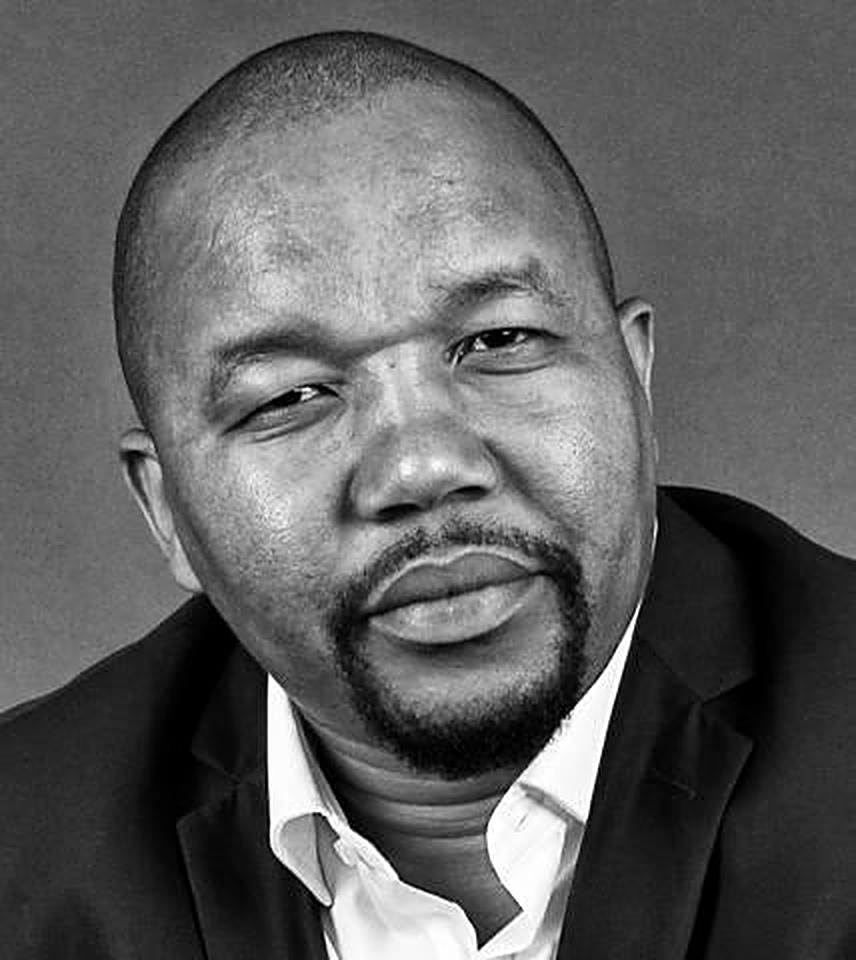
Yonela Diko is the author of Ramaphosa: The Long Game.
Website: https://thelonggame.co.za/