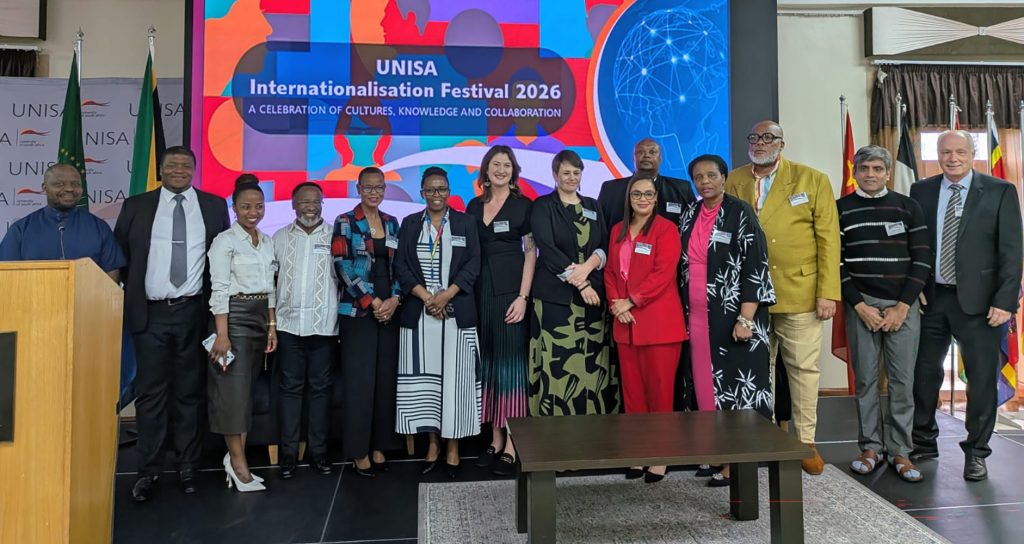
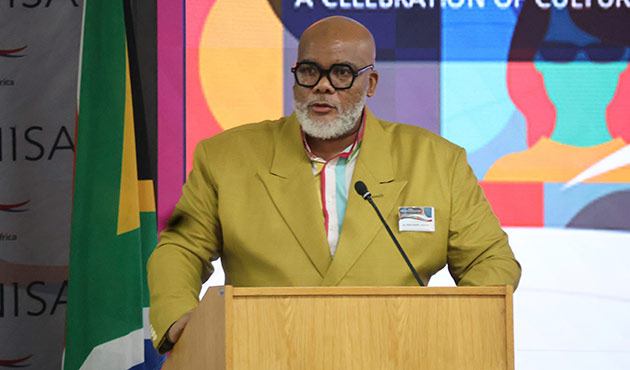
PRETORIA: On 18 November 2026, I had the rare privilege of presenting a keynote address at Unisa’s Internationalisation Festival in Pretoria.
As a South African diplomat who has served in Abuja and Lagos, I did not present the address as a tourist. It was for me an emotional homecoming to one of the greatest citadels in Africa. Through this event, I came to witness and contribute to how South Africa is seen abroad, how African knowledge is valued or dismissed, and how our universities can either reinforce dependency or break it. But most importantly, to create our own rooted universities.
The theme, “Rethinking Knowledge, Identity and Institutional Purpose in a Rapidly Changing World”, was not ceremonial. It asked the question that haunts every university in Africa: How do we internationalise without recolonising ourselves?
I began my keynote not with my words, but with President Thabo Mbeki’s in May 1996:
“I am an African. I owe my being to the hills and the valleys, the mountains and the glades, the rivers, the deserts, the trees, the flowers, the seas and the ever-changing seasons that define the face of our native land. I am formed of the migrants who left Europe to find a new home on our native land… In my blood courses the blood of the Malay slaves who came from the East… I am born of a people who are heroes and heroines. I am an African.”
What President Mbeki delivered was an epistemology, not just a poem. To be African is not to be a single story. It is rooted in this soil, yet shaped by the world. To be local in your hills and valleys, yet global in your blood and belonging.
That is internationalisation without loss of African identity. That was the essence of the festival.
Too often we begin internationalisation with metrics: students abroad, agreements signed, rankings climbed. President Mbeki, with his epistemology, was inviting us to begin with identity: Who are we? What do we know? Whose knowledge counts?
Strangers to ourselves
A few years ago I visited a university on this continent. In its library were row upon row of books about Africa, written by scholars who had never lived in Africa, published in journals Africans could not afford, taught as truth to African children who could not see themselves in it.
I asked: How did we become strangers to ourselves in institutions meant to make us know ourselves?
What we know about ourselves is not who we are. It is who we have been taught we are.
ALSO READ: Opinion | Tshwane’s water crisis is not a new problem
A student in Lagos learns African history from Oxford. A student in Pretoria finds African thinkers in week twelve, under “alternative perspectives”. A doctoral candidate in Dakar must publish in London, in a language not her own, to be promoted.
This is not internationalisation. It is intellectual dependency dressed as international standards.
We have confused international with Northern, global with Western, excellence with recognition by those who once colonised us. The festival was an attempt to break that pattern, not to ask how Unisa can become more like Harvard, but how it can become more fully Unisa, and thus more useful to the world.
The Rooted University
At the heart of my address was a framework: the Rooted University. What is the Rooted University?
The Rooted University rests on three commitments: rooted knowledge, beginning with African questions, data, languages and lived experience, then dialoguing with the world as an equal; rooted identity, refusing to treat African languages, music and governance systems as Heritage Day decoration; and rooted purpose, measuring success not by how many graduates leave Africa, but by how many can solve African problems with global tools, and global problems with African wisdom.
First, rethink knowledge: from extraction to co-creation. The old model, in which the North provides funding and theory and the South provides data and gratitude, must end. Co-creation means joint framing of questions, African principal investigators, data sovereignty, and African journals and languages counting as scholarship.

As Ngũgĩ wa Thiong’o warned in “Decolonising the Mind” (1986), “the bullet was the means of the physical subjugation. Language was the means of the spiritual subjugation.” We must decolonise how we know, not only what we teach, because what we know is what we have been taught.
Second, rethink identity: from deficit to dignity. Internationalisation strategies too often begin: Africa lacks funding, capacity, infrastructure. The festival began differently: Africa has knowledge, languages, youth, resilience, and Ubuntu: “I am because we are.” In a world torn by individualism, Ubuntu is not a proverb. It is a theory of international relations, embedded in South Africa’s foreign policy.
Third, rethink institutional purpose: from prestige to service. Rankings without purpose are vanity. Unisa’s purpose, “a truly African university in the service of humanity”, is a test: Does our internationalisation serve the student in Mthatha who will never board a plane? Does it serve the nurse in Durban studying at night?
For most Unisa students, internationalisation must happen at home: in curriculum, virtual classroom and reading list. A COIL project linking Mthatha and Milan democratises access more than five scholarships to Europe. It decolonises mobility.
The festival proposed mechanisms: curriculum with an internationalisation-at-home component in every programme; African languages as languages of science, supported by AI trained on African data; an annual audit of every partnership for reciprocity, with African first authors, African PhDs funded, infrastructure left behind; ethical knowledge-sharing with data sovereignty and protection of Indigenous knowledge; and investment in the people who actually do internationalisation: lecturers, librarians and students.
ALSO READ: Opinion | Women are missing in South African research. what is the fix?
Five resolutions for Unisa and Africa
I closed with five resolutions for Unisa and for Africa:
1. Adopt the Rooted University as official doctrine: continental first, global second, human always.
2. By 2030, ensure every Unisa student graduates with at least one structured international experience, delivered mainly at home.
3. Lead a continental campaign for academic visa reciprocity. A guide like the “Study in South Africa Guide 2026” is a start, but a guide is not a visa.
4. Make ethical knowledge-sharing (data sovereignty, Indigenous knowledge protection and African-language publication) a condition of all new partnerships.
5. Make festivals policy laboratories, not just celebrations. The Internationalisation Festival must produce a communiqué. Celebration without policy is entertainment. Celebration with policy is transformation. The 2026 festival must identify deliverables for 2027, taking a leaf from its current programme, sign partnerships with foreign missions, collaborate with the private sector, civil society, and DIRCO.
Africa is the table
Essentially, this means the 2026 festival must set the tone for the 2027 festival because Unisa did not host a festival. It hosted a rehearsal for the world we want, where Africa is not invited to the table, because Africa is the table, and the world is invited to sit, listen and learn.
As Ben Okri wrote, “The world is a story we tell ourselves about ourselves.” At Unisa, my remarks contributed to telling a new story, where internationalisation is not about becoming like others, but about becoming more fully ourselves, together.
Let us return to President Mbeki: “I am an African.” If we believe that as epistemology, not a slogan, then internationalisation is not a threat to identity. It is an expression of it. To be African is already to be international.
That is the university Unisa is called to be. That is the future we must now build.
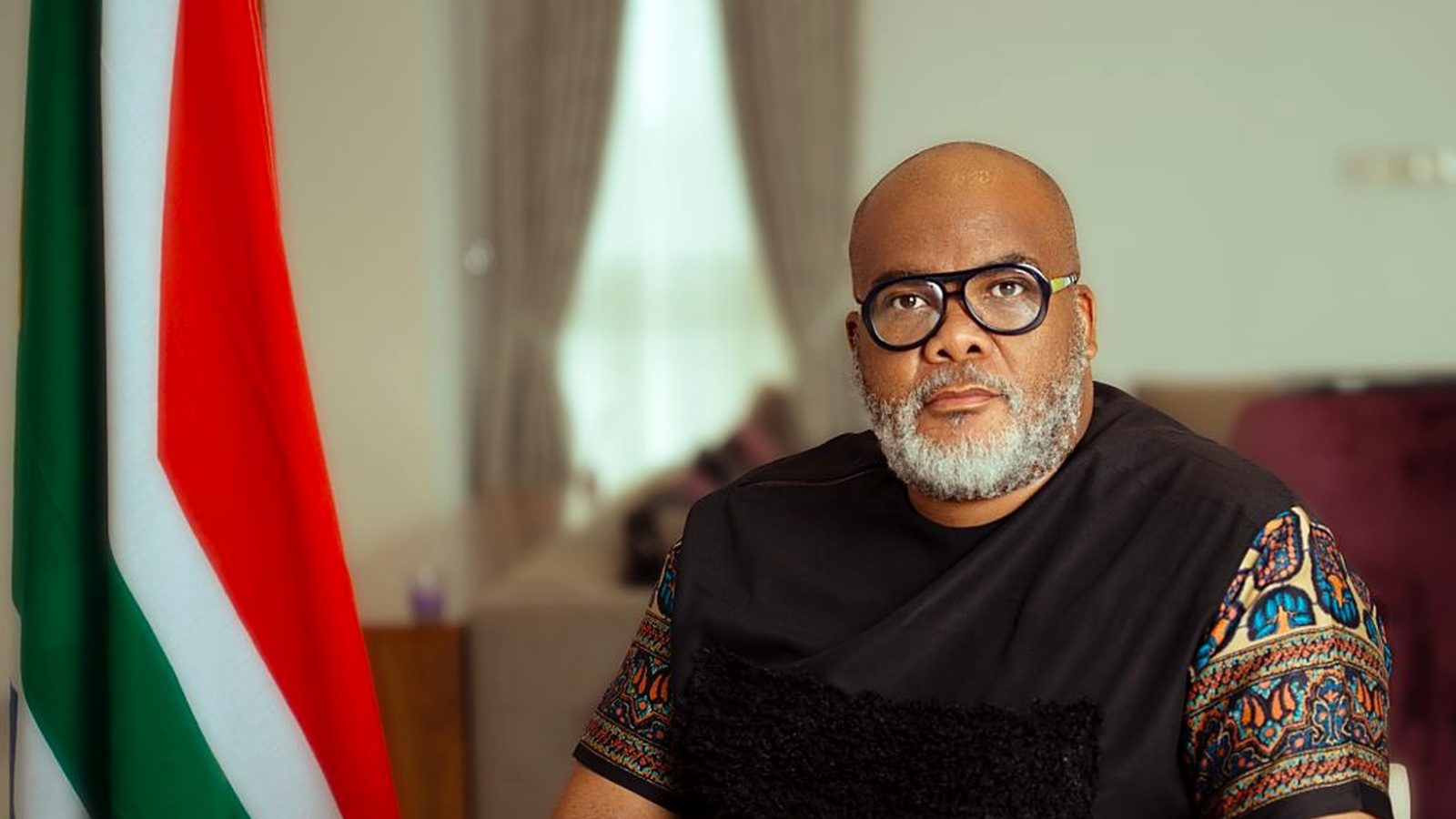
Prof Bobby J. Moroe is the Consul-General of South Africa in Lagos, and Acting High Commissioner to the Federal Republic of Nigeria. He serves as Adjunct Professor at Nelson Mandela University, Deputy Chairperson of the African Centre for Indigenous Knowledge Systems (AIIKS) at UKZN, and Chairholder of the Dr Matthews Phosa Chair on Diplomacy, International Relations and Leadership at Nelson Mandela University.