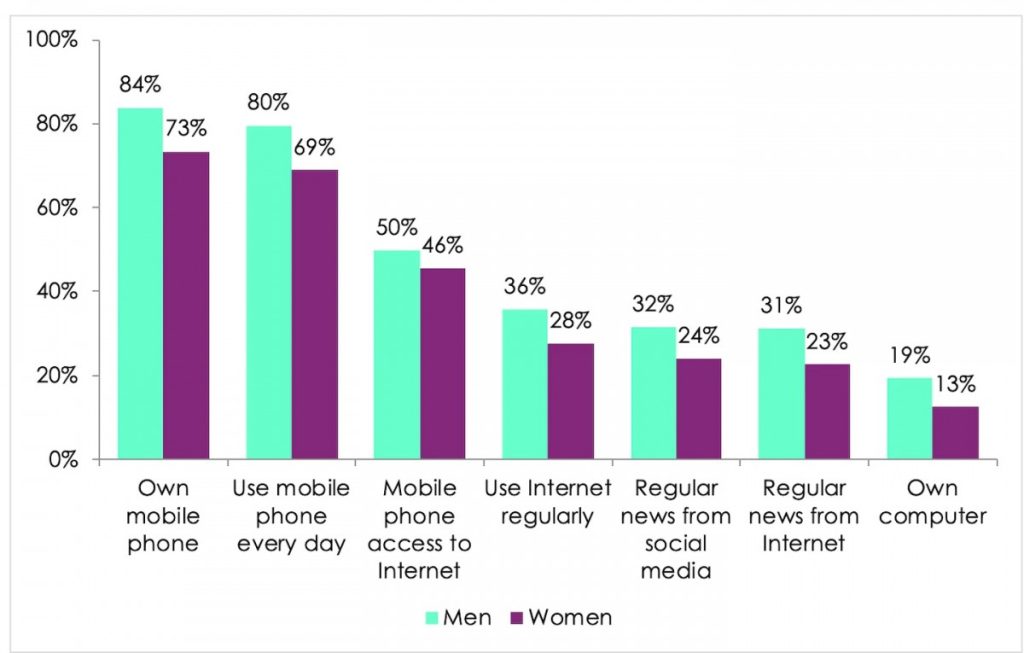
Across Africa, women have less access to the internet than men. In Ethiopia, Uganda, Rwanda and Tanzania only 15%-28% of women own smartphones





By Tinuade Adekunbi Ojo, University of Johannesburg
Across Africa, women have less access to the internet than men. In Ethiopia, Uganda, Rwanda and Tanzania only 15%-28% of women own smartphones. Tinuade Adekunbi Ojo is a feminist political economist and director of the Centre for the Study of Race, Gender and Class at the University of Johannesburg. She researches gender inequality in digital resources, and sets out what the G20 group of the world’s most powerful nations should do to close the gendered digital divide.
It refers to the systemic inequalities between women and men in accessing, using and benefiting from digital technologies. This includes mobile phones, the internet and artificial intelligence. Women experience structural barriers like education, cultural norms, less ability to pay for digital tools, and limited digital literacy.
But the gendered digital divide is not just about a lack of devices or internet connectivity. It is also about men and women having unequal opportunities to participate in and shape the digital economy. Today, almost all aspects of the economy are digital, from how machines do work, to how goods are sold, to payments, to how artificial intelligence is being used in business.
I was part of a team who reviewed the negative effects of the gendered digital divide in Africa. We wrote a policy brief recommending solutions.
READ MORE: How Nollywood films help Kenyan housemaids make sense of their lives
In Africa, the gendered digital divide makes existing gender inequalities worse. It prevents many women from getting full access to education, financial services, health information, and opportunities to start or grow businesses.
These are the problems:
Closing the gendered digital divide requires targeted investment in affordable digital infrastructure. The government, private sector actors, development practitioners and civil society should work together on expanding and subsidising broadband internet, especially in rural and working class or underserved communities.

Also needed are:
As the G20 president in 2025, South Africa must be the champion of gender equality in the digital age. It needs to place the gendered digital divide at the centre of its agenda. This means advocating for countries of the world to fund affordable connectivity for women, digital inclusion for women, and setting up innovation hubs that empower women entrepreneurs.
READ MORE: Women’s empowerment shapes stronger societies
Because private tech companies drive innovation, G20 countries should also offer incentives to tech companies if they hire more women. Governments should invest in women-led start-up businesses.
By ensuring digital policy frameworks reflect the varied experiences and needs of women, men, children and young people, South Africa can position the G20 as a platform for advancing inclusive digital transformation. It can take action to ensure that African women are not left behind in the global digital economy.
Tinuade Adekunbi Ojo, Associate Professor, University of Johannesburg
This article is republished from The Conversation under a Creative Commons license. Read the original article.


