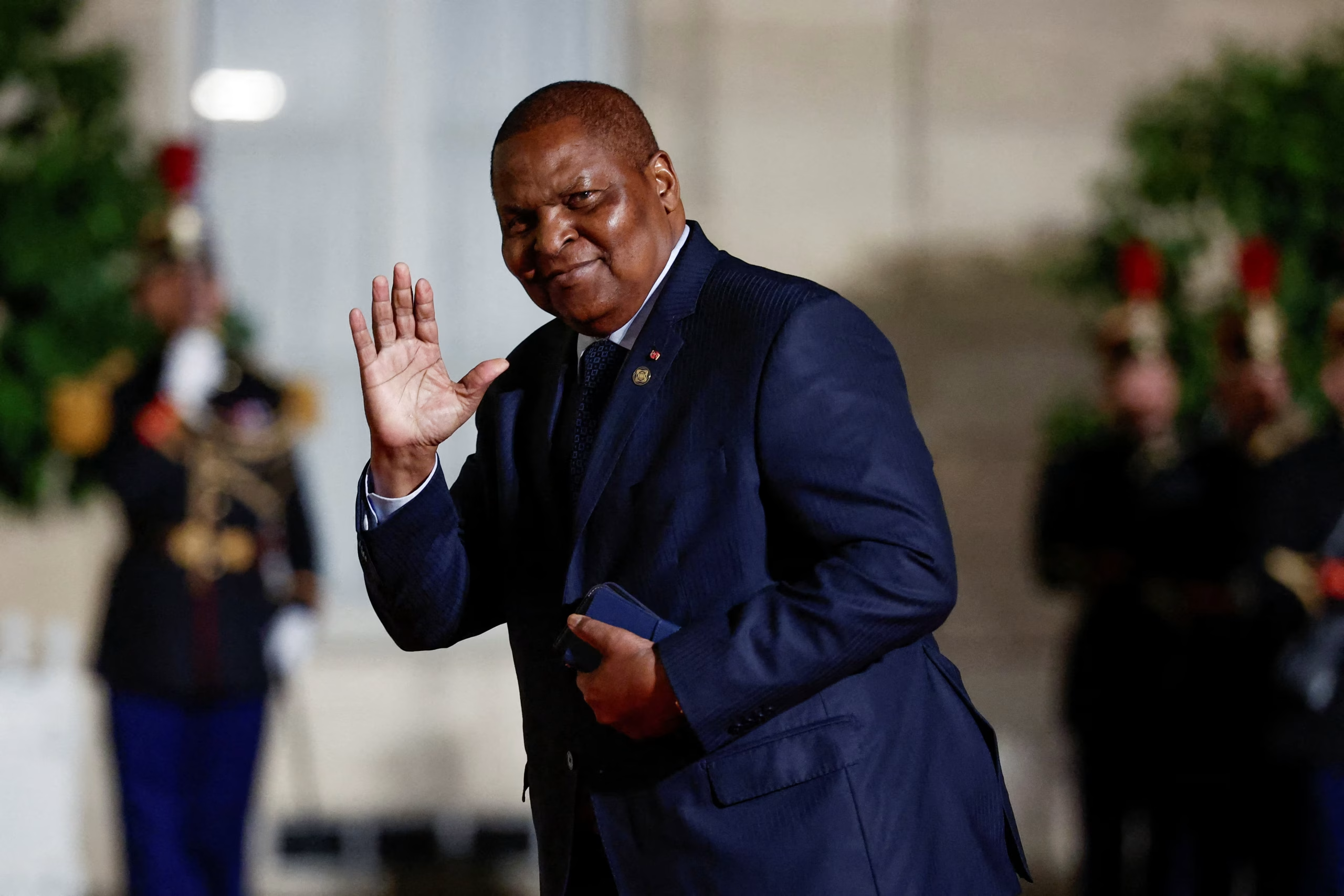
Bangui, Central African Republic — Central African Republic’s (CAR) President Faustin-Archange Touadera officially declared on Saturday his intention to seek a third term in the upcoming presidential election slated for December 2025, signalling his ambition to extend his rule into a second decade.
This announcement comes following a 2023 constitutional referendum that scrapped prior term limits and extended presidential mandates from five to seven years.
Speaking at a gathering of his party, the United Hearts Movement, in the capital Bangui, the 68-year-old Touadera said,
“Many of you have asked for me, and my answer is yes. I am your candidate for the presidential election of December 2025.”
He pledged to “continue the work of rebuilding our country,” emphasising themes of stability and development.
ALSO READ: Is Lack of Discipline the ANC’s Downfall?
Since his initial election in 2016, Touadera has governed a nation grappling with chronic instability marked by civil wars, coups, and fragmented armed groups. Despite the Central African Republic’s wealth in natural resources, including gold, diamonds, and timber, the country remains one of the poorest in the world, burdened by insecurity and weak governance.
To maintain control, Touadera’s government has relied heavily on foreign support. Notably, in 2018, Russian mercenaries affiliated with the Wagner Group entered the conflict on the government’s side, aiding military operations against rebel groups. Additionally, CAR forces are backed by United Nations peacekeepers and troops from Rwanda, underscoring the international community’s involvement in stabilising the country.
The 2023 Constitutional Referendum: Removing Term Limits
Previously bound by a two-term limit for presidents and five-year mandates, the 2023 referendum introduced sweeping changes. The new constitution extended presidential terms to seven years and eliminated term limits altogether, a move that effectively cleared the way for Touadera’s third-term bid.
According to official results, over 95% of voters approved the new constitution, although opposition groups and civil society organisations criticised the referendum. Many fear that the changes will consolidate Touadera’s grip on power and could allow him to stay in office indefinitely, thereby undermining democratic governance.
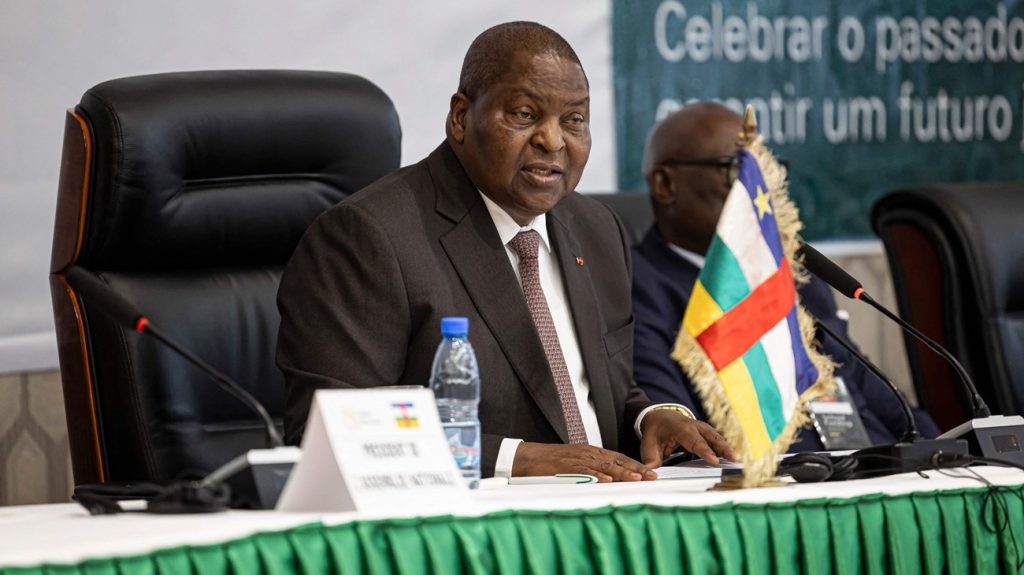
Opposition parties have expressed deep concern about the referendum’s implications and Touadera’s third-term bid. They argue that the constitutional changes jeopardise democratic norms and risk perpetuating authoritarianism. Civil society groups have called for transparency, inclusive dialogue, and respect for political pluralism, but face significant restrictions amid ongoing conflict and political repression.
The exact date for the December election is yet to be formally announced, raising questions about the electoral timeline and conditions for free and fair voting amid a tense security environment.
Security Challenges Remain Pervasive
Touadera’s administration continues to confront armed opposition from the Coalition of Patriots for Change (CPC), a coalition of rebel factions intent on destabilising the government. Despite years of military engagement, fighting persists in many parts of CAR.
The national army, bolstered by UN peacekeepers and allied foreign troops, has made advances in reclaiming territory, but the security situation remains fragile. Civilians continue to suffer displacement, violence, and humanitarian crises aggravated by attacks from armed groups.
ALSO READ: ECOWAS 50 Years: A Deeper Battle Against Money Laundering Demands Continental Urgency
President Touadera’s third-term bid encapsulates the Central African Republic’s broader struggle between peace, governance, and democratic progress. The upcoming election presents a critical juncture:
- Will the vote be free, fair, and inclusive despite ongoing instability?
- Can the government and opposition ensure a peaceful transition or consolidation of power?
- How will the international community respond to the evolving political landscape?
For the population of approximately 5.5 million, many of whom live amid poverty and insecurity, the election’s outcome will impact not just political leadership, but prospects for peace, development, and human rights.