KUMASI: Ghana’s government has called on district leaders to take a more direct role in tackling illegal mining, saying national enforcement operations need sustained local support to protect rivers, forests and farming communities.
Lands and Natural Resources Minister Emmanuel Armah-Kofi Buah proposed that every mining-affected district establish or strengthen a coordination mechanism bringing together government departments, regulators, security agencies and community representatives.
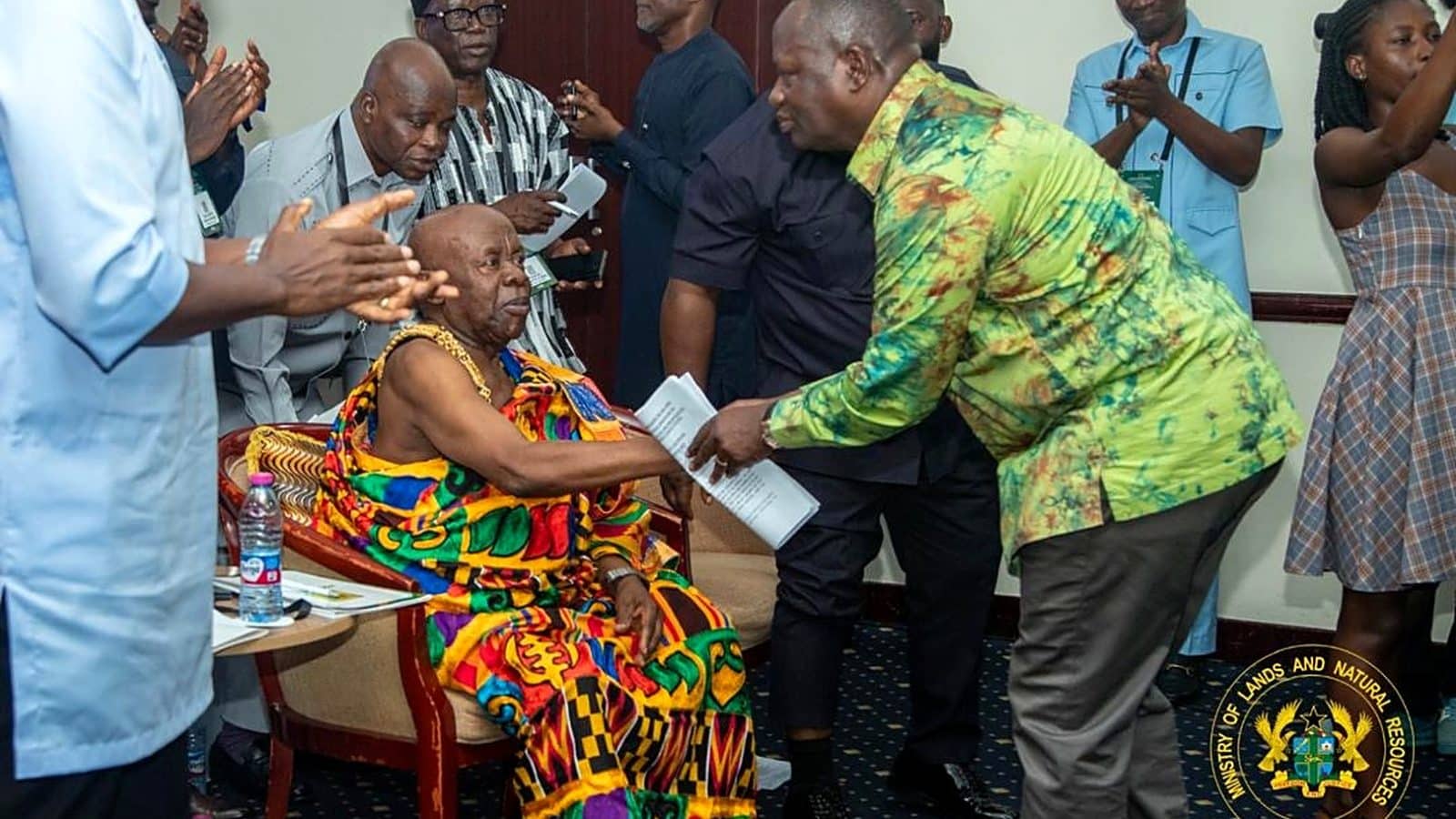
He was addressing the first National Conference for Metropolitan, Municipal and District Chief Executives on illegal small-scale mining in Kumasi on Monday, according to the Ministry of Lands and Natural Resources.
The proposal would give district assemblies a stronger role in sharing information, supporting enforcement and monitoring what happens after national teams leave.
‘A call to collective responsibility’
Buah said his ministry and the security services could not defeat illegal mining, known locally as galamsey, on their own.
He described the conference as “not merely an administrative gathering but a call to collective responsibility and decisive action”.
Illegal mining, he said, had become a national security threat, damaging the environment and undermining public health, food security, water supplies and local economies.
“History will remember whether we protected our rivers or allowed them to be destroyed, whether we preserved our forests or watched them disappear, and whether we safeguarded the interests of future generations or sacrificed them for immediate gains,” he said.
Ashanti Regional Minister Dr Frank Amoakohene welcomed the conference and praised what he described as the courage of President John Dramani Mahama’s administration in confronting the problem.
Holding the gathering in Kumasi placed the discussion in one of Ghana’s major mining regions, where the industry supports livelihoods but illegal operations have caused extensive damage.
What district assemblies would do
Buah said the National Anti-Illegal Mining Operations Secretariat (NAIMOS), police, armed forces and other security institutions would remain central to enforcement.
ALSO READ: Ramaphosa urges voters to help rebuild failing municipalities in Wednesday’s elections
District assemblies, however, needed to help turn those operations into lasting improvements.
“Enforcement operations must be supported by effective local governance. When NAIMOS conducts operations in a district, the Assembly must be prepared to assist with local information, logistical coordination within its lawful capacity, community engagement and follow-up monitoring,” he said.
Buah also urged assemblies to explain the requirements of cooperative mining and other approved schemes, where these exist, so communities understand the legal routes available to them.
The proposal comes as NAIMOS continues operations across mining regions. By March 2026, the secretariat had reported seizing 94 excavators, destroying nearly 3,000 illegal mining sites and making 237 arrests, according to JoyNews Research.
Polluted rivers threaten water supplies
The environmental damage has made illegal mining a pressing issue well beyond the communities where it takes place.
Scientists at the CSIR-Water Research Institute, cited by JoyNews, estimate that about 60% of Ghana’s water bodies are polluted. Illegal mining is a major contributor, alongside agricultural runoff, industrial activity and household waste.
Mining operations wash sediment into rivers, making water more difficult and expensive to treat.
Turbidity, a measure of water cloudiness, has reached 64,000 nephelometric turbidity units (NTU) in the Birim River and up to 32,000 NTU in the Pra, according to JoyNews. Buah has previously put Ghana Water’s normal treatment threshold at 500 NTU.
JoyNews reported that extreme turbidity can result in losses of up to half the water being treated, compared with normal losses of about 5%. It also reported reductions in turbidity of between 70% and 90% at some monitoring points following enforcement.
Those improvements point to the potential benefits of intervention, while highlighting the importance of preventing illegal operations from returning.
Forests and cocoa farms affected
The damage extends to protected forests and agricultural land.
ALSO READ: Participation In Elections Without Understanding Reflects ‘Democracy On Autopilot’
In February 2025, Buah told Parliament that illegal mining had affected 44 of Ghana’s 288 forest reserves, with more than nine fully taken over by illegal miners.
“This situation has assumed crisis proportions with dire national security and public health consequences,” he said at the time, according to the Daily Graphic.
JoyNews also cited COCOBOD assessments indicating that illegal mining had affected 81% of the cocoa farmland assessed in the Eastern Region, 74% in the Western Region and 68% in Ashanti.
The figures relate to assessed farmland, rather than necessarily representing all cocoa-growing land in those regions. They nevertheless illustrate the threat to farming livelihoods alongside the damage to water and forests.
Reforms face demands for tougher action
The conference follows moves to tighten mining policy.
In December 2025, the government revoked Legislative Instrument 2462, which had allowed presidential authorisation of mining in forest reserves, according to law firm King & Spalding.
Amendments to the Minerals and Mining Act have also been proposed. Buah said further reforms would strengthen responsible mining.
Campaigners have continued to press for stronger enforcement, particularly against people with political connections.
Last year, the Ghana Coalition Against Galamsey demanded a state of emergency in mining areas and the prosecution of politically connected individuals involved in illegal operations, including officials linked to the ruling National Democratic Congress.
“If this government does not act decisively, no one is safe,” coalition convener Dr Kenneth Ashigbey said in June 2025, according to the Daily Graphic.
The proposed district-level structures seek to close the gap between national raids and sustained enforcement. Their effectiveness will depend on whether local authorities have the resources, independence and political backing to act, including when illegal mining involves influential people.