By Bheki Dlamini
Mbabane, Eswatini — A critical legal challenge has been launched in Eswatini’s High Court seeking access and justice for five foreign nationals deported from the United States and currently held incommunicado within the country’s prison system.
The Southern African Litigation Centre (SALC) has announced its support for the urgent application filed by prominent human rights lawyer Sibusiso Magnificent Nhlabatsi, which aims to address serious legal and human rights concerns surrounding the detainees.
The detainees—men from Yemen, Cuba, Jamaica, Vietnam, and Laos- were convicted of felonies in the U.S., served their sentences, and deported to Eswatini on or around July 16, 2025, under a clandestine agreement between the U.S. and Eswatini governments.
Notably, their countries of origin were reportedly not consulted prior to the transfer, and the details of the arrangement remain undisclosed to both the public and the Eswatini Parliament.
ALSO READ: A Tale of Two Systems: South Africa’s Overcrowding Dilemma and Eswatini’s Emerging Repatriation Hub
Since arriving, the men have been confined to an isolated unit within Matsapha Correctional Complex without formal charges, a trial, or due process. They remain cut off from family, legal counsel, or consular representation, raising grave fears of unlawful detention and violation of their fundamental rights.
The Eswatini Prime Minister has indicated a maximum detention period of twelve months, but the detainees have not been informed of this or of other rights.
Legal Action and Denial of Access
On July 25, 2025, attorney Nhlabatsi presented credentials to prison officials seeking to visit and legally consult the deportees, but access was refused.
Authorities cited the installation of new communication systems and a forthcoming “pre-approved list” limiting visits to family members, effectively barring immediate access for counsel.
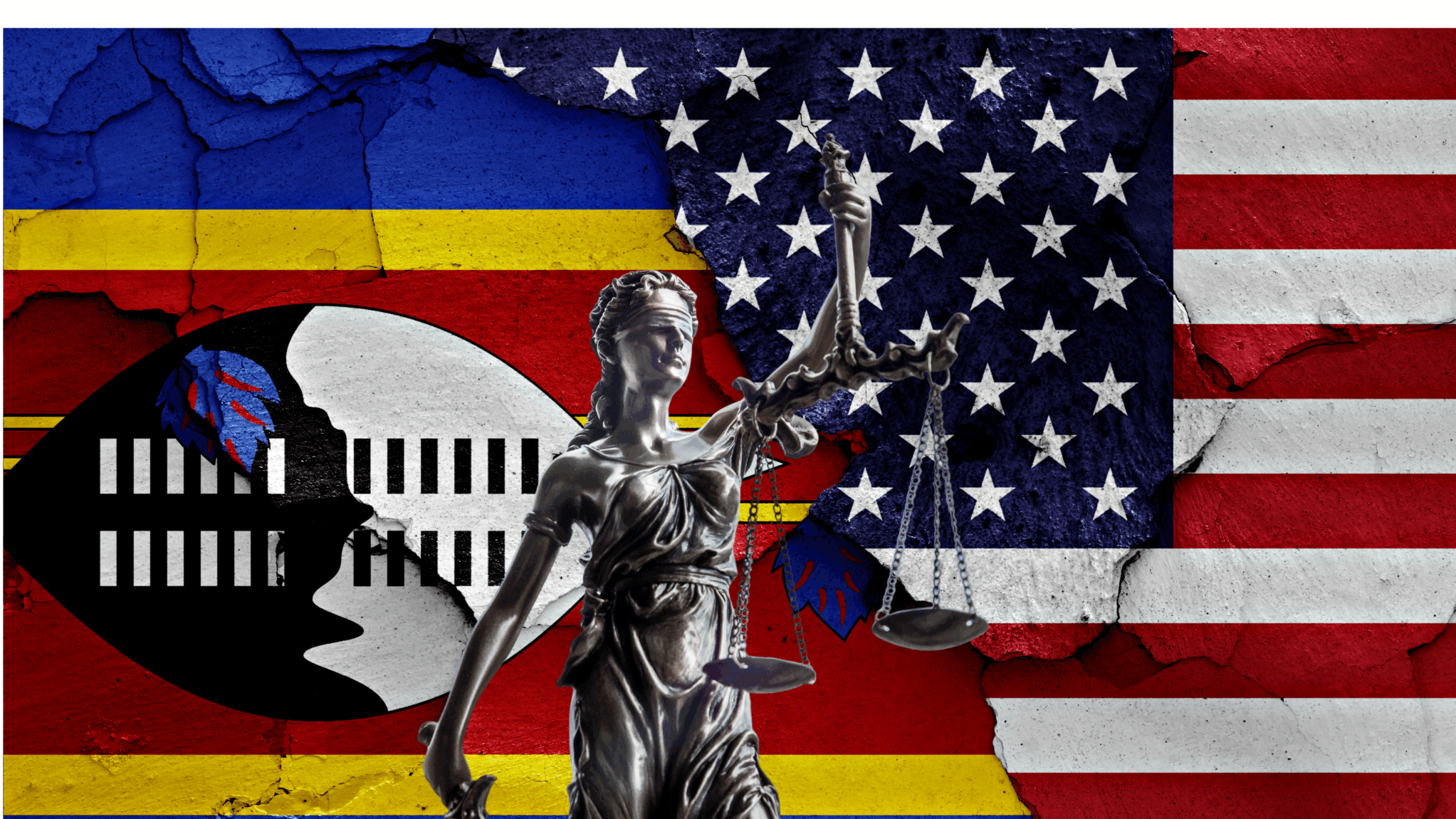
The High Court application demands that the detainees be produced before the court for legal consultations and that correctional officials be restrained from withholding access to their lawyer.
The suit stresses the constitutional and international legal violations inherent in the current detention and denial of counsel.
Constitutional and International Law Violations
SALC highlights that the refusal to grant legal access infringes on several protections, including:
- Section 21 of the Eswatini Constitution, which guarantees the right to legal representation;
- Section 16(6) of the Constitution, ensuring access to counsel and family;
- Obligations under the International Covenant on Civil and Political Rights (ICCPR) that prevent arbitrary detention and require due process.
Melusi Simelane, SALC Programme Manager for Civic Rights, stated:
“This denial of legal counsel is a blatant breach of fundamental rights. These men, who have no ties to Eswatini, are at risk of prolonged arbitrary detention, incommunicado holding, and potential refoulement to countries where they may face harm.”
ALSO READ: Eswatini Assures Public: US-Deported “Barbaric” Criminals Pose No Threat
Simelane expanded on these concerns in a recent Newzroom Afrika interview, emphasising the absence of any lawful basis for Eswatini’s incarceration of the U.S. deportees without judicial oversight or transparency.
Calls for Transparency and Accountability
SALC, in partnership with local organisations including the Swaziland Litigation Centre and the Swaziland Rural Women’s Assembly, is advocating for:
- Disclosure of the full terms of the deportation agreement between Eswatini and the United States;
- Notification and involvement of the detainees’ home countries and consular officials;
- Enabling independent monitoring by institutions such as the African Commission on Human and Peoples’ Rights.
The legal challenge underscores broader governance and human rights concerns in Eswatini, including ongoing issues related to secretive government policies, prison conditions, and limits on judicial independence.

SALC is urging the international community, especially the U.S., to ensure that deportation agreements uphold human rights standards and to discourage further third-country transfers without comprehensive legal protections and transparent processes.
The case spotlights a pressing need to balance international security cooperation with respect for individual rights and open governance, particularly within the Southern African region.