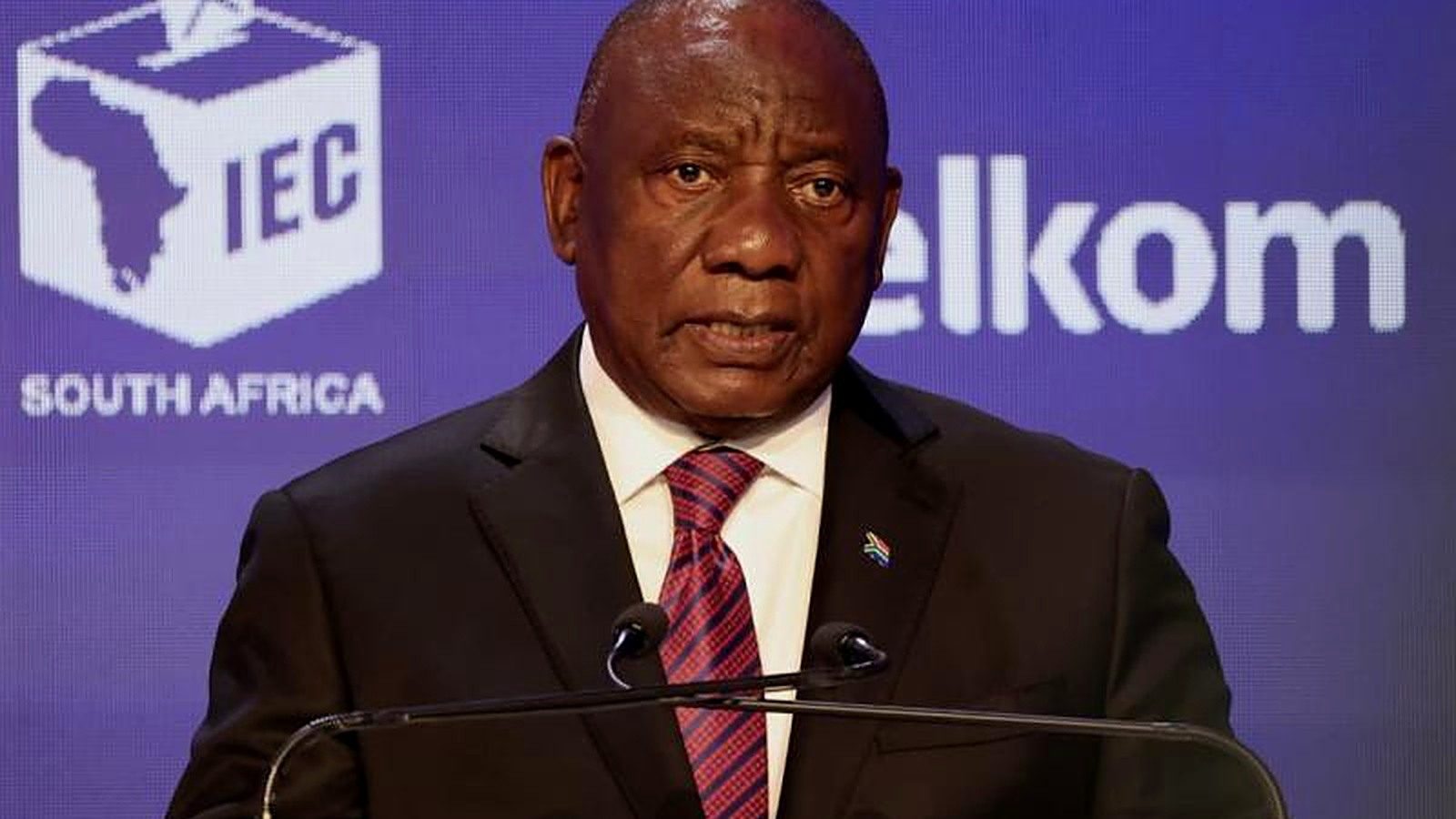
PRETORIA: President Cyril Ramaphosa has urged political parties to work together in good faith to establish functioning municipal councils, following the declaration of final results in the 2026 local government elections, which confirmed a significant decline in ANC support and left several major metros without an outright majority.
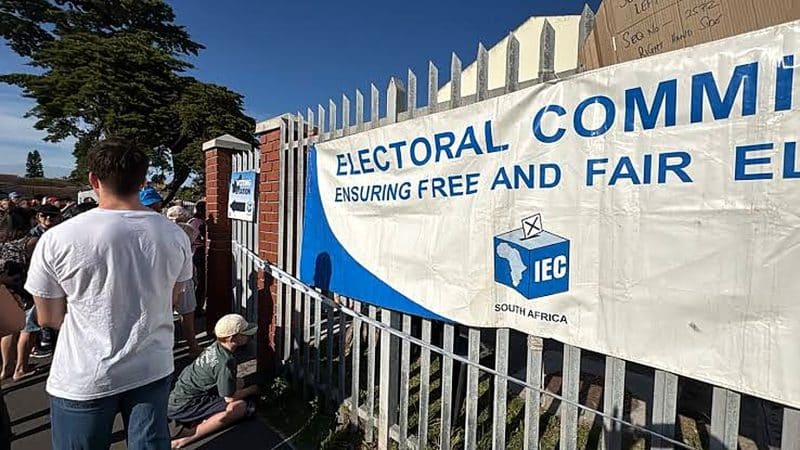
In his weekly newsletter on Monday, a day after the Electoral Commission of South Africa (IEC) declared the results, Ramaphosa described the elections as free, fair and peaceful, saying the focus must now shift to rebuilding local government and improving service delivery.
“Those who have been elected to councils now need to prove themselves worthy of the trust placed in them by the South African people,” he wrote.
ANC suffers historic electoral setback as DA and MK make gains
The ANC secured 30.76% of the national vote, down from 45.59% in the 2021 municipal elections, marking its weakest electoral performance since the advent of democracy in 1994, according to BusinessTech.
The DA increased its share to 24.64%, compared with 21.66% in 2021, while the MK Party, contesting municipal elections for the first time, secured 9.77%.
The EFF’s support declined from 10.31% to 6.22%, while ActionSA more than doubled its share of the vote to 5.67%.
Despite the ANC’s losses, Ramaphosa said more than 15 million people had participated in the elections. He pointed to the improved voter turnout, alongside a record field of more than 540 political parties and nearly 137,000 candidates, as evidence that “our democracy is active and vibrant”.
DA leads in five metros as political landscape shifts
The DA emerged as the largest party in five of the country’s eight metropolitan municipalities, although it secured an outright majority in only one: Cape Town, where it won 56.42% of the vote.
In Johannesburg, the party received 34.79%, ahead of the ANC’s 20.25%. In Tshwane, it secured 34.37%, followed by ActionSA on 22.07% and the ANC on 20.22%.
The DA also emerged as the largest party in Ekurhuleni, with 30.68%, and Nelson Mandela Bay, where it secured 44.17%.
The MK Party topped the poll in eThekwini with 38.29%, pushing the DA into second place and leaving the ANC a distant third on 16.43%.
The ANC retained its position as the largest party in Buffalo City, with 42.02%, and narrowly edged out the DA in Mangaung by less than half a percentage point.
The IEC also confirmed that voting would be repeated at one voting centre after ballots were destroyed when the facility was stormed. The rerun is expected to take place at a later date.
ALSO READ: Ramaphosa urges voters to help rebuild failing municipalities in Wednesday’s elections
Political parties acknowledge voters’ verdict
ANC Secretary-General Fikile Mbalula said the party accepted the election outcome with humility, acknowledging that it needed to work harder to regain public confidence.
“The people of South Africa have spoken,” he said, adding that the ANC had to “earn the confidence of the people” through improved service delivery.
Mbalula described the result as “catastrophic” and said the party would not rush into coalition agreements. He indicated that the ANC was prepared to serve in opposition rather than enter into arrangements it considered unsuitable.
“Where we govern a council, we will govern well,” he said, according to Daily Maverick.
DA Federal Council chairperson Ashor Sarupen said his party would approach coalition negotiations with humility, arguing that voters had delivered a clear mandate.
He said negotiations would be coordinated nationally through the DA’s Federal Executive.
Coalition negotiations gather momentum
With several major municipalities requiring coalition arrangements, political parties have begun outlining their positions and conditions for entering into agreements.
ActionSA leader Herman Mashaba said his party was prepared to negotiate with any political organisation, including the MK Party, although he acknowledged reservations about working with it.
He said any coalition agreement would have to prioritise service delivery, the fight against corruption, political stability and addressing illegal immigration.
MK Party KwaZulu-Natal leader Willies Mchunu said the party wanted to govern municipalities where it had emerged as the largest political force. He also expressed a desire to avoid a repeat of the 2024 provincial government negotiations, when the party was excluded from government in KwaZulu-Natal despite securing the most votes.
EFF leader Julius Malema called for a political alliance involving the ANC, MK Party, EFF and SACP, but made it clear that such an arrangement would require a change in the ANC’s leadership.
“The ANC must agree that Ramaphosa must go because we are in this mess because of him,” he said.
ALSO READ: Mnangagwa hands SADC baton to Ramaphosa, warns region against Over-Reliance on foreign funding
The ANC leadership is expected to meet this week, with its National Executive Committee scheduled to convene on Thursday to consider the election outcome and the party’s next steps.
Councils face a 14-day deadline
The immediate challenge is to establish functioning municipal administrations.
Under the Municipal Structures Act, newly elected councils must hold their first meetings within 14 days of the declaration of election results. These meetings are required to elect speakers, mayors and other office-bearers.
Ramaphosa urged councillors to put political differences aside and prioritise the interests of residents when forming municipal administrations.
“In the interests of effective, accountable local government, those who have been elected must work to find common ground from the very outset, regardless of their political differences,” he wrote.
The 2021 municipal elections produced a record number of hung councils, with several municipalities, including Johannesburg and Tshwane, experiencing repeated changes in political leadership as coalition arrangements collapsed.
The experience highlighted the difficulties of governing municipalities through unstable political partnerships, with disputes between coalition partners frequently disrupting administration and service delivery.
Local government reforms await incoming councillors
Beyond coalition negotiations and the allocation of political positions, Ramaphosa said the new councils would have an important responsibility in implementing the Revised White Paper on Local Government, launched last month.
The proposed reforms seek to address longstanding municipal weaknesses, including financial instability, inadequate infrastructure maintenance and unreliable basic services.
Among the measures are proposals to stabilise municipal finances, ring-fence funding for infrastructure maintenance and improve the reliability of service delivery.
“We need to make local government an engine room of service delivery, a driver of development and a creator of opportunity,” Ramaphosa wrote.
He said voters expected municipalities to create jobs, provide reliable and affordable water and electricity, maintain safe neighbourhoods and ensure that local administrations were properly managed.
With coalition negotiations expected to shape the political leadership of several major municipalities over the coming days, the immediate test will be whether political parties can translate their electoral mandates into stable administrations capable of meeting those expectations.