MBABANE: Three more men deported to Eswatini by the United States have voluntarily returned to their home countries, the government says, rejecting allegations that deportees were secretly released and allowed to cross illegally into South Africa.
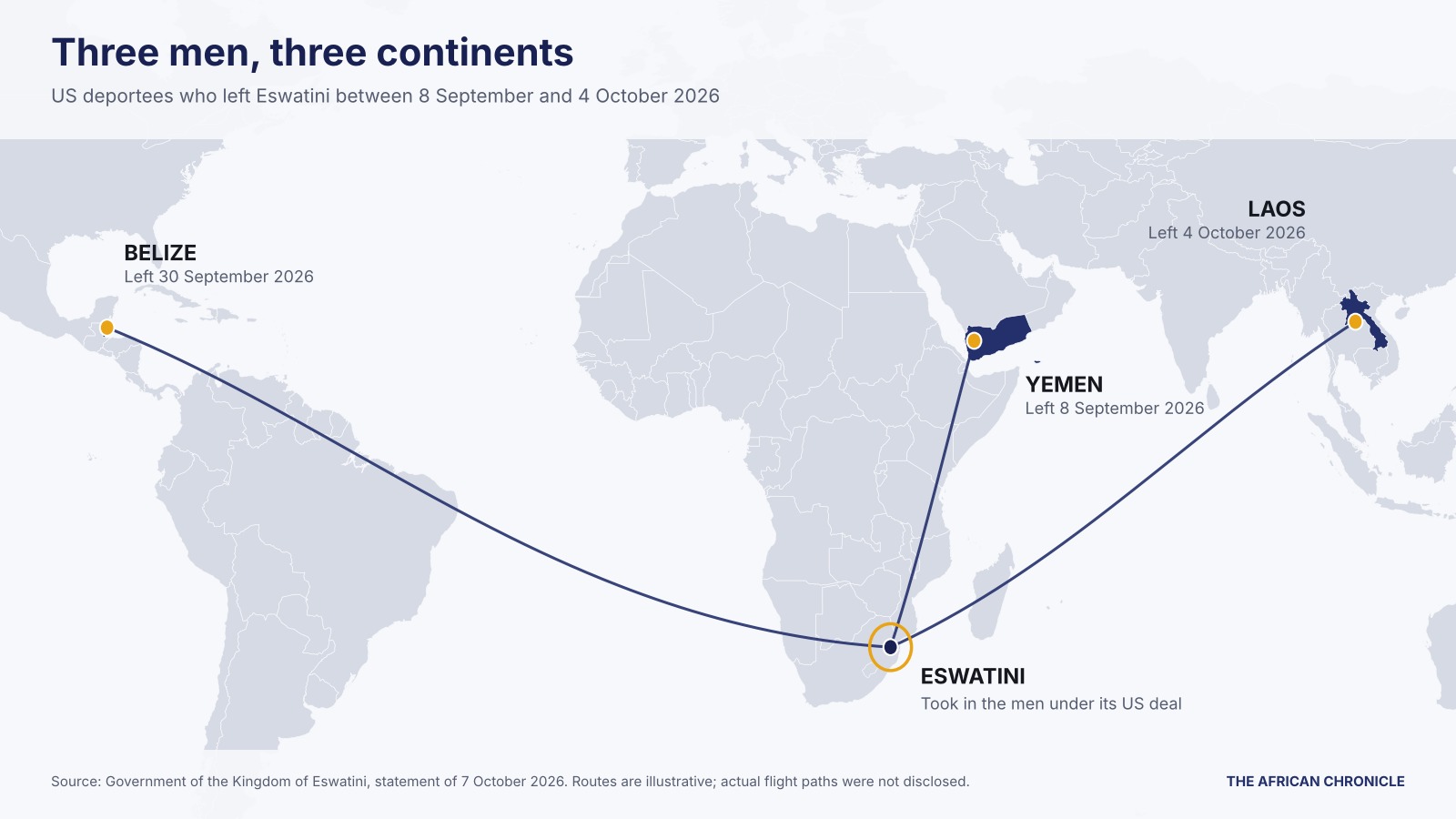
Acting government spokesperson Thabile Mdluli said in a statement on Wednesday that the men, nationals of Yemen, Belize and Laos, had left the kingdom separately in recent weeks.
The announcement comes amid continuing scrutiny of Eswatini’s agreement to receive people deported by Washington who have no citizenship ties to the kingdom. Questions remain about their detention, access to lawyers and the arrangements for their return home.
Three departures in recent weeks
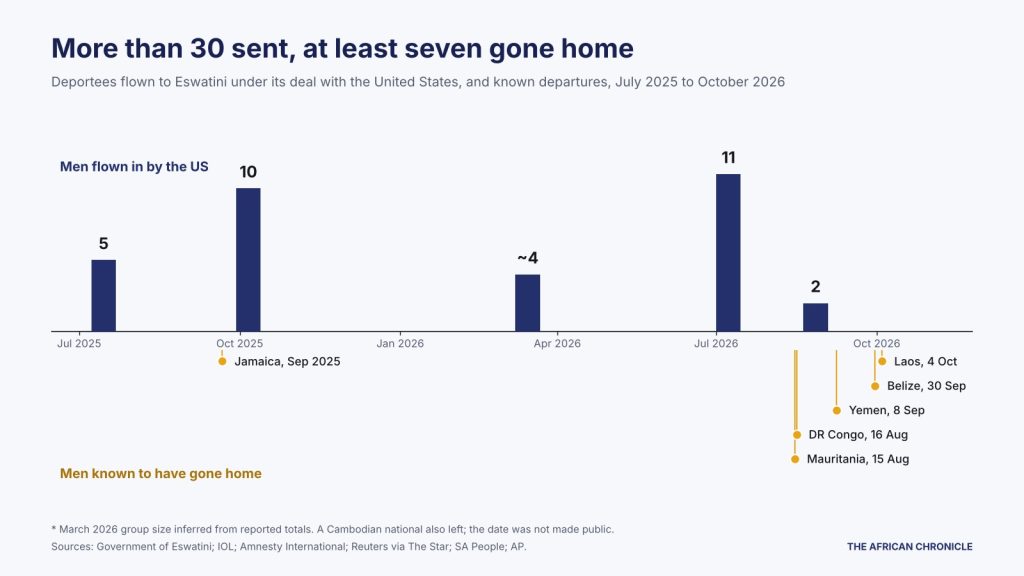
According to the government, the Yemeni national left on 8 September after requesting repatriation. The Belizean national departed on 30 September, followed by the Laotian national on 4 October.
The statement did not name the men, identify their travel routes or explain who paid for their journeys. It described their departures as part of the arrangements for third-country nationals temporarily staying in Eswatini.
Mdluli said the government continued to work with relevant authorities and partners to facilitate voluntary repatriation requests.
The statement also thanked countries that had assisted with transit. However, it did not identify those countries or clarify whether any of the men travelled through South Africa.
Government denies secret releases
The announcement followed allegations published by Swaziland News that deportees had been quietly released and allowed to enter South Africa through informal border crossings.
One allegation concerned the Laotian national, who was reportedly released to catch a flight from Johannesburg. Mdluli rejected claims that deportees had been sent across the border illegally, according to The Citizen.
The government maintained that the three men had left voluntarily through coordinated arrangements with cooperating authorities. It also reiterated its commitment to protecting the deportees’ rights and well-being while safeguarding the kingdom’s security.
ALSO READ: Eswatini soldiers open fire on US personnel during Anti-Smuggling operation
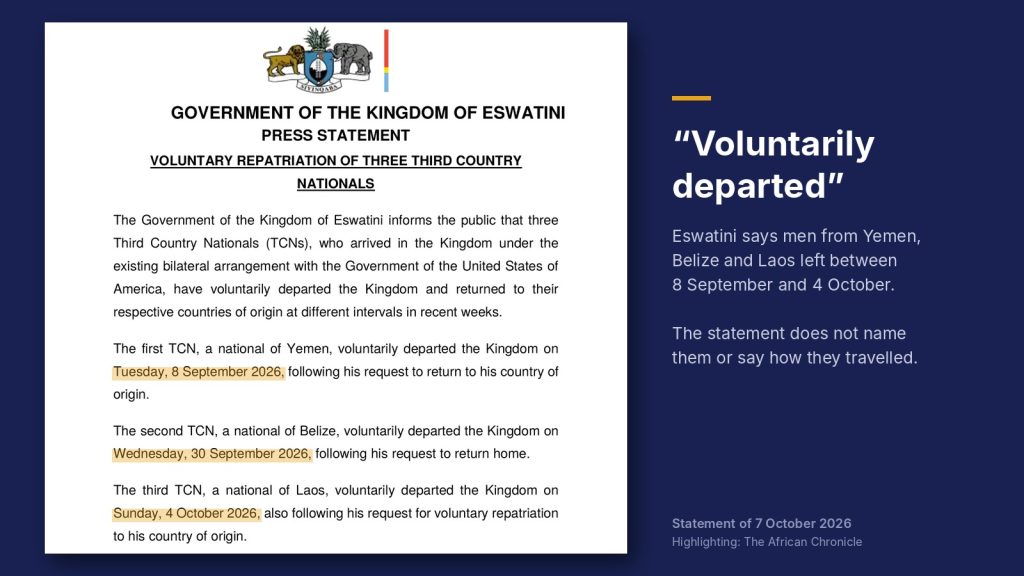
The statement nevertheless left the travel arrangements unexplained, including which border posts or airports were used and what documentation accompanied the men.
A controversial agreement with Washington
Eswatini signed an agreement in May 2025 to accept up to 160 people deported by the United States. The arrangement formed part of the Trump administration’s policy of sending some deportees to countries other than their own.
Reuters reported that the agreement provided for US$5.1 million in support for border and migration management. Finance Minister Neal Rijkenberg confirmed receipt of the money in Parliament in November 2025, saying his ministry had not been involved in negotiating the agreement.
The first five deportees arrived on 15 July 2025. They were nationals of Cuba, Jamaica, Laos, Vietnam and Yemen. US authorities described them as people convicted of crimes who had completed their sentences.
Eswatini initially said they were in transit and would eventually be returned to their countries of origin. Further groups followed, with Amnesty International reporting that at least 30 people had been transferred to the kingdom by July 2026.
The latest government statement did not specify when the three men arrived or provide an updated total of deportees remaining in Eswatini.
Detention and access to lawyers
The arrangement has drawn criticism over the treatment of deportees housed at Matsapha Correctional Centre, a maximum-security prison outside Manzini.
Lawyers and rights organisations have challenged their detention without criminal charges in Eswatini and complained about restrictions on legal access. In April, the Supreme Court ordered that four deportees be allowed to meet their lawyers in person after months without such access, according to the Associated Press.
The government has disputed descriptions of the men as prisoners. In September, it said they were not serving prison sentences and could leave the facility under supervision, citing shopping trips and attendance at the Umhlanga ceremony.
ALSO READ: Eswatini repatriates two US deportees as pressure mounts over secretive migration deal
Amnesty International has continued to challenge the transfers and detention arrangements. In an assessment marking a year since the first arrivals, the organisation said the programme had expanded despite persistent human rights concerns.
The government’s description of the latest repatriations as voluntary does not explain how consent was established or what alternatives were available to men awaiting departure.
Court challenge dismissed on standing
The agreement has also faced a legal challenge within Eswatini.
In February, the High Court dismissed a case brought by civil society organisations and human rights lawyers who argued that the arrangement required parliamentary approval.
The court found that the applicants lacked legal standing. Their inability to produce a copy of the agreement was another obstacle to the case, Business Day reported.
The dismissal therefore turned on the applicants’ ability to bring the challenge, rather than resolving the substantive objections to the agreement.
Questions remain over the arrangement
The three departures are the latest in a series of repatriations, but the government’s announcement offers no complete account of how many deportees have returned home or how many remain.
It also does not explain whether further transfers from the United States are expected, how long the remaining men may stay in Eswatini or how the US funding has been allocated and spent.
For those still awaiting repatriation, the central questions concern access to legal advice, the conditions of their stay and the safeguards surrounding any decision to return home.
Mdluli said the government would provide further updates on significant developments. For now, it has confirmed three departures while leaving the wider arrangement and the routes used to send the men home largely unexplained.