MALI – For most of his life, Sidi Haidara did not question the practice. In his community in central Mali, female genital mutilation (FGM) was simply how things were done, a rite passed from mother to daughter, generation after generation, defended as culture and rarely examined as harm.
“I used to believe that this practice was part of our traditions and needed to be preserved,” Haidara says.
Today, the same man walks from village to village carrying the opposite message: that no custom, however old, is worth a girl’s health, her rights, or her future.
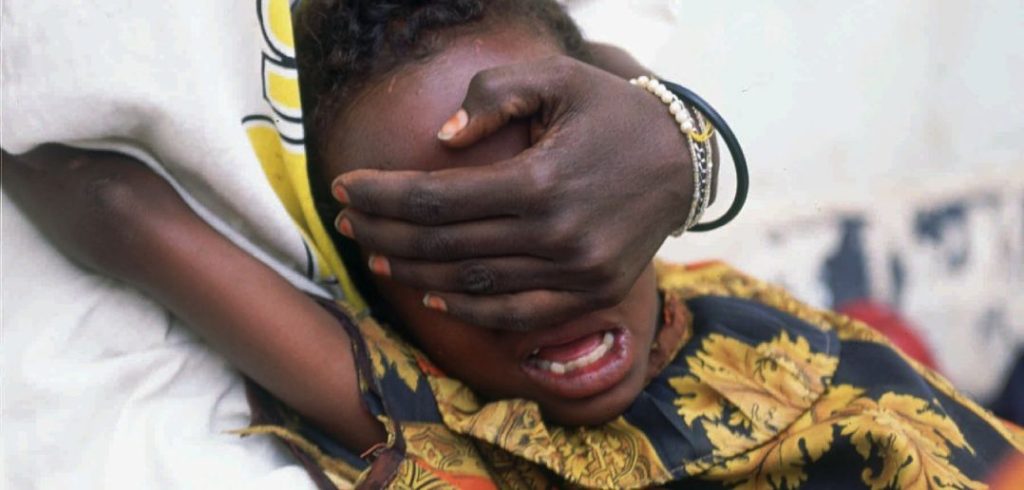
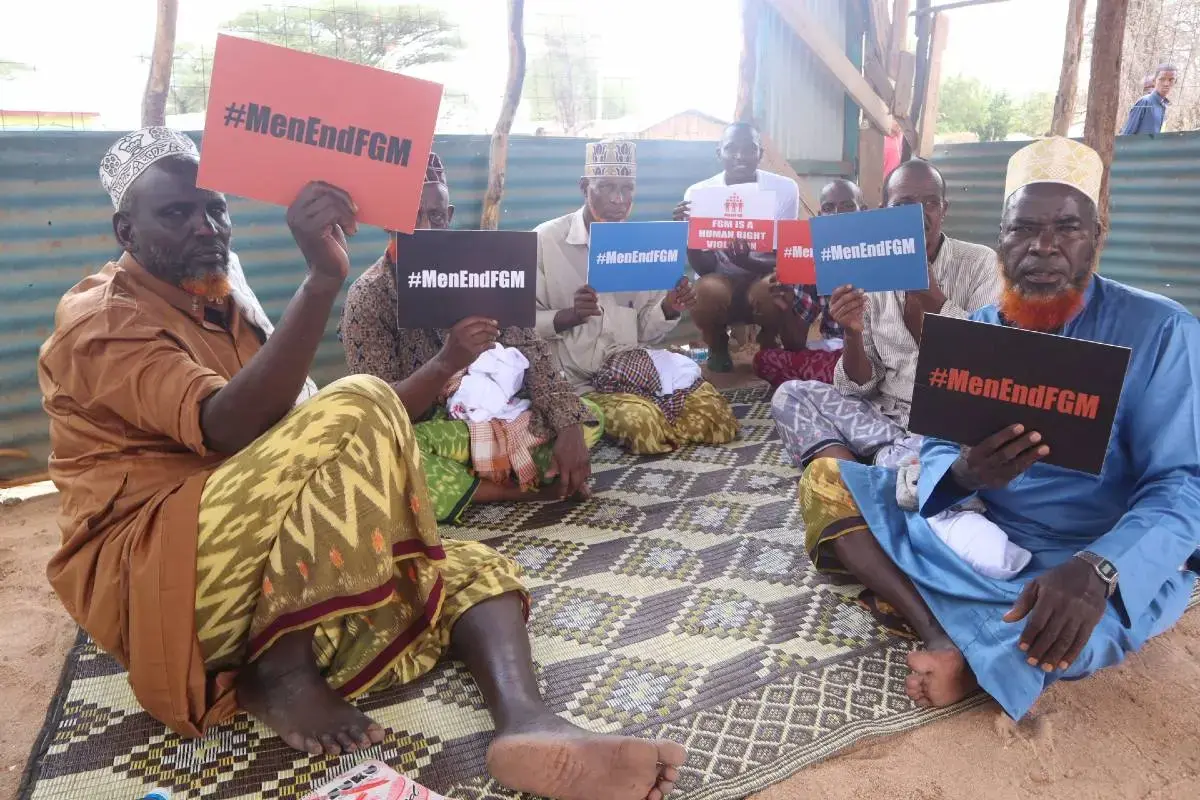
Haidara’s turn is a small story set against a large and stubborn statistic. Mali has one of the highest FGM prevalence rates in West and Central Africa. The World Bank has put the figure among women aged 15 to 49 at around 91 per cent, and roughly nine out of ten women and girls in the country are estimated to have undergone the procedure. Unlike a number of its neighbours, Mali has no law specifically criminalising FGM, leaving the practice to persist largely unchallenged by the state. The resistance to change runs deep enough that a group of men in the country recently launched an all-male campaign in open defence of FGM, framing it as tradition under threat.
It is against that backdrop that Haidara’s transformation matters. He is not an outside activist parachuted in to lecture a community he doesn’t belong to. He is a father and a recognised leader within it, the kind of figure whose opinion shapes what others believe is normal, acceptable, or up for debate.
A slow unlearning
The shift did not happen overnight, and it did not come from being told he was wrong. It came from listening.
Haidara’s change of heart began after he took part in training sessions, workshops and community dialogues run under the Men and Boys as Agents of Change project, an initiative implemented by UN Women with financial backing from the German government.
ALSO READ: Inside the Women-Led Initiative That Has Been Fighting Poverty for 35 Years
Sitting with others and hearing testimonies he had never had reason to hear before, he began, for the first time, to interrogate beliefs he had carried without question his entire life.
He also arrived at a harder truth about how change actually happens in a community like his: it cannot be handed down or imposed from outside. It has to be built, through dialogue, through trust, and through people in the community choosing, on their own terms, to see things differently.
That understanding now shapes everything he does.
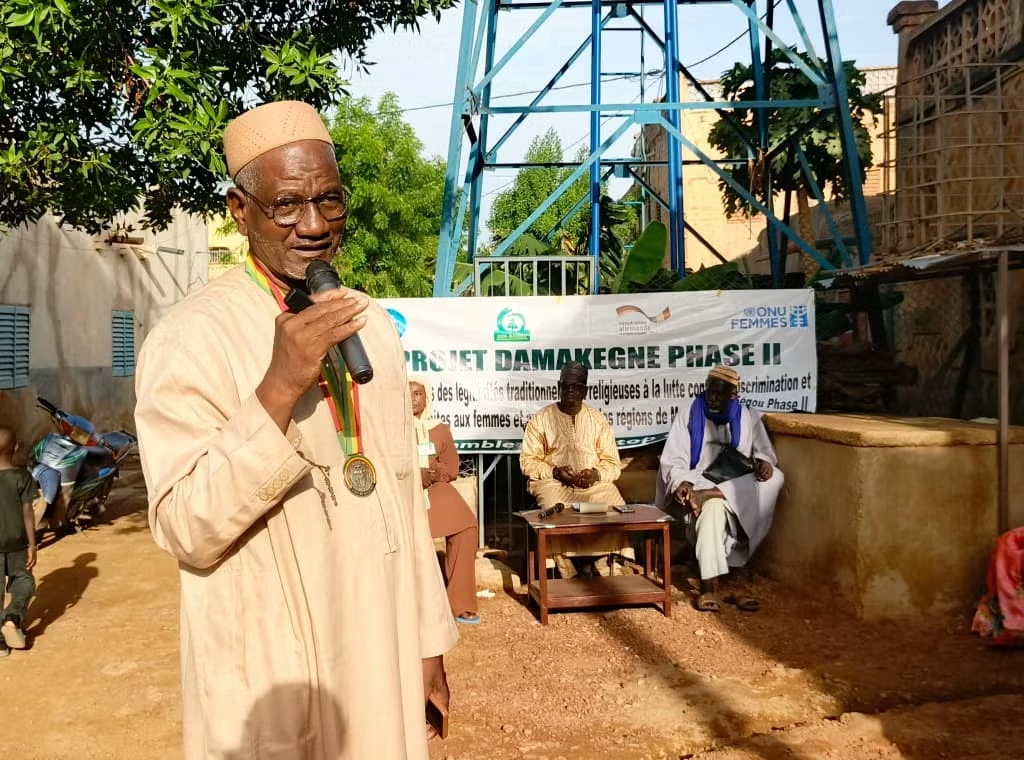
“Today, I regularly organise awareness-raising sessions with families, religious leaders, young people, and women,” he explains.
He is careful about how he does it. Rather than positioning himself as an authority telling people what to think, Haidara opens conversations about what protecting a daughter actually means, about the harm behind a practice long treated as beyond question, and lets people work through their own long-held beliefs at their own pace.
ALSO READ: Eswatini, UAE Launch Africa’s First She Powers Africa Digital Academy
It is, by his own account, slow work. But it is working.
“I can see change: more parents are asking questions, several families are abandoning female genital mutilation, and discussions about protecting girls have become more open,” he says.
A movement built one dialogue at a time
Haidara is not acting alone, and his story is one thread in a wider effort taking shape across Mali’s Mopti and Gao regions. With German government support, UN Women has been working alongside traditional and religious leaders, women, young people and men like Haidara, community members willing to challenge harmful social norms and push back against violence targeting women and girls from within, rather than from outside.
The scale of that work is not abstract. Fifty community-driven initiatives have been carried out across the two regions to date, and eight community-dialogue platforms now exist as standing spaces where people can talk through girls’ rights, their protection, and how gender-based violence might be prevented, conversations that, in many of these villages, simply did not have anywhere to happen before.
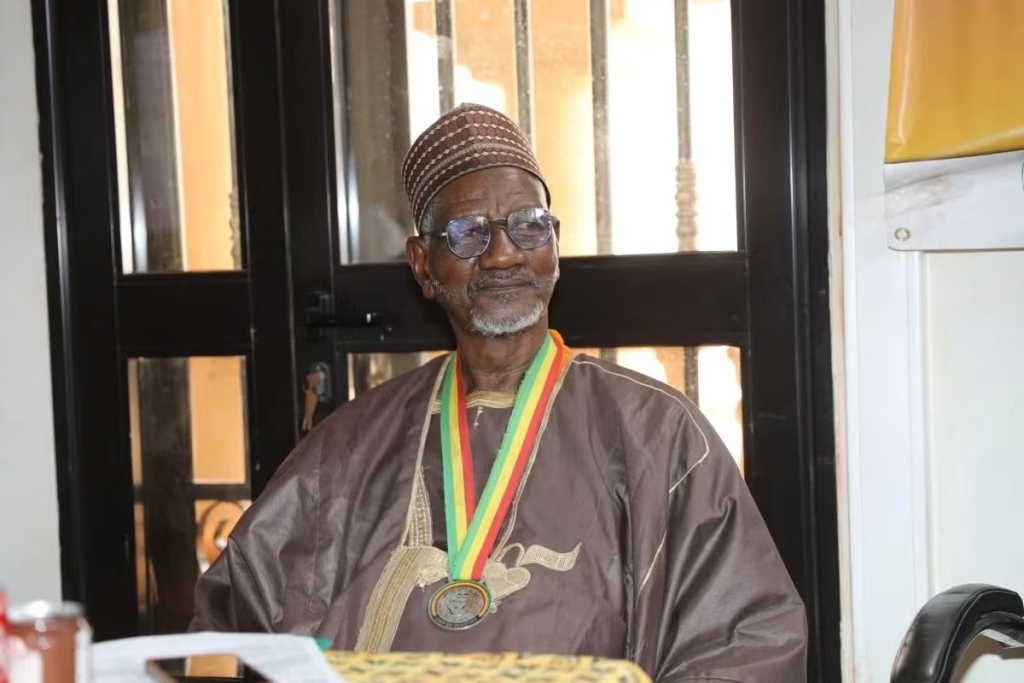
For Haidara, the point was never only to end a single practice. It is about what ending it makes possible: girls who grow up safely, who stay in school, who get to shape lives of their own choosing rather than inherit a script written for them before they were born.
He is realistic about the timeline. Traditions embedded across generations do not dissolve because one man changes his mind, or because a handful of workshops are held in a handful of villages. But he has come to believe that every conversation opens a door that wasn’t there before, and every family that chooses differently for its daughters adds another line to a story that looks nothing like the one their parents and grandparents lived.
What is emerging in Mopti and Gao suggests something worth paying attention to: that the most durable shifts in deeply rooted social practices may not start with legislation or decree, but with communities, and the men within them who once upheld the old ways, deciding, conversation by conversation, to imagine something different for their girls.