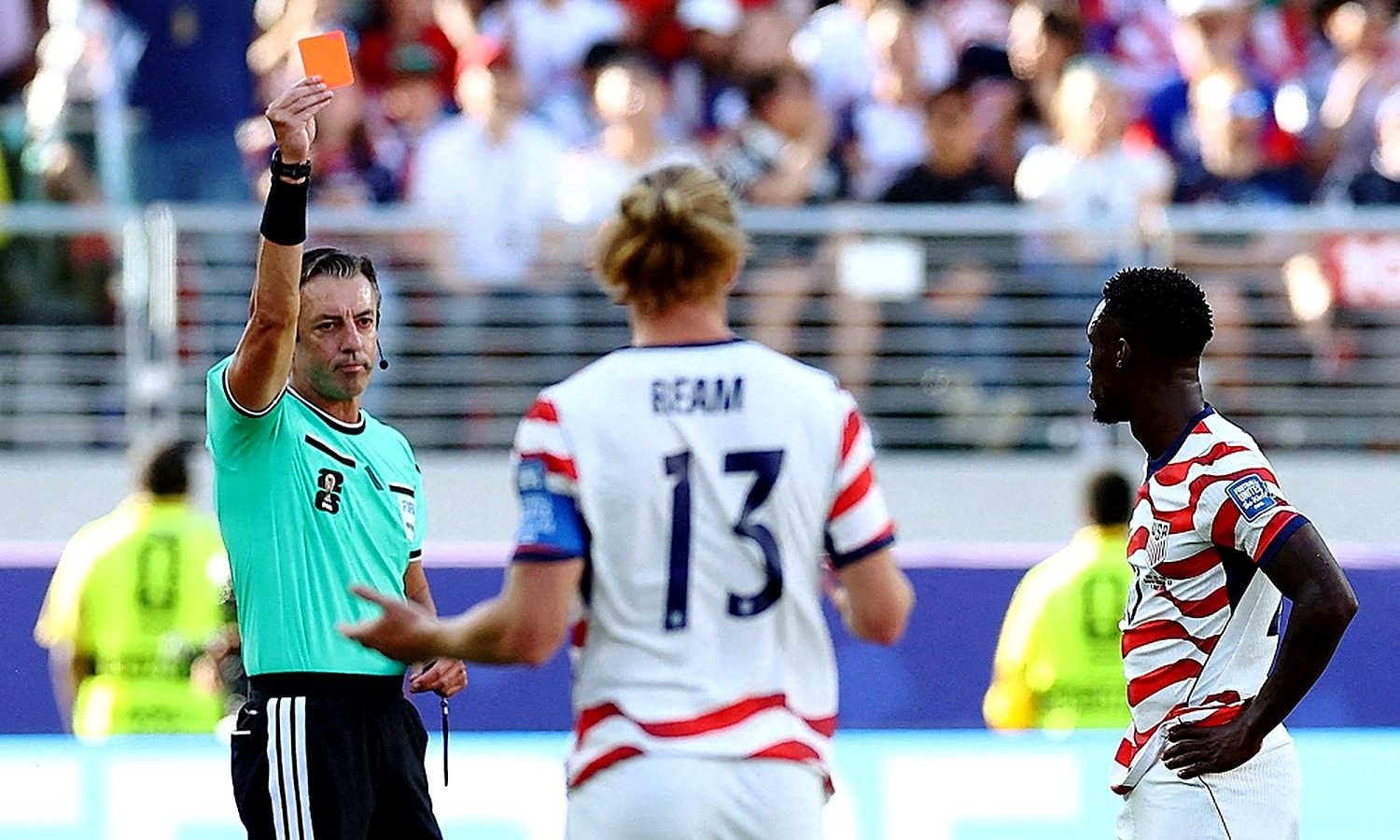
ZURICH, Switzerland: FIFA’s ruling council is set to vote on scrapping the rule that allowed United States striker Folarin Balogun to escape a World Cup suspension, after a summer in which the decision became one of the most damaging controversies of Gianni Infantino’s presidency.
The 37-member FIFA Council meets in Zurich on Thursday, with a motion to stop disciplinary bodies from suspending mandatory one-match bans at the top of the agenda, ESPN reported. It is the council’s first meeting since the Balogun affair and since Infantino faced a backlash over a now-shelved plan to sell a stake in the World Cup’s commercial business to private investors.
For South African fans, the case has an uncomfortable echo. While Balogun was cleared to play in a knockout match, Bafana Bafana’s Themba Zwane served a three-match ban from the same tournament, and FIFA rejected South Africa’s appeal.
How a red card disappeared
Balogun was sent off in the 64th minute of the United States’ 2-0 round-of-32 win over Bosnia and Herzegovina on 1 July, for a challenge on Tarik Muharemović. Brazilian referee Raphael Claus showed the red card after a video review.
Under FIFA’s disciplinary code, a red card carries an automatic one-match ban. That should have ruled Balogun out of the round-of-16 clash with Belgium on 6 July.
Instead, on 5 July, FIFA’s disciplinary committee used Article 27 of the code, which allows a sanction to be suspended on probation. Balogun was fined $40,000 and his ban was put on hold for a year. He played against Belgium, who won 4-1.
FIFA stressed that the red card itself had not been cancelled. But the timing ensured the decision would not be judged on the rulebook alone.
Trump’s phone call
United States President Donald Trump confirmed that he had personally asked Infantino to look again at the red card.
“All I did, I asked for a review because I didn’t think it was a foul,” Trump said on 6 July. A day earlier he had thanked FIFA on Truth Social “for doing what was right, and reversing a great injustice!”
ALSO READ: Zimbabwe sets sights on VAR as FIFA begins implementation drive
Infantino acknowledged the call but insisted the decision was made by independent bodies. “That is how FIFA’s system works, and it is a principle that I will always uphold,” he said.
The reaction across world football was fierce. UEFA expressed “disbelief at such an unprecedented, incomprehensible and unjustifiable decision”. Former FIFA president Sepp Blatter wrote: “Red cards are not overturned by political phone calls. They are overturned by rules, evidence and independent bodies.”
Belgium’s federation appealed, but FIFA ruled it inadmissible because the Belgians were not party to the original disciplinary case. The federation later withdrew its support for Infantino’s re-election bid.
The Zwane contrast
Weeks before Balogun’s reprieve, South Africa learned how strictly the same rulebook could be applied.
In the tournament’s opening match against Mexico at the Azteca on 11 June, Bafana Bafana had two players sent off. Sphephelo Sithole was dismissed for denying a goalscoring opportunity and served a one-match ban. Zwane, 36, was shown a straight red card after a video review for raising his arm towards Roberto Alvarado.
FIFA’s disciplinary committee classified Zwane’s offence as violent conduct and raised his ban from one match to three, covering the group games against Czechia and South Korea.
Coach Hugo Broos was furious. “Zwane’s red card is too severe. I do not think it was a red,” he said before the Czechia match, pointing out that Lionel Messi faced no action after stamping on Algeria’s Aïssa Mandi in Argentina’s opener. “I do not think there was even a VAR review with Messi, whereas this incident was reviewed.”
The South African Football Association appealed. On 25 June, FIFA dismissed it. “We are disappointed with the outcome of our appeal because we strongly believe that the punishment is far harsher than the offence,” SAFA said in a statement.
Zwane never played again at the tournament. South Africa were knocked out by Canada in the round of 32, before his ban expired.
ALSO READ: Motsepe says Africa has shed its ‘inferiority complex’ after historic FIFA world Cup campaign
The offences were different, and FIFA treats violent conduct more harshly than a reckless challenge. But the outcomes show what was at stake. One player’s ban was extended and his appeal rejected. Another’s was suspended within four days, after a head of state made a phone call.
Not the only reprieve
Balogun was not the only player to benefit from Article 27 around this World Cup. FIFA suspended the final two matches of Cristiano Ronaldo’s three-match ban from a qualifier, allowing him to play Portugal’s opening games. Argentina’s Nicolás Otamendi and Ecuador’s Moisés Caicedo also had one-match bans waived for their teams’ openers.
But Balogun’s was the first red card at a World Cup itself to go unpunished since Brazil’s Garrincha was cleared to play the 1962 final, which is why the case has become a symbol of the question that now faces the council.
What the council will decide
According to beIN Sports, FIFA will argue at the meeting that the disciplinary rules were not clear in the Balogun case, and will seek to change the wording of Article 27 so that mandatory one-match bans can no longer be suspended.
Critics say that defence will not settle the matter. FIFA vice-president and English Football Association chair Debbie Hewitt has written to Infantino and secretary general Mattias Grafström seeking the release of all material related to the Balogun decision and the abandoned investment plan.
UEFA, the Asian Football Confederation and CONCACAF have all called for changes at the top of FIFA, and Norway’s football federation has filed an ethics complaint.
Africa stands by Infantino
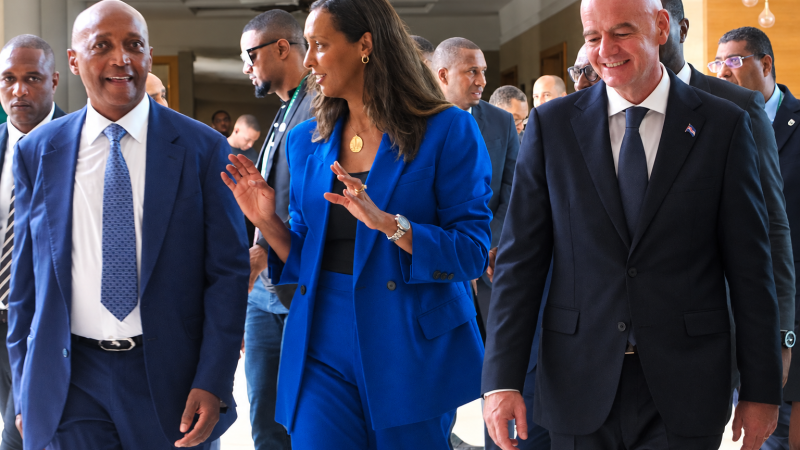
Africa is a notable exception. CAF president Patrice Motsepe, who also sits on the FIFA Council as a vice-president, told the CAF Strategy Conference in Cape Verde that the continent’s backing for Infantino was “unanimous and unconditional”. The heads of all 54 African federations joined him in supporting Infantino’s bid to stay in office beyond the 2027 FIFA Congress.
That support carries weight. Africa’s 54 member associations make up one of the two biggest voting blocs in FIFA’s 211-member Congress, and its representatives on the council will help decide how far Thursday’s reforms go.
For South African supporters who watched Zwane sit out the rest of the tournament, the question is simple. If the rule is changed on Thursday, it will close the door for future players. It will not explain why it was opened for one.