KAMPALA, Uganda: Uganda’s Parliament has suspended enforcement of the ban on commercial charcoal burning and trade in the country’s northern regions, demanding answers on whether households have access to affordable alternatives.
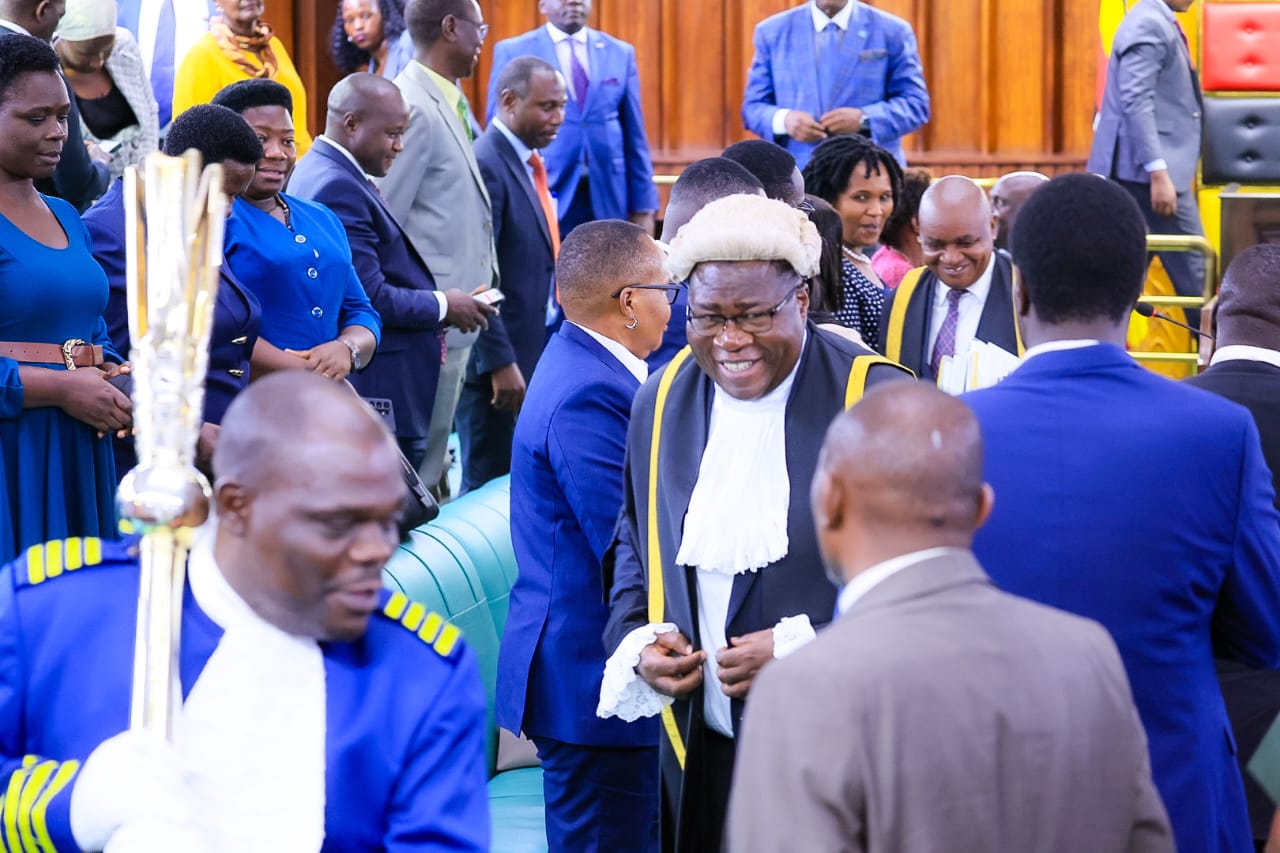
Speaker Jacob Marksons Oboth issued the directive during Wednesday’s plenary sitting and instructed the Minister of Energy and Mineral Development to brief MPs on the ban and efforts to promote cleaner cooking fuels.
“Government should come next Wednesday and update us on this ban, and tell us the extent of the performance by the ministry in promoting alternative energy sources,” Oboth said.
“For between now and Wednesday, let us first suspend the enforcement. I do that not because I support charcoal, but because I am aware of how difficult it is going to be for the enforcers.”
The suspension places affordability at the centre of a policy intended to curb forest destruction in Uganda’s main charcoal-producing areas.
The ban stems from Presidential Executive Order No. 3, issued by President Yoweri Museveni on 19 May 2023. It prohibits commercial charcoal burning and trade in West Nile, Northern Uganda, Karamoja and the Teso sub-region.
MPs Demand Affordable Alternatives
Leader of the Opposition Joel Ssenyonyi raised concerns that announcements of intensified enforcement had caused widespread alarm among people who depend on charcoal and firewood.
He cited a 2024 Uganda Bureau of Statistics (UBOS) survey indicating that between 87% and 94% of Ugandans rely on the two fuels.
“How aggressively are we making it possible for ordinary persons to access alternative sources of energy? This directive was issued three years ago, but what has government done to avail these alternatives cheaply to Ugandans before we can heavily crack the whip?” Ssenyonyi asked.
Cohen Amanya, the National Resistance Movement MP for Igara County West, questioned the ban’s legal basis and called for enforcement to remain suspended until legislation was passed.
“In the meantime, let the status quo be maintained until the minister comes with a statement,” Amanya said.
Three Years Of Uneven Enforcement
The presidential order followed years of complaints from local leaders about forests being destroyed to supply charcoal to Kampala and other urban centres.
ALSO READ: Uganda’s SAGE expansion stalls as Shs252 billion funding gap leaves older persons waiting
Enforcement has largely fallen to the army and police. In November 2025, the Uganda People’s Defence Forces (UPDF) said security teams had intercepted more than 120 trucks carrying charcoal since the crackdown began. Seized charcoal was distributed to vulnerable households in Lira City.
“Since 1960, more than 60 per cent of Uganda’s forest cover has been lost to charcoal burning and deforestation,” UPDF 5 Infantry Division commander Major General Keith Katungi said at the time.
Despite the operation, the trade has continued.
On Tuesday, a day before Oboth’s directive, the Daily Monitor reported that charcoal was still being produced, stored and traded in West Nile. Motorcyclists were transporting small loads to roadside collection points, where trucks picked up larger consignments.
Security chiefs who met in Arua on 6 October had resolved to intensify enforcement and impound vehicles transporting charcoal.
Critics have questioned whether the crackdown reaches those financing the trade or concentrates on small transporters.
“Who owns the charcoal? Who paid for the trees to be cut? Who financed the burners?” former Obongi County MP George Bhoka asked in comments to the newspaper.
Government Defends Clean Cooking Efforts
Minister of State for Energy and Mineral Development responsible for minerals, Phiona Nyamutooro, said the government was promoting liquefied petroleum gas (LPG), electric cooking, ethanol and biogas.
She said a special electricity tariff had been introduced for cooking and that the government continued to distribute free LPG cylinders and accessories.
“As part of oil and gas production, LPG will be produced from both Tilenga and Kingfisher projects. We hope that this will help in improving the access to clean gas,” Nyamutooro said.
The ministry’s Clean Cooking Unit was also addressing concerns about gas safety and cultural barriers to adopting different cooking methods, she added.
Ssenyonyi questioned how much these measures had achieved. He put LPG uptake at about 2% and said many households could not afford refills, even after receiving free cylinder kits.
His objection highlights the difference between helping a household acquire cooking equipment and enabling it to meet the continuing cost of fuel.
Electricity Uptake Remains Low
Figures on electric cooking also point to a slow transition.
The Electricity Regulatory Authority introduced the Fumba cooking tariff in 2022 at UGX 412 per unit for qualifying households.
However, according to UBOS figures cited by the Economic Policy Research Centre, the proportion of households cooking with electricity increased only from 1.4% to 1.7% over the following three years.
The anticipated supply of locally produced LPG also depends on oil projects that have repeatedly missed their production targets.
Commercial production from the Lake Albert fields was previously expected in 2018, 2020 and 2025. In August, the Daily Monitor reported that the mid-2026 target was slipping again.
For households being asked to abandon charcoal and firewood, the parliamentary debate therefore turns on both the availability of alternatives and their everyday running costs.
Government Proposes A Phased Approach
Government Chief Whip Jane Ruth Aceng said the issue involved several government agencies and required a phased response.
“We cannot stop it outright, so we will have dialogue through the office of the Leader of Government Business with Ministry of Energy, to map a way forward to address it step by step,” Aceng said.
The energy minister is expected to present the government’s statement to Parliament on Wednesday, 21 October.
MPs will then have to assess whether efforts to expand clean cooking have progressed far enough to support renewed enforcement, or whether households need more assistance before the crackdown resumes.