Police and UN officials in the Democratic Republic of Congo are calling for stronger international information-sharing and digital investigative capacity as cybercrime, disinformation and transnational criminal networks increasingly challenge traditional policing methods.
UN Police and DRC Police Call for Stronger Digital Cooperation as Cybercrime Threat Grows
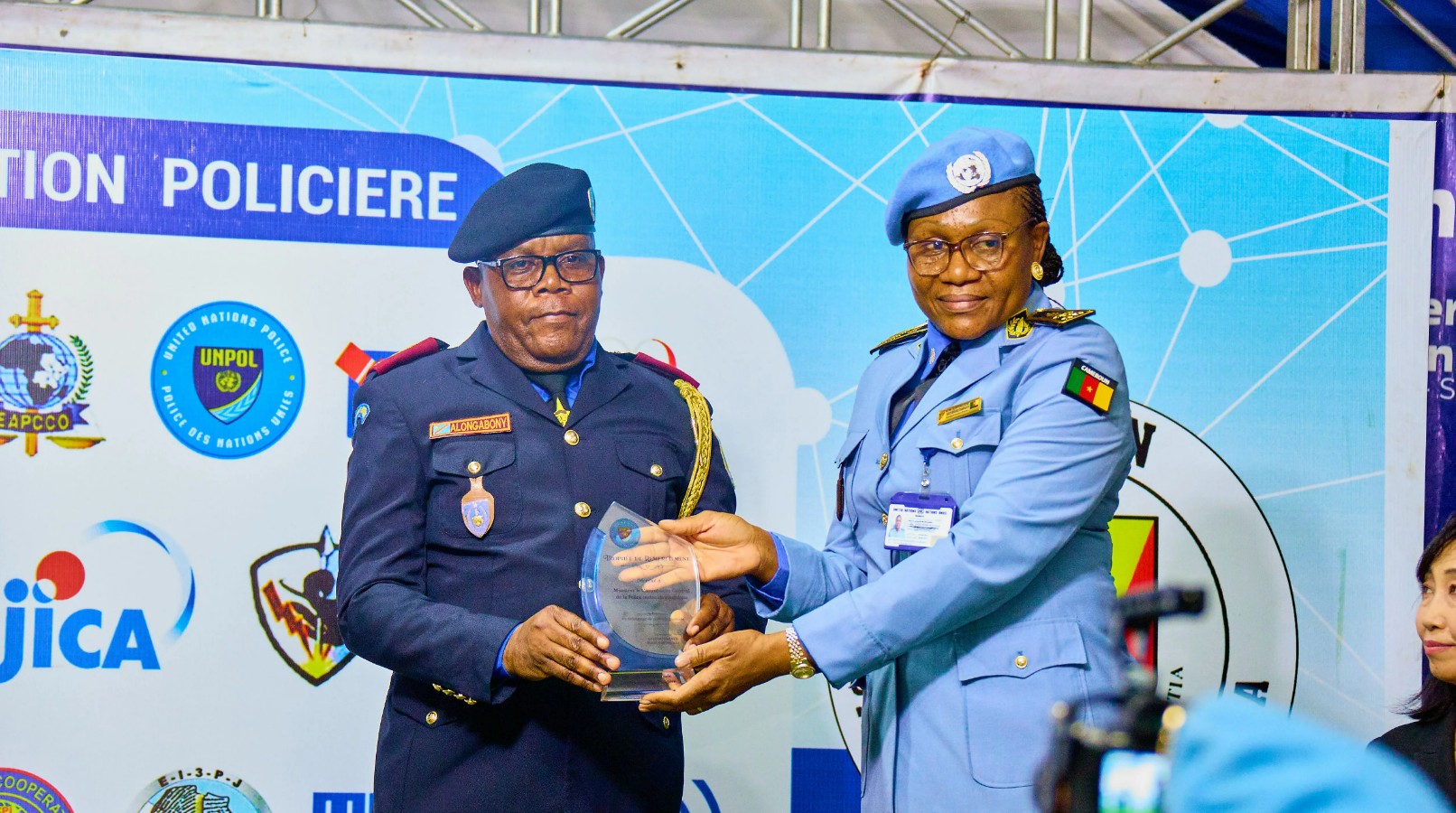
KINSHASA, Democratic Republic of Congo – Crime in the Democratic Republic of Congo is increasingly moving into the digital space, prompting Congolese and United Nations police officials to call for deeper international cooperation and stronger digital investigative capabilities.
The warning came during the country’s commemoration of International Police Cooperation Day on Monday, 7 September, at the University of Kinshasa.
Held under the theme “Digital Technology at the Heart of Police Cooperation,” the event brought together members of the Congolese National Police (PNC), United Nations Police (UNPOL), academics, civil society representatives and government officials.
Speakers agreed that as criminals increasingly use technology to operate across borders, police forces must be able to share information and investigative expertise more quickly.
Crime is becoming increasingly digital
Deputy Commissioner Stéphane Mawana, an eight-year veteran investigator with the PNC and a graduate of the National School of Cybersecurity in Dakar, outlined how technology is changing police investigations.
He said cyberspace has become an increasingly important resource for investigators, alongside traditional sources such as informants and physical evidence.
Digital investigation, he said, is now playing a growing role in criminal cases as police seek to trace activity carried out through online platforms and other technologies.
PNC Commissioner General Benjamin Alongaboni said the change was part of a broader evolution in criminal activity.
Criminals, he said, were increasingly exploiting technology for illegal purposes, creating challenges that conventional policing methods alone cannot adequately address.
Among the threats highlighted at the event were cybercrime, disinformation campaigns and transnational criminal networks.
Christiane Sophie Eone, UNPOL Coordinator for Reform and Restructuring, said technology was fundamentally changing the security environment in which police forces operate.
Information sharing becomes essential
The officials agreed that increasingly borderless crime requires police forces to move beyond isolated investigations and strengthen the exchange of information.
Mawana described information sharing as crucial to an effective response to cybercrime, while Eone characterised international police cooperation as a strategic necessity rather than an optional addition to policing.
Alongaboni similarly stressed the importance of information moving between police forces, particularly when criminal networks operate across jurisdictions and use technologies that are not confined by national borders.
Eone said MONUSCO would continue supporting efforts to strengthen the capacity of the Congolese police.
She framed the cooperation as a shared responsibility between the UN mission and Congolese authorities, with institutional capacity building remaining an important part of the mission’s engagement with the PNC.
The DRC’s Minister of the Interior, who attended the commemoration, reinforced the message that no country can effectively confront increasingly sophisticated criminal threats in isolation.
He called for greater international exchanges between police forces, including the sharing of operational experience and expertise to help dismantle organised criminal networks.
Universities seen as part of the security response
The decision to hold the event at the University of Kinshasa also reflected a growing emphasis on the relationship between academic research and policing.
UNPOL has been seeking to strengthen links between universities and security institutions, arguing that research and technological innovation can help shape the policing tools needed to respond to emerging threats.
ALSO READ: Two Congolese Nationals Granted Bail Over Unauthorised SADC Summit Access
Eone challenged students attending the event to contribute to that process by developing ideas and solutions for the security challenges created by new technologies.
Alongaboni also highlighted the importance of closer cooperation between police and academic communities.
The relationship could become increasingly important as the DRC considers how to develop sustainable security capabilities while MONUSCO’s role in the country continues to evolve.
Digital policing amid a changing security environment
The discussion comes as the DRC continues to face serious conventional security challenges, particularly in its eastern provinces, while also confronting the growing use of technology for criminal activity and disinformation.
For the PNC, developing digital investigative expertise represents one part of a wider effort to modernise policing.
Mawana’s cybersecurity training in Dakar is an example of the specialised skills increasingly required by investigators as criminal activity moves online.
But building that capacity will require more than individual training.
Police forces will need sustained investment in technology, specialist skills, digital evidence management and cooperation with counterparts in other countries.
That challenge is particularly significant as MONUSCO’s presence and responsibilities in the DRC continue to change.
International cooperation takes on a new dimension
International Police Cooperation Day has been marked annually on 7 September since 2023 to highlight the contribution of cross-border police cooperation to peace, security and justice.
In Kinshasa, this year’s commemoration placed a distinctly modern challenge at the centre of that cooperation.
For the DRC and its international partners, the issue is no longer simply how police can exchange information about criminals operating across physical borders.
It is how they can keep pace with criminal networks operating in a digital environment where those borders are increasingly difficult to define.
The message from the event was clear: as technology changes the way crime is committed, police cooperation must evolve with it.
Subscribe to Our Newsletter
Keep in touch with our news & offers
Thank you for subscribing to the newsletter.
Oops. Something went wrong. Please try again later.