TVET Month highlighted the growing opportunities in technical and vocational education, with the story of Bokamoso Motsemme, a female Fitter and Turner from Tshwane South TVET College, showing how practical skills can open the door to a rewarding career.

By Mamonare Mahlo
PRETORIA, South Africa – Technical and Vocational Education and Training (TVET) is opening new pathways for young people to develop practical skills, pursue meaningful careers and challenge long-standing perceptions about vocational education.
This was highlighted during TVET Month in August, when the UNEVOC Centre at the University of South Africa (Unisa) joined celebrations at Esayidi and Tshwane North TVET Colleges. Among the stories emerging from the celebrations was that of Bokamoso Sharon Motsemme, a Fitter and Turner whose journey into the skilled trades is challenging stereotypes about women’s roles in engineering and artisan careers.
TVET Month was celebrated under the theme, “TVET: The inclusive home of occupational excellence – Driving the skills revolution.”
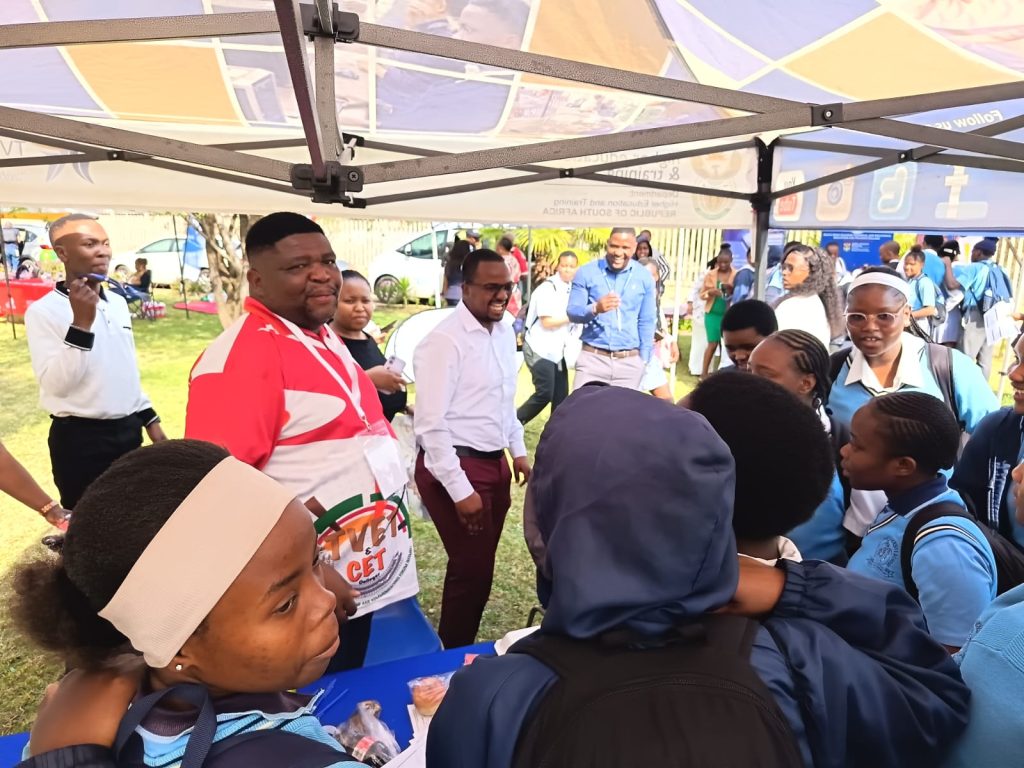
As part of the month’s activities, the UNEVOC Centre was invited by the Department of Higher Education and Training (DHET) to participate in the national launch at Esayidi TVET College on 13 August and a drive-by event at Tshwane North TVET College on 31 August.
The events provided platforms to promote occupational programmes, raise awareness of the role of TVET in the post-school education and training system and challenge misconceptions about TVET colleges.
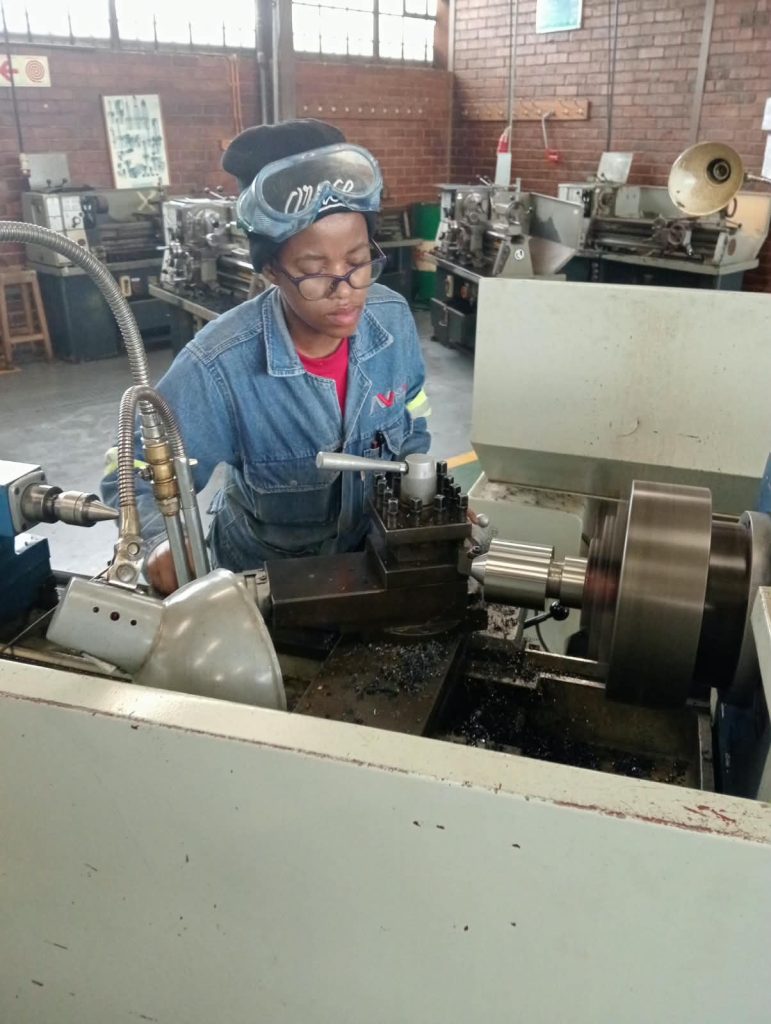
The launch at Esayidi TVET College brought together stakeholders from across the sector, including the Minister of Higher Education and Training, Buti Manamela, college alumni and representatives from the TVET sector.
Addressing learners and stakeholders, Manamela encouraged young people to consider TVET colleges when planning their futures, emphasising that university is not the only route to a successful career.
ALSO READ: Inside The Rise of Unisa: The University That Revolutionised Distance Learning in Africa
“Yes, universities are important institutions, but TVET colleges are equally important institutions,” he said.
The Minister also highlighted improvements in the TVET sector, including upgraded infrastructure and initiatives aimed at exposing lecturers to industry. These efforts seek to ensure that learners gain relevant knowledge and practical experience that can be applied in the workplace.
Prof Vaola Sambo, Centre Manager of the UNEVOC Centre at Unisa, said the Centre forms part of a global network that enables TVET institutions to access knowledge and expertise from around the world.
“We operate within this very big ecosystem called the UNEVOC network, with UNEVOC Centres like ourselves across the globe, where we are able to tap into the skills available across the world and make those available to TVET colleges,” she said.

She identified innovation and excellence, inclusion and employability, and public-sector engagement as key areas through which the Centre supports the TVET sector. Among its priorities is strengthening artificial intelligence skills and supporting TVET educators to use and manage the 4IR centres established at colleges.
The message continued at Tshwane North TVET College, where stakeholders gathered to promote occupational education and the different pathways available through TVET.
Tshwane North TVET College Principal Thembi Tsibogo highlighted the range of opportunities available to young people, including direct entry into employment, entrepreneurship and further study at university.
She also encouraged young women to consider careers traditionally associated with men, including engineering, construction, technology and the skilled trades.
“To the young women, the young girls that are here today, engineering, construction, technology and skilled trades are open to your ambitions too. We have seen young women venturing into jobs that have always been jobs that are meant for boys,” she said.
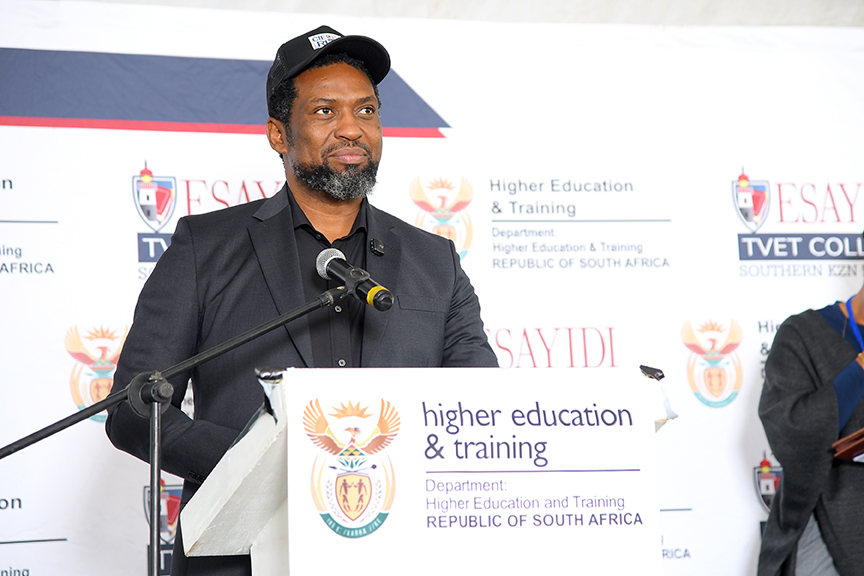
Motsemme’s journey is a practical example of that changing landscape. Motsemme’s interest in engineering began with a simple curiosity about how things work.
Inspired by her father and uncles, she developed an early interest in working with her hands and understanding mechanical systems. Her curiosity grew when she encountered Mechanical Technology, a subject that allowed her to turn theory into practical work.
That experience sparked an interest in mechanics and eventually led her to study Mechanical Engineering, specialising in Fitting and Turning, at Tshwane South TVET College.
Her training exposed her to engineering drawings, calculations and metallurgy, alongside workshop safety, precision measurement and the operation of machinery.
The practical nature of the training particularly appealed to her. She enjoyed transforming raw materials into functional components through machining and fitting, often working with lathes and milling machines where accuracy can be measured in fractions of a millimetre.
Producing a component and seeing it fit precisely into an assembly gave her a sense of achievement while reinforcing the importance of patience, discipline and attention to detail.
Her TVET education also provided a bridge into the workplace. She secured an apprenticeship, gained practical experience and qualified as an artisan before moving into full-time employment.

Her achievements have since earned wider recognition, including becoming a finalist in the South African National Artisan Awards (SANAA) 2026.
Her journey has not been without challenges.
As a woman entering a traditionally male-dominated trade, Motsemme encountered assumptions about whether women could succeed in workshop environments and whether her physical size would enable her to meet the demands of the job.
She chose instead to let her work demonstrate her capabilities.
“Strength in the workshop comes from precision, technique, and mindset – not physical size or gender,” she says. “Precision machinery doesn’t care who is operating it; it responds to skill, focus, and discipline.”
Her experience has reinforced her belief that technical ability, discipline and quality workmanship matter more than stereotypes about who belongs in a particular profession.
She hopes other young people will also recognise the opportunities offered by TVET education and artisan careers and move away from the perception that vocational education is a second-choice option.
“You don’t need to limit yourself to traditional office careers to build a successful life,” she says. “Don’t let fear of male-dominated spaces hold you back – there is space for you here, and your perspective and precision are needed.”
Motsemme now hopes to use her experience to help others follow similar paths.
ALSO READ: Celebrating Cultural Diversity and Embracing a Season of Renewal
She plans to mentor apprentice fitters and turners in the workplace, participate in school exhibitions and share her knowledge with young people interested in technical careers, particularly young women from rural areas and townships.
Her journey reflects the message behind this year’s TVET Month theme and demonstrates what inclusivity can mean in practice.
“To me, this theme is a personal reflection of my journey. ‘Inclusive’ means that TVET colleges create an environment where anyone – regardless of gender, physical stature, or background – can enter and build a world-class skill set,” she says.

For Motsemme, occupational excellence is not simply about acquiring a qualification. It is about developing the technical ability, discipline and confidence to contribute meaningfully to the economy.
Her story demonstrates how a TVET education can turn curiosity into practical skills, skills into a profession and a profession into an opportunity to inspire others.
* By Mamonare Mahlo, Communication and Online Officer: UNEVOC Centre at Unisa