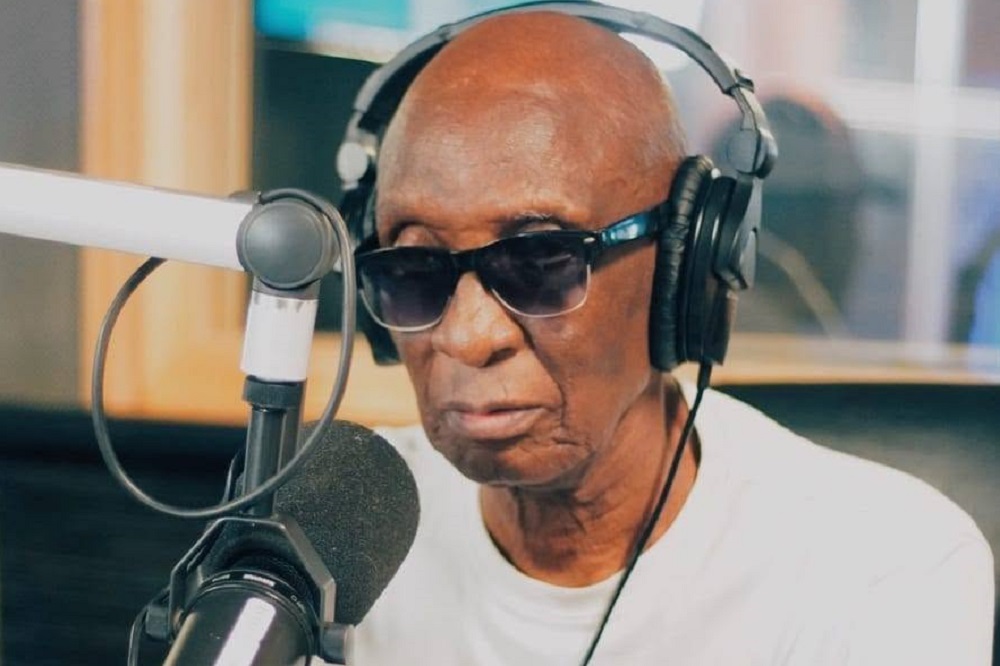
JOHANNESBURG – Veteran musician Babsy Mlangeni, whose distinctive voice and enduring hit Sala Emma won him fans across South Africa, died on Thursday night, 1 October, after a short illness. He was 83.
His death marks the end of a career spanning almost six decades, during which he crossed language barriers, challenged prejudice against blind people and helped younger musicians find their place in the industry.
Born Bernard Mlangeni in Orlando East, Soweto, on 24 February 1943, he lost his sight at about three after becoming seriously ill while staying with his grandmother in Daggaskraal, Mpumalanga.
His parents encouraged him to explore the world and refused to let blindness limit his ambitions.
“They didn’t shield me from the world,” he recalled at his 82nd birthday celebration in Soweto last year.
Mlangeni later attended the Athlone School for the Blind in Cape Town, where he learned to play the guitar, laying the foundation for a life in music.
ALSO READ: A Tribute to Nandi Nyembe: South Africa’s Soulful Storyteller and Icon
His professional career gathered momentum in the 1960s when he joined the All Rounders, a Soweto group of blind musicians. Solo success followed, with Sala Emma becoming his best-known song.
He wrote it for his wife, Emma, whom he met in 1966 and married two years later. Although sung in Sesotho, the song found audiences far beyond the language’s speakers, becoming a favourite in KwaZulu-Natal, the Eastern Cape and Cape Town.
In a 2025 interview with 702, Mlangeni said he had never anticipated its lasting appeal and still did not know why it had been selected as a single.
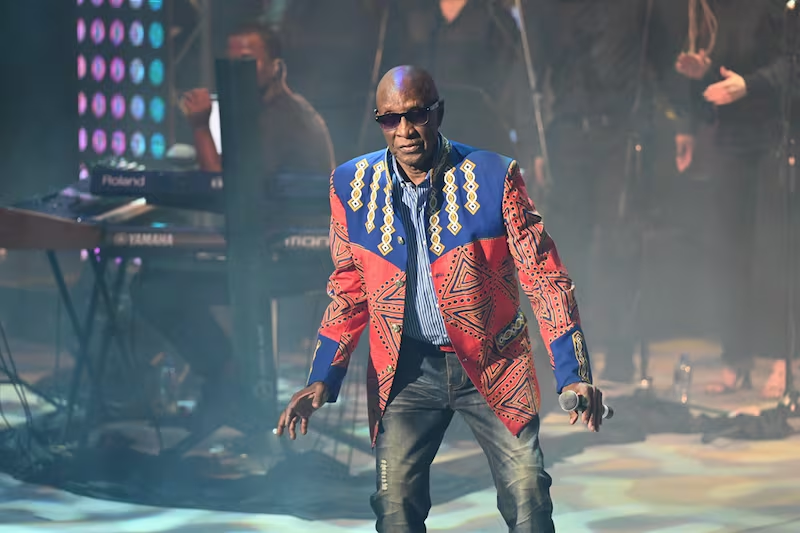
Other hits included Bua Nnete, Botsotso, Lonely Man and Umadlembathini. Recording in isiZulu, Sesotho and isiXhosa, he reached listeners across linguistic and cultural divides, becoming a familiar voice in South African popular music during the 1970s and 1980s.
His success also challenged narrow assumptions about what blind people could achieve. In the same 702 interview, he recalled a time when society believed they could do little beyond begging.
ALSO READ: South Africa Mourns Entertainment Icon Seputla Sebogodi, Dead at 63
“I have proved them wrong,” he said.
Mlangeni also helped nurture younger talent, including the late Steve Kekana, a fellow visually impaired musician who went on to become one of the country’s most celebrated performers.
Recognition of Mlangeni’s contribution continued well into his later years. In 2017, he received a South African Music Award for Lifetime Achievement alongside Rebecca Malope and Don Laka.
In August 2025, the Department of Sport, Arts and Culture presented him with the Ministerial Artist with Disability Award at the National Arts and Culture Awards in Sun City.
“I feel really honoured because I have been in this industry for 58 years,” he said at the time, acknowledging the difficulties he had faced as a musician with a disability.
Tributes began emerging on Friday morning, with the Max Mojapelo Foundation describing him as a visionary music maestro and extending condolences to his family and friends.
Fan Bhoza Mphela said Mlangeni had shown the country that music was felt deep within the soul.
“Your talent, resilience and contribution to SA music will never be forgotten,” Mphela wrote.
The specific cause of Mlangeni’s death has not been publicly confirmed. Memorial and funeral arrangements have yet to be announced.