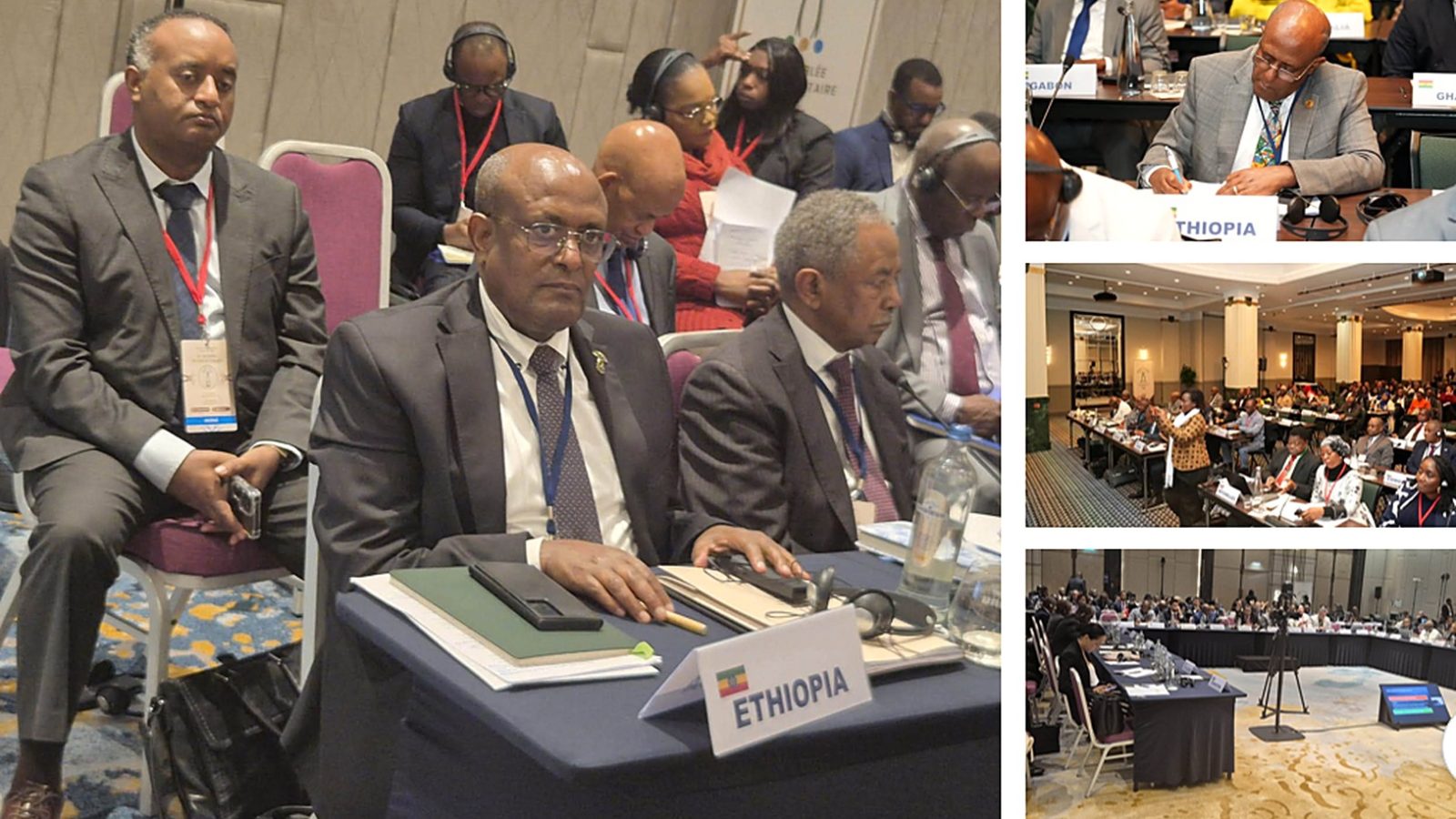
BRUSSELS: Ethiopian lawmakers are participating in a week of parliamentary meetings in Brussels, bringing together representatives from Africa, the Caribbean and the Pacific with their European counterparts to discuss the implementation of a new 20-year partnership agreement.
The Ethiopian delegation is attending the African Regional Parliamentary Session of the Organisation of African, Caribbean and Pacific States (OACPS) and the 65th session of the OACPS Parliamentary Assembly, taking place from 7 to 13 November, the Ethiopian Embassy in Brussels said.
The meetings coincide with preparations for the second OACPS-EU Joint Parliamentary Assembly, scheduled for 9 to 13 November. Discussions will focus on issues of mutual interest and shared priorities between OACPS member states and the European Union, according to the embassy.
However, the embassy’s statement did not identify the Ethiopian delegates or specify the positions the country intends to advance during the discussions.
Understanding the Samoa Agreement
The parliamentary meetings take place under the framework of the Samoa Agreement, signed on 15 November 2023 in Apia, Samoa, by the European Union, its member states and OACPS members.
The agreement replaced the Cotonou Agreement and provides the framework for relations between the two blocs over the next 20 years, according to the Council of the European Union.
Covering approximately two billion people, the agreement establishes a common framework for all OACPS members, supported by three regional protocols covering Africa, the Caribbean and the Pacific.
It identifies six priority areas: human rights and democracy; peace and security; human and social development; migration and mobility; climate change; and sustainable economic growth.
The agreement has been provisionally applied since January 2024, while participating countries continue their respective ratification processes.
ALSO READ: WHO-Backed upgrades strengthen infection control at key Ethiopia-Kenya border hospital
Parliamentary diplomacy seeks tangible results
The Brussels discussions follow the first Africa-EU Parliamentary Assembly, held in Ezulwini, Eswatini, in May. According to the OACPS, lawmakers from 41 of the 48 African OACPS member states attended the meeting.
The assembly examined the ratification and implementation of the Samoa Agreement, the EU’s Global Gateway investment strategy, youth employment, climate resilience and migration. It also adopted a joint recommendation for the Africa-EU Council of Ministers.
Opening the session, Eswatini’s Prince Lindani stressed the need for the partnership to move beyond commitments and deliver tangible benefits to ordinary citizens.
The partnership, he said, “must now translate into concrete results for citizens”.
OACPS Secretary-General Moussa Saleh Batraki called on parliamentarians to “take ownership of the reform agenda” and help bring the organisation closer to the people it represents.
The discussions reflected growing emphasis on the role of parliamentary diplomacy in monitoring commitments, holding governments accountable and ensuring that agreements translate into measurable development outcomes.
Samoa Agreement faced controversy in parts of Africa
Despite its broad development agenda, the Samoa Agreement has generated controversy in some African countries, particularly over its provisions relating to human rights, sexual orientation and gender identity.
The debate became particularly prominent in Nigeria when the country signed the agreement in June 2024. Critics argued that its provisions could oblige Nigeria to recognise LGBTQ+ rights, despite domestic laws prohibiting same-sex relationships.
ALSO READ: Ethiopia Begins $12.5 Billion Construction of ‘Africa’s Biggest Airport’
The Nigerian government rejected that interpretation.
Information Minister Mohammed Idris said the government had ensured that the agreement “did not contravene the 1999 Constitution (as amended) and other extant laws”, TheCable reported.
References to sexual orientation and gender identity were removed from the final text during negotiations. The agreement instead contains broader commitments to promoting and protecting human rights, alongside implementing existing international obligations relating to reproductive health and gender equality.
The controversy highlighted the challenge of negotiating a common partnership framework among countries with different legal systems, political traditions and social positions.
Why the Brussels discussions matter for Ethiopia
For Ethiopia, Africa’s second-most populous country, participation in the parliamentary discussions provides an opportunity to engage with the wider implementation of an agreement covering areas central to the continent’s development priorities.
These include trade, investment, migration, climate resilience and sustainable economic growth.
The joint parliamentary assembly also provides a platform for elected representatives from both blocs to scrutinise implementation, raise concerns and press governments on their commitments.
As countries continue working through their ratification processes, the Brussels meetings will provide an opportunity to assess progress and consider how the partnership can move beyond its formal commitments.
Ultimately, the agreement’s significance will be measured not by the number of meetings held or declarations adopted, but by whether its commitments translate into tangible economic and social benefits for the people of Africa, the Caribbean and the Pacific.