NAIROBI, Kenya: Africa’s ability to respond to health emergencies and improve healthcare delivery is being undermined by a problem that receives far less attention than shortages of doctors, hospitals and medicines: the continent’s failure to consistently record, analyse and use reliable health information.
A new World Health Organisation (WHO) assessment has exposed significant weaknesses in health information systems across the continent, warning that incomplete death records, poor data quality and inadequate funding could prevent governments from identifying emerging health threats and directing lifesaving interventions to the communities that need them.
The findings are particularly concerning because they affect the information governments rely on to make decisions about healthcare spending, disease prevention, medical staffing and the distribution of essential services.
Of the 40 countries assessed in the WHO African Region, only 19 reported that authorities were notified of at least 80% of deaths. Just 21 recorded the cause of death for at least 80% of registered deaths.
The findings mean that in many countries, authorities do not have sufficiently comprehensive information to establish how many people are dying or consistently determine the reasons behind those deaths.
“When we do not know why people are dying, which children are missing essential services or where communities face the greatest health risks, we may overlook the very people who need our attention most,” said Dr Mohamed Janabi, WHO regional director for Africa.
The report, The Maturity and Functionality of Health Information Systems in the WHO African Region, was launched at the inaugural African Health Data Forum in Nairobi on Tuesday. The assessment was conducted in 2024 across 40 of the region’s 47 member states.
It gives the region an overall health information system maturity score of 59 out of 100, indicating that many countries remain at an early stage of developing the capacity to generate and use reliable health information.
When deaths are not properly recorded
The failure to record deaths and their causes is more than an administrative weakness. It affects how governments understand the health of their populations and whether they can identify patterns that require urgent intervention.
Death registration and cause-of-death information help authorities establish whether people are dying from infectious diseases, non-communicable conditions, injuries, pregnancy-related complications or other causes.
Without reliable information, governments can struggle to identify preventable deaths, monitor changes in disease patterns and assess whether healthcare interventions are working.
For example, incomplete records can make it difficult to determine whether a particular community is experiencing an increase in deaths linked to a disease or whether a healthcare facility is failing to respond effectively to certain medical emergencies.
The WHO’s findings also point to weaknesses in the systems used to collect and interpret information within healthcare facilities.
Only 43% of the countries assessed reported having sufficient capacity to analyse health data at clinic and hospital level. Just one in four had the capacity to assess the quality of that information at facility level.
This creates a gap between collecting information and being able to use it to improve healthcare.
A country may have records of patient visits, medical diagnoses and available medicines, but if the information is incomplete, inaccurate or not properly analysed, health authorities may struggle to identify shortages, allocate staff or determine which communities are being underserved.
Digital systems are growing, but investment is lagging
Africa has made progress in adopting digital technology to improve the collection and reporting of health information.
ALSO READ: Uganda urged to invest in health system to support $500bn economic ambition
According to WHO, 43 of the 47 countries in its African Region have adopted digital platforms for routine health information collection and reporting.
However, the expansion of digital platforms has not necessarily translated into stronger information systems.
Only 18% of countries reported having a dedicated budget for health information systems, raising concerns about their long-term sustainability.
The challenge extends beyond purchasing computers or introducing electronic reporting platforms. Effective systems require trained personnel, reliable infrastructure, clear governance arrangements, coordination between institutions and regular checks to ensure that information is accurate.
The lack of dedicated funding also creates a risk for countries that depend heavily on external assistance to maintain their health information infrastructure.
That concern is becoming more significant as international development financing comes under pressure and governments face competing demands on their budgets.
At the First Africa Health Data Forum, WHO officials and other stakeholders are discussing how countries can strengthen domestic investment and reduce fragmentation between systems.
The United Nations Economic Commission for Africa (ECA) has also called on governments to treat health information systems as essential public infrastructure rather than optional administrative projects.
Speaking at the forum, ECA Chief of Staff Aboubakri Diaw, representing Executive Secretary Claver Gatete, warned that incomplete population and mortality data undermine healthcare planning and the effective use of public resources.
Africa spends approximately US$145 billion annually on health, according to the ECA. Yet decisions on healthcare workers, vaccines and public investment can still be made using incomplete or outdated population information.
The implications are significant. Governments cannot reliably determine where additional clinics are needed, how many healthcare workers should be deployed or which communities require more resources if they lack accurate information about the people they serve.
The cost of not knowing where children are being left behind
The WHO assessment also highlights how better data can help identify people who are missing essential healthcare services.
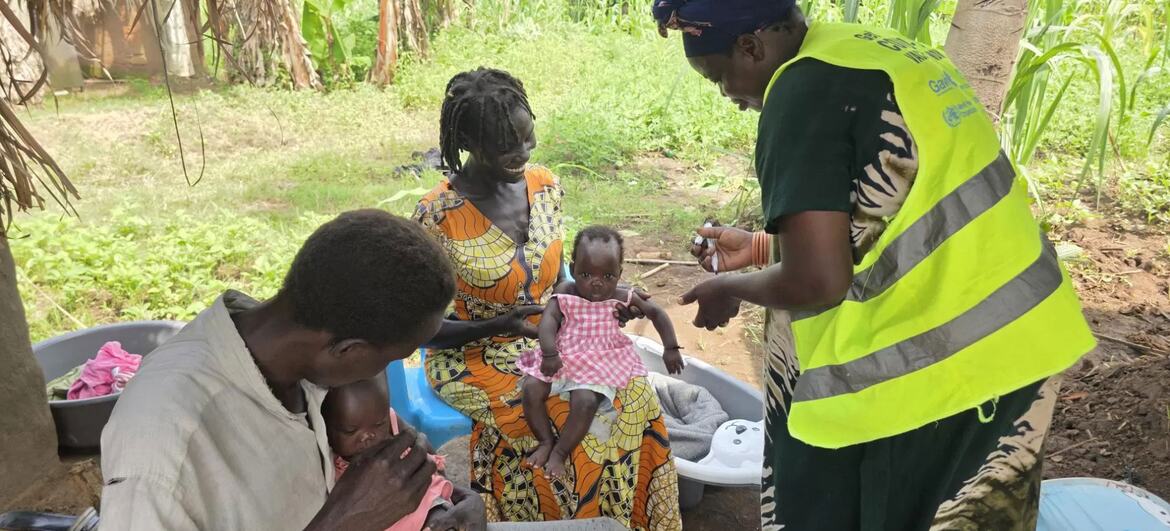
In Nigeria’s Bauchi State, health authorities have used vaccination records and community-level information to identify children who had missed routine immunisations.
The example illustrates how information can be used to identify gaps in healthcare delivery and help officials reach children who might otherwise remain outside routine vaccination programmes.
Without reliable records, such children can remain invisible to health authorities, increasing the risk that they miss vaccinations and other essential interventions.
This is particularly important in countries where communities are geographically dispersed, health facilities are under-resourced and access to healthcare remains uneven.
The ability to identify underserved populations is also central to achieving universal health coverage, which requires people to access essential healthcare services without suffering financial hardship.
AI offers opportunities, but safeguards are essential
The growing use of artificial intelligence is another issue being considered at the Nairobi forum.
AI has the potential to improve how health information is analysed, identify patterns in large datasets and support medical diagnosis. It could also help health authorities process information more quickly and detect potential risks earlier.
Dr Hillary Kipruto, a WHO technical officer, told UN News that technological advances had significantly accelerated diagnostic analysis.
However, he cautioned that the adoption of AI must be accompanied by appropriate legislation and regulatory frameworks to ensure its responsible use.
“We cannot run away from it, but we have to make sure there are enabling legislation and frameworks which allow us to responsibly use AI,” he said.
The warning is important for African countries seeking to modernise their health systems.
AI tools depend on the quality of the information used to train and operate them. If health records are incomplete, inaccurate or biased towards certain populations, technological advances alone will not correct those weaknesses.
There are also questions around patient privacy, data security, consent, accountability and who has access to sensitive medical information.
The priority, therefore, is not simply to introduce more technology, but to build the institutional capacity and safeguards needed to use it effectively.
A continental health data agenda
The First Africa Health Data Forum, running from 10 to 12 November, has brought together more than 300 participants from 51 countries, including health ministers, government officials, development partners, academics and private-sector innovators.
Convened by WHO, Kenya’s Digital Health Agency and the country’s Ministry of Health, the meeting is intended to help governments identify practical ways of improving the collection, management and use of health information.
Discussions are focusing on data governance, financing, interoperability, workforce capacity, digital health and the responsible use of emerging technologies.
The forum is also expected to advance a common agenda for strengthening health information systems across participating countries.
For Africa, the challenge is to move beyond collecting data towards using it consistently to improve healthcare outcomes.
The WHO findings show that digital adoption alone is not enough. Countries need functioning civil registration systems, reliable reporting from healthcare facilities, trained professionals who can analyse information and sustainable domestic funding.
Ultimately, the question is whether governments can make decisions based on an accurate picture of the health needs of their populations.
A death that is not recorded can disappear from official statistics. A disease trend that is not detected can continue unchecked. A child who is missing vaccinations can remain outside the system.
Africa cannot effectively plan for the health of its people if it does not know who they are, what they need and, in too many cases, why they are dying.
The continent’s health data problem is therefore not just a technical issue. It is a fundamental question of public accountability, the allocation of scarce resources and the ability of governments to protect lives.