SAN JOSE, California: President Cyril Ramaphosa has arrived in California at the head of a high-level South African delegation for a working visit to Silicon Valley, as the government seeks to attract investment, strengthen local technological capabilities and position the country as a competitive artificial intelligence hub on the African continent.
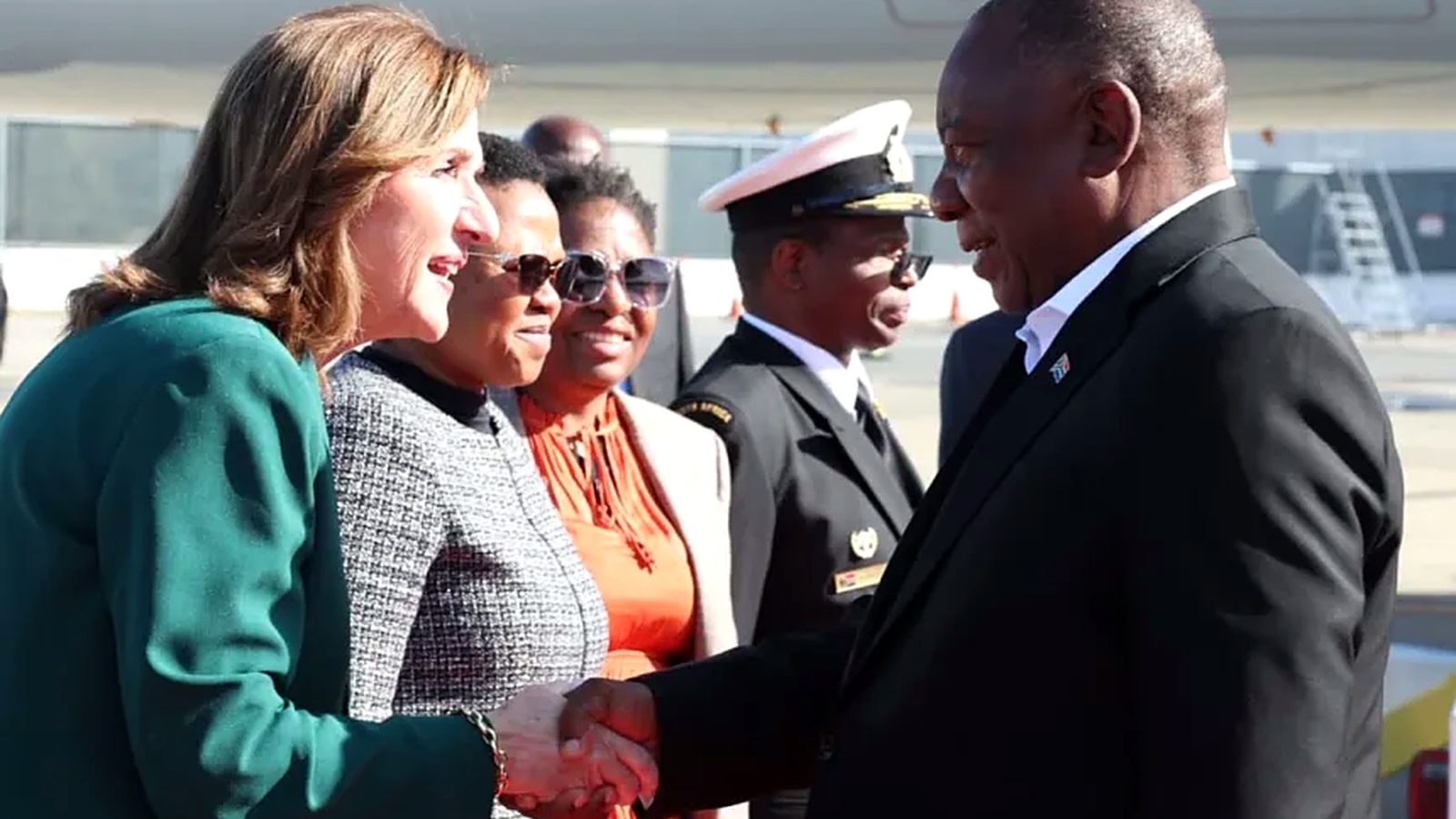
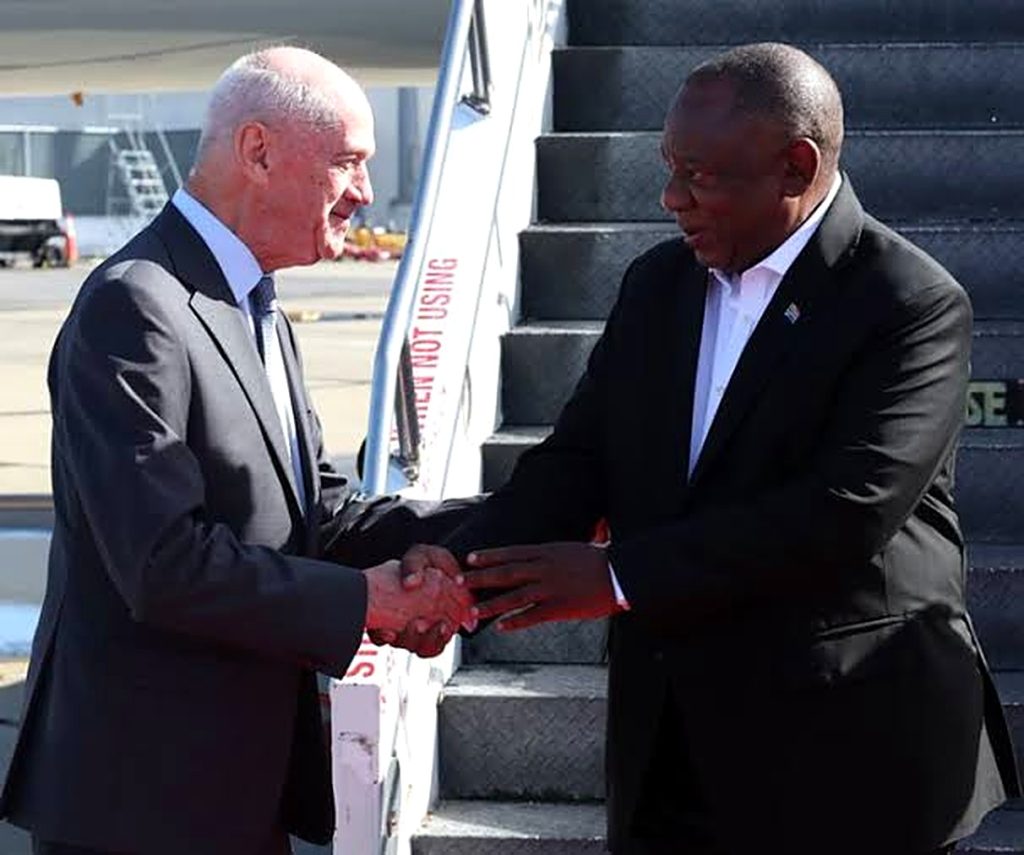
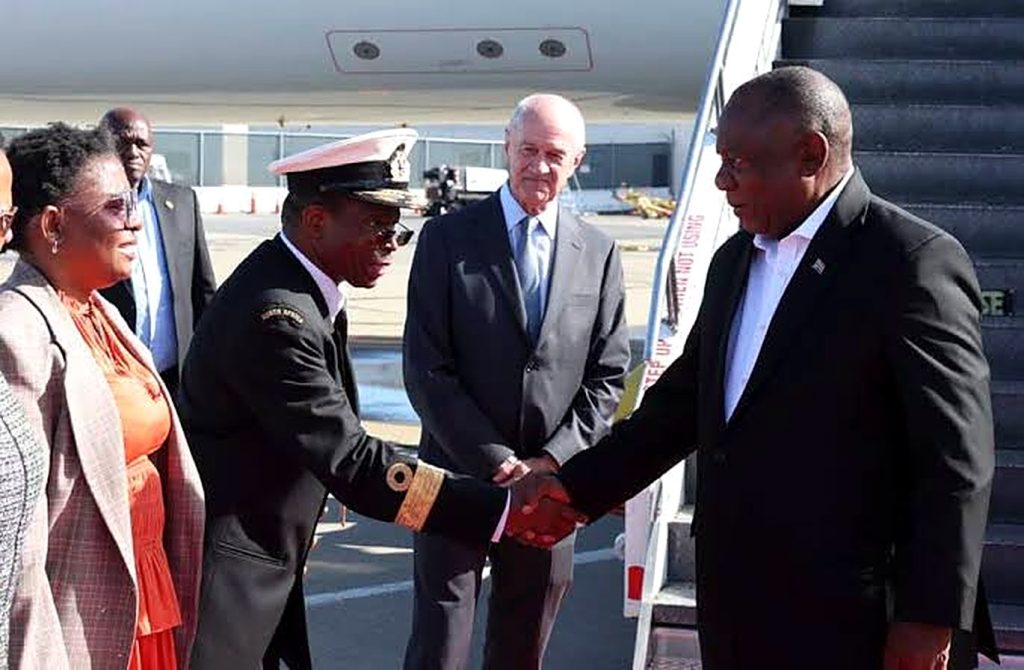
Ramaphosa arrived at San José Mineta International Airport on Saturday, November 14, ahead of the official programme, which runs from November 15 to 21. He was received by Santa Clara Mayor Lisa M. Gillmor and South Africa’s Ambassador to the United States, Roelf Meyer.
The visit brings together representatives from government, academia, business, research institutions, technical experts and university students. The Presidency says the aim is to expose the delegation to developments in the global AI ecosystem and draw lessons that can inform South Africa’s approach to developing, adopting and regulating the technology.
Ramaphosa is accompanied by eight ministers responsible for Finance; International Relations and Cooperation; Science, Technology and Innovation; Trade, Industry and Competition; Communications and Digital Technologies; Electricity and Energy; Small Business Development; and the Presidency.
Presidential spokesperson Vincent Magwenya said the engagements would explore how South Africa could position itself as a competitive AI hub in Africa.
The challenge is to turn the knowledge and investment opportunities generated by the visit into practical benefits at home, including stronger digital infrastructure, more skilled workers, local innovation and wider access to technology.
A week of meetings with global technology leaders
The programme includes engagements with technology companies, investors, researchers, academics and AI specialists, alongside demonstrations and discussions on frontier AI, robotics, data infrastructure, cloud computing and digital innovation.
The delegation is scheduled to attend the Semafor: Silicon Valley and the World event on November 16, where global leaders and experts will discuss developments in technology and the changing AI landscape.
On November 17, Ramaphosa and the delegation are expected at Stanford University for engagements with venture capital investors and AI academics. The programme includes a presidential fireside chat and a visit to a robotics laboratory.
The discussions will examine how research is converted into commercial products and the role of venture capital in financing new technologies and businesses.
A workshop titled “South Africa and the Future of AI” is scheduled for San Jose on November 18. It will focus on AI infrastructure, the use of artificial intelligence in government, AI safety and the future of work.
The delegation will visit Alphabet and Google, as well as Cisco, in Mountain View on November 19. The engagements will explore applications of AI in digital commerce, small businesses and government.
The programme concludes with visits to Palo Alto Networks and the Microsoft Experiential Centre in Santa Clara on November 20, where discussions will focus on cybersecurity, resilience and digital sovereignty in the AI era.
South Africa wants a bigger share of Africa’s AI economy
A central part of the visit is the South Africa AI Opportunity gathering, held under the theme “Building the African AI Economy: Infrastructure, Investment and Innovation”.
The discussions are expected to focus on the foundations needed to build a competitive AI industry, including data centres, computing capacity, reliable energy supply, investment and support for start-ups.
These are significant requirements. Developing and running advanced AI systems requires substantial computing power, data infrastructure, electricity and specialised skills. Countries that lack these foundations risk becoming consumers of technology developed elsewhere, rather than building businesses and intellectual property of their own.
For South Africa, the opportunity is to use its existing financial, telecommunications, research and technology sectors as a base for expanding its role in the continental digital economy.
The delegation will also promote the country as an investment destination and showcase economic reforms being pursued through Operation Vulindlela, the joint initiative of the Presidency and National Treasury aimed at accelerating structural reforms and improving the business environment.
The Presidency says AI could improve productivity, strengthen public service delivery, stimulate economic growth and support the creation of new industries and jobs. Potential applications include healthcare, education, criminal justice, public administration and government procurement.
ALSO READ: What Africa can learn from Huawei’s innovation machine
However, the economic benefits will depend on whether the country can build the infrastructure and skills needed to develop and use the technology, while ensuring that its benefits are not confined to a small number of companies and highly skilled workers.
The government has also emphasised the need to protect digital sovereignty, policy autonomy and personal data, and to establish responsible governance of AI.
The infrastructure gap behind the AI ambition
South Africa’s ambitions face a practical challenge: the country needs more computing infrastructure and greater capacity to develop and deploy advanced AI systems.
Acting Deputy Director-General in the Department of Communications and Digital Technologies Jeanette Morwane identified this gap at a South Africa-Finland AI dialogue in October.
“What’s missing for us is there is a huge need for investing in computing infrastructure,” Morwane said.
Her remarks highlight an important issue for the Silicon Valley visit. Access to advanced technology and international partnerships can accelerate development, but South Africa will still need to invest in the infrastructure, energy supply, research capacity and skills required to support its own AI ecosystem.
The country’s energy constraints also matter. Large data centres and AI computing facilities require reliable electricity, while the expansion of digital services will place additional demands on telecommunications networks and data infrastructure.
Science, Technology and Innovation Minister Blade Nzimande has described the digital economy as a strategic pillar of South Africa’s Science, Technology and Innovation Decadal Plan for 2022 to 2032, with AI identified as one of the department’s priorities.
He said engagement with Silicon Valley offered an opportunity to strengthen local research capabilities, expand international collaboration and support a competitive domestic innovation ecosystem.
National AI policy remains under review
The visit comes at a time when South Africa is still rewriting its national AI policy, following the withdrawal of an earlier draft that contained fictitious references.
The Department of Communications and Digital Technologies published the Draft South Africa National Artificial Intelligence Policy for public comment on April 10, 2026. Communications and Digital Technologies Minister Solly Malatsi withdrew it on April 26 after it emerged that the document contained fictitious sources in its reference list.
Cabinet formally approved the withdrawal in June, allowing the department to rework the policy and address concerns about its credibility and the standards governing the use of AI in its preparation.
Malatsi subsequently appointed a seven-member independent expert panel, chaired by Professor Benjamin Rosman of the University of the Witwatersrand’s Machine Intelligence and Neural Discovery Institute, to review the document and advise on the revised policy.
The timetable has since shifted. The drafting team now has until November 30 to submit the revised policy and an accompanying discussion document to the minister. Internal government consultations are scheduled to run from December to February, with the revised document expected to reach Cabinet by March 2027.
That Cabinet consideration would be an initial step towards publishing the revised policy for public comment, rather than its final approval. The department would still need to consider public submissions and return the policy to Cabinet for final sign-off.
The delay means South Africa is pursuing an ambitious international AI investment and learning programme while the domestic policy framework that should guide the technology’s development and use remains unfinished.
The revised policy is expected to address issues including data and computing sovereignty, AI governance, safety, skills development and the use of South Africa’s official languages in AI systems.
For businesses and researchers, a clear policy framework is important because it can provide greater certainty about the rules governing investment, data use, accountability and the development of AI products.
Ramaphosa has put AI on the international agenda
The Silicon Valley visit builds on Ramaphosa’s growing focus on AI as an economic and geopolitical issue.
At the 18th BRICS Leaders’ Summit in New Delhi in September, he called for the establishment of an international mechanism for the independent scientific evaluation of AI.
ALSO READ: Microsoft outage disrupts businesses worldwide as recovery efforts falter
He argued that AI governance should be accompanied by meaningful human control, the reporting of serious incidents and stronger safeguards as the technology becomes more powerful.
Ramaphosa also called for investment in sovereign AI capacity in developing economies, warning against a situation in which countries become entirely dependent on technologies and systems developed elsewhere.
“We should therefore neither fear AI nor approach it recklessly. Our responsibility is to ensure that human governance advances as rapidly as artificial intelligence itself,” he told the summit.
In July, while opening the inaugural Google Cloud Summit in Africa in Johannesburg, Ramaphosa called for cooperation between government and technology companies to build local capabilities while protecting citizens’ data and rights.
He said technological development could create new industries, improve the competitiveness of existing businesses and open opportunities for entrepreneurs.
The emphasis on sovereign capacity reflects a broader concern among developing countries: access to AI tools alone does not guarantee technological independence. Countries also need the ability to develop, regulate and adapt those tools to their own economic, social and linguistic conditions.
Existing investment offers a starting point
South Africa is not starting from scratch. International technology companies have already committed significant investment to the country’s digital infrastructure.
In March 2025, Microsoft announced plans to invest an additional R5.4 billion by the end of 2027 to expand its hyperscale cloud and AI infrastructure in South Africa.
The company also announced a programme to pay for technical certification exams for 50,000 young people in high-demand digital skills over a 12-month period. The investment builds on Microsoft’s previous R20.4 billion investment in the country over three years.
Such investments could help expand the infrastructure needed for AI development and adoption. But the wider economic impact will depend on how much local businesses, researchers, universities and entrepreneurs can participate in the ecosystem.
The challenge is to ensure that South Africa develops more than a market for imported AI products. It needs local companies capable of building solutions, skilled people who can work in the sector and institutions able to research and govern the technology.
A technology mission amid strained US relations
The visit is also taking place against a difficult backdrop in South Africa’s relationship with Washington.
Ramaphosa visited the United States in May 2025 in an effort to reset bilateral relations with President Donald Trump after tensions over a range of political and economic issues.
More recently, the Trump administration announced plans to exclude South Africa from the African Growth and Opportunity Act (AGOA), putting preferential access for eligible South African exports to the US market under further pressure.
The Presidency has been careful to distinguish the current California visit from diplomatic engagements in Washington. Magwenya said the trip was specifically focused on AI and technology, and that Ramaphosa would not be travelling to the US capital for bilateral trade talks. The President was, however, expected to inform Trump of his presence in the country as a matter of courtesy.
The distinction matters because the visit is primarily an attempt to build commercial, research and technology links with Silicon Valley, rather than a formal effort to resolve the broader political and trade disagreements between the two governments.
The delegation’s working visit is scheduled to conclude on November 21.
For South Africa, the measure of its success will not simply be the number of meetings held with global technology companies. It will be whether those engagements lead to investment, stronger research partnerships, better infrastructure, skills development and opportunities for local businesses to participate in the AI economy.
The country wants to become a leading AI hub in Africa. Turning that ambition into reality will require a clear policy framework, sustained investment and the ability to build technological capacity at home.