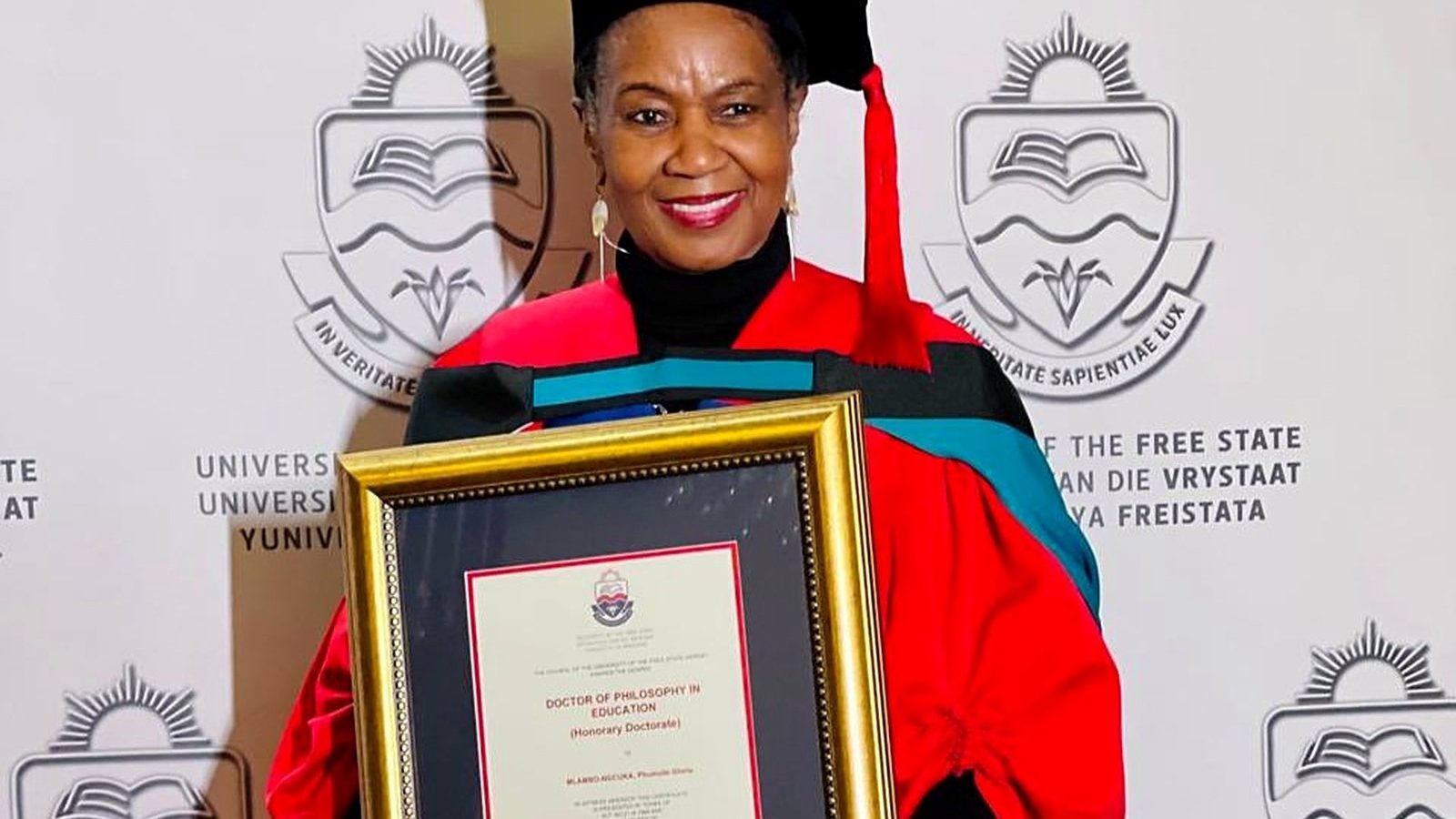
JOHANNESBURG: The struggle for freedom, for the most basic of human rights, shaped the life of Phumzile Mlambo-Ngcuka and imposed on her a responsibility far greater than herself. It was a struggle for the right to pursue a career of one’s choosing, to raise a family without harassment, and to live and work wherever one’s talent and hard work could take them.
For Mlambo-Ngcuka, the fight for these freedoms became a defining purpose. It was a burden she carried throughout her life, but one that also produced remarkable victories for South Africa and the world.
Like many students of her generation, she understood that quality education and freedom were inseparable, and that both were worth fighting for, whatever the cost or sacrifice. Her commitment to this cause saw her organise protests demanding better education, eventually leading to her expulsion. She would later complete her studies in Lesotho.
If the apartheid government was unwilling to provide her and other black students with quality education, she would pursue that education elsewhere. In 1980, she completed a Bachelor of Arts degree in Social Science and Education before returning to South Africa to teach, first at Mpumalanga Teachers Training College and later at Ohlange High School in Inanda, KwaZulu-Natal.
The fight for basic rights, and the willingness to pay the price for demanding them, would remain a recurring theme in her life for the next two decades.
The struggle for women’s emancipation
Perhaps the most distinguishing quality of Mlambo-Ngcuka was her understanding that defeating apartheid and racial oppression would not automatically liberate women.
She appeared to understand the warning of struggle veteran Ruth Mompati: “Don’t think oppression of women will disappear when apartheid does.”
The fight against racial oppression and the fight against patriarchy had to be waged simultaneously. One could not be postponed until the other had been won.
Even at the height of the struggle against apartheid, she recognised that women’s emancipation was a distinct battle that required equal commitment, energy and determination.
It was this conviction that took her thousands of kilometres away from home to Geneva, Switzerland, where she joined the World Young Women’s Christian Association (World YWCA) in 1984.
Her work in women’s empowerment would become one of the defining features of her career, eventually taking her to the United Nations, where she would lead global efforts to advance gender equality and challenge discrimination against women.
At the UN, Mlambo-Ngcuka again demonstrated an important understanding: gender equality could not be achieved without men becoming active partners in the struggle.
Her leadership helped advance the HeForShe campaign, which sought to mobilise men and boys as advocates and partners in the fight for gender equality. The initiative became one of the United Nations’ flagship gender equality programmes.
She seemed to embody the words of American educational reformer Horace Mann: “Be ashamed to die until you have won some victory for humanity.”
At every stage of her life, Mlambo-Ngcuka registered victories for humanity. But those victories came at a considerable personal cost, particularly for her and her family.
ALSO READ: Ramaphosa remembers Mlambo-Ngcuka as patriot and champion of women’s rights
The personal price of freedom
When her husband, Bulelani Ngcuka, was arrested in the early 1980s on accusations of helping comrades leave the country to join the liberation struggle in exile, even a simple letter from a wife to her imprisoned husband resulted in her own arrest.
Her activism had made her a target of the apartheid security machinery. She was repeatedly harassed in her own apartment and denied basic rights enjoyed by other spouses, including the right to visit her husband in prison.
It was an intolerable way to live, but rather than weakening her resolve, the harassment strengthened her determination to challenge the system.
Geneva offered the Ngcukas some relief from the relentless state harassment they had experienced in South Africa. The mid-1980s gave them an opportunity to spend time together as a family, welcome a son into the world and live without constantly looking over their shoulders.
But they had not abandoned their mission. Their destination remained South Africa, and their commitment to its liberation was unwavering.
Even when the Swiss authorities reportedly considered whether the couple might seek Swiss citizenship for their son, born in Switzerland, that was not what they wanted. They remained proudly South African. Switzerland was a place of refuge, not a replacement for home. They were there temporarily, with their eyes firmly set on returning to a free South Africa.
Rebuilding a democratic South Africa
Despite her extensive experience at the World YWCA, including its work with the International Labour Organization on women’s employment, labour rights, equal pay and working conditions, Mlambo-Ngcuka reportedly declined President Nelson Mandela’s offer to become Minister of Labour.
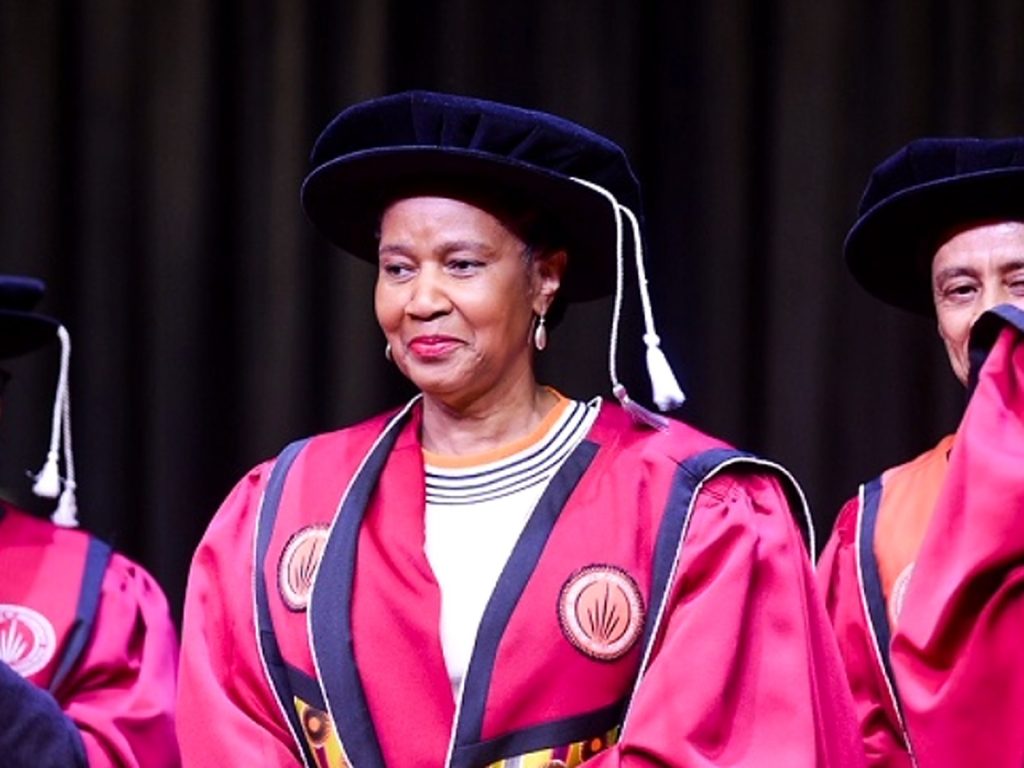
She cited her limited experience for such a senior position, an expression of humility that was remarkable given her considerable knowledge of labour and women’s rights.
Instead, she accepted the position of Deputy Minister of Trade and Industry, serving from 1996 to 1999. It was an opportunity to serve her country while continuing to learn and develop within government.
She would later become Minister of Minerals and Energy, where she established a record of achievements that remains an important part of her public service legacy.
Throughout her career, Mlambo-Ngcuka served in various government positions with dedication and humility. She understood the privilege that comes with being entrusted with state power and the responsibility to use it in the public interest.
She also understood the importance of setting an example, particularly as a woman occupying positions of authority. Her leadership was part of a broader effort to ensure that future generations would never have to question the ability of women to lead, govern and transform public institutions.
That humility was evident in the way she maintained cordial and respectful relationships with Cabinet colleagues, even during periods when her husband, as National Director of Public Prosecutions, was viewed with hostility by some of those same political circles.
Her ability to maintain those relationships, despite the political tensions surrounding her family, spoke to a discipline that went beyond the demands of public office.
ALSO READ: Babsy Mlangeni, the voice behind Sala Emma, dies at 83
A different kind of victory
When Mlambo-Ngcuka became Deputy President in 2005, she entered one of the most demanding positions in South African politics at a time of growing political tensions.
Her relationships with some former comrades had become considerably more complicated, yet she continued to engage people with respect and dignity. She also registered noteworthy achievements during her time in office.
Although she did not ascend to the highest political office, she was not defined by that outcome. Instead, she adapted, redirected her energies and found new ways to contribute.
She continued to expand her influence beyond the boundaries of South African politics, taking her experience and commitment to women’s rights onto the international stage.
Her 2021 Nelson Mandela Changemaker Award, recognising leaders continuing Mandela’s legacy of peace and social justice, and the Cannes LionHeart Award, presented to individuals and organisations that use their influence to make a positive difference, reflected the breadth of her contribution.
Both honours recognised a life devoted to women’s empowerment, human rights and social justice.
They also captured something fundamental about Mlambo-Ngcuka: her determination to use whatever platform, influence or position she was given to make a difference.
A life of victories for humanity
Phumzile, yours has been a remarkable journey. From a young student challenging an unjust education system to a teacher, an advocate for women’s rights, a Cabinet minister, Deputy President and international champion of gender equality, you have consistently used your life to advance the cause of others.
You understood that freedom was not simply about removing the chains of apartheid. It was also about ensuring that women could participate fully in society, occupy positions of leadership, enjoy economic opportunities and live with dignity.
Your victories were not without sacrifice. Your family paid a price, and so did you. But the contribution you have made to South Africa and humanity will endure beyond the positions you held and the awards you received.
When you reach the Pearly Gates, you will have a remarkable story to tell. You fought for your country, stood up for women and helped shape a world in which future generations could enjoy opportunities that were denied to yours.
South Africa and the world are better for it.
Go well, my comrade.
Yonela Diko is the author of Ramaphosa: The Long Game.
Website: thelonggame.co.za