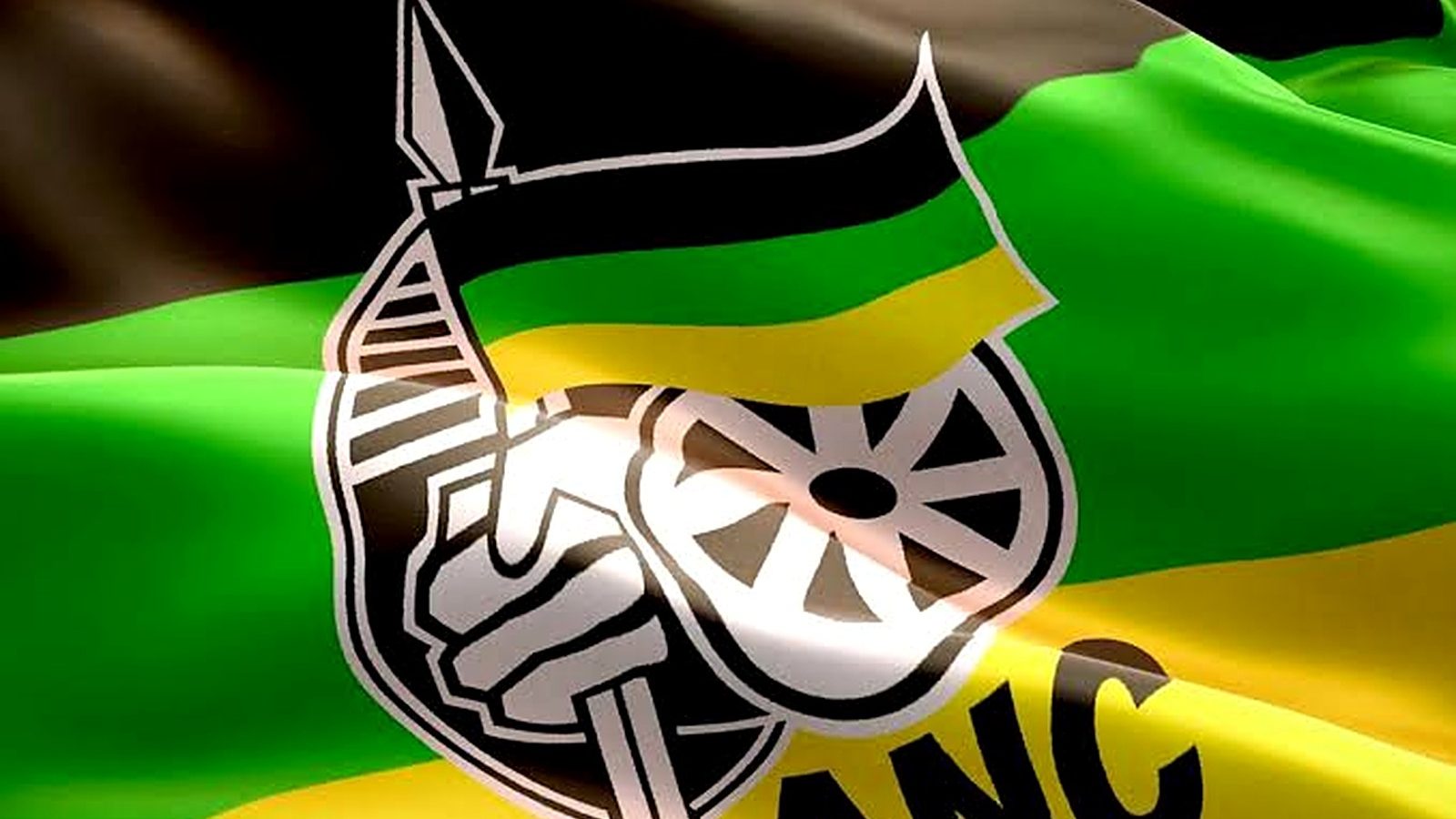
JOHANNESBURG: As the ANC approaches its 115th anniversary in 2027, its long history offers an important lesson: the organisation has faced moments when its survival seemed impossible, yet it has repeatedly found a way to recover. Its current crisis is serious, but it is not without historical precedent.
In 2027, the African National Congress will mark 115 years since its founding. It is an extraordinary milestone that places the ANC in the rare company of political organisations that have endured across generations, through profound political, social and economic upheaval.
Since its establishment in 1912, the ANC has held 55 national conferences. Forty-seven of these took place during the long years of colonialism and apartheid, when the organisation had to navigate repression, political exclusion and the enormous challenge of mobilising a disenfranchised population.
The 48th National Conference, the first after the unbanning of the ANC, was held in Durban in July 1991. It took place at a time of rising hope and renewed belief that peace and democracy were within reach.
The next conference, the 49th, was held in Bloemfontein in December 1994, just months after the historic democratic elections of 27 April. It marked a defining moment in the country’s transition and affirmed the belief that a new South Africa had indeed been born.
After 82 years of struggle against an immoral and oppressive system, the ANC and the people of South Africa had demonstrated the resilience of the human spirit. The liberation movement had survived through sheer determination and the moral authority of a cause rooted in justice and human dignity.
The cost had been enormous. Dreams were shattered, thousands of young lives were lost, and generations were born and died without experiencing the freedom and ordinary pleasures that make life meaningful. But the struggle had finally succeeded. South Africans could begin to reclaim their dignity and take pride in their country.
The ANC had played a central role in making that possible.
Yet, just three years later, at the 50th National Conference in Mafikeng, held from 16 to 20 December 1997, it was becoming clear that a new set of challenges was emerging. The movement had won political power, but governing would test its values, discipline and internal cohesion in ways that the liberation struggle had not.
Mandela’s warning about the dangers of power
Nelson Mandela, already conscious of the risks that came with governing, issued a warning about the temptations that could confront former liberation fighters once they entered the corridors of power.
“Freedom and the installation of a democratic government bring erstwhile liberators from the bush to the corridors of power, where they now rub shoulders with the rich and mighty. In situations of this nature some former freedom fighters run the risk of forgetting principle and those who are paralysed by poverty, ignorance and disease; some then start aspiring to the lifestyle of the oppressor they once detested and overthrew,” Madiba said.
Those words have proved remarkably prescient. What Mandela identified as a potential danger has, over the years, developed into one of the ANC’s most serious internal crises.
At the 51st National Conference, held in Stellenbosch from 16 to 20 December 2002, then secretary-general Kgalema Motlanthe gave a frank account of how the pursuit of power and access to resources was already damaging the organisation.
Reflecting on the findings of the 2000 National General Council, Motlanthe said:
“We have also reported to the NGC (held in 2000), on the challenges being in power has on the structures of the movement. We found that the issues dividing the leadership of some of our provinces are not of a political nature, but have mainly revolved around access to resources, positioning themselves or others to access resources, dispensing patronage and in the process using organisational structures to further these goals.”
The warning was clear. The ANC was beginning to lose sight of the political purpose that had brought it to power.
It is tempting to romanticise the period before the ANC entered government, as though the liberation movement had been free of internal divisions, leadership failures and personal ambition. That would be a mistake. Its history is also one of difficult personalities, competing interests and organisational weaknesses.
The ANC has endured not because its leaders have always been beyond reproach, but because the idea that gave birth to the movement has proved stronger than the shortcomings of those entrusted with its leadership.
The vision of a national democratic society, in which all citizens can live together under conditions of equality, dignity and shared prosperity, remains a powerful political ideal. It has survived the failures of individuals, the temptations of power and the organisation’s recurring internal battles.
The ANC has risen from the brink before
The ANC’s ability to recover from decline is not a recent phenomenon. Its history is punctuated by moments when its survival appeared uncertain.
Founded in 1912 as a representative organisation for the country’s disenfranchised African population, the ANC was soon confronted with one of the most devastating blows to the rights of black South Africans.
In 1913, the Natives Land Act came into effect, systematically dispossessing African people and restricting their access to land. The organisation was still in its formative years, with limited structures and an approach to political engagement that relied heavily on petitions and appeals to the British authorities.
ALSO READ: ANC’s devastating electoral decline: a Kairos moment or the beginning of the end?
For many people, this approach was inadequate to the scale of the injustice. There were growing questions about whether the new organisation had the political will and a clear strategy to confront the conditions under which black people lived.
The ANC struggled to establish itself as a mass movement. Its leadership approach also created divisions, as sections of the population became frustrated with what they regarded as an ineffective response to their oppression.
Yet the organisation continued, under leaders such as its founding president, John Dube. Its efforts to challenge colonial rule and mobilise support continued despite the outbreak of the First World War in 1914, which disrupted its activities.
The years that followed brought another challenge. The Industrial and Commercial Workers’ Union (ICU), led by Clements Kadalie, emerged with a more radical message and attracted considerable support among black workers.
The rise of the ICU exposed the ANC’s weaknesses and drew support away from the organisation. It was an early indication that the ANC could not take public loyalty for granted. Other movements would emerge over the years, promising more decisive action and a different approach to liberation.
But the ANC continued to organise around a broader vision of restoring the dignity and rights of all oppressed people, not only those in the workplace.
The 1930s: when the ANC nearly collapsed
The 1930s were arguably the lowest point in the ANC’s early history. They offer a particularly striking comparison with the organisational difficulties the party faces today.
Under the leadership of Pixley ka Isaka Seme, who served as president from 1930 to 1936, the organisation came close to collapse. Seme was an exceptionally gifted intellectual, but his leadership was also marked by an inability to manage internal differences and respond effectively to criticism.
Membership reportedly fell to fewer than 1,000 nationally. Branches closed or became inactive, the organisation struggled financially, and it became increasingly difficult to convene national conferences or sustain its newspaper, Abantu-Batho.
By the middle of the decade, the ANC had effectively ceased to function as a coherent national organisation.
But it did not disappear.
The organisation’s recovery began with leadership changes and a renewed commitment to rebuilding from the ground up. The election of Reverend Zaccheus Richard Mahabane as president and James Calata as secretary-general ushered in a period of organisational revival.
They travelled across the country, visiting regions and branches, reconnecting with former members, rebuilding structures and restoring organisational discipline.
The appointment of Dr Alfred Xuma as president in 1940 accelerated this recovery. Xuma strengthened the ANC’s financial administration, improved its communications machinery and modernised its constitution.
These were not merely administrative adjustments. They helped restore the organisation’s ability to function, mobilise and prepare for a new phase of political struggle.
The ANC had once again demonstrated that decline did not have to mean extinction.
From the 1960 ban to an international liberation movement
The banning of the ANC in 1960 presented an even greater existential threat.
Senior leaders were arrested, while others went into exile. The apartheid state used its police and military machinery to dismantle the organisation’s structures, suppress its activities and remove its presence from communities across the country.
Inside South Africa, the ANC was effectively forced underground. Its continued existence and revival depended heavily on the leadership of Oliver Reginald Tambo, who operated from outside the country.
The challenge was immense. The organisation had to maintain its political identity, build international support, mobilise resources and sustain the struggle while its members inside the country faced imprisonment, harassment and persecution.
Yet the ANC endured.
ALSO READ: The Nasiphization phenomenon: a new wave of performance-driven politics in South Africa?
Over the three decades between its banning in 1960 and its unbanning in 1990, the organisation developed into a major international liberation movement, with representation and support across the world.
It became a powerful diplomatic and political force, increasingly recognised internationally as the legitimate representative of the aspirations of the majority of South Africans.
The organisation that the apartheid government had sought to destroy had become a movement with an international presence and influence that extended far beyond the country’s borders.
Its survival was not accidental. It was the result of determined leadership, organisational adaptation, international solidarity and the enduring legitimacy of its liberation cause.
Lessons for the ANC’s next leadership
The ANC enters 2026 facing another defining moment. Its electoral support has fallen to its lowest levels in the democratic era, public confidence has weakened, and the organisation is confronting the real possibility of losing its position as the country’s dominant political force.
For a movement that once commanded overwhelming electoral support, this is a profound setback. It would be a mistake, however, to assume that the current crisis makes the ANC’s disappearance inevitable.
The organisation’s own history shows that it has survived periods of far greater organisational vulnerability. But survival has never been automatic. Recovery has required honest self-assessment, leadership renewal and a willingness to rebuild the organisation from its foundations.
The experience of the 1930s is particularly instructive.
The recovery under Mahabane and Calata was built on reconnecting with members, restoring branches and rebuilding organisational discipline. Xuma then strengthened the institution through better financial management, improved communications and constitutional reform.
These lessons remain relevant today.
The next ANC president and secretary-general, to be elected at the party’s 2027 National Conference, must understand that the task ahead is not simply to win an internal leadership contest. It is to rebuild an organisation whose structures have become disconnected from many of the communities it once mobilised.
They must be prepared to travel across the country, from province to province and branch to branch, listening to members, reconnecting with communities, restoring organisational discipline and rebuilding trust.
The ANC also needs to strengthen its financial management, improve transparency and accountability, and develop a modern communications strategy capable of speaking credibly to a changing society. Its structures must become places of political organisation and public service, not vehicles for access to positions, patronage and resources.
Most importantly, the party must recover a clear sense of purpose. The national democratic society, founded on equality, shared prosperity and the restoration of human dignity, must remain its lodestar. That vision cannot survive as a slogan alone. It must be reflected in the conduct of its leaders, the quality of its governance and the material conditions of the people it claims to represent.
The ANC’s history is a blueprint for renewal
The ANC’s history is not a story of uninterrupted success. It is a record of repeated setbacks, internal crises, leadership failures and moments when the organisation appeared to be approaching its end.
But it is also a story of recovery.
From the organisational weakness of its early years, through the near-collapse of the 1930s and the banning of 1960, the ANC has repeatedly found the leadership and political will to rebuild itself.
Its greatest strength has never been that it is immune to failure. It is that, at critical moments, it has been able to recognise the need for change and return to the principles that gave birth to the movement.
The ANC now faces another such moment. The challenges are different, but the lesson remains the same: a liberation movement cannot rely indefinitely on the history of its achievements. It must earn the confidence of each new generation.
The blueprint for renewal is already written in its own history. The task of the leadership elected in 2027 will be to apply those lessons with urgency, humility and discipline.
The ANC has risen before. Whether it rises again will depend not on the weight of its history, but on what its leaders and members choose to do with it.
Yonela Diko is the author of Ramaphosa: The Long Game.