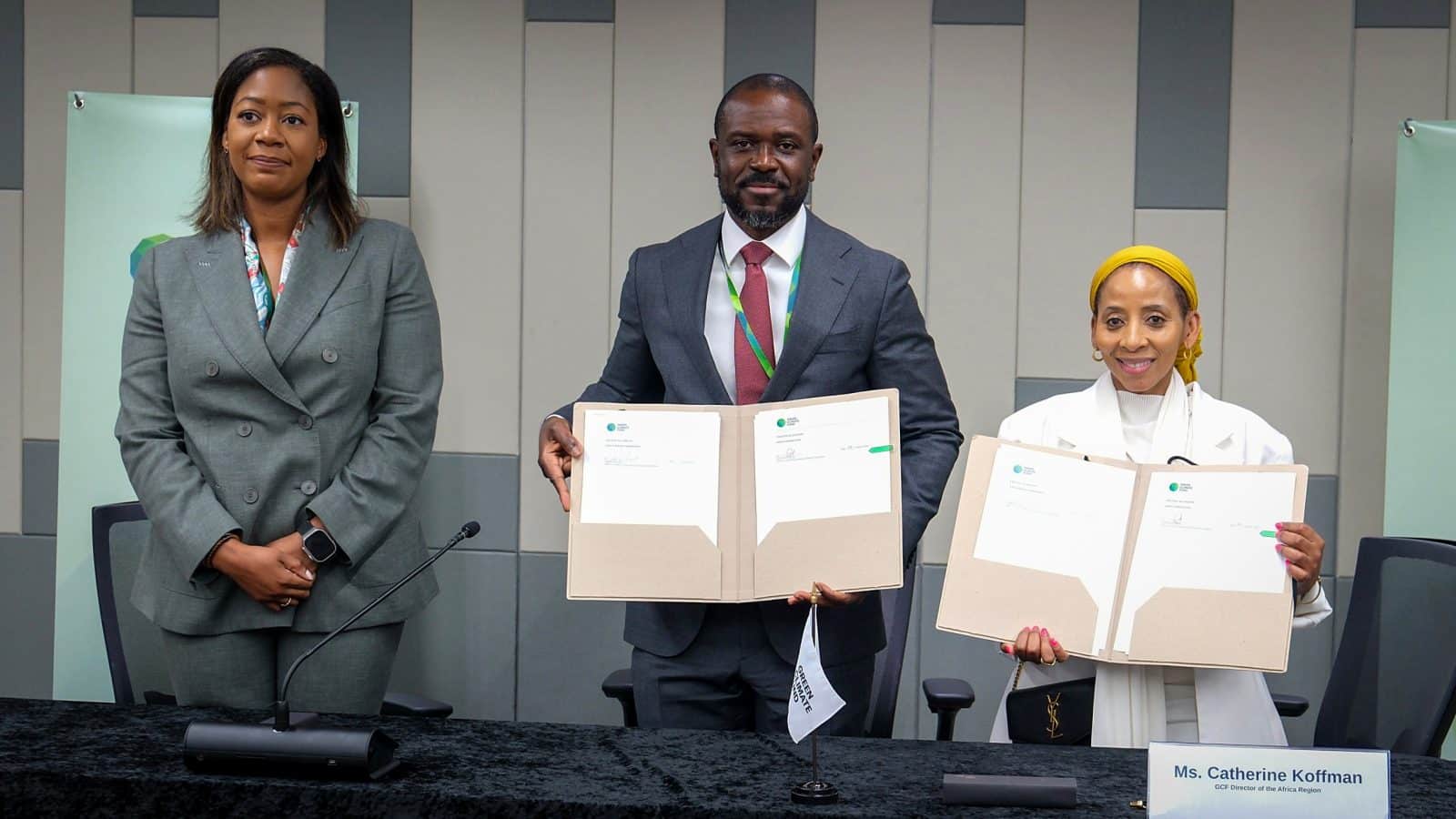
INCHEON: Africa Finance Corporation (AFC) and the Green Climate Fund (GCF) have launched a climate finance facility that AFC values at US$690 million, with Angola, Benin, Côte d’Ivoire and Nigeria set to participate in its first phase.
Launched at a signing ceremony in South Korea, the Africa Sovereign Climate Facility will help governments turn their commitments under the Paris Agreement into projects that can attract financing. Grants will help officials prepare projects and account for climate risks in national budgets. Loans channelled through finance ministries will support eligible investments.
How the financing works
AFC’s launch announcement puts the GCF contribution at US$280 million. AFC says it will arrange and fully fund a parallel commercial lending facility of up to US$260 million, with repayment terms of up to 10 years. The announcement does not specify how the remaining US$150 million is made up.
The GCF’s project register gives a different breakdown. It lists an approved project value of about US$675 million, comprising nearly US$275 million in GCF funding and about US$400 million in co-financing loans. The fund’s own contribution consists of about US$255 million in loans and nearly US$20 million in grants. The published figures do not reconcile the approved budget with AFC’s launch figure.
ALSO READ: Pan-African Parliament calls for stronger climate laws as Africa prepares for COP31
From climate plans to projects
The four countries face rising temperatures, erratic rainfall, drought and floods that threaten water supplies, farming and infrastructure. The GCF says high borrowing costs and pressure on public budgets have made it harder for them to prepare and finance projects.
Potential investments include renewable energy access, electricity networks and storage, water supply and sanitation, food systems and infrastructure designed to withstand extreme weather. An initial list of potential projects was developed with the four finance ministries, but the launch announcement did not say which would receive funding first.
“The infrastructure we build today must both power Africa’s growth and withstand the climate pressures of tomorrow,” AFC president and chief executive Samaila Zubairu said.
ALSO READ: Liberia moves to unlock climate finance with national carbon policy
The GCF’s approved project estimates that the facility could help 4.5 million people better withstand climate impacts and avoid 3.4 million tonnes of greenhouse gas emissions, measured in carbon dioxide equivalent. AFC’s announcement separately lists higher estimates of 5.2 million people and 5.78 million tonnes. Both sets of figures are projections.
A small share of Africa’s financing needs
The facility addresses only a fraction of the continent’s funding gap. An earlier Climate Policy Initiative assessment estimated that Africa needed about US$250 billion a year between 2020 and 2030 to meet its climate goals, against roughly US$30 billion received in 2020.
The partnership builds on a US$253 million GCF commitment in 2023 to an infrastructure fund run by AFC Capital Partners. While that fund sought to attract private investment in climate-resilient infrastructure, the new facility will work through governments and their finance ministries.
The next test is whether the four countries can move projects from preparation to construction on terms their budgets can sustain. Grants can help get projects ready, but governments will still have to repay the loans that finance them.