Health officials have warned of “rapid local transmission” of mpox after most of South Africa’s latest cases were recorded within five weeks, while a separate diphtheria outbreak continues more slowly. Both developments are unfolding against declining routine childhood vaccination coverage.

JOHANNESBURG – South Africa is managing two vaccine-preventable outbreaks, with mpox cases rising sharply in recent weeks while a diphtheria outbreak continues at a slower pace.
The Department of Health on Friday urged the public to remain vigilant following what it described as a “rapid increase in laboratory-confirmed mpox cases in the past few weeks”.
As of 17 September, South Africa had recorded 18 confirmed mpox cases and one probable case. Fifteen of the confirmed cases were in the Western Cape, mainly in Cape Town, while three were reported in Gauteng and one in KwaZulu-Natal.
The pace of the increase has raised concern among health authorities. Thirteen cases were recorded between 13 August and 17 September, which the department said “suggests a rapid local transmission of this preventable viral infection”.
It said the situation “requires immediate and sustained public cooperation to contain”.
The patients are aged between 23 and 50, with a median age of 36.5 years. Eighteen are men and one is a woman.
The department stressed that mpox “can affect anyone regardless of race, gender, sexual orientation and socioeconomic status”.
One recent case involves a traveller who returned from Spain on 14 September after being identified as a probable case. South African authorities are awaiting laboratory results from Spain to confirm the diagnosis.
Mpox cases rise after a relatively quiet period
Although the overall number of cases remains relatively small, the recent increase marks a significant change from earlier in the year.
The National Institute for Communicable Diseases (NICD) recorded four unrelated mpox cases as of 15 April 2026. The latest total has since risen to 19 confirmed and probable cases.
South Africa recorded its first mpox cases in 2022, when five infections were confirmed. A further outbreak began on 9 May 2024 with a case in Gauteng. By late June that year, 13 cases had been recorded, including two deaths.
By August 2025, the WHO Regional Office for Africa had recorded 11 confirmed cases in South Africa for that year and noted signs of local transmission.
The latest increase comes less than eight months after Africa CDC lifted mpox as a continental public health emergency on 22 January 2026.
The decision followed a 60% decline in confirmed cases between the peak in early 2025 and late 2025. However, Africa CDC cautioned that lifting the emergency did not mean mpox had been eliminated from the continent.
The World Health Organisation’s international public health emergency over mpox ran from August 2024 to September 2025.
Vaccine supply remains limited
The Department of Health said South Africa had secured “limited doses of mpox vaccines (MVA-BN) and treatment (Tecovirimat)” with support from the WHO.
The department said health authorities would determine “where and how to use” the available vaccines and treatment.
It has not disclosed how many doses are available, which groups will be prioritised or when the vaccines will be administered.
South Africa launched an mpox vaccination programme in July 2025, prioritising people considered to be at higher risk in Gauteng, the Western Cape and KwaZulu-Natal.
ALSO READ: DRC Ebola Outbreak: Death Toll Surges as UN Warns Epidemic Remains ‘Deadly and Massive’
According to the WHO, MVA-BN has an estimated effectiveness of 76% after one dose and 82% after two doses.
Tecovirimat is an antiviral treatment rather than a vaccine. When South Africa first received the medicine in 2024, the initial batch consisted of 10 doses. Its use was authorised under a Section 21 application because the medicine was not registered in South Africa.
The Department of Health has also cautioned that “vaccination should be accompanied by continued adherence to preventive measures”.
Diphtheria outbreak continues
Meanwhile, the country’s diphtheria outbreak is continuing, although the number of new cases has increased more slowly.
The NICD’s week 37 situational report recorded 39 confirmed cases of respiratory diphtheria and 10 asymptomatic carriers of toxigenic C. diphtheriae between 29 December 2025 and 13 September 2026.
The Western Cape accounts for 33 of the confirmed cases, or 85%, followed by Limpopo with four and Gauteng with two.
Of the 10 asymptomatic carriers, eight are in the Western Cape and two in Limpopo. Limpopo has also recorded five probable cases.
One new confirmed case was reported in the Western Cape during the latest reporting week, while no new carriers were recorded.
The outbreak has slowed considerably in recent months. There were 18 confirmed cases by 12 April, all in the Western Cape. The number increased to 26 by 31 May and 38 by 12 July.
The total remained at 38 through the end of August before increasing by one case in September.
The outbreak has not been confined to Cape Town or the Western Cape. A report in late June recorded two confirmed cases in Limpopo, along with five probable cases. Two of the probable cases died.
Diphtheria remains a serious threat
The longer-term figures highlight the potential severity of the disease.
Between January 2024 and 8 March 2026, South Africa recorded 96 confirmed respiratory diphtheria cases and 19 deaths among probable and confirmed cases, representing a case-fatality ratio of 19%.
Among people younger than 18, the fatality ratio was 24%.
South Africa and Guinea recorded the highest fatality ratios among affected African countries during the period covered by the WHO assessment.
Across Africa, the WHO recorded more than 29,000 suspected diphtheria cases and 1,420 deaths in eight countries between early 2025 and 1 March 2026.
The disease is also not limited to children.
NICD data to February 2026 put the median age of confirmed cases at 25, with 69% of cases occurring among people aged 18 and older.
The data point to potential gaps in adult booster protection. The national immunisation schedule provides booster doses at 18 months, six years and 12 years.
The NICD notes that respiratory diphtheria “can occur in persons of all ages”.
For clinicians, the NICD has stressed the importance of early intervention, noting that “early administration of DAT may be life-saving”. It recommends that treatment, contact tracing and chemoprophylaxis begin before laboratory confirmation.
A global shortage of diphtheria antitoxin has also complicated outbreak responses in parts of Africa.
Declining vaccination coverage adds pressure
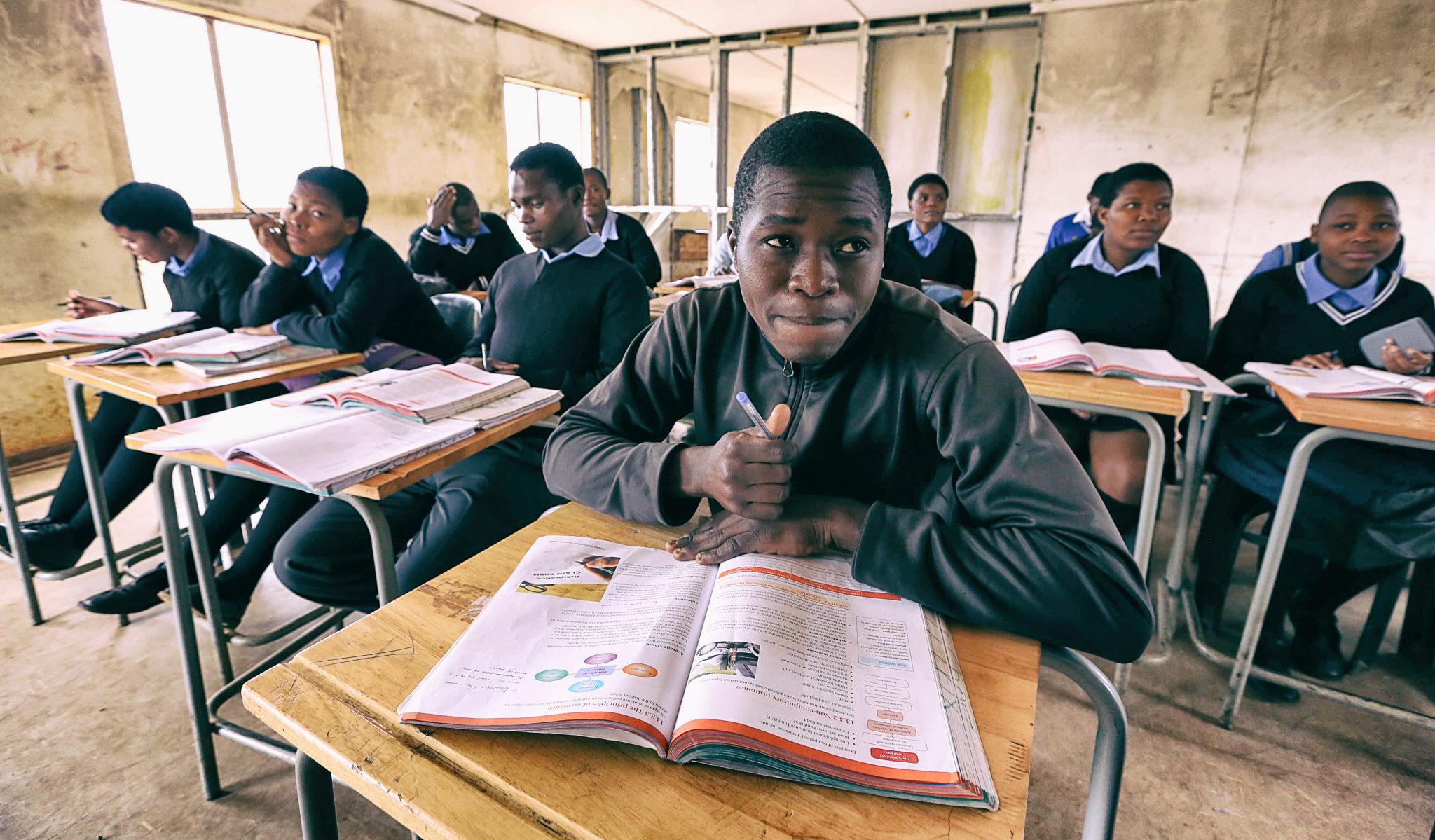
The two outbreaks are unfolding against a broader decline in routine vaccination coverage.
Department of Health figures released in August showed that first-dose vaccination coverage among infants fell from 87% in 2021 to 67% in 2025.
The proportion of infants receiving no vaccines increased from 12.1% in 2017 to 36.3% between January and April 2026.
South Africa has also recorded 3,462 laboratory-confirmed measles cases this year, while imported poliovirus strains have been detected in Cape Town wastewater.
ALSO READ: In Yaoundé, Communities Take the Fight Against Cholera Into Their Own Hands
Department spokesperson Foster Mohale said the risk was “no longer a theoretical risk”, with active outbreaks reported in multiple provinces.
Mpox is not primarily a childhood vaccination issue. However, the surveillance, contact-tracing and healthcare systems responding to mpox are also involved in managing diphtheria, measles and poliovirus risks.
The concentration of several of these public-health signals in the Western Cape has added to the pressure on local health authorities.
Key questions remain unanswered
The Department of Health’s latest mpox statement does not specify how many vaccine doses South Africa currently has, which groups will receive them first or when vaccination will begin.
It also does not establish whether the Cape Town cases form a single chain of transmission, provide detailed information on the severity of the infections or confirm the status of the traveller who returned from Spain.

The latest diphtheria report does not provide a 2026 death toll or information on current diphtheria antitoxin stocks.
These details will be important in assessing the scale of the response and whether available resources are keeping pace with the outbreaks.
What the public should know
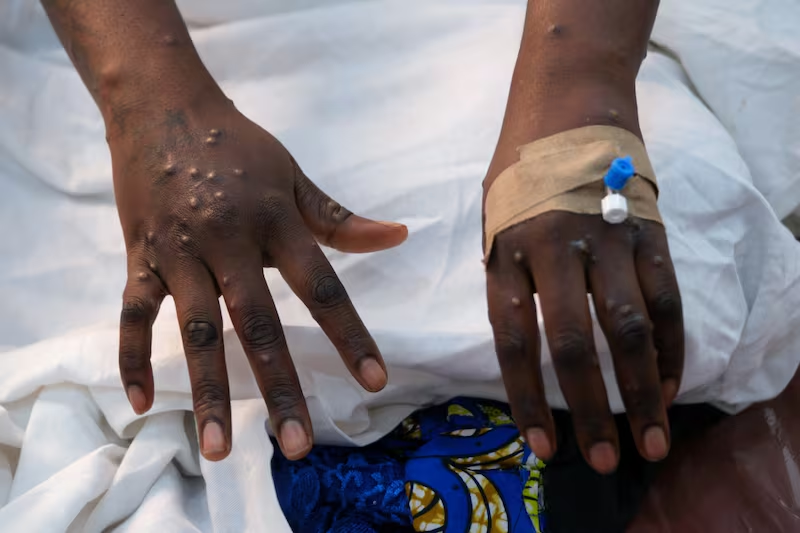
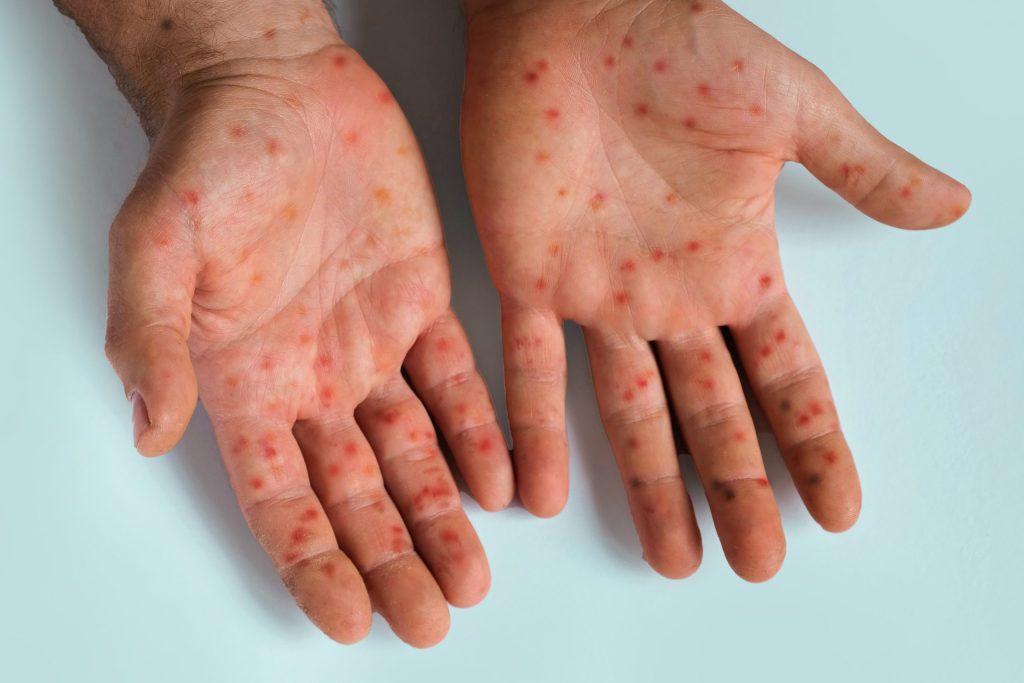
Mpox symptoms can include fever, headache, muscle aches, back pain, fatigue and a rash that develops from flat red spots into bumps, blisters and crusted scabs.
The rash can occur on the face, hands, feet, genitals or other parts of the body.
Symptoms usually develop six to 13 days after exposure, although the incubation period can extend to 21 days.
Anyone experiencing symptoms, particularly after contact with a confirmed or suspected case, should seek medical attention promptly and avoid close contact with others.
Mpox can spread through close skin-to-skin contact, contaminated bedding, clothing and towels, as well as prolonged face-to-face contact. Regular hand washing can help reduce the risk of transmission.
The Department of Health has also urged communities to support people who are diagnosed with or suspected of having mpox, warning that “stigma and discrimination have the potential to undermine an outbreak response”.
For diphtheria, symptoms such as a sore throat accompanied by a low-grade fever, a greyish-white membrane in the throat or swelling of the neck require urgent medical attention.
The Department of Health advises parents and adults to check their vaccination and booster status at their nearest clinic.