NEW DELHI, India: Youth-led protests demanding the resignation of Chief Election Commissioner Gyanesh Kumar entered a second day on Sunday, hours after a court released three leaders of the Cockroach Janta Party (CJP) detained ahead of a planned demonstration.
The movement’s founder, Abhijeet Dipke, and two senior colleagues were taken into custody when their flight landed in the capital on Saturday. Their supporters had planned to gather at Jantar Mantar, New Delhi’s designated protest site, to challenge alleged irregularities in a nationwide revision of voter rolls.
According to the CJP, the three were released after undertaking to maintain public peace. The group responded with a defiant message on X declaring that cockroaches cannot be killed.
Their release has done little to resolve the dispute driving the protests: whether an exercise intended to clean up India’s electoral register has excluded eligible voters and compromised confidence in the institution responsible for the world’s largest elections.
YouTuber and activist Dhruv Rathee, whose channel has more than 33 million subscribers, was also held on Saturday and released after midnight. He disputed the authorities’ description of what had happened.
“I was not arrested or detained, I was KIDNAPPED,” Rathee wrote on X.
Heavy Security As Protesters Regroup
Authorities imposed sweeping restrictions on Saturday, closing metro stations, suspending mobile internet services and barricading access to Jantar Mantar.
With the main protest venue blocked, student activist Neha Bora urged supporters to regroup at Dilli Haat, a crafts market about 10km away.
Police said more than 2,000 activists were detained, including the national president of the left-wing All India Students’ Association. Most were released late on Saturday.
Metro services and mobile data had resumed by Sunday, but thousands of police and paramilitary personnel remained deployed across the capital. By midday, a few dozen members of student organisations were chanting against Kumar, with police detaining some demonstrators.
Abhita Ruheja, one of those detained, told Reuters that the authorities had turned Delhi into a fortress. She accused the government of progressively stripping away citizens’ rights and warned that India was moving towards dictatorship.
Lawyers protesting outside the Supreme Court were also briefly detained on Saturday, along with several reporters, including a Reuters journalist.
At a special Sunday hearing, the Supreme Court recorded the government’s assurance that lawyers and journalists would be allowed to work without obstruction.
Opposition parties condemned the policing, while a United Nations body urged India to uphold the right to peaceful assembly. The foreign ministry rejected that intervention as unwarranted interference in the country’s internal affairs.
Disputed Voter Revision Fuels Anger
The protests centre on the Special Intensive Revision (SIR), described as the first comprehensive overhaul of India’s voter rolls in nearly two decades.
Critics have seized on a figure of roughly 130 million names excluded during the verification exercise, including about 63 million people recorded as having moved and 30 million who could not be traced.
ALSO READ: Tanzania Tightens Grip Ahead of Independence Day Protests
The figure requires an important distinction: the Election Commission says it includes entries flagged at the draft stage, rather than the final removal of 130 million eligible voters. Reuters’ September explainer also described the exclusions as involving the first draft of the revised register.
Opposition parties nevertheless argue that the process has denied eligible citizens the opportunity to vote. They say Muslims and other minorities, whose support for Prime Minister Narendra Modi’s Hindu nationalist Bharatiya Janata Party (BJP) is generally weaker, have been disproportionately affected.
The revision had already become a political flashpoint in West Bengal, where about nine million names, nearly 12% of the electorate, were removed ahead of state elections, according to NPR.
For protesters, the issue extends beyond the accuracy of individual entries. Their campaign questions whether voters can trust the commission to administer elections impartially and provide a fair route for those wrongly excluded to return to the register.
Reports Of Internal Objections Intensify Scrutiny
Anger grew after The Indian Express reported in late September that two of the Election Commission’s three members had formally objected at least 14 times to decisions involving the revision.
Election Commissioner Sukhbir Singh Sandhu reportedly described a subsequent change to re-enrolment rules as “unauthorised/illegal”, according to The News Minute.
The commission has rejected suggestions that these disagreements demonstrate political bias. It says differences of opinion are a normal part of internal deliberations and maintains that decisions on the revision were taken unanimously.
Kumar’s critics have also questioned a 2023 law passed under Modi’s government that protects election commissioners from prosecution for actions carried out in their official capacity.
These disputes have placed the commission’s internal decision-making, as well as the voter verification process itself, under growing scrutiny.
Election Commission And BJP Reject Allegations
The Election Commission denies favouring any political party and has described the widely circulated 130 million figure as misleading.
It says the exercise identifies entries belonging to people recorded as absent, relocated, dead or registered more than once, and that the revision remains incomplete.
The commission also says about 23.7 million voters aged between 18 and 28 have been added to the rolls since the process began in June 2025.
On 29 September, it ordered a special enrolment drive across 20 states and union territories to restore eligible voters left off the revised registers. In Delhi, the deadline for claims and objections has been extended to 30 October.
The BJP has accused opposition parties of undermining confidence in Indian democracy by casting doubt on legitimate electoral procedures.
Kumar has not publicly responded to demands for his resignation.
ALSO READ: Tunisians step up protests against Saied’s crackdown on opposition
Protests Move From The Streets To The Courts
The latest wave of demonstrations began on 2 October and spread beyond New Delhi.
On 4 October, opposition leaders Uddhav and Raj Thackeray led thousands of marchers through Mumbai, calling for Kumar to step down.
A day later, a three-judge Supreme Court bench led by Chief Justice Surya Kant issued notices to the government, the Election Commission and Kumar, seeking explanations for decisions taken during the voter roll revision.
On 6 October, opposition leader Rahul Gandhi was briefly detained during a march towards the commission’s offices.
The dispute has brought together youth activists and established opposition figures, although their involvement does not necessarily mean they share the same political programme. Their common demand is greater accountability over the revision and the commission’s handling of it.
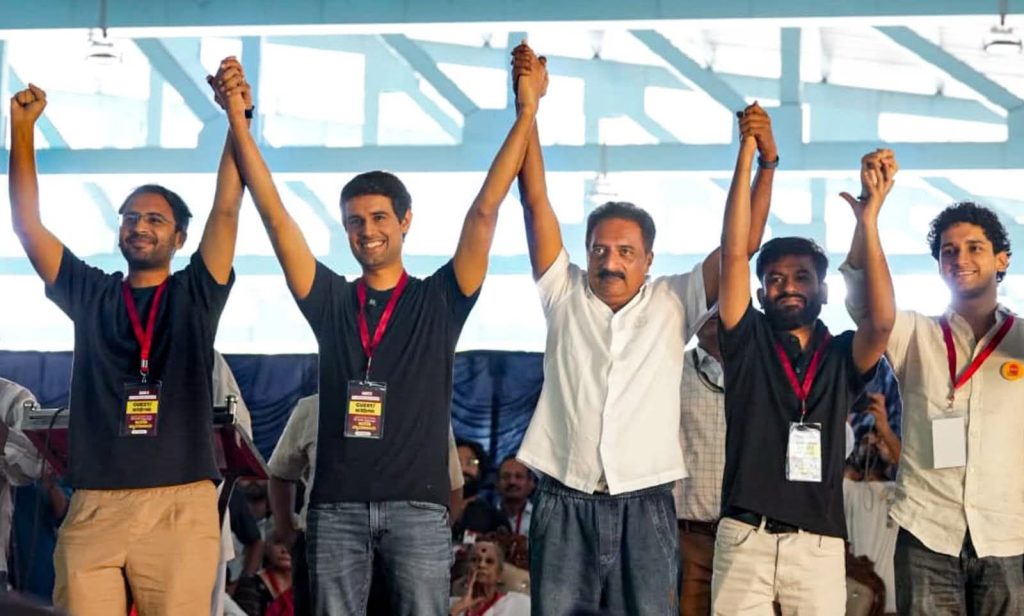
From Online Satire To Street Mobilisation
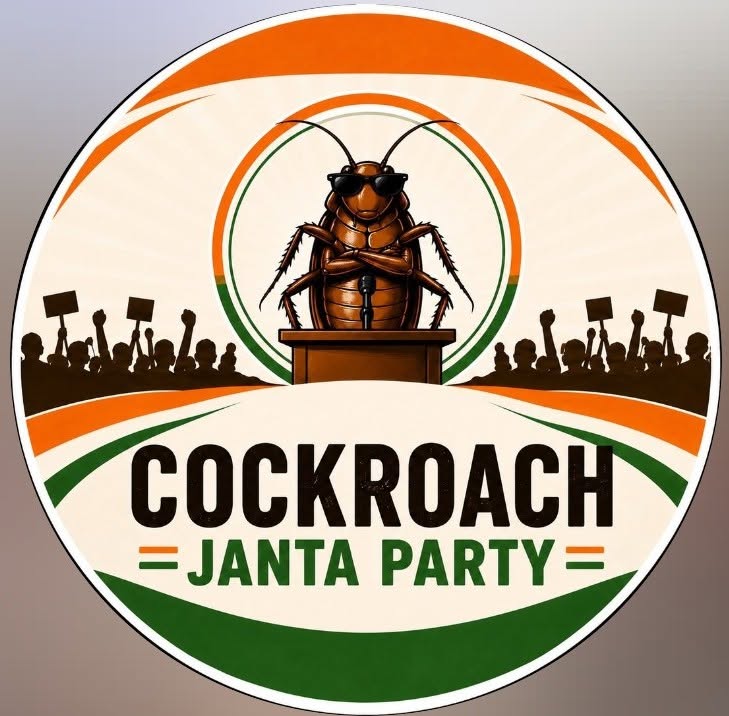
The CJP began on 16 May as an online parody of the ruling party’s name.
Dipke, a 30-year-old Boston University graduate and former communications strategist for the opposition Aam Aadmi Party, launched the platform after Kant reportedly referred to young government critics as “cockroaches” and “parasites” during a court hearing.
Kant later said his remarks had been taken out of context.
The movement adopted the insult as a symbol of resilience. Within weeks, its Instagram account had attracted more than 22 million followers, more than twice the BJP’s following on the platform, AFP reported.
Before returning from the United States in June, Dipke expressed hope that India “is still a democracy today” and that supporters would be permitted to protest peacefully.
The group’s first major campaign focused on leaks in the NEET medical entrance examination, which forced about two million students to resit. A sit-in at Jantar Mantar began on 20 June, followed by sustained pressure for Education Minister Dharmendra Pradhan to resign.
Pradhan stepped down in July, giving the movement a significant political victory and demonstrating its ability to turn online support into sustained public mobilisation.
The campaign also drew international attention. UN spokesperson Stéphane Dujarric said peaceful protesters should be able to demonstrate “without the fear of harassment, the fear of arrest, or the fear of injury”.
Amnesty International India’s board chair, Aakar Patel, said the authorities’ responsibility was “to protect and facilitate peaceful protests, not to suppress them”.
The CJP now faces a different test. Having helped secure a minister’s resignation, it is demanding the removal of the head of a constitutional body that rejects its allegations of wrongdoing.
With its leaders released, supporters regrouping and the courts examining the dispute, the confrontation has become a test of both electoral confidence and the space available for peaceful dissent in India. (Additional reporting: Reuters, AFP)